





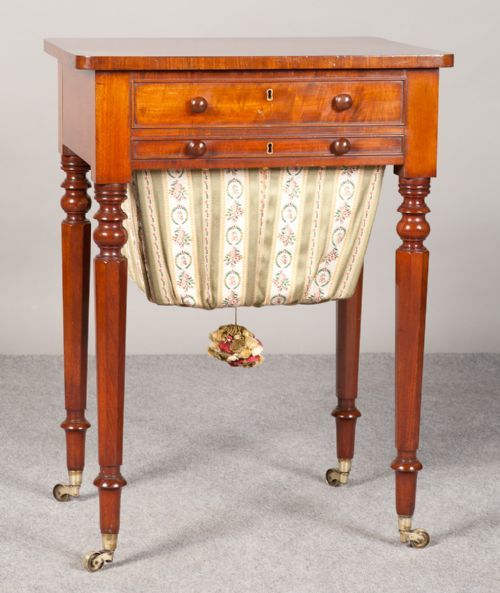
Edwardian Fabric Sewing Table
An edwardian fabric sewing table brings compact elegance to a room, offering clever storage for needlework alongside the clean lines of early twentieth-century design.
Edwardian Fabric Sewing Table
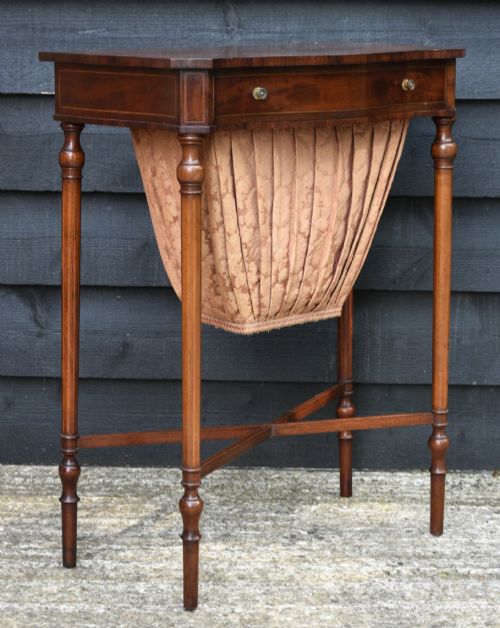
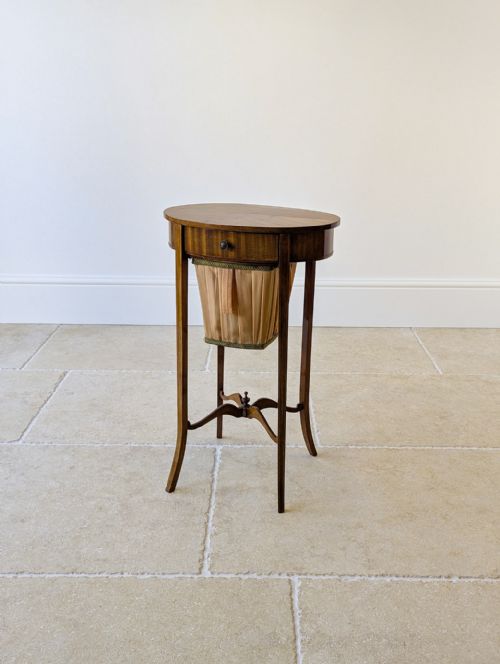
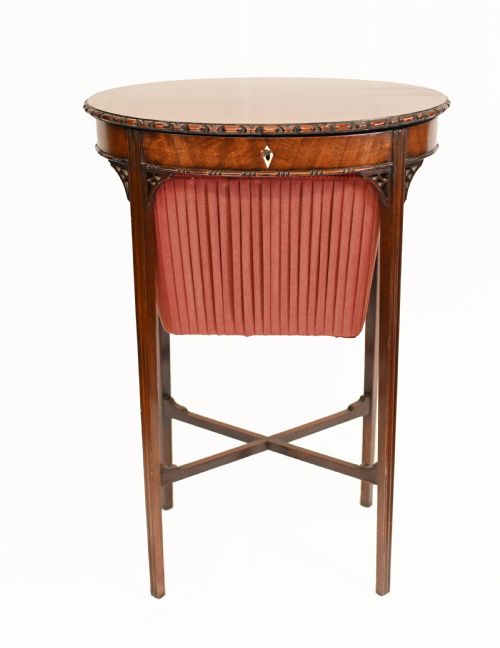
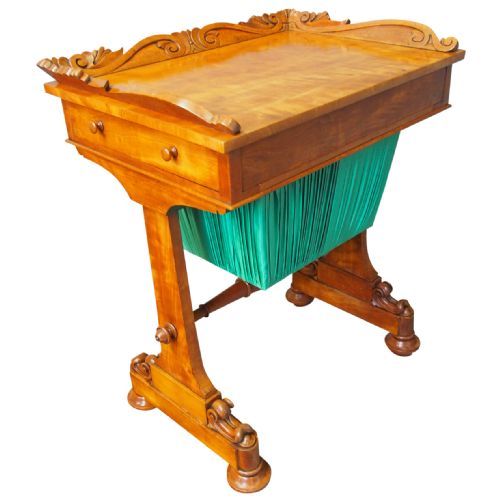
An edwardian fabric sewing table combines the practical requirements of needlework storage with the refined craftsmanship typical of the early twentieth century. These pieces function equally well as occasional or side tables while concealing fitted compartments for threads and tools.
The selection ranges from dedicated sewing and needlework tables to versatile work boxes and lamp tables. While the overarching style is Edwardian, examples also bridge earlier Victorian and Regency periods, utilising forms that emphasise domestic utility and grace.
Materials and construction
Cabinet makers utilised a rich palette of timbers, including mahogany, satinwood, burr walnut, walnut, and rosewood, often enhanced with delicate wood inlay. These woods were selected for their grain and warmth, forming the structural carcass and decorative surfaces of each work table.
Brass fittings and hardware provide structural accents and functional movement to drawers and compartments. Fabric elements integrate directly into the design, creating soft storage bags or skirts suspended beneath the wooden frames.
Judging quality and craftsmanship
Excellence in these pieces rests upon the precision of the cabinet work and the choice of timber veneer. Superior examples display seamless wood inlay, balanced proportions, and well-executed serpentine forms that require advanced carpentry skills.
The integration of the fabric component with the wooden frame dictates the refinement of the piece. Tables that maintain structural integrity alongside delicate detailing demonstrate the higher tier of period workshop production.
Gillows
The Edwardian Fabric Sewing Table Glossary
- Serpentine
- A curved line that undulates gently, featuring a convex centre flanked by concave sides. This shaping appears on the tops and bodies of finer tables.
- Work table
- A dedicated piece of furniture designed to hold sewing implements, textiles, and materials. These often feature internal compartments and suspended fabric bags.
- Satinwood
- A lustrous hardwood native to Ceylon and India, prized for its golden yellow colour and reflective sheen. It was frequently used for fine crossbanding and stringing.
- Burr walnut
- Timber taken from the warted growths on walnut trees, revealing highly decorative, swirling grain patterns. Cabinet makers used veneers of this wood on prominent surfaces.
- Inlay
- A decorative technique where pieces of contrasting wood, shell, or metal are inserted into recessed cavities on the surface. This creates flat ornamentation across the timber.
Edwardian Fabric Sewing Table: Frequently Asked Questions
What is an edwardian fabric sewing table used for?
These tables were originally designed to organise sewing materials, threads, and needlework tools within accessible compartments. Today, they serve equally well as side or lamp tables in living spaces.
The integrated fabric pockets and internal trays offer discreet storage for small household items while maintaining a decorative presence.
How do I distinguish Edwardian pieces from Victorian ones?
Edwardian pieces generally exhibit lighter proportions, brighter satinwood or mahogany veneers, and less ornate carving than their Victorian predecessors. Victorian examples tend to be heavier and employ darker timbers.
Looking at the overall silhouette provides a clear indication of the period aesthetic and workshop priorities.
What woods are most common?
Mahogany forms the primary structure for many examples, often paired with satinwood or rosewood veneers. Burr walnut also appears on pieces that emphasise decorative grain patterns.
These timbers were chosen for both their durability and their ability to take a fine polish.
Can these work tables function as lamp tables?
The flat top surfaces and stable proportions make these tables suitable for holding small lamps or decorative objects. Their height aligns well with adjacent seating.
Using them in this manner repurposes the domestic furniture without altering the historic structure.