
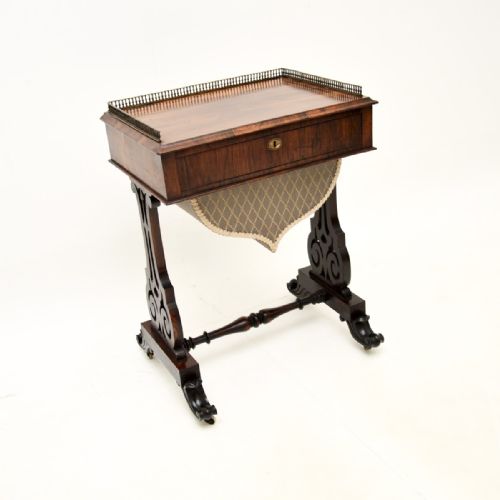
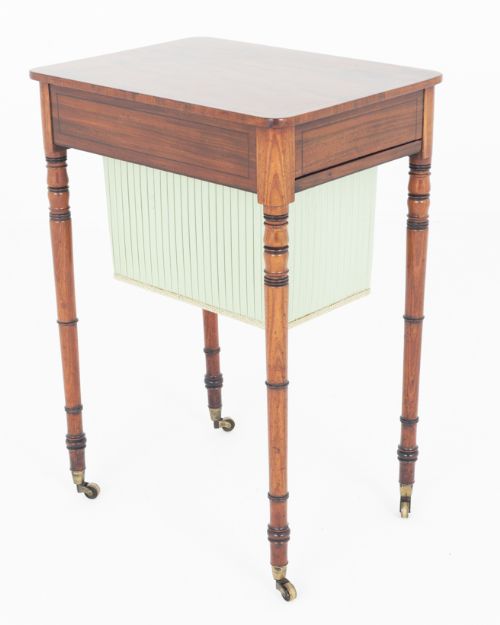


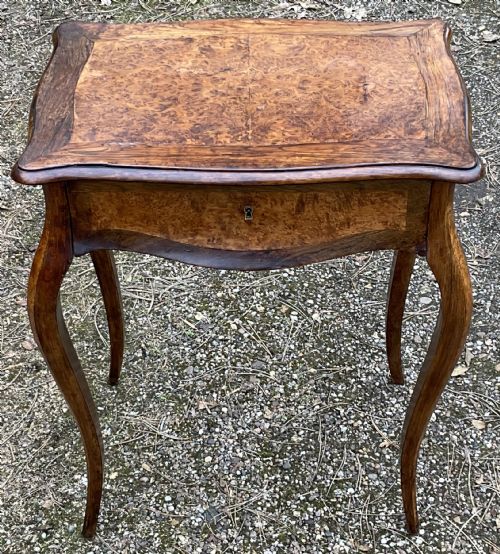
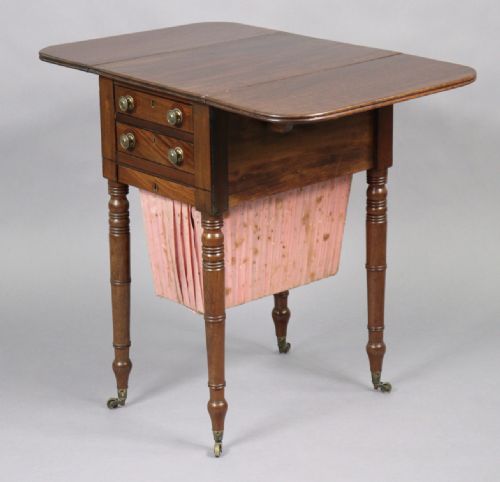

Small Sewing Box Table
These small sewing box tables combine neat proportions with practical fitted interiors, offering a compact spot for needlework and correspondence.
Small Sewing Box Table
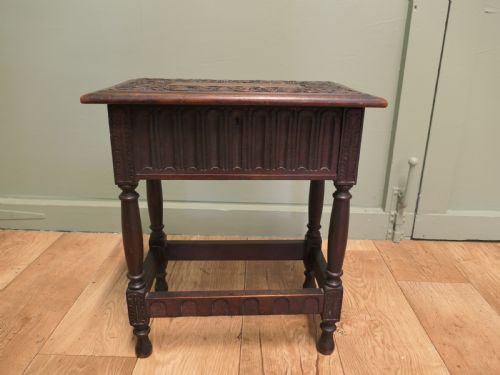
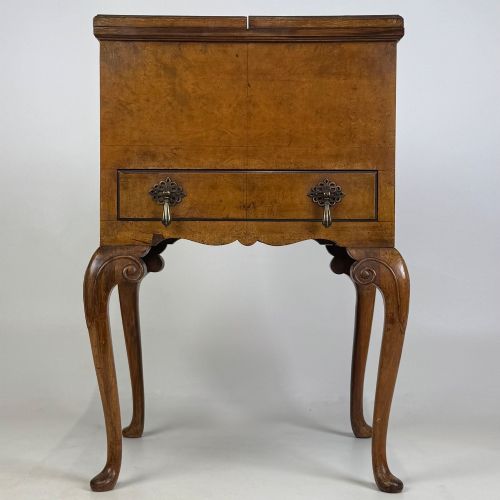
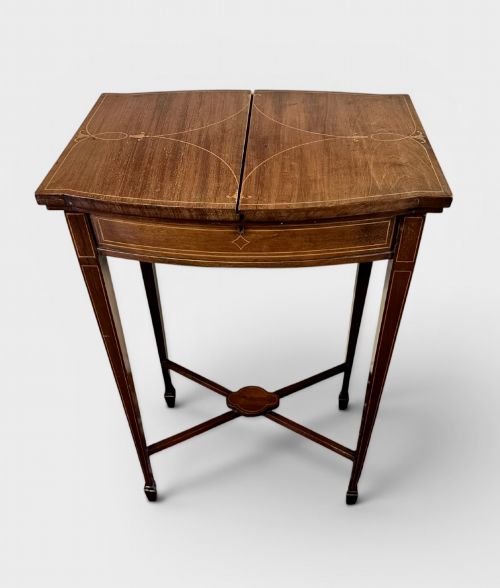
When you search for a small sewing box table, you find pieces designed to hold needlework supplies, cottons and small tools within a dedicated compartment. The selections here span the Regency, Victorian and Edwardian eras, alongside Sheraton Revival and Biedermeier interpretations.
Most examples function simultaneously as side tables, occasional pieces or lamp tables, featuring fitted interiors beneath their lids. Mahogany and rosewood dominate the earlier forms, while burr walnut and birch appear in later nineteenth and twentieth-century pieces.
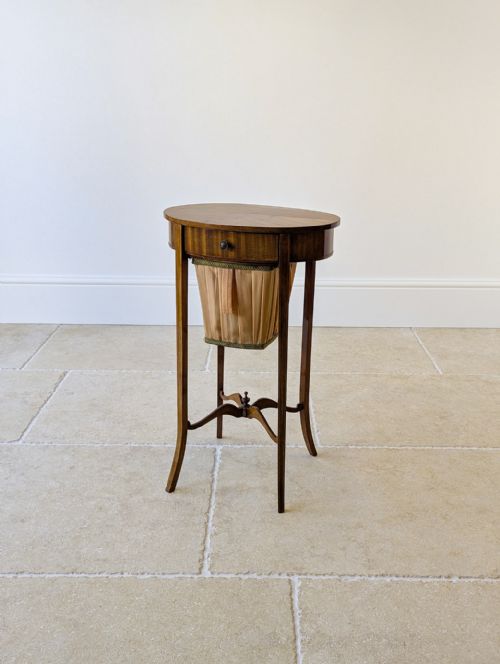
The layout typically incorporates drop leaves, lower fabric bags or internal trays for sorting threads and needles. These multi-purpose items suit modern sitting rooms as compact storage surfaces that conceal small household clutter.
How they were made
Cabinetmakers utilised solid timbers alongside fine veneers, applying flame mahogany, satinwood and burr walnut across the visible surfaces. Internal compartments frequently received delicate dividers and miniature storage boxes constructed from lighter woods.
Inlaid decoration appears regularly, employing contrasting shell motifs and fine stringing lines set into the primary timber. Brass handles, hinges and small castors complete the construction of these movable tables.
Listings span the Regency, Victorian and Edwardian periods, utilising mahogany, rosewood, burr walnut, birch and satinwood.
What varies in quality
The refinement of the internal compartment layout distinguishes finer examples from simpler utilitarian models. Elaborate fitted trays with retained lids and original bone or ivory winders elevate a piece above a basic partitioned box.
Timber selection and veneer matching dictate the visual strength of the exterior, particularly where burr walnut or flame mahogany is employed. Crispness in the inlaid shell motifs and precision in the brass hardware indicate superior workshop execution.
The Small Sewing Box Table Glossary
- Work table
- A multi-purpose furniture form designed for sewing, needlework and small domestic tasks, incorporating internal storage compartments.
- Drop leaf
- A hinged flap at the side of a table top that lifts to extend the surface area when needed.
- Satinwood
- A light-coloured, hard timber from the tropical regions often used for contrasting inlay and banding.
- Serpentine
- A curved shape characterised by a convex centre flanked by concave ends, found on tabletops and drawer fronts.
- Stringing
- Thin lines of contrasting wood inlay used to outline panels, drawers and table edges.
Small Sewing Box Table: Frequently Asked Questions
What is inside a sewing box table?
These tables typically conceal a fitted interior with small partitioned compartments, lidded boxes and sometimes miniature trays for holding pins, threads and needles.
Many examples also retain lower fabric work bags suspended beneath the main box to hold larger balls of yarn or ongoing stitching projects.
Can I use one as a side table?
Their compact dimensions make them suitable for placement beside a sofa or armchair as an occasional surface for a lamp or book.
The enclosed top keeps everyday clutter out of sight while providing a sturdy flat surface above.
How do I date a sewing table?
Dating relies on timber choices, leg styles and decorative motifs such as inlaid shell patterns or brass hardware.
Regency and early nineteenth-century pieces tend to use rosewood and heavy pillar supports, whereas Edwardian versions favour lighter mahogany and delicate stringing.
Are all these tables made of solid wood?
Cabinetmakers frequently combined solid framing with decorative veneers applied to the tabletops and sides to display striking grain patterns like flame mahogany and burr walnut.
Secondary timbers were often utilised for internal drawer linings and structural framing beneath the decorative outer surfaces.