
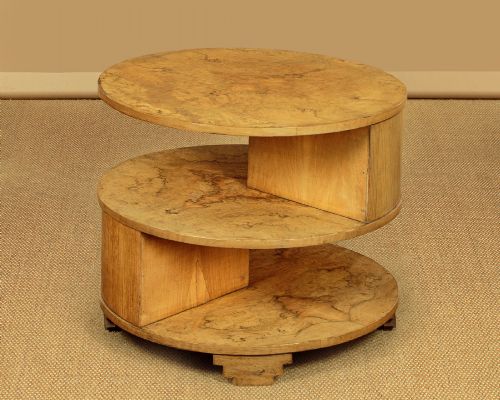


Blond Wood Side Table
A blond wood side table brings pale warmth and distinct grain into a room, spanning periods from nineteenth century Biedermeier to Art Deco.
Blond Wood Side Table
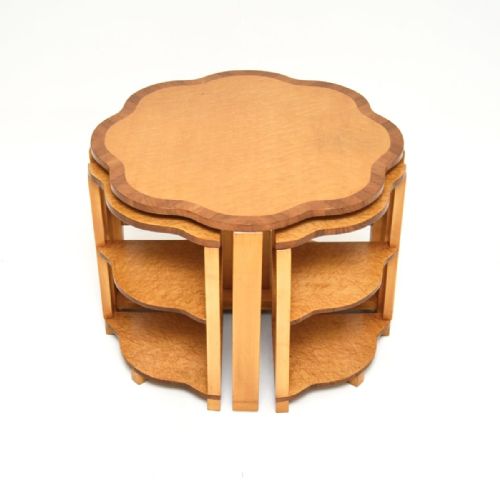
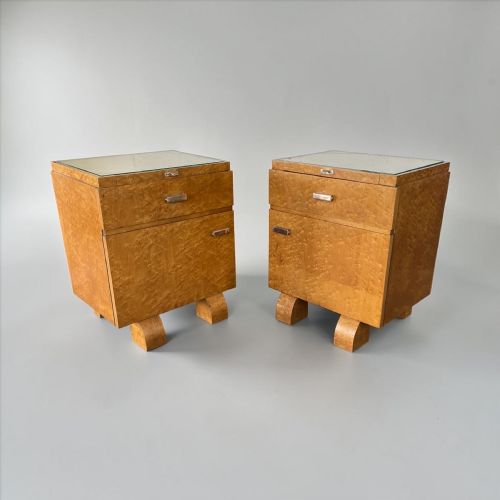
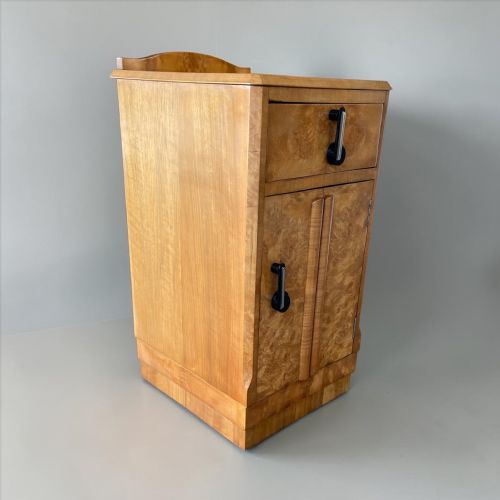
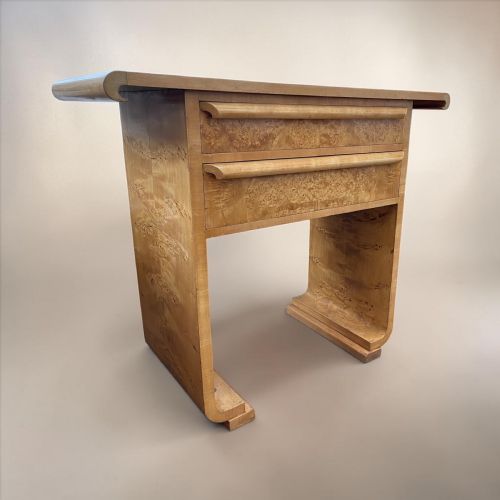
A blond wood side table is a practical surface defined by pale timbers such as birch, birds eye maple, satin birch, and sycamore. When buyers search for a blond wood side table, they encounter diverse forms ranging from compact nineteenth century Swedish lamp tables to striking nineteen-thirties Art Deco nests and console tables.
The pieces appearing here cross several centuries and stylistic revivals, notably Biedermeier, Empire Revival, and French Provincial. Side tables, occasional tables, coffee tables, and bedside cabinets dominate the selection, offering versatile proportions for modern rooms.
Origins stretch across Britain, France, and Scandinavia, with Swedish birch and English maple appearing frequently. Buyers find everything from simple single drawer side tables to elaborate inlaid tea and sofa tables.
Materials and Construction
Cabinetmakers utilised striking veneers such as birds eye maple, burr birch, and karelian birch over solid timber foundations to showcase natural grain patterns. Ebonised wood and brass accents frequently provide sharp contrast against the pale surfaces.
Construction techniques evolved from nineteenth century joinery traditions to twentieth century Art Deco production methods by firms like Hille and Fortnum and Mason. Surfaces were finished to highlight the figure of the wood, whether through polished shellac or simpler French polishing.
Judging Quality and Execution
Quality rests upon the selection of the timber veneer and the precision of its matching across the top and drawers. Superior examples display uninterrupted grain symmetry in burr birch or birds eye maple, whereas lesser pieces use flat, unfigured timber.
The integrity of the underlying construction and the subtlety of details such as ebonised stringing or turned supports dictate distinction. Maker attribution, visible in select pieces from established firms, separates standard utility furniture from exceptional cabinet work.
Fortnum and Mason·The Hille Furniture Company
The Blond Wood Side Table Glossary
- Birds Eye Maple
- A figure in maple wood resembling tiny swirling eyes caused by local disruptions in the grain growth. This decorative pattern is prized for table tops and cabinet fronts.
- Biedermeier
- A influential Central European style spanning the nineteenth century characterised by utilitarian comfort, clean lines, and blond veneers. It avoids excessive ornamentation in favour of polished wood grain.
- Satin Birch
- A pale, lustrous timber native to northern Europe often utilised in nineteenth century Swedish and British furniture. Its reflective surface gives tables a bright appearance.
- Console Table
- A table designed to stand against a wall, frequently supported by brackets or ornate legs. Nineteenth century and Art Deco iterations often feature pale wood veneers.
- Ebonised
- Wood treated with a dark stain or finish to imitate ebony. It frequently outlines pale blond surfaces on Art Deco tables to create graphic contrast.
Blond Wood Side Table: Frequently Asked Questions
What periods do these blond wood tables come from?
The selection spans the nineteenth century through the early twentieth century, including pieces from the eighteen-eighties, nineteen-hundreds, and nineteen-thirties.
Art Deco and Biedermeier revival pieces sit alongside earlier nineteenth century Swedish and French examples.
How were these tables used originally?
These versatile surfaces served as bedside cabinets, tea tables, lamp stands, and small writing desks in period interiors. Occasional and nest tables provided moveable surfaces for entertaining.
Console and sofa tables stood against walls or behind seating to hold decorative objects and lighting.
How do I care for a pale wood table?
Keep nineteenth century and Art Deco blond wood surfaces away from direct sunlight and excessive heat to prevent veneer lifting or fading. Regular dusting with a dry, soft cloth preserves the polished finish.
Avoid moisture pooling on birch and maple surfaces by using coasters for drinks.
How can I tell Swedish birch from English maple?
Swedish birch often displays a pale, even tone with tight grain patterns found in nineteenth century lamp and side tables. English maple and birds eye maple frequently show more pronounced swirling figures and deeper golden hues.
Origin is also indicated by construction methods and regional design characteristics.