




Art Deco Console Table
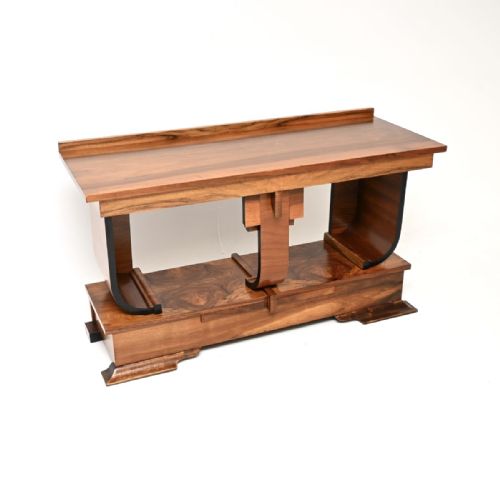
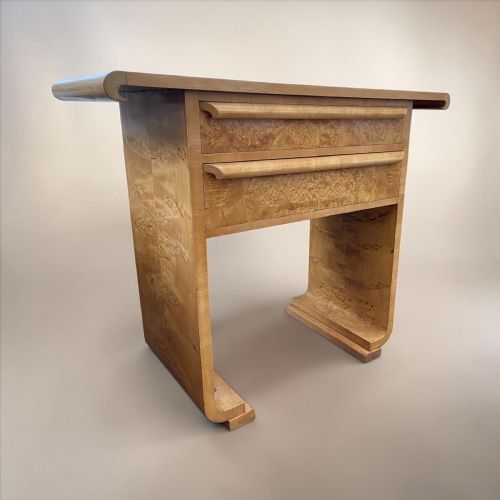
An art deco console table brings striking geometric lines and rich figuring to a hallway or reception room.
Art Deco Console Table
When searching for an art deco console table, buyers encounter furniture primarily originating from the nineteen twenties and nineteen thirties, alongside occasional pieces from the turn of the century and nineteenth century.
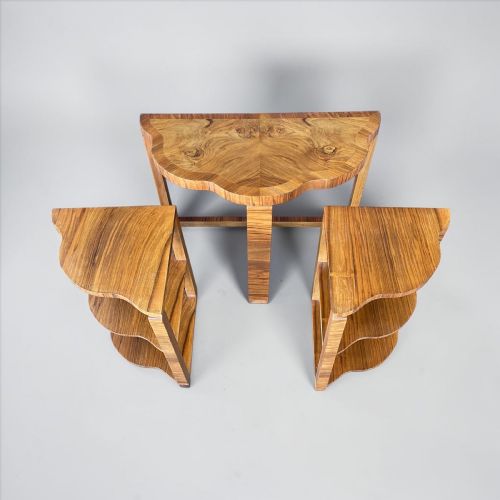
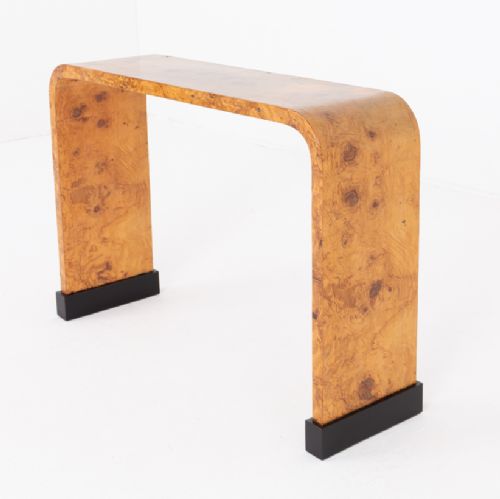
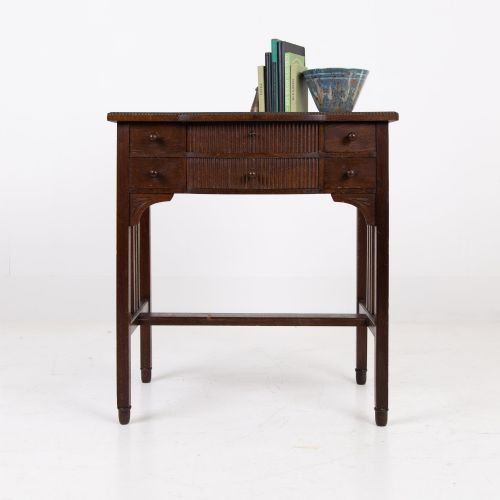
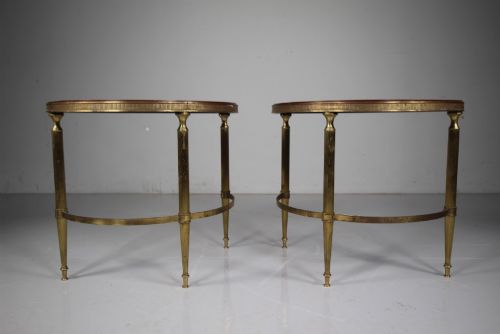
The selections on this page span straightforward console tables, serving tables, and demi lune side tables designed to stand flat against a wall.
These forms frequently showcase the characteristic symmetry and streamlined profiles associated with the period, often executed in warm timbers.
Materials and construction
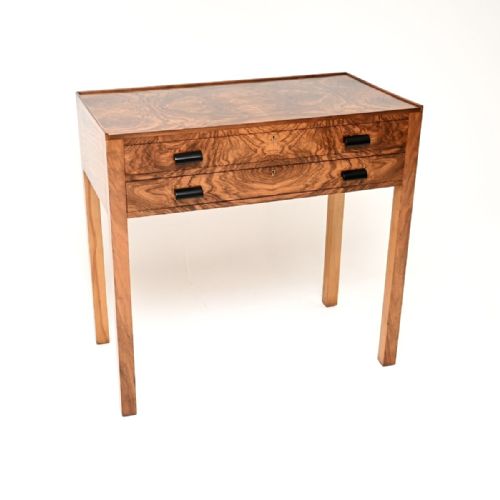
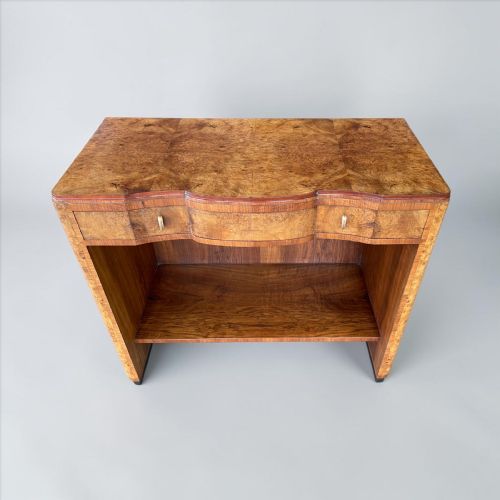
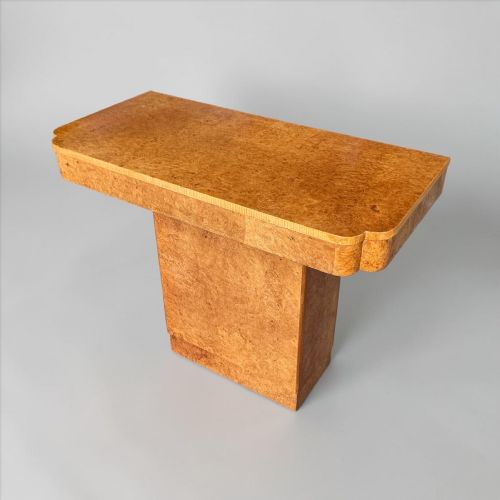
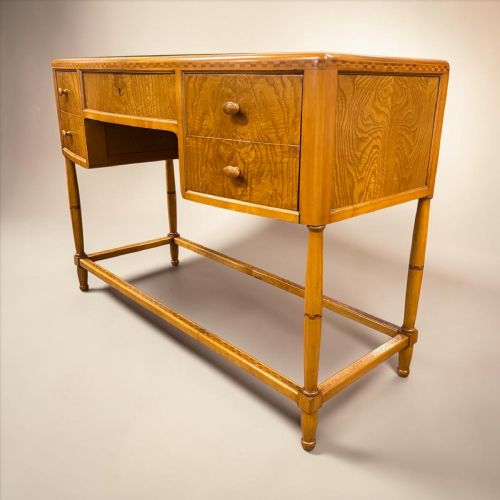
Cabinet makers utilised select hardwoods such as walnut, burr walnut, elm, birds eye maple, and oak, frequently applying veneer to achieve sweeping decorative grain patterns across the top surface.
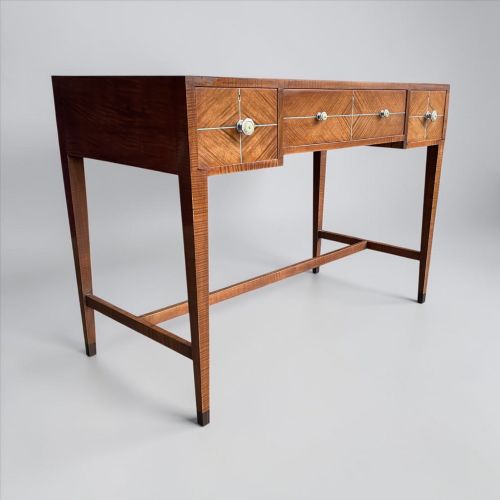
Details in ebonised wood, glass, and brass provide sharp contrast to the warm timber tones, grounding the geometric forms typical of the era.
Art Deco Console Table Retail Price Guide 2026
Typical asking prices for art deco console table among the pieces listed under this phrase on Sellingantiques today, from the lower quarter to the upper quarter. They describe what is for sale here now, not the wider market.
The periods represented on this page span from the nineteenth century through the nineteen forties.
Assessing quality and execution
The distinction between standard examples and superior pieces rests on the choice of timber veneer and the precision of the cabinet work.
Makers who selected heavily figured burr walnut or birds eye maple created surfaces with deep visual movement, elevating the status of the furniture from utilitarian to decorative.
Maurice Adams·Hille·Fortnum and Mason·Epstein·Heals of london
The Art Deco Console Table Glossary
- Console table
- A table designed to stand against a wall, frequently supported by brackets or front legs, intended for display or service.
- Burr walnut
- A prized timber harvested from walnut tree growths, producing swirling, intricate grain patterns highly valued in cabinet making.
- Demi lune
- A half moon shape characteristic of tables built to fit snugly against a flat wall.
- Ebonised wood
- Timber treated to resemble ebony, providing a dark, uniform contrast to lighter veneers.
- Veneer
- A thin layer of choice wood applied over a secondary timber base to create a decorative exterior surface.
Art Deco Console Table: Frequently Asked Questions
Where should I place a console table?
These tables find a natural home in hallways, entrance passages, or behind sofas where surface space is needed without blocking circulation.
Because they sit flat against the wall, they offer a decorative display area for lighting or objects while maintaining a shallow depth.
How do I care for walnut veneer?
Burr walnut and walnut veneer require simple dusting with a dry cloth and protection from direct sunlight to prevent the timber from fading.
Avoiding excessive moisture and rapid temperature changes keeps the polished wood stable over decades of use.
Are these tables strictly from the nineteen thirties?
While the majority date from the nineteen twenties and nineteen thirties, the evidence also includes pieces attributed to the nineteenth century and nineteen hundred.
Stylistic continuity links these earlier examples to the later movement through their linear forms and choice of timbers.
What metals were used on these pieces?
Brass appears frequently as a contrasting material, used for sabots, trim, and structural supports on side tables and consoles.
Its warm metallic sheen complements the deep tones of walnut, elm, and ebonised wood.