

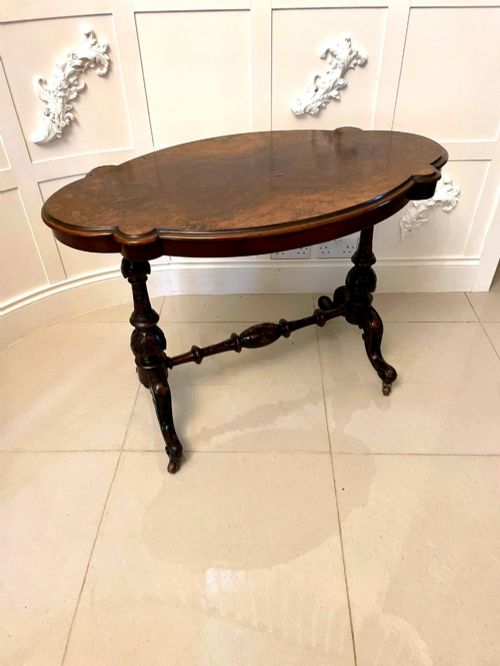
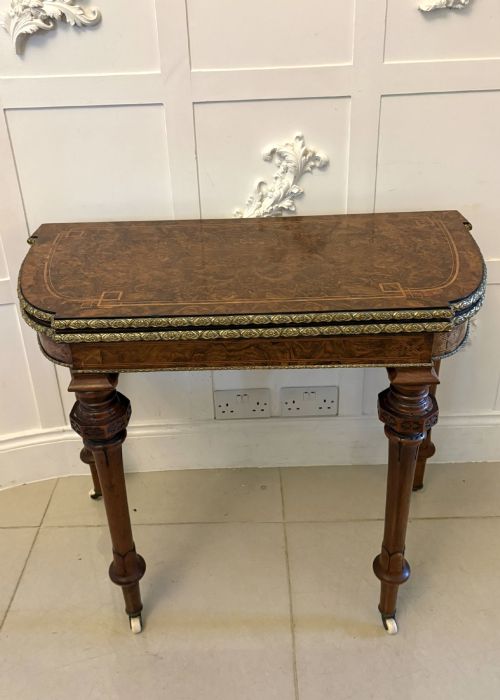
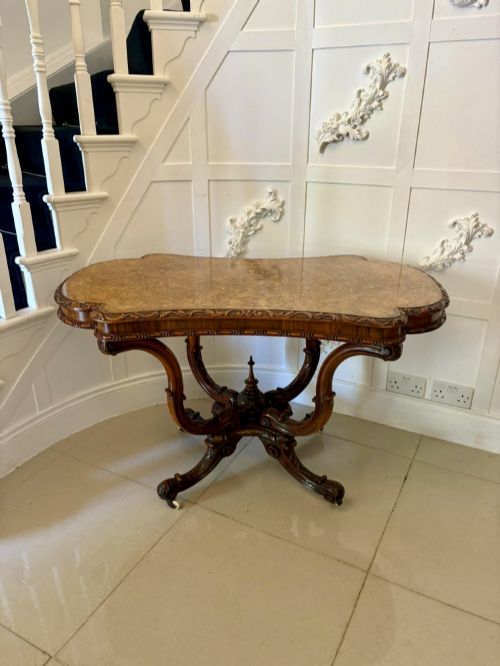
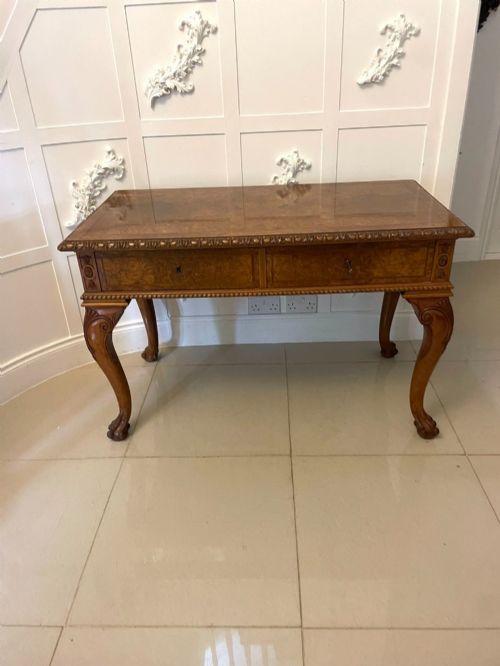
Burr Walnut Hall Table
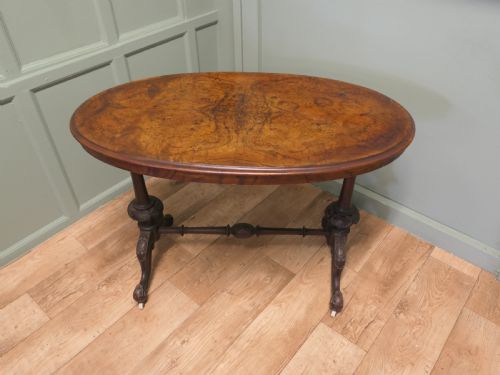
When you search for a burr walnut hall table, you are looking at richly figured timber built into narrow, striking entrance pieces spanning from the nineteenth century into the twentieth.

Burr Walnut Hall Table
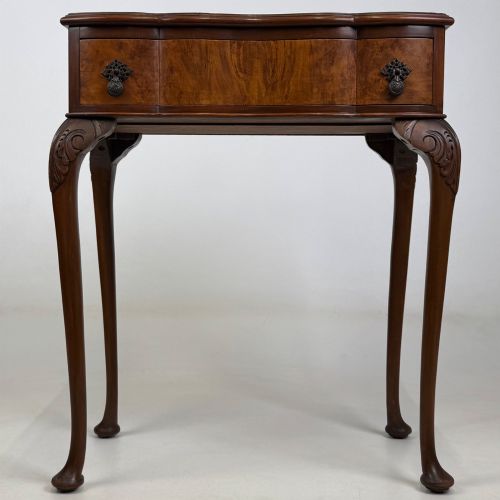
A burr walnut hall table brings dramatic, swirling grain patterns directly into an entranceway, utilising slim footprints designed specifically for hallways and corridors. You will encounter these pieces most frequently in twentieth-century revivals or Victorian forms, though earlier examples surface.
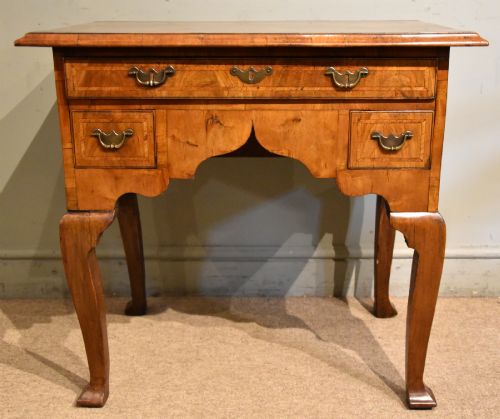
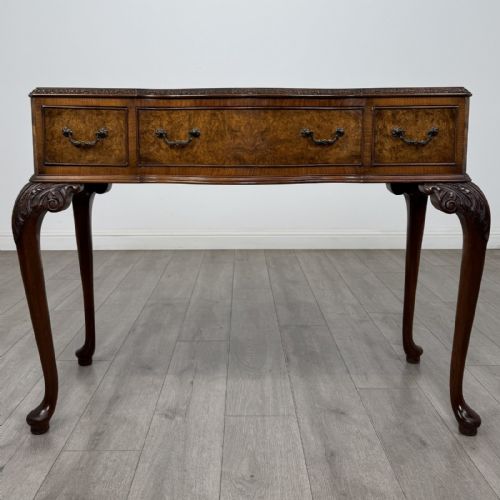
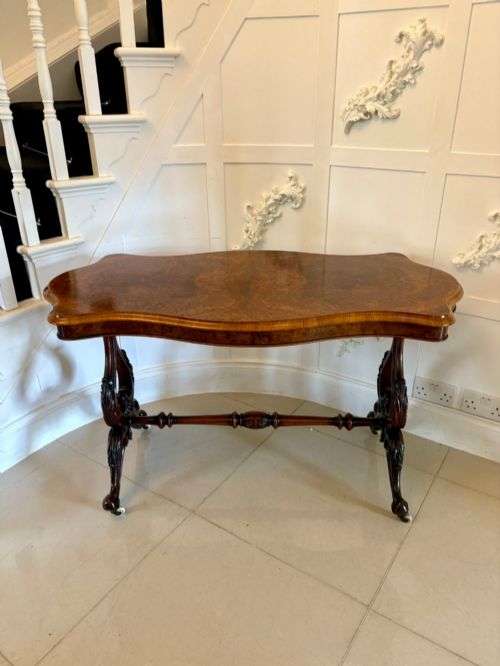
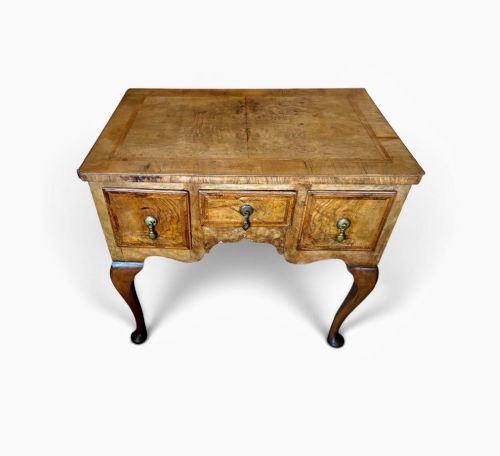
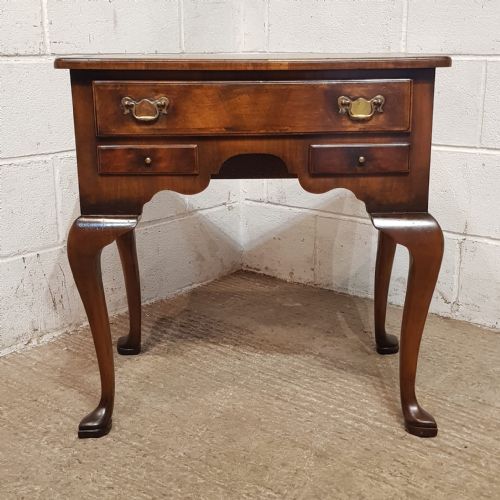
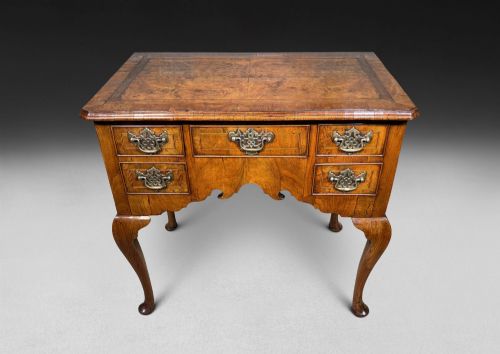
Makers adapted several formats for the hall, including console tables, side tables, lowboys, and occasional tables. Many incorporate serpentine fronts or demi-lune shapes to fit tight spaces without obstructing movement.
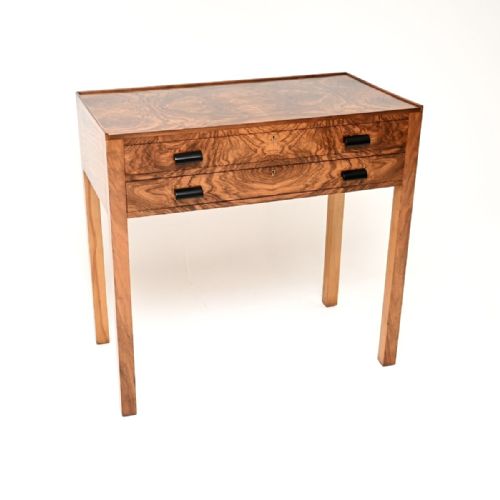
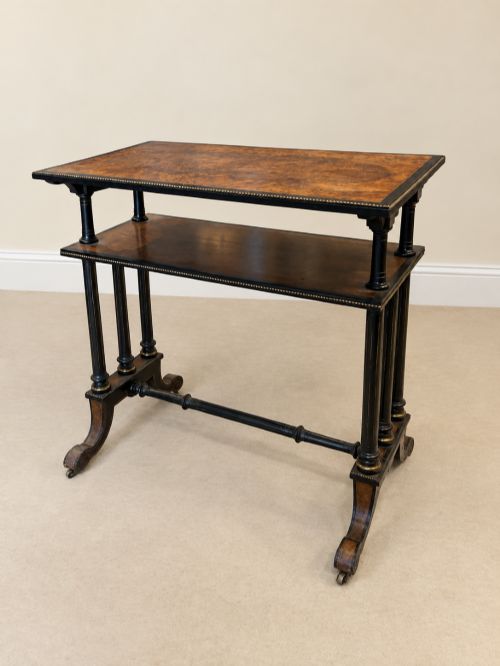
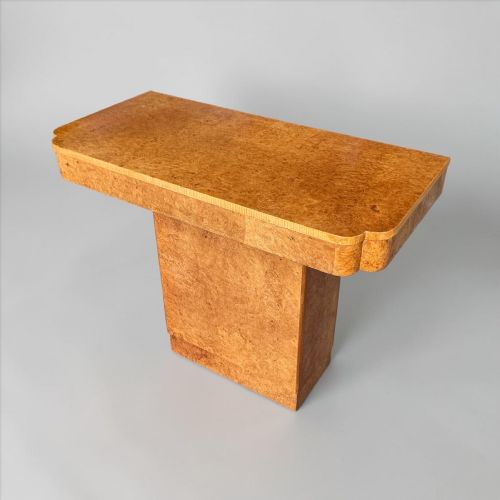
The selection ranges from Queen Anne style revivals with characteristic cabriole legs to clean-lined Art Deco interpretations and heavy Victorian pedestal models. Each variety offers a distinct silhouette while sharing the unmistakable allure of burr veneer.
Materials and Technique
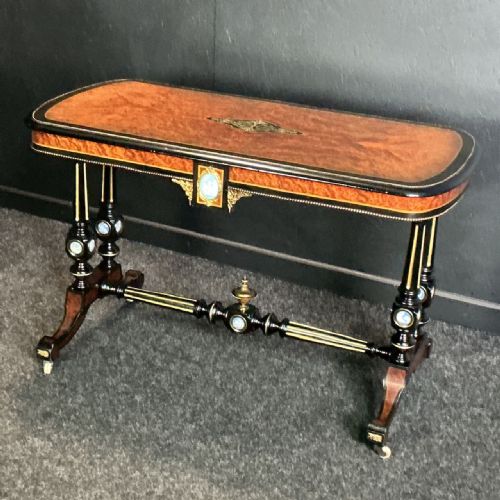
Cabinetmakers constructed these tables using solid carcases faced with carefully sliced burr walnut veneer, harnessing the swirling growth knots of the tree to create mesmerising patterns on the top surfaces. They often combined this striking timber with secondary woods, brass mounts, or ebonised details.
Construction techniques evolved from traditional dovetailing on drawers and hand-carved cabriole legs in earlier centuries to sleeker, geometric veneering during the Art Deco period. Ormolu mounts and fine inlay work occasionally accented the primary walnut surfaces.
Burr Walnut Hall Table Retail Price Guide 2026
Typical asking prices for burr walnut hall table among the pieces listed under this phrase on Sellingantiques today, from the lower quarter to the upper quarter. They describe what is for sale here now, not the wider market.
Listings feature burr walnut hall tables spanning the eighteenth, nineteenth, and twentieth centuries, alongside styles from Georgian to Art Deco.
The Spectrum of Quality
Quality rests primarily on the choice and matching of the burr veneer, where symmetrical grain alignment across a top surface distinguishes superior examples from standard production. The depth of the figuring and the richness of the natural timber tone dictate the visual impact of the piece.
The sophistication of the secondary detailing, from hand-carved cabriole legs to finely cast ormolu mounts and precise drawer construction, separates standard utility tables from exhibition pieces made by premier cabinetmakers.

Edward s And Robert s·Walker and Hall·Hille·Holmes Baldock·Shoolbred and Co·Maple and Co·I Waterer Chertsey·Gillows
The Burr Walnut Hall Table Glossary
- Burr walnut
- A veneer sliced from the distorted growth knots of a walnut tree. It produces intricate, swirling patterns highly prized in cabinet making.
- Console table
- A narrow table designed to stand against a wall, frequently anchored with brackets or legs at the front.
- Lowboy
- A small, low table with drawers, originating in the eighteenth century and frequently used as a side or hall table.
- Demi-lune
- Half-moon shaped. This format allowed tables to sit flush against hallway walls.
- Ormolu
- Gilded bronze used for decorative mounts and accents. It often highlights Victorian and revival pieces.
Burr Walnut Hall Table: Frequently Asked Questions
What is a burr walnut hall table?
It is a narrow surface featuring the knotty, swirling grain of burr walnut, built to furnish entranceways and corridors.
These pieces combine decorative impact with practical, shallow proportions suited to smaller spaces.
How were these tables used?
Historically, they provided a surface in the hall for incoming post, gloves, and lamps.
Today, they continue to serve narrow spaces while displaying decorative objects or mirrors above.
How do I date a hall table?
Dating relies on combining the stylistic clues, such as Queen Anne revival cabriole legs or Art Deco geometry, with construction methods.
Cabinetmaking techniques and material choices help narrow down the period from the eighteenth century into the twentieth.
What styles are available?
The selection spans Georgian designs, Victorian carvings, Edwardian interpretations, and twentieth-century Art Deco forms.
Revival styles drawing on Queen Anne aesthetics appear frequently across the twentieth-century pieces.