




Curved Leg Console Table
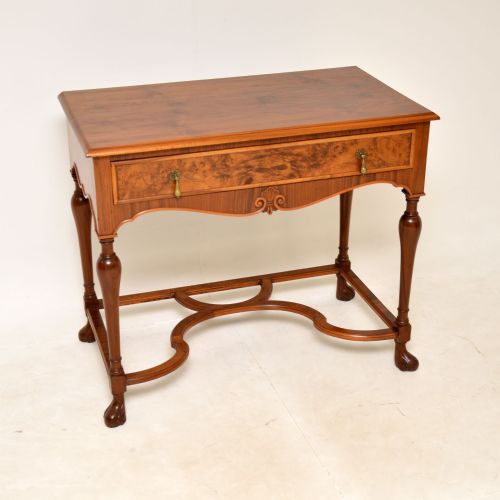
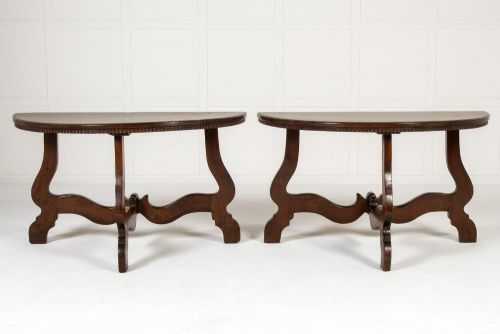
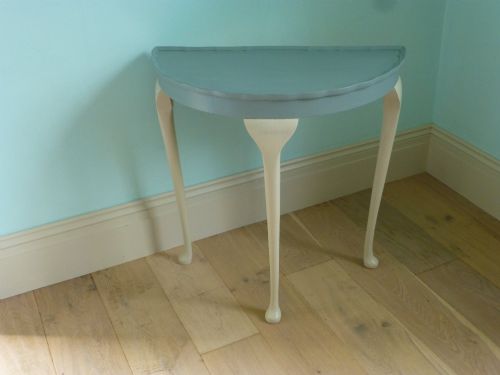
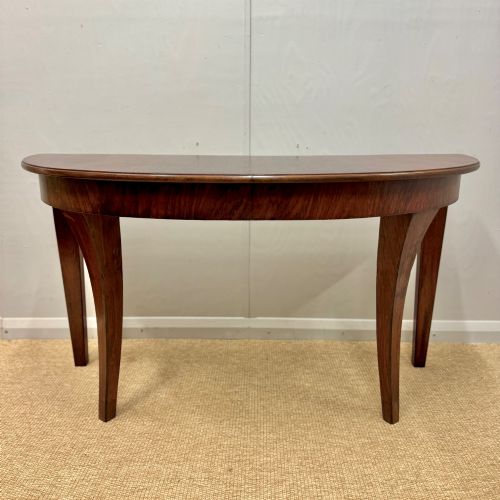
These curved leg console tables bring architectural elegance to a hallway, offering surface space paired with distinct legwork spanning multiple centuries.
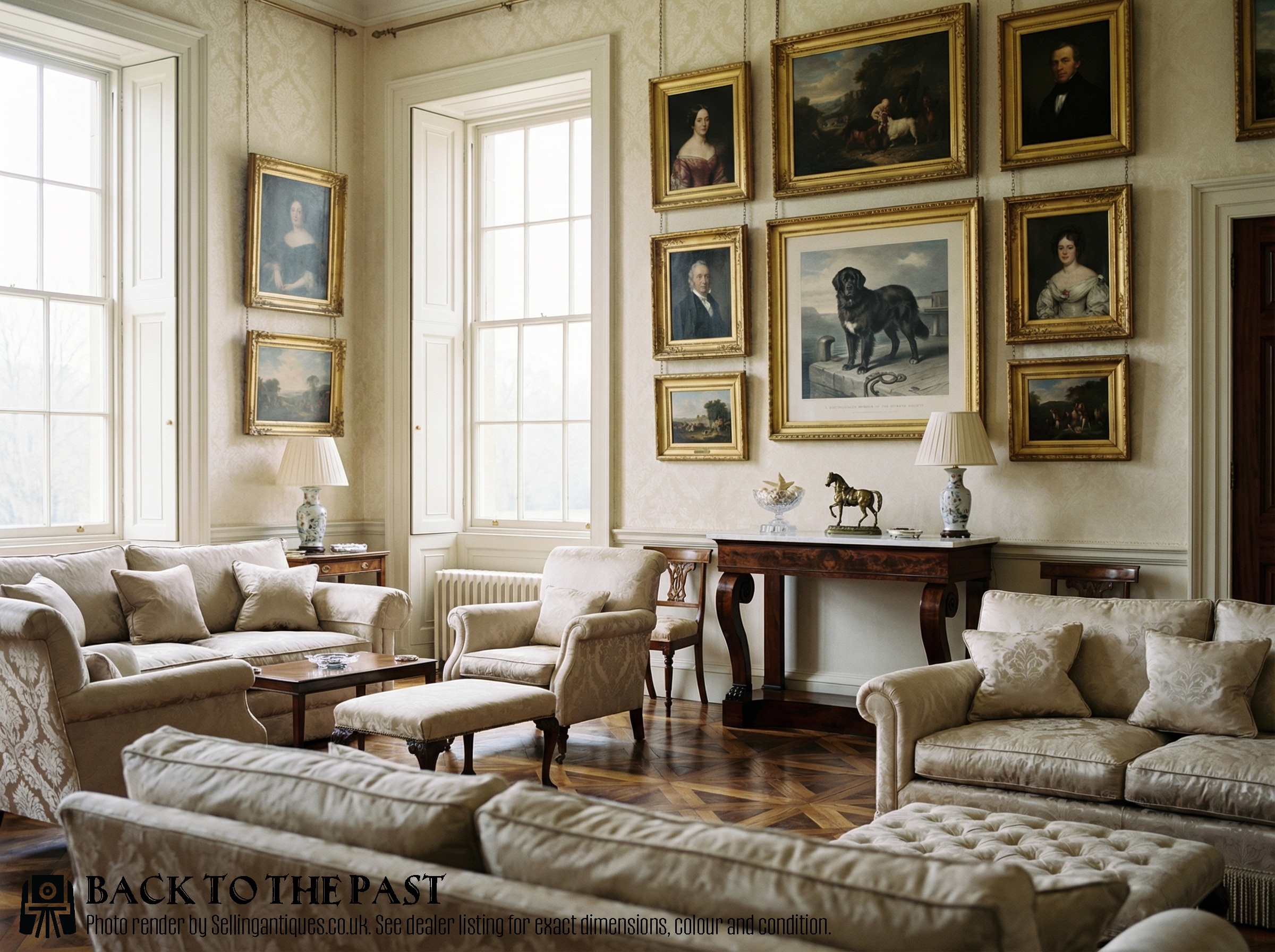
Understanding Curved Leg Console Tables
A curved leg console table provides a functional surface for display against a wall, appearing in forms such as demi lune tables alongside freestanding centre tables. These pieces emerge from periods including the eighteenth century, nineteenth century, nineteen-twenty, eighteen-eighty, and nineteen-hundred.
The selections on this page showcase diverse stylistic influences, ranging from Regency and French Empire to Art Deco, eighteenth-century Italian, and traditional Chinese design. Buyers frequently encounter walnut and mahogany constructions, occasionally accented by marble tops or brass details.
Makers such as Hille contribute to the Art Deco selection, while other entries represent uncredited cabinetmaking traditions from Italy, China, and Britain. The overarching unifying element remains the characteristic curved leg supporting each table.

Construction and Materials
Carpenters utilised primary hardwoods such as walnut, mahogany, elm, and general hardwoods to build these tables, often applying veneer and burr walnut for decorative grain patterns. Selected pieces incorporate contrasting brass elements and fitted marble surfaces.
Construction techniques evolved across the periods represented, from eighteenth-century Italian joinery methods to nineteen-twenty Art Deco manufacturing processes by firms like Hille. Cabinetmakers shaped solid timber and applied figured veneers to achieve both structural stability and decorative appeal.
Retail Price Guide 2026
Typical UK retail prices for curved leg console table, calculated from the Sellingantiques database of over a million retail prices indexed since 2003. This retail price guide relies exclusively on Sellingantiques data; no external sources or auction records are used, so the figures do not describe the wider market.
Period styles span the eighteenth century, Regency, French Empire, Art Deco, and Chinese traditional design.
Distinctions in Quality
Quality separates standard production items from exceptional works through the selection of figured timber, burr walnut veneers, and the sophistication of the carved or formed curved legs. Superior examples display meticulous attention to grain alignment and timber selection across the entire surface.
The inclusion of premium secondary materials, such as heavy marble tops and quality brass mounts, elevates the standing of an individual console table. Maker attribution, as seen with works by Hille, further distinguishes particular pieces within the broader range.

Hille
The Curved Leg Console Table Glossary
- Console table
- A table designed to stand against a wall, traditionally fixed with brackets or supported by front legs.
- Centre table
- A freestanding table intended to be viewed from all sides rather than placed strictly against a wall.
- Demi lune
- A half-moon shape characteristic of certain console tables designed to fit flush against flat walls.
- Burr walnut
- Timber taken from a walnut tree outgrowth, prized for its swirling, highly figured grain pattern.
- Veneer
- A thin layer of superior wood applied over a base of cheaper hardwood to enhance the visual appearance.
Frequently Asked Questions
Where should I place a curved leg console table?
These tables find a natural home in hallways, entryways, or living rooms where wall space allows a shallow surface for display.
Freestanding centre tables require placement away from walls to make full use of their design from every angle.
How do I identify an Art Deco console table?
Art Deco pieces from the nineteen-twenties often feature streamlined geometries combined with luxurious materials like burr walnut.
Makers such as Hille defined this period through distinctive modernist interpretations of classic furniture forms.
What is a demi lune table?
A demi lune table possesses a semicircular top and flat back, allowing it to sit neatly against a wall.
This specific form appears frequently among eighteenth-century Italian and Chinese oriental listings on this page.
How do I care for walnut and mahogany surfaces?
Maintain timber surfaces by avoiding direct sunlight and excessive moisture to protect the polished finish and underlying veneers.
Regular dusting with a soft cloth preserves the natural lustre of walnut, mahogany, and elm without chemical buildup.