

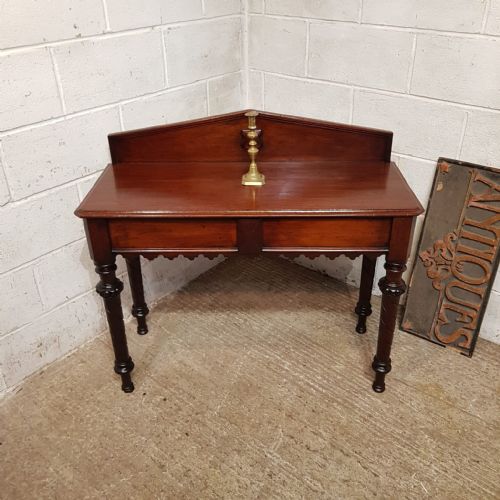
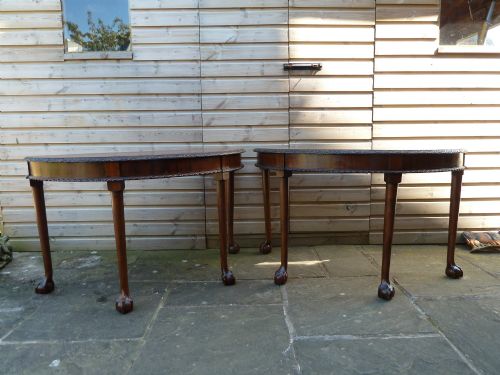


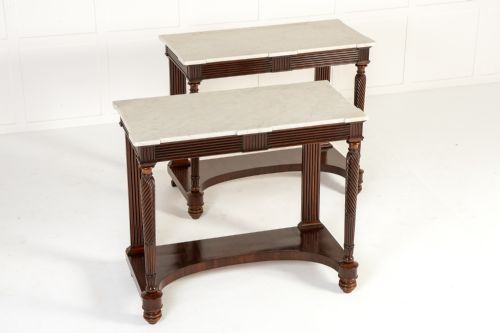


Mahogany Entryway Table
A mahogany entryway table brings warmth and proportion to a hall, offering a disciplined surface for daily post and keys.
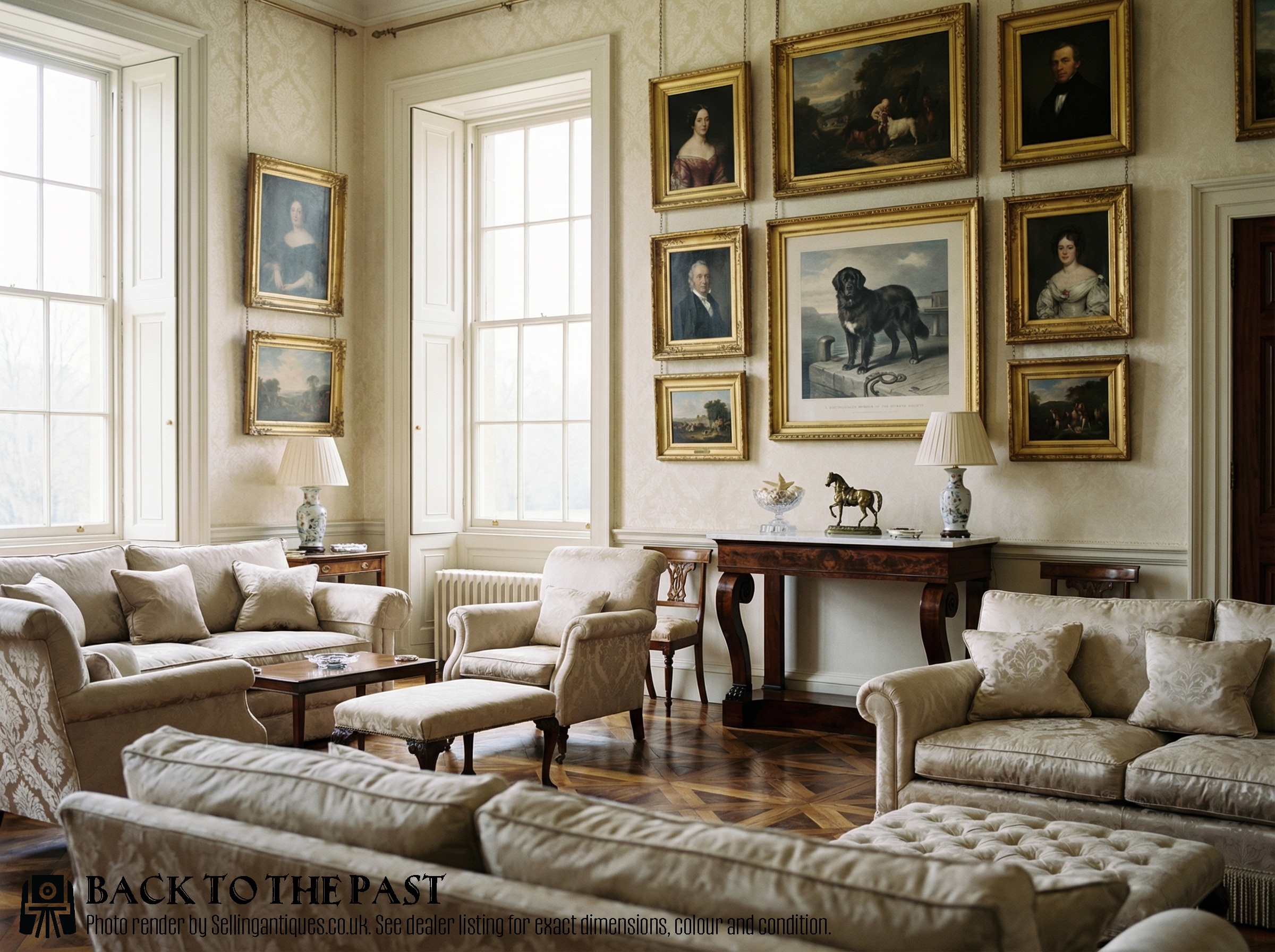
What a mahogany entryway table is
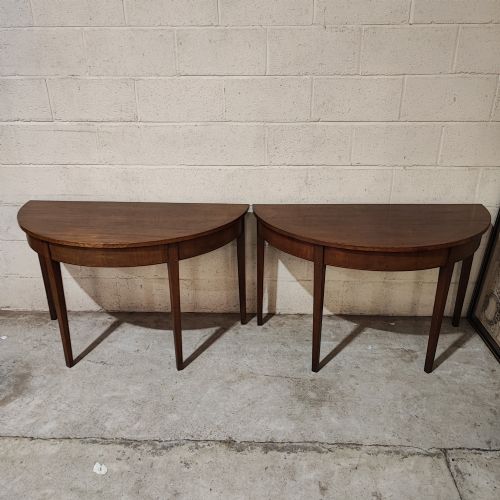
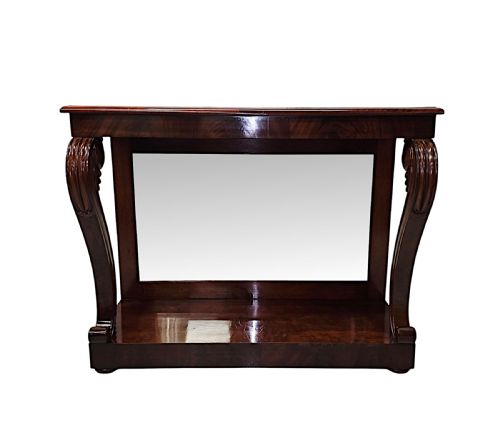
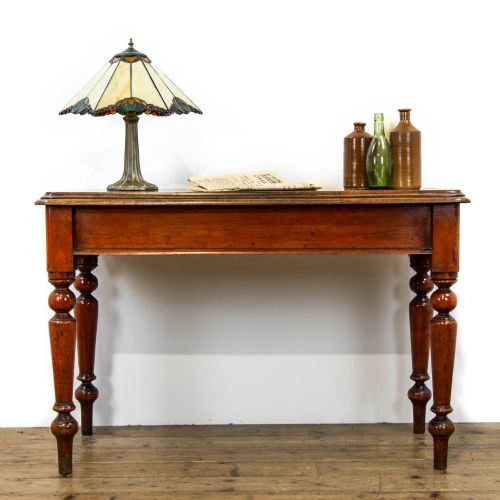
A mahogany entryway table takes the form of a console table or hall table designed to stand flat against a passage wall. These pieces emerge from the nineteenth century, the Victorian era, and the Regency, William IV, George III, and Chippendale Revival styles.
The versions met on this page appear primarily as nineteenth century pieces, alongside Victorian examples and specific George III style interpretations. Makers of the period engineered them specifically for narrow spaces, balancing shallow depths with substantial presence.
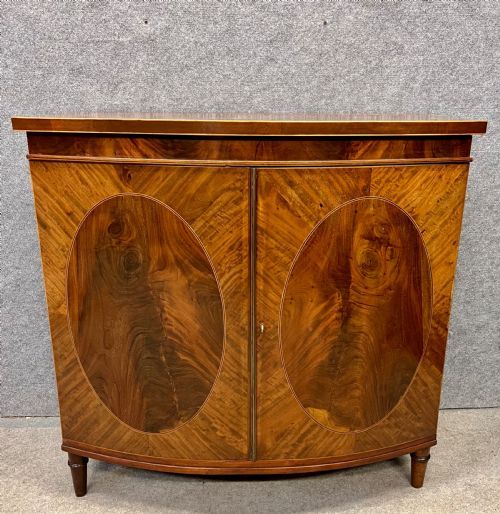
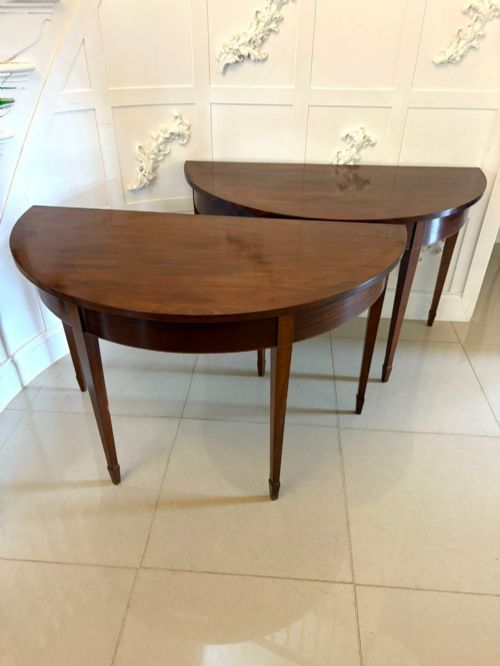
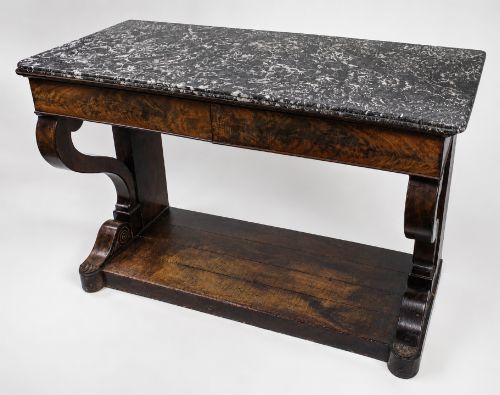
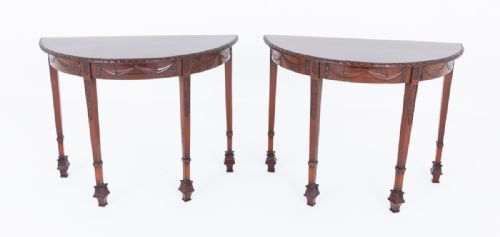
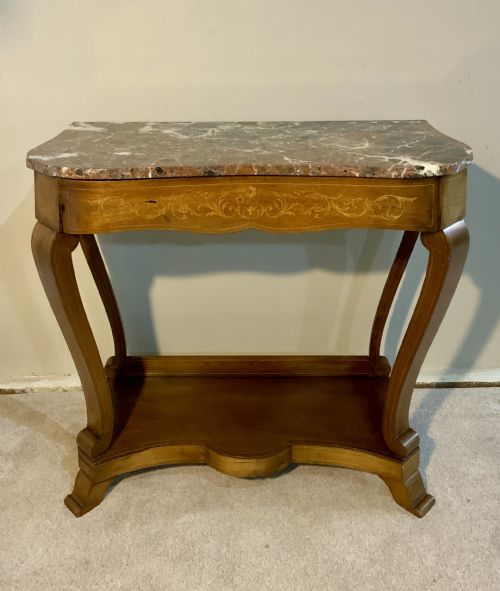
The selection encompasses crossbanded and inlaid hall tables as well as console tables featuring marble tops and brass detailing. Buyers encounter matching pairs from the late nineteenth century alongside singular items bearing earlier stylistic markers.
How they were made
Cabinetmakers constructed these tables using solid timber and finely figured veneer applied over secondary woods. Workshops incorporated mahogany as the primary structural and visual medium, sometimes enhancing surfaces with satinwood for contrast.
Detailing relied on precision woodworking techniques, including crossbanding and inlay work to define borders and panels. Additional elements like marble inserts and brass mounts required specialist fitting by contemporary artisans.
Retail Price Guide 2026
Typical UK retail prices for mahogany entryway table, calculated from the Sellingantiques database of over a million retail prices indexed since 2003. This retail price guide relies exclusively on Sellingantiques data; no external sources or auction records are used, so the figures do not describe the wider market.
A pair of late nineteenth century tables waits patiently to double the symmetry of your hallway.
What varies in quality
The distinction between standard examples and superior pieces rests in the selection of the timber and the crispness of the joinery. Finer tables display exceptional grain patterns in the veneer and precise execution of crossbanding.
Proportion and decorative restraint set the best work apart from heavier commercial output. Superior items integrate brass elements and marble tops with structural harmony rather than relying on heavy ornament.
The Mahogany Entryway Table Glossary
- Console table
- A table designed to be fixed against a wall, frequently supported by brackets or front legs. These items suit hallways and reception rooms where floor space is at a premium.
- Crossbanding
- A strip of veneer run perpendicularly to the grain of the surrounding surface, framing the top. This technique creates a neat border that accentuates the central panel.
- Satinwood
- A durable, lustrous wood from tropical trees used for contrasting inlay and stringing. Its pale yellow colour provides a sharp visual boundary against dark mahogany.
Frequently Asked Questions
Where should a mahogany entryway table go?
These tables belong in hallways, corridors, and entrance spaces where a shallow footprint allows easy passage.
Their slim proportions ensure they sit flush against walls while offering a practical surface for daily items.
How do I care for a mahogany surface?
Maintain the finish by dusting with a dry cloth and avoiding placement near direct heat sources or strong sunlight.
Applying occasional wax preserves the moisture and deep colour of the timber without building up heavy residues.
What is the difference between a console and a hall table?
Console tables traditionally relied on wall fixings or front legs for support, whereas hall tables stood independently on four legs.
Both forms served the same welcoming function in domestic entryways throughout the nineteenth century.
How do I identify a George III style table?
George III style pieces display classical proportions, restrained carving, and linear inlay work typical of the late eighteenth century.
Revival versions produced during the Victorian period adopted these balanced aesthetics while using contemporary construction methods.