


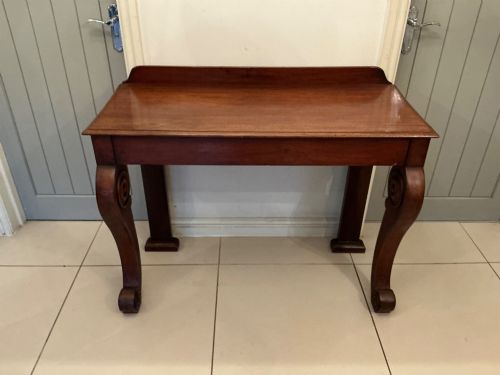
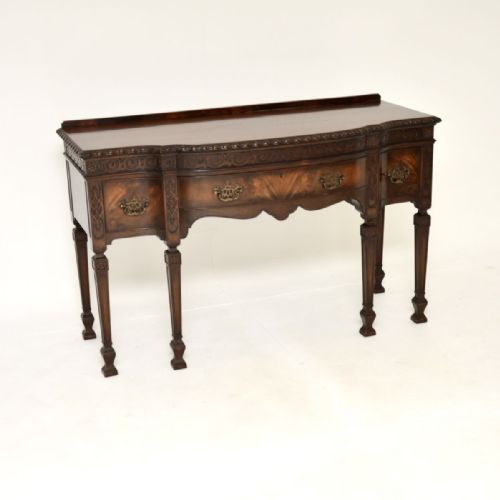
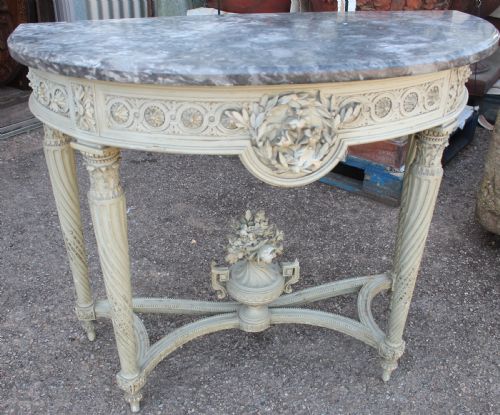
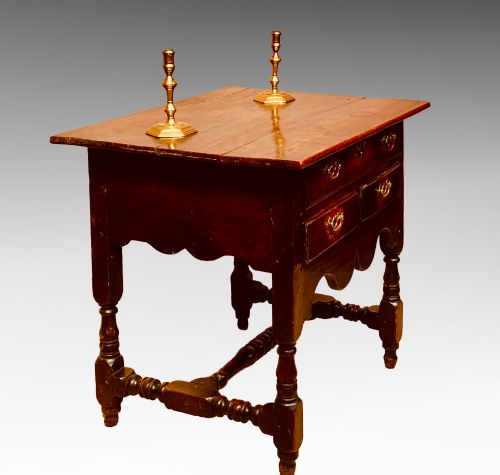
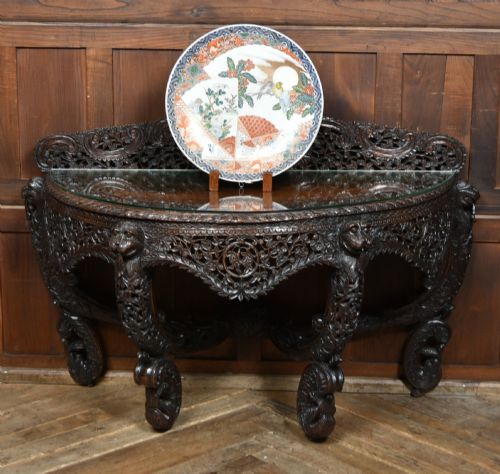
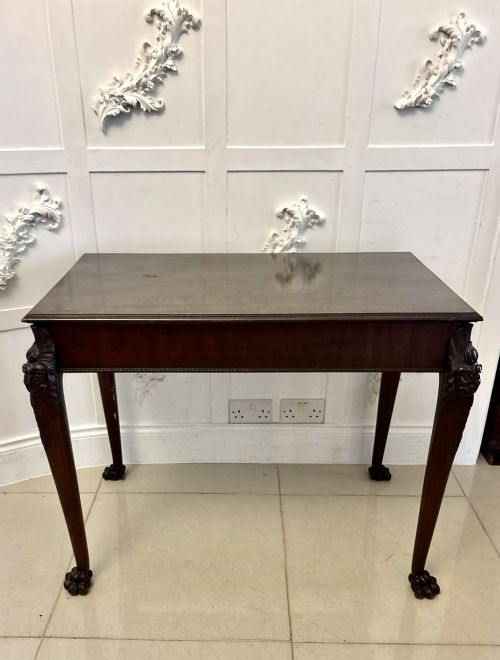
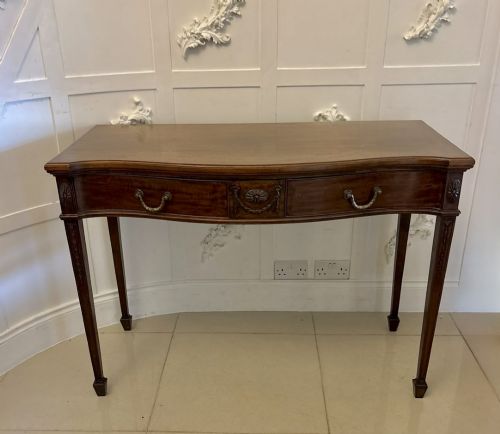
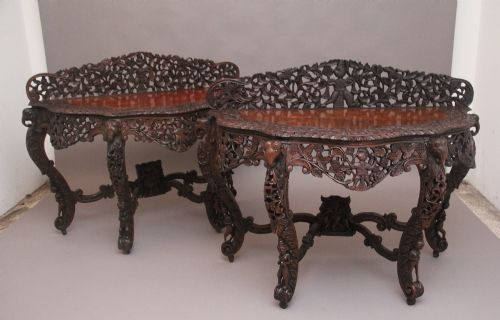

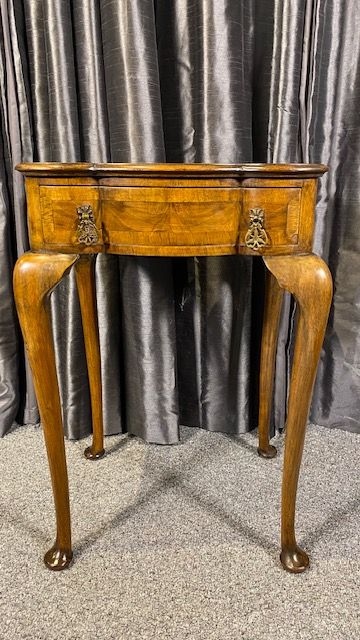
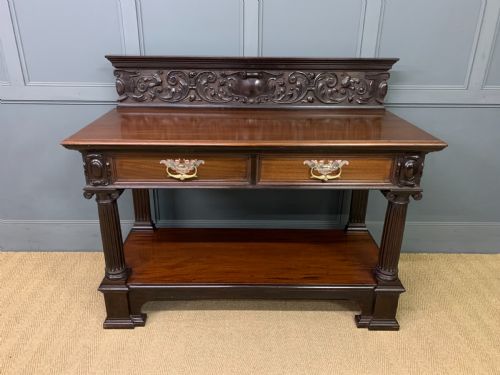
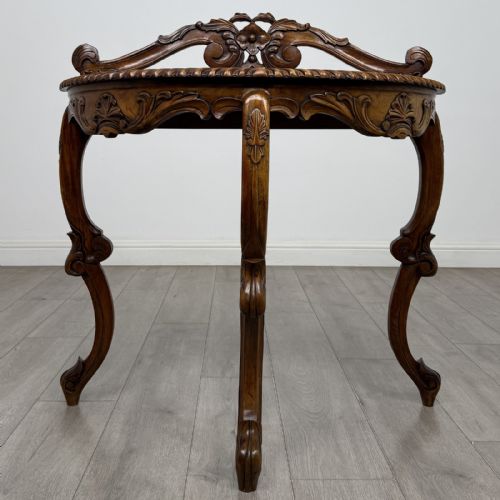
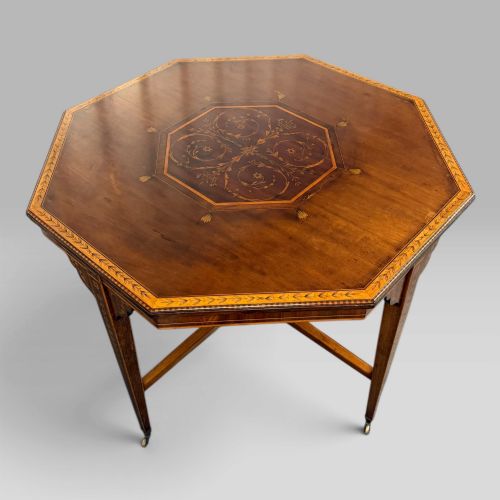
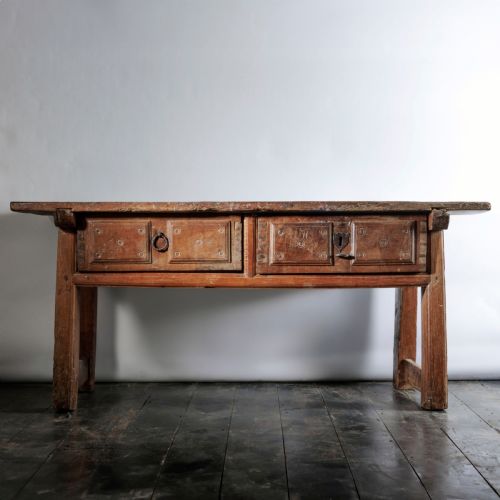

Carved Wooden Hall Table
A carved wooden hall table brings character to an entrance, serving as a practical surface crafted from solid timbers across several centuries.
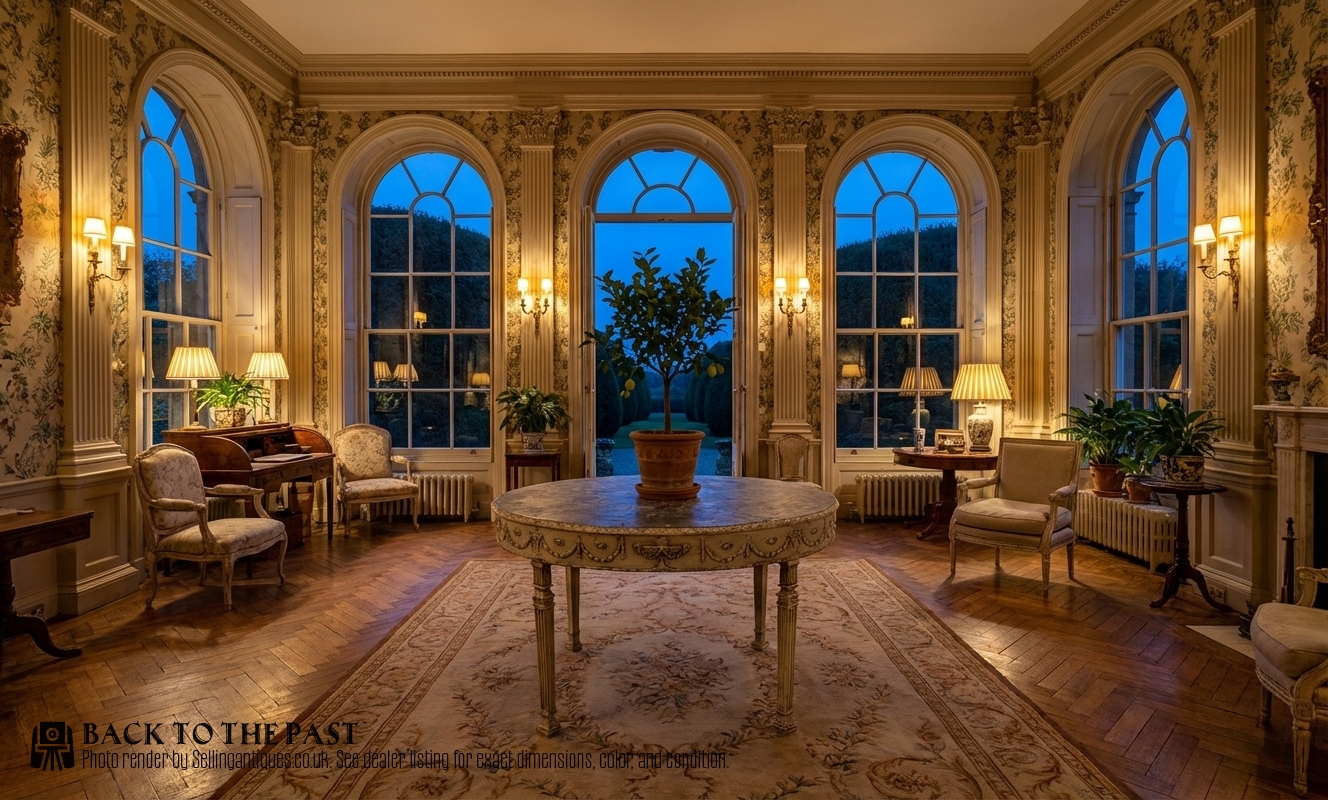
Carved Wooden Hall Table
A carved wooden hall table meets visitors at the entrance, offering a surface for correspondence or keys while establishing the character of an interior. When searching this phrase, buyers encounter forms that span compact side pieces and console tables designed to sit flush against a wall.
The selection on this page draws heavily from Victorian and Edwardian periods, alongside Georgian and nineteenth-century examples. Oak and mahogany dominate the selection, supported by walnut, burr walnut, and occasional painted finishes.
Makers and workshops adapted these pieces into various forms, including console tables, side tables, and occasional tables, often incorporating drawers or carved details specific to revival styles such as Jacobean and Queen Anne.
Materials and construction methods
Cabinet makers utilised dense hardwoods such as oak, mahogany, walnut, and elm to ensure structural stability in narrow hallway environments. These timbers were selected for their grain patterns and durability, providing a solid foundation for intricate hand-carved ornamentation.
Surface decoration relied on traditional joinery techniques, geometric mouldings, and applied carvings executed directly into the solid wood. Brass fittings and occasional marble inserts appeared on specific console and washstand variants to add functional contrast.
Finishes developed through careful polishing and waxing, preserving the natural patina of the wood over decades of domestic use.
Carved Wooden Hall Table Retail Price Guide 2026
Typical asking prices for carved wooden hall table among the pieces listed under this phrase on Sellingantiques today, from the lower quarter to the upper quarter. They describe what is for sale here now, not the wider market.
Some tables manage to hide entire rooms of secrets within surprisingly compact frames.
Assessing quality in construction and carving
Quality rests in the crispness of the hand-carving and the selection of timber, where burr walnut veneers or dense figured oak distinguish finer commissions from simpler utility items. Superior examples display thoughtful proportion, tight joinery, and symmetry in decorative elements.
The integrity of the original surface patina and the retention of period brass hardware influence the standing of a piece. Finer items demonstrate harmonious integration between the structural carcass and the decorative mouldings applied by the cabinet maker.
James Mein of Kelso·Walker and Hall
The Carved Wooden Hall Table Glossary
- Console table
- A table designed to stand against a wall, frequently secured with brackets or resting on front legs.
- Lowboy
- A small seventeenth or eighteenth-century table with drawers, typically raised on tall legs.
- Patina
- The surface sheen and coloration developed through age, handling, and regular polishing of wood.
- Refractory style
- A heavy, long dining or serving table design inspired by early monastic dining boards.
- Burl walnut
- Timber taken from the root growth of a walnut tree, yielding intricate, swirling grain patterns.
Carved Wooden Hall Table: Frequently Asked Questions
Where should I place a carved wooden hall table?
Position the piece in an entrance hall or narrow corridor where its profile allows passage while offering a surface for post or a small lamp. Console variants sit flat against the wall, making them suitable for restricted spaces.
Ensure the depth of the table does not obstruct doorways or movement between rooms, allowing the woodwork to remain visible as a focal point.
How do I care for antique wood surfaces?
Maintain the timber by applying a quality beeswax polish periodically and buffing with a soft cloth to preserve the natural sheen. Keep the table away from direct heat sources and strong sunlight to prevent the wood from drying out.
Avoid using modern liquid cleaners or silicone sprays, as these can penetrate the grain and alter the historical finish of the piece.
How can I identify the period of a table?
Examine the construction methods, tool marks on the underside, and the specific timber used, as Georgian pieces often feature different proportions compared to Victorian or Edwardian revivals. Styles such as Jacobean revival or Art Nouveau provide strong clues regarding the era of manufacture.
Look at the hardware, such as drawer pulls and hinges, which frequently reflect the prevailing taste and manufacturing technology of the decade in which the table was built.
What is the difference between a console and a side table?
A console table is traditionally designed to be placed directly against a wall, sometimes relying on wall fixings or featuring flat backs, whereas a side table is freestanding with four fully finished legs. Console tables frequently serve decorative functions in entryways.
Side tables offer greater versatility for repositioning within a room because they do not require wall attachment for stability.