


French Empire Console Table
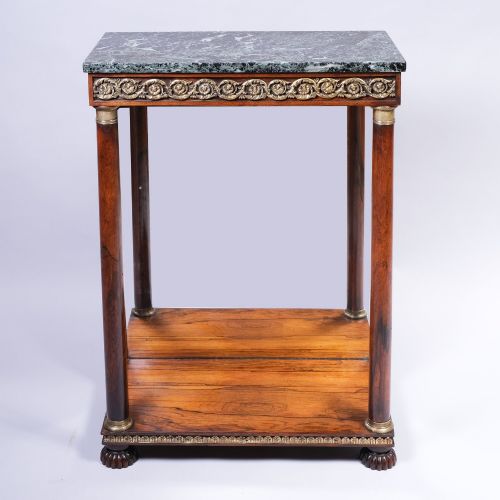
A french empire console table brings architectural presence and classical weight to an interior through substantial timbers and polished stone.

French Empire Console Table
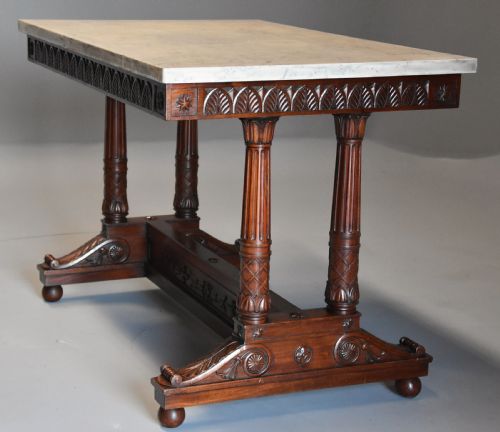
A french empire console table is a substantial wall-mounting or freestanding furniture piece rooted in neoclassical design. These tables frequently present rectangular or demi-lune forms designed to anchor a formal room.
The selections available here range from early pieces created during the 1800s to later revival interpretations from the 1900s. Alongside standard console tables, buyers encounter related forms including centre tables, side tables, and sofa tables.
Originating largely from French workshops, these items incorporate specific regional proportions and decorative idioms. The primary variants on this page combine timber carcasses with heavy stone surfaces.
How They Were Made
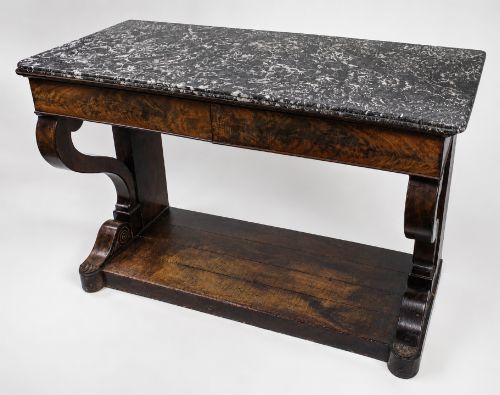
Cabinetmakers constructed the main carcase from dense hardwoods such as mahogany, walnut, and rosewood, often applying flame or figured veneers to the external surfaces. These timber structures provide the physical stability required to support heavy upper elements.
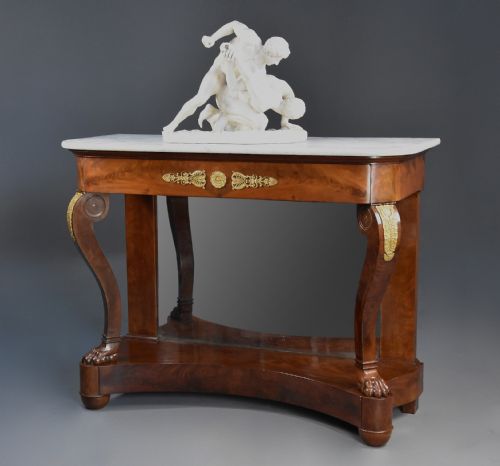
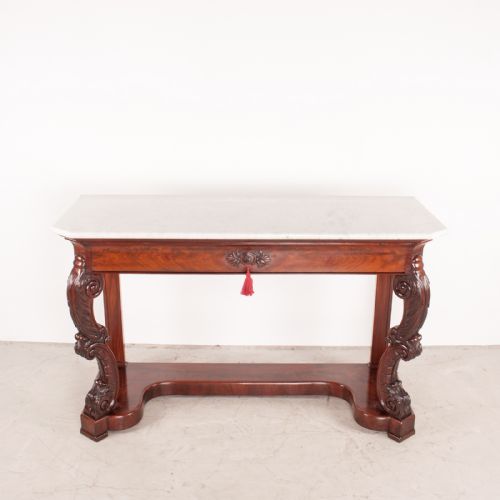
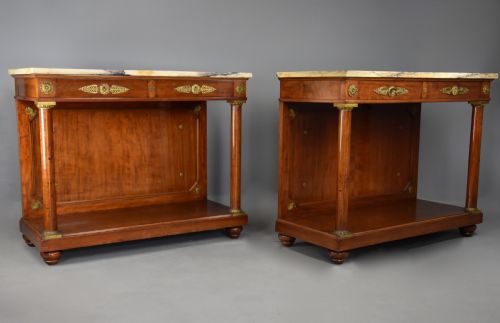
Stone tops, particularly white carrara and fossil marble, sit directly upon the timber frames to create a durable, cool surface. Cast or gilt bronze and ormolu mounts are applied as architectural accents, securing to the wood with threaded fixings.
French Empire Console Table Retail Price Guide 2026
Typical asking prices for french empire console table among the pieces listed under this phrase on Sellingantiques today, from the lower quarter to the upper quarter. They describe what is for sale here now, not the wider market.
Several tables feature carved wooden swans and fierce satyrs keeping silent watch beneath the heavy stone.
What Varies in Quality
The refinement of the cast bronze or ormolu mounts sets superior examples apart from simpler pieces. Sharply chased detailing and heavy gilding indicate a higher standard of workshop production.
The choice and matching of timber veneers also dictate the rank of a piece. Figured flame mahogany or burr birch arranged with symmetrical grain patterns demonstrates greater ambition from the maker.
Structural integrity relies upon the original connection between the heavy marble top and the wooden base. Pieces retaining their original heavy stone without later alteration command closer attention.
Krieger Paris·JACOB·Jean-Joseph Chapuis
The French Empire Console Table Glossary
- Ormolu
- Gilded bronze used for decorative mounts on furniture. This technique involves applying a finely ground gold-mercury amalgam to a bronze base before heating.
- Console table
- A table designed to stand against a wall, frequently supported by front legs or architectural brackets. These pieces often feature flat backs to fit flush against vertical surfaces.
- Flame mahogany
- A veneer cut from the fork of a mahogany tree where the grain twists. This pattern creates a distinctive flickering flame effect across large surfaces.
- Gueridon
- A small French table supported by a central column or multiple legs. These versatile stands appear in various revival and neoclassical periods.
- Carrara marble
- A type of white or blue-grey stone quarried in Italy. It provides a classic, cool-toned surface for the tops of case pieces.
French Empire Console Table: Frequently Asked Questions
Where should I place a console table?
These tables find a natural home in entrance halls, living rooms, or dining spaces against a flat wall. They provide a strong visual anchor beneath large wall mirrors or paintings.
Because many examples feature finished backs or structural wall fixings, checking the intended placement helps determine whether a wall-anchored or freestanding version suits the room.
How do I care for the marble top?
Cleaning requires only a damp cloth and mild, non-acidic soap to preserve the polished surface. Avoid placing citrus or vinegar directly on the stone to prevent etching.
Applying a specialist stone wax periodically helps protect the marble from moisture and everyday staining while maintaining its subtle sheen.
Are these tables heavy?
The combination of dense hardwoods and thick stone slabs makes these pieces exceptionally heavy. Moving them usually requires two people to lift the marble separately from the timber base.
Securing taller or wall-mounted versions with appropriate fixings ensures stability within the room.
How can I tell original pieces from revivals?
Construction methods, timber shrinkage, and wear patterns inside the carcass help indicate the period of manufacture. Nineteenth-century pieces often display hand-cut joinery and traditional secondary timbers.
Revival pieces from later decades may utilise machine-cut elements or different internal lining woods while copying earlier neoclassical proportions.