




French Empire Pier Table
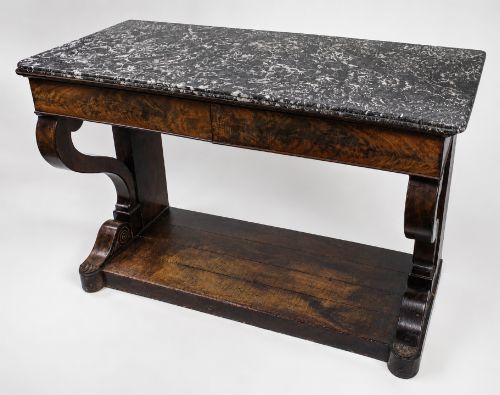
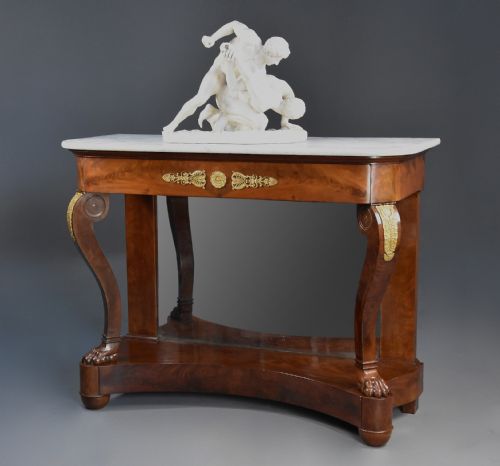
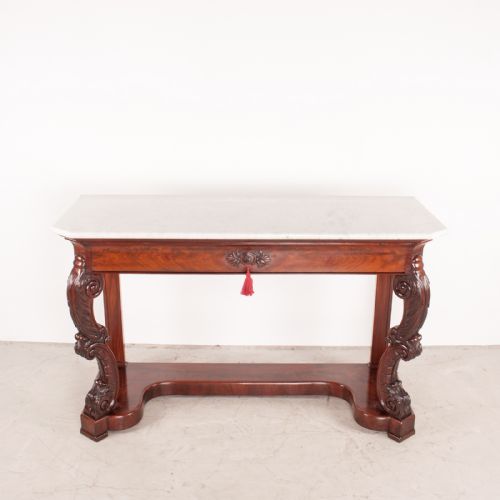
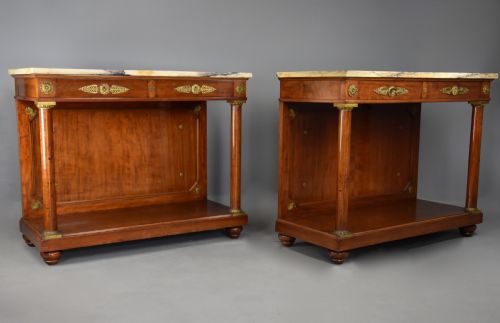
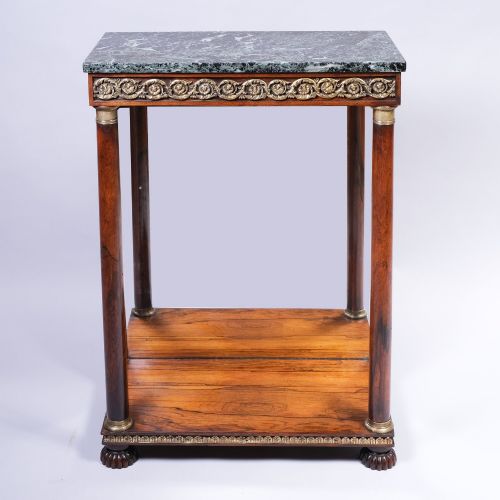
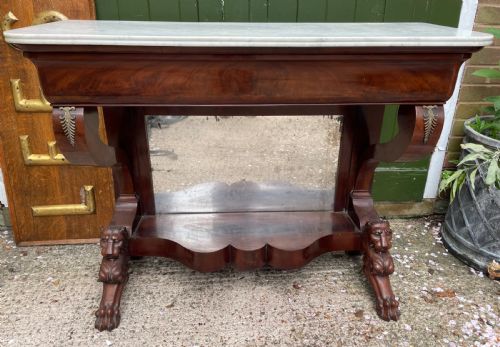
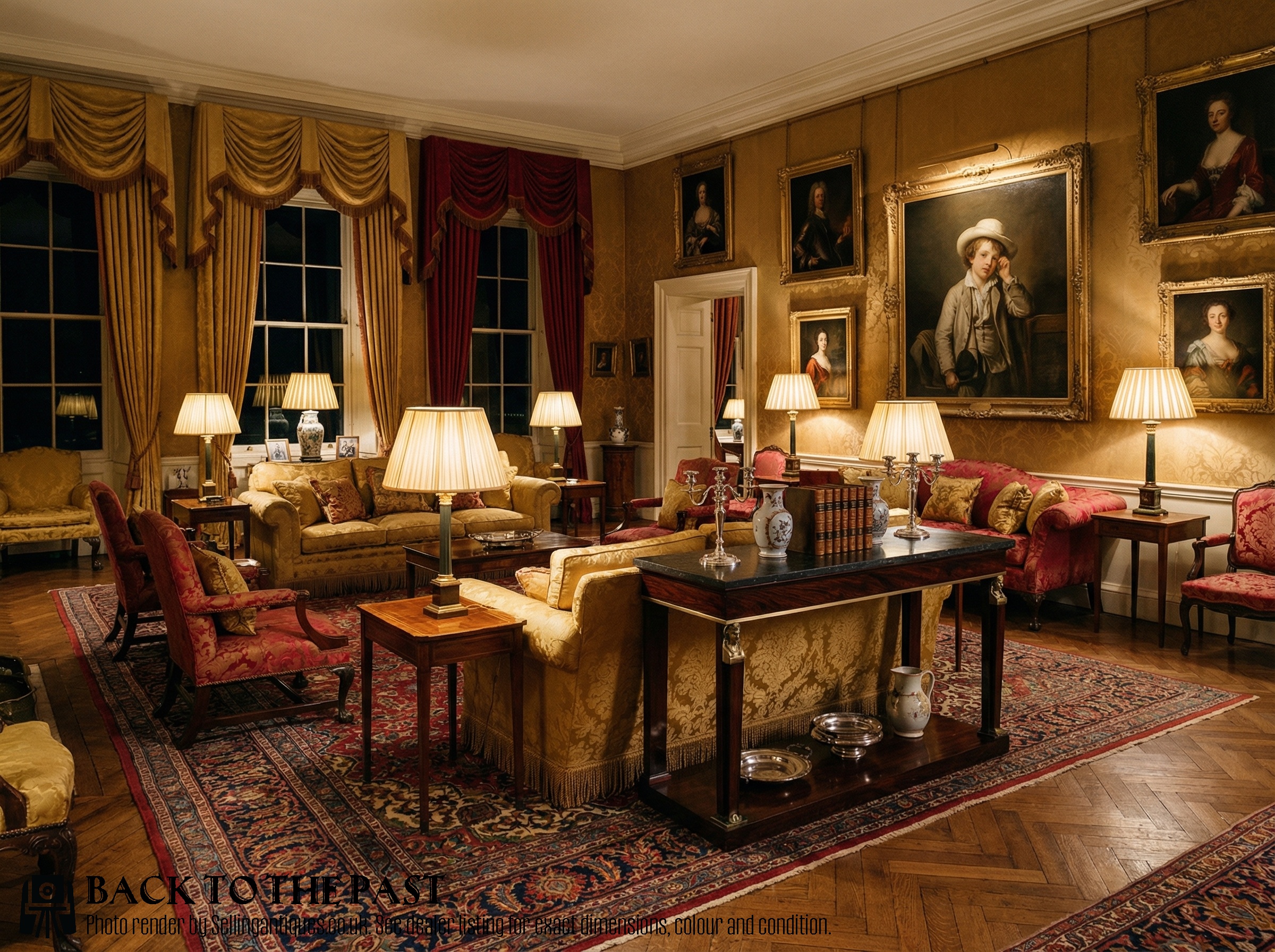
These French empire pier table pieces bring architectural dignity and classical presence to a room, driven by rich mahogany, flame mahogany, rosewood, satinwood, and burr walnut.
French empire pier table forms and periods
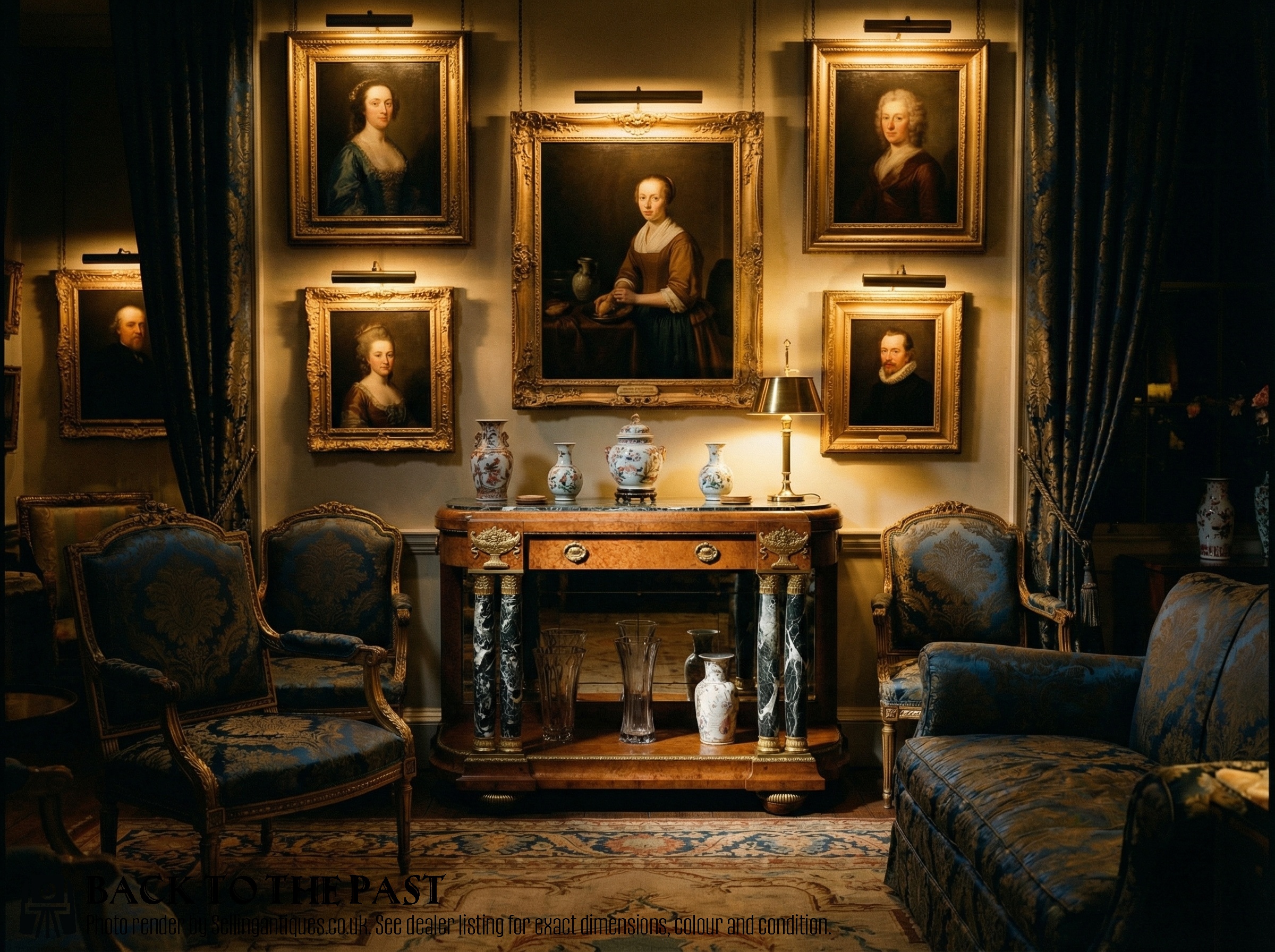
A french empire pier table search reveals console tables and serving tables designed to sit flat against a wall, frequently beneath a mirror or window pier. The examples seen here span the nineteenth century, including pieces dated to eighteen hundred, nineteen ten, and eighteen ninety, alongside Charles X Restauration period items.
Most pieces date to the nineteenth century, though revival interpretations also appear in walnut and mahogany. Forms range from single console tables to large pairs and pier cabinets, uniting architectural presence with domestic utility.
Materials and construction
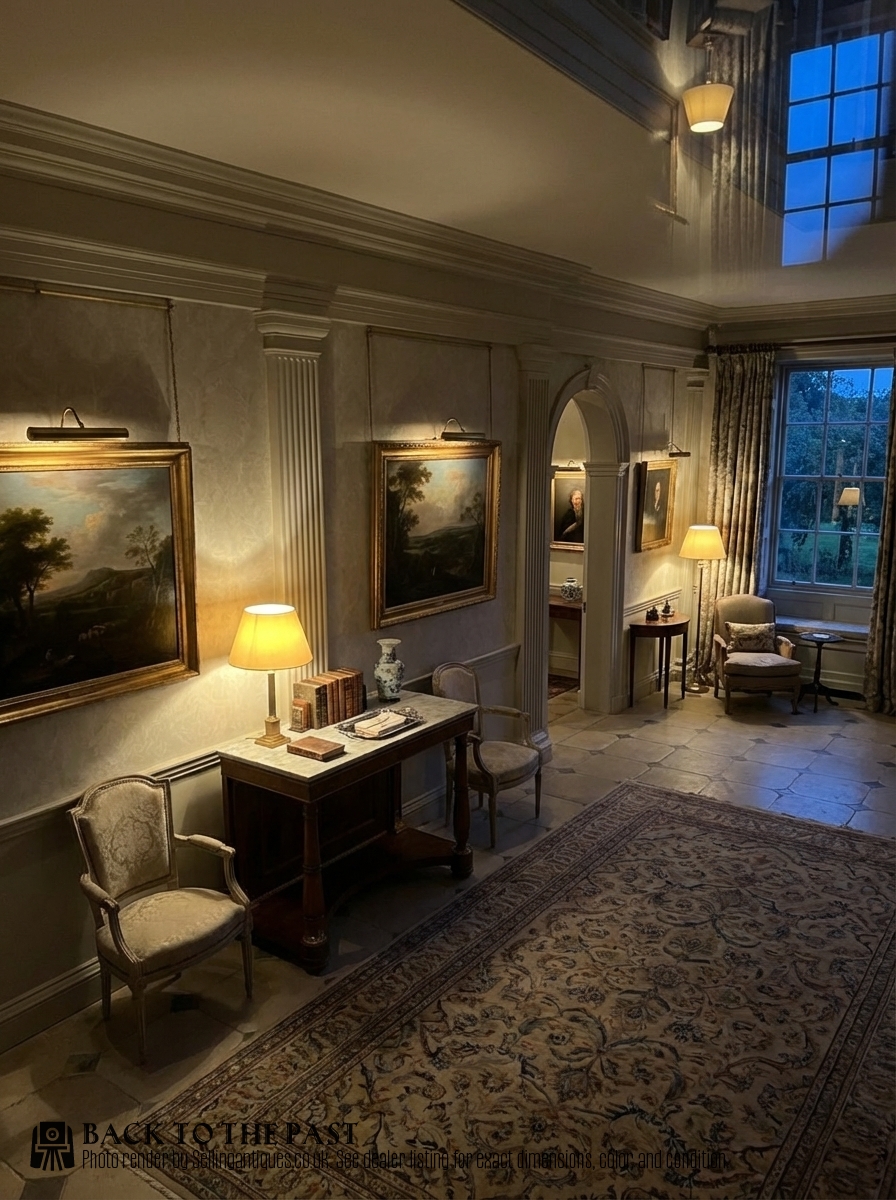
Construction relies on timber foundations of mahogany, flame mahogany, rosewood, satinwood, and burr walnut, surfaced with heavy marble tops in carrara and other varieties. Metal enrichment is central to the aesthetic, employing ormolu, gilt bronze, brass, and bronze mounts.
Glass elements frequently complement the woodwork and metalwork. The combination of dense tropical hardwoods and polished stone gives each piece substantial weight and structural presence.
Retail Price Guide 2026
Typical UK retail prices for french empire pier table, calculated from the Sellingantiques database of over a million retail prices indexed since 2003. This retail price guide relies exclusively on Sellingantiques data; no external sources or auction records are used, so the figures do not describe the wider market.
Some pier tables double as pier cabinets, offering hidden storage behind closed doors for secrets best kept away from the drawing room.
Judging quality in empire console tables
Quality rests in the selection of timbers, from simple mahogany to intensely figured flame mahogany, satinwood, and burr walnut. Finer execution shows in the crispness of ormolu, gilt bronze, brass, and bronze mounts rather than plain cast replacements.
The integration of heavy marble tops and the handling of classical proportions distinguish superior examples from simpler provincial work. Precision in the joinery of rosewood and mahogany frames dictates the long-term stability of the piece.
The French Empire Pier Table Glossary
- Pier table
- A table designed to stand against a wall between two architectural openings, such as windows or doors. They frequently feature marble tops and heavy classical mounts.
- Ormolu
- Gilt bronze ornamentation applied to furniture mounts and decorative details. The technique involves applying a mercury and gold amalgam to bronze before heating.
- Charles X
- A French design period spanning the eighteen twenties, bridging the full Empire style and later nineteenth century revivals. It often employs lighter timbers like satinwood and restrained classical lines.
- Flame mahogany
- Mahogany timber cut to reveal a flamy, undulating grain pattern. It was highly prized for prominent veneered surfaces on high-status furniture.
- Console table
- A table supported by wall brackets or console legs rather than four independent vertical supports. They are built specifically to anchor against flat vertical surfaces.
Frequently Asked Questions
What is a french empire pier table?
A french empire pier table is a formal console designed to stand against a wall, typically featuring a marble top and classical wood veneers.
These pieces were built to anchor grand interiors, often positioned beneath wall mirrors.
How do I style one at home?
Place the table against a prominent wall in a hallway, drawing room, or dining space where its architectural form can be appreciated.
Keep styling minimal on top to let the flame mahogany, rosewood, and ormolu mounts remain the focus.
What woods were used?
Maker workshops utilised dense tropical hardwoods including mahogany, flame mahogany, rosewood, satinwood, and burr walnut.
These timbers provided stable foundations for high-gloss finishes and elaborate veneered layouts.
How to date these tables?
Dating relies on timber choice, mount quality, and structural characteristics associated with the nineteenth century.
Pieces range from around eighteen hundred through Charles X periods up to later nineteenth century revivals.