
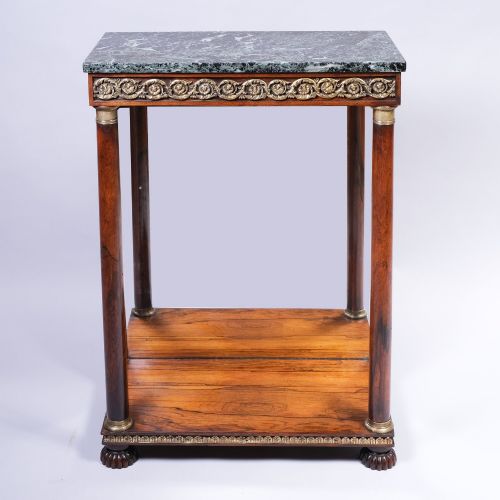
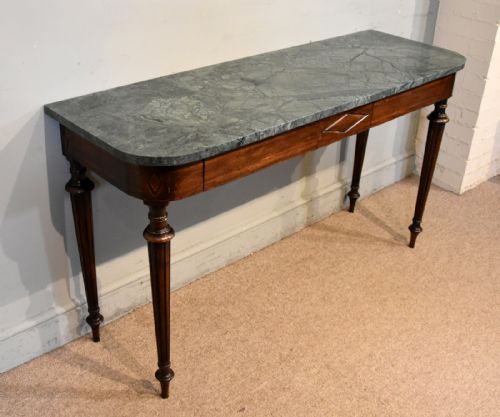
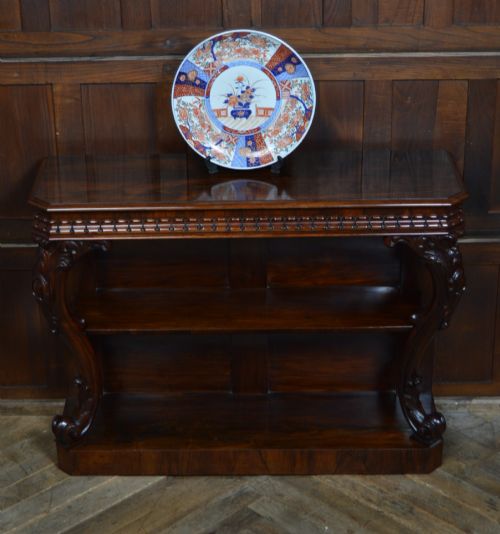
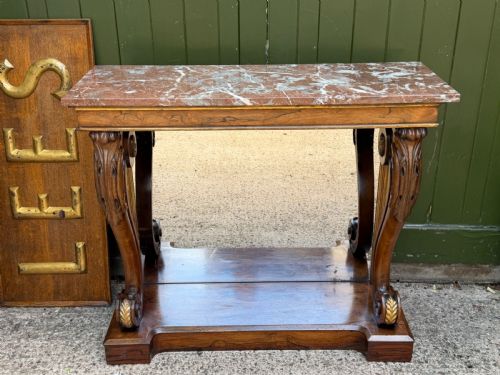
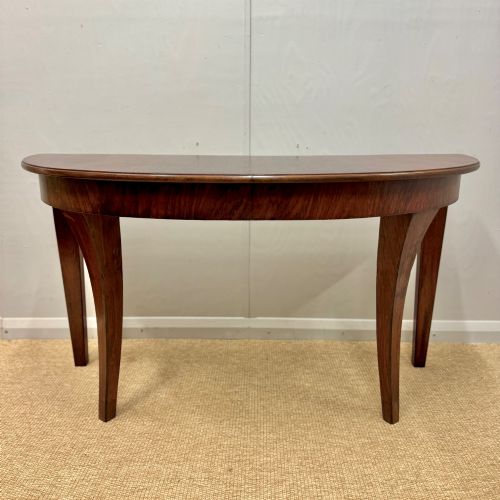


Rosewood Pier Table
These rosewood pier table designs bring architectural symmetry and dark timber warmth to a hall or drawing room.
What a rosewood pier table is
A rosewood pier table is a formal side table designed to stand flat against a wall, frequently positioned beneath a pier glass mirror. These pieces appear across the Regency, Victorian, and 19th-century periods, taking the form of console tables, hall tables, and occasional furniture.
The versions most commonly met on this page date from the 19th century and the Regency period, often featuring the rich figuring of rosewood timber combined with marble tops, gilt wood, or brass mounts. Many examples bridge the distinction between pier tables and console tables, sharing similar proportions and wall-anchoring forms.
How they were made
Maker workshops built these tables using solid and veneered rosewood, often applying marquetry inlay or geometric brass mounts to the timber surfaces. The primary structure supported heavy inset marble tops or folding timber surfaces designed for games and cards.
Makers integrated mirror glass into the rear frames of console and pier tables to reflect room light, sometimes pairing the dark rosewood with contrasting gilt wood or ormolu details.
Retail Price Guide 2026
Typical UK retail prices for rosewood pier table, calculated from the Sellingantiques database of over a million retail prices indexed since 2003. This retail price guide relies exclusively on Sellingantiques data; no external sources or auction records are used, so the figures do not describe the wider market.
The site records span the 19th century, incorporating Regency and Victorian examples built from rosewood, marble, brass, and gilt wood.
What varies in quality
Quality in these tables rests upon the selection of the rosewood timber, where rich figuring and balanced grain patterns distinguish finer examples from plain stock. The integration of materials such as inset marble, mirror glass, and cast brass or ormolu mounts demonstrates the ambition of the original workshop.
Proportion and structural detailing also separate the output, visible in concave legs, pierced stretchers, and the precision of marquetry inlay rather than surface finish alone.
Robert Strahan·Gillows Lancaster
The Rosewood Pier Table Glossary
- Pier table
- A formal table designed to stand flat against the wall between windows, usually placed beneath a pier glass mirror.
- Console table
- A table supported against a wall by decorative brackets or legs, closely related in form to the pier table.
- Ormolu
- Gilded bronze mounts applied to furniture woodwork for decorative contrast.
- Marquetry
- Inlaid patterns of wood veneer assembled to create decorative designs on furniture surfaces.
- Pierced stretcher
- An openwork wooden rail connecting the legs of a table for added stability and decoration.
Frequently Asked Questions
What is a rosewood pier table?
A rosewood pier table is a formal piece of 19th-century furniture built to stand flat against a wall, frequently beneath a mirror.
These tables utilise dense rosewood timber and often incorporate marble tops, brass mounts, or mirror glass backs.
Where were pier tables placed?
Pier tables were traditionally positioned against the wall between two windows, directly underneath a matching pier glass mirror.
This placement maximised the reflection of natural light into the room while providing a decorative surface for display.
How do I identify a Regency table?
Regency tables date from the early 19th century and often feature classical architectural motifs, brass mounts, or gilt wood details.
Makers from this period frequently combined dark rosewood with contrasting ormolu mounts and marble tops.
Did pier tables have other uses?
Some 19th-century examples combined the form of a pier table with folding tops intended for games and cards.
These versatile pieces served both as decorative side furniture and functional tables for evening entertainment.