

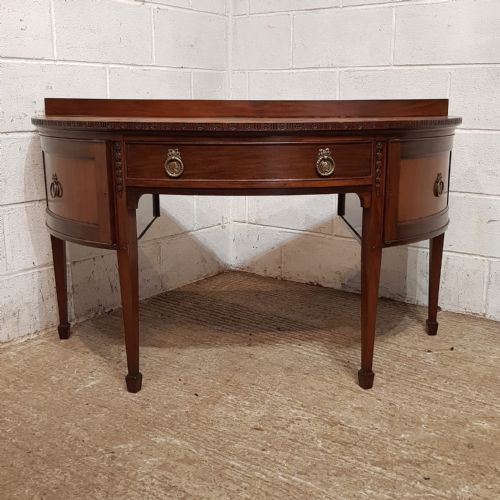
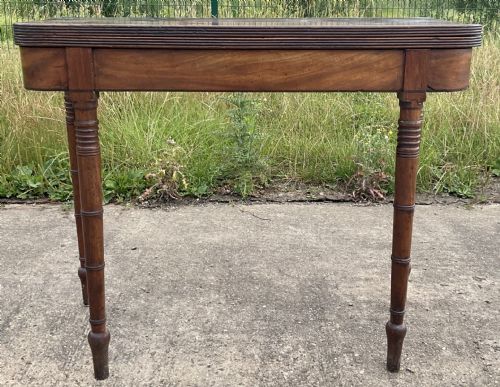

Demilune Side Table
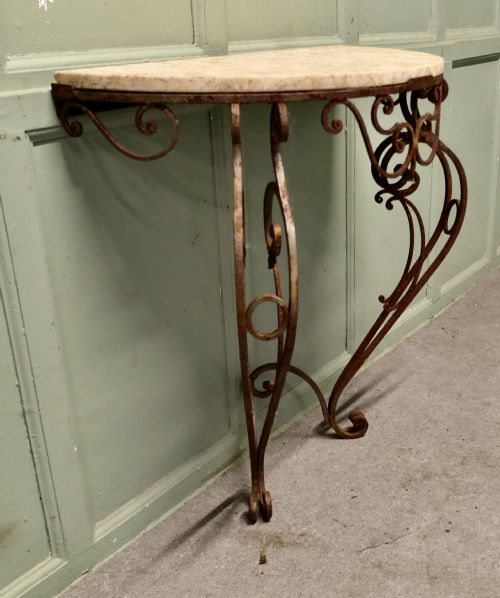
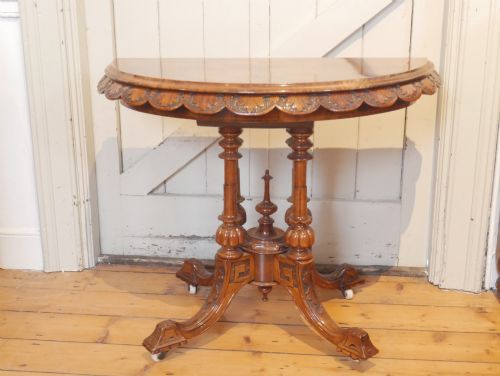
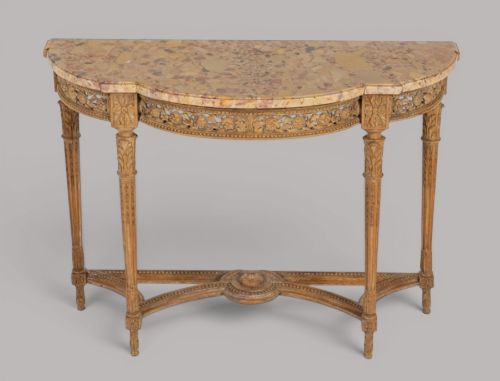
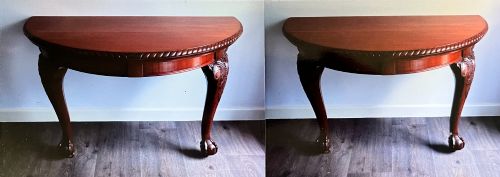
A demilune side table offers a distinct semicircular silhouette that fits flat against a wall, making it a clever choice for narrow spaces and hallways.
What they are
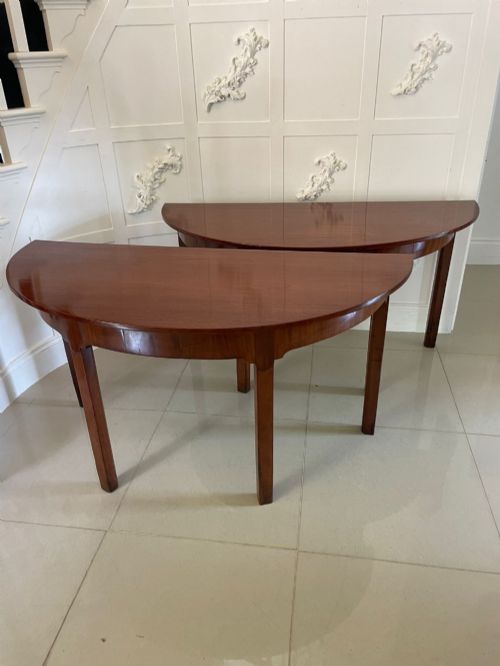
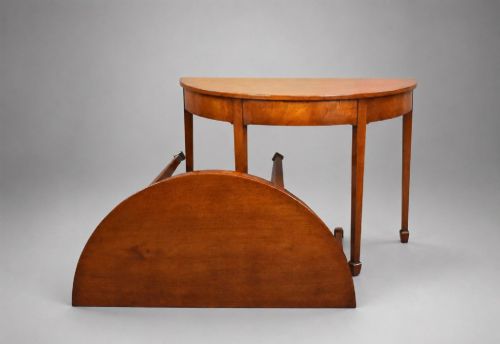
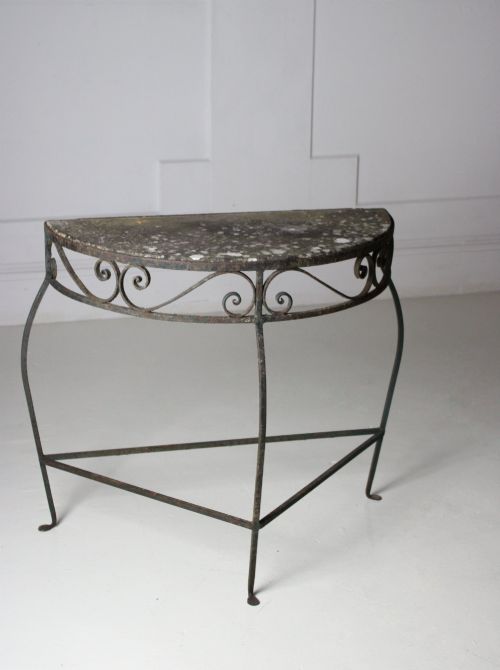
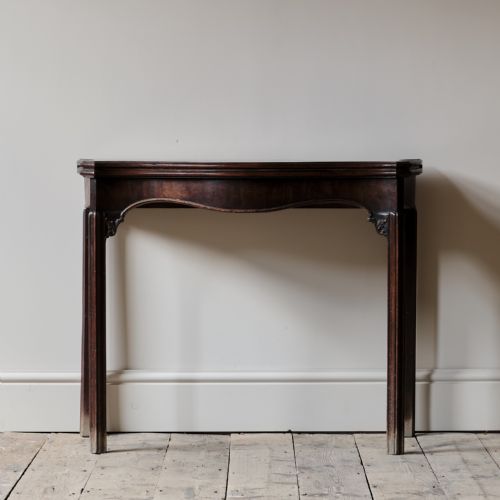
A demilune side table is defined by its flat back and curved front, taking up minimal depth while providing a useful surface. These pieces appear frequently as console tables, card tables, and hall servers.
The selection on this page spans several centuries, ranging from eighteenth-century Georgian examples to nineteenth-century Victorian and Edwardian iterations. Buyers will also encounter revival styles such as Chippendale, Queen Anne, and Adam, alongside occasional games and tea tables with folding tops.
Woods such as mahogany, walnut, rosewood, oak, and satinwood dominate the offerings, occasionally enhanced by veneer, burr walnut, or brass mounts. Origin points across the inventory include English, Irish, French, Dutch, and Chinese workshops.
How they were made
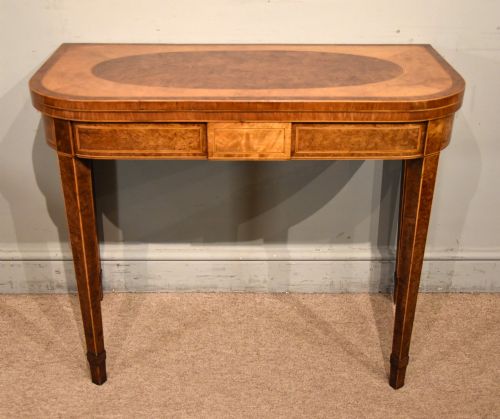
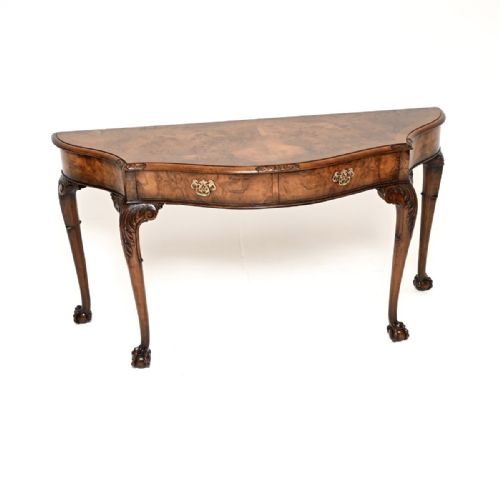
Joiners and cabinetmakers constructed these semicircular frames using solid hardwoods like mahogany, oak, and walnut, often applying finely figured veneers to the tabletops and aprons. Rosewood and satinwood surface treatments add visual depth to the curved fronts.
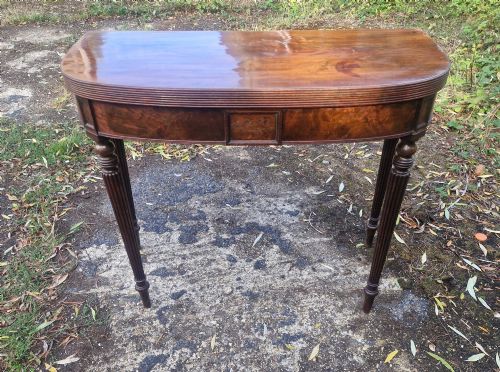
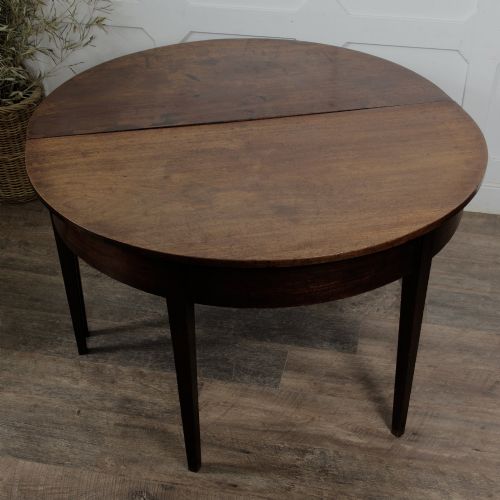
Construction techniques adapted to the folding functionality of games and tea tables, utilising hinged leaves and brass mounts for stability. Legs range from straight tapered supports to concave and carved cabriole forms depending on the period.
Retail Price Guide 2026
Typical UK retail prices for demilune side table, calculated from the Sellingantiques database of over a million retail prices indexed since 2003. This retail price guide relies exclusively on Sellingantiques data; no external sources or auction records are used, so the figures do not describe the wider market.
Revival styles represented include Chippendale, Queen Anne, Adam, and Neoclassical designs.
What varies in quality
Quality rests upon the choice of timber and the precision of the veneer work across the curved apron and top. Grain matching and timber selection distinguish finer examples from standard production.
The integrity of the construction, particularly around folding mechanisms and joints, determines durability. Original surface patination and restrained inlay work also elevate the standing of a piece.
The Demilune Side Table Glossary
- Demilune
- Semicircular in shape. This profile allows the furniture to sit flush against a wall while projecting outward into the room.
- Console table
- A table designed to stand against a wall, typically supported by brackets or legs at the front. These often feature decorative carving or veneer work along the frieze.
- Games table
- A folding table designed for card playing or board games. Many demilune versions feature a fold-over top that reveals a baize-lined playing surface.
- Frieze
- The horizontal band beneath the tabletop. On these pieces, the frieze often displays inlay, stringing, or figured veneer.
Frequently Asked Questions
How do I style a demilune side table in a hallway?
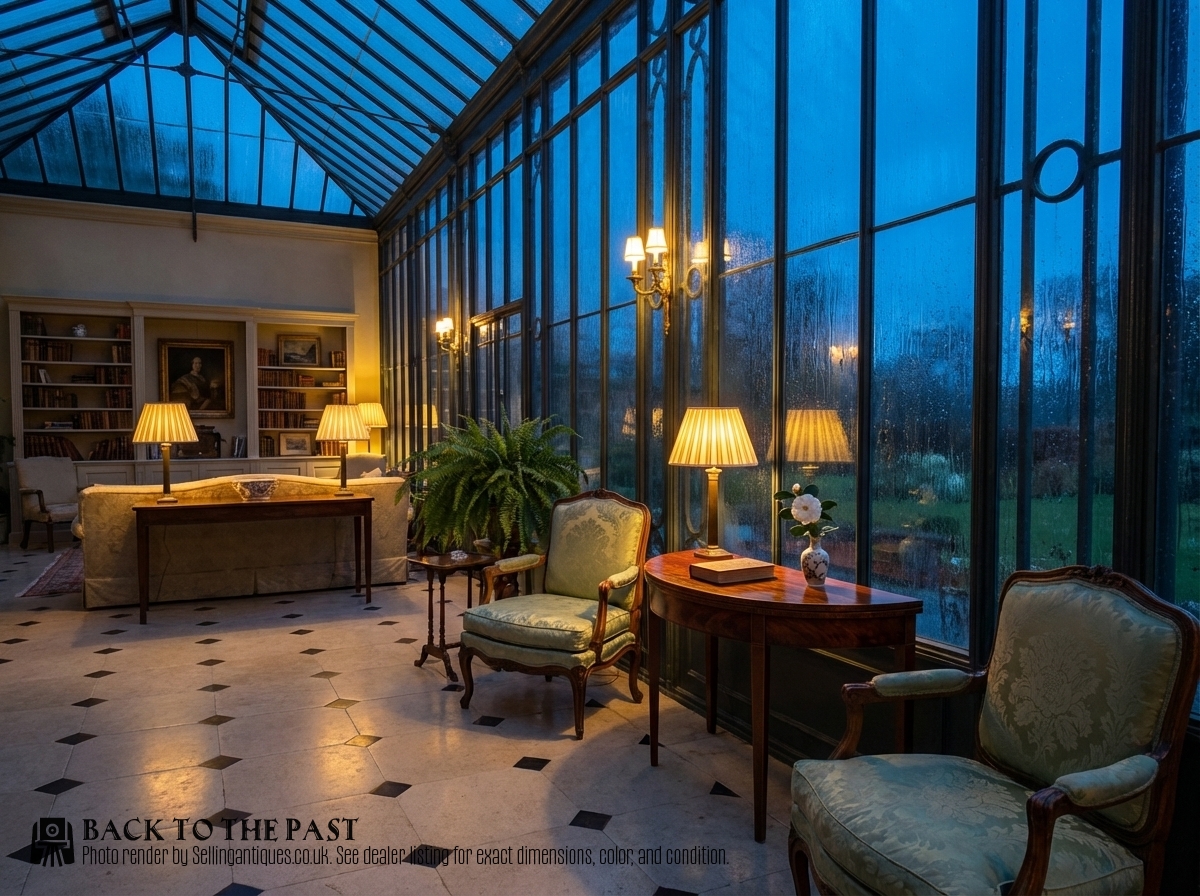
Because of its shallow semicircular footprint, a demilune table hugs the wall closely without blocking narrow thoroughfares. Placing one beneath a mirror or a piece of art creates a balanced entryway.
Keep the surface styling restrained to honour the curved edge. A small lamp, a ceramic bowl, or a seasonal arrangement of stems is usually sufficient.
Were all demilune tables used for games?
Not all pieces served as gaming surfaces, though many examples include folding tops. Simple console and hall tables were designed purely for display and serving.
Tables with hinges and double-fold tops generally indicate a dual purpose for dining or card games. Examining the interior will reveal whether a compartment exists for storing cards or counters.
How do I identify a Georgian demilune table?
Georgian pieces typically showcase dense mahogany timber with understated craftsmanship and classical proportions. Look for straight tapered legs or subtle spade feet rather than heavy Victorian ornamentation.
Construction details such as hand-cut dovetails in the drawer framing help confirm the eighteenth-century origin. Patination develops naturally over centuries of polishing and handling.
What is the difference between a console table and a side table?
A console table traditionally requires wall support or brackets, though many freestanding antique versions are also referred to as side tables. The terms often overlap in historical records and marketplace listings.
Both serve similar functional roles in living areas and hallways. The primary distinction lies in whether the piece was originally intended to be anchored or placed freely.