


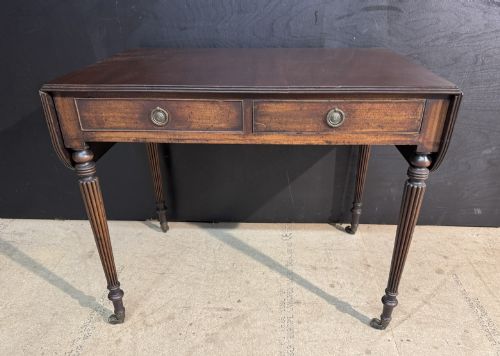
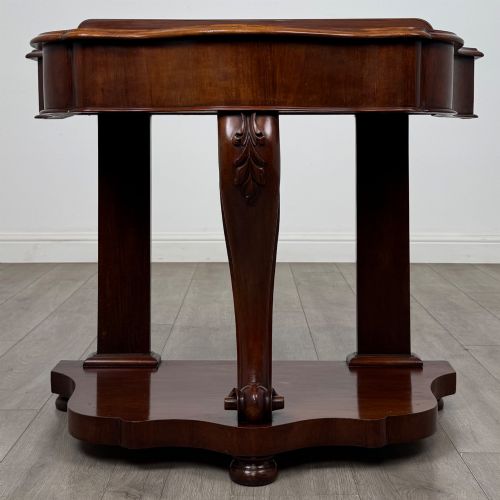
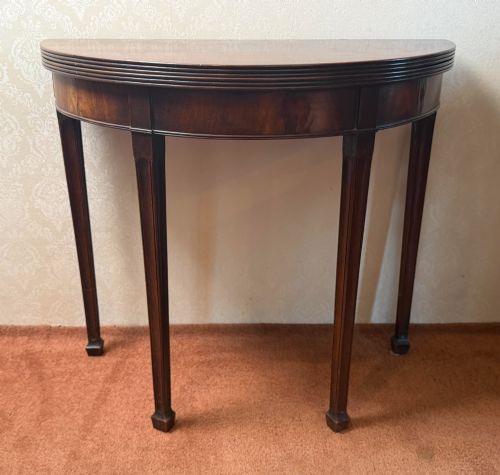
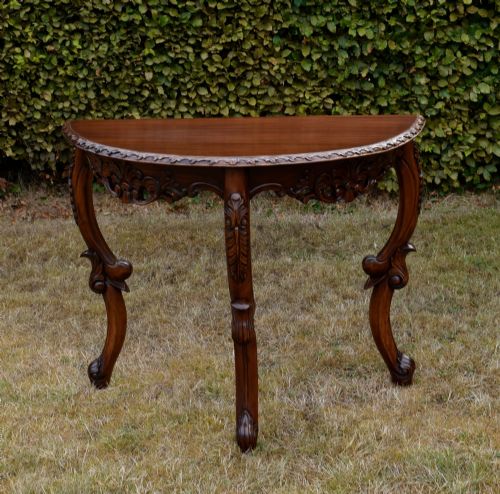
Dark Wood Console
These dark wood console tables bring mahogany and rosewood surfaces into an interior with distinct period character.
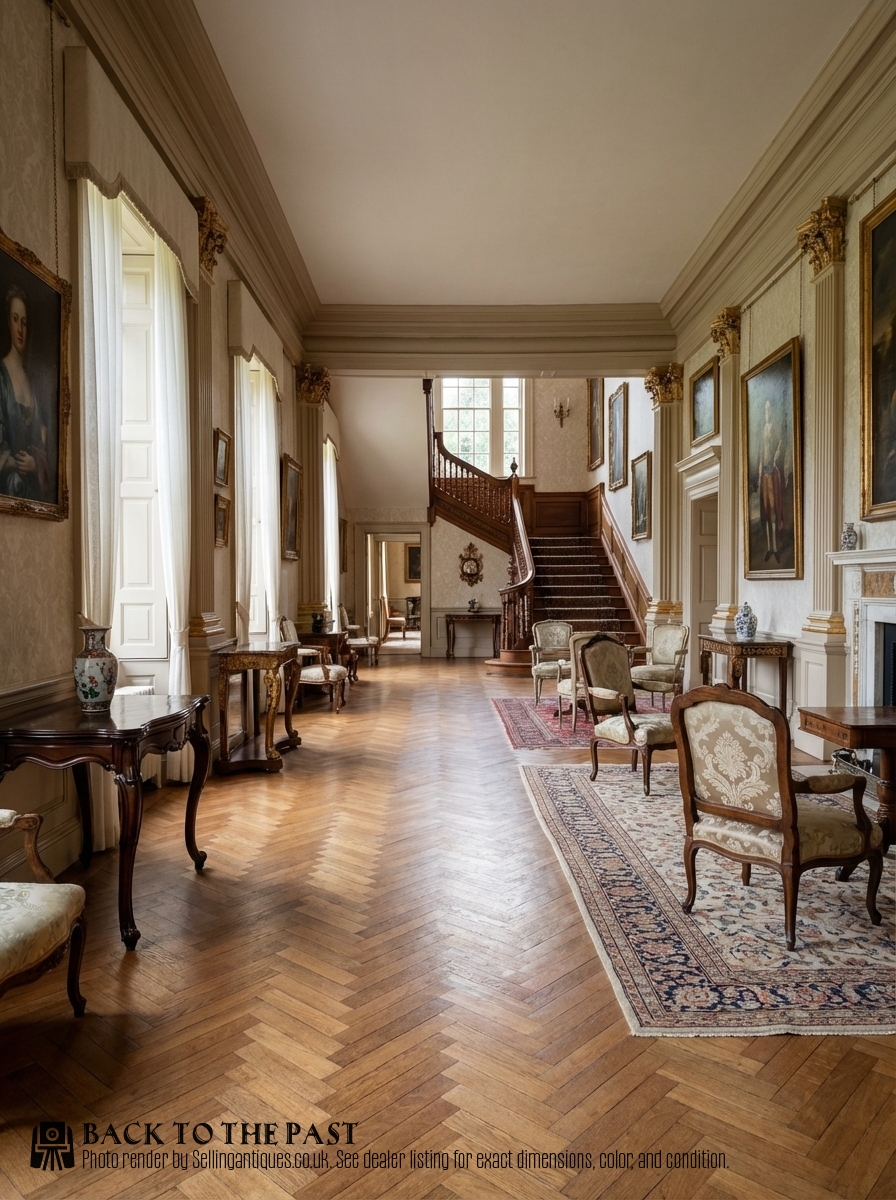
What these dark wood console tables are
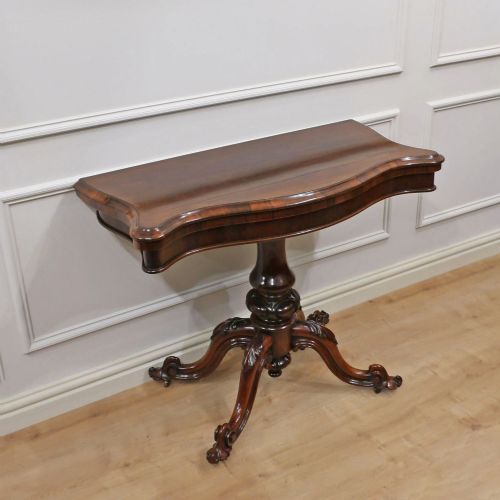
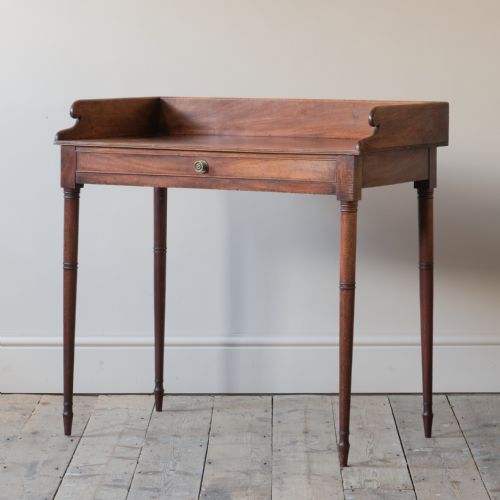
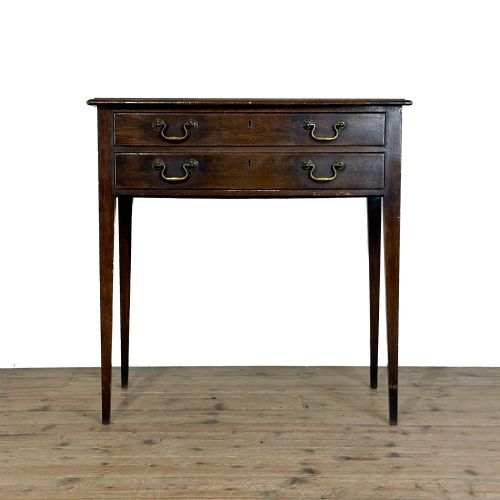
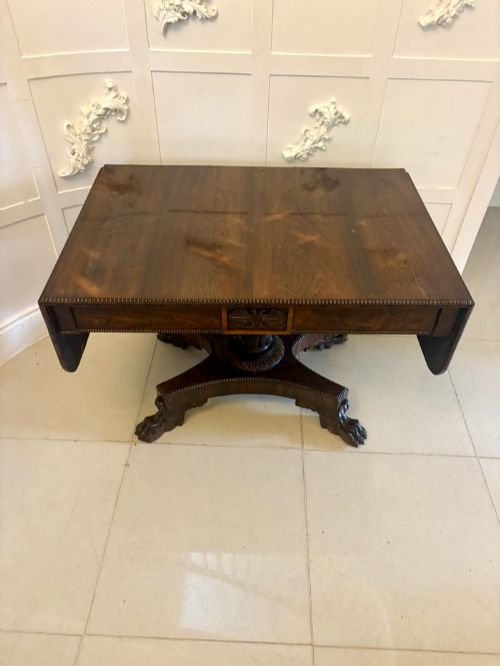
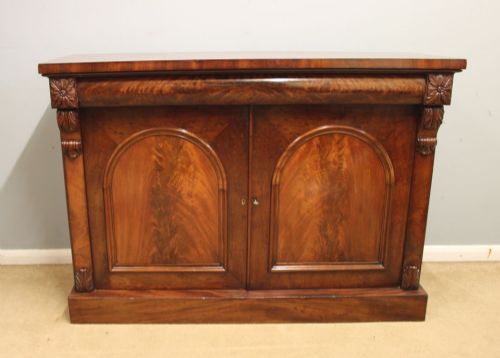
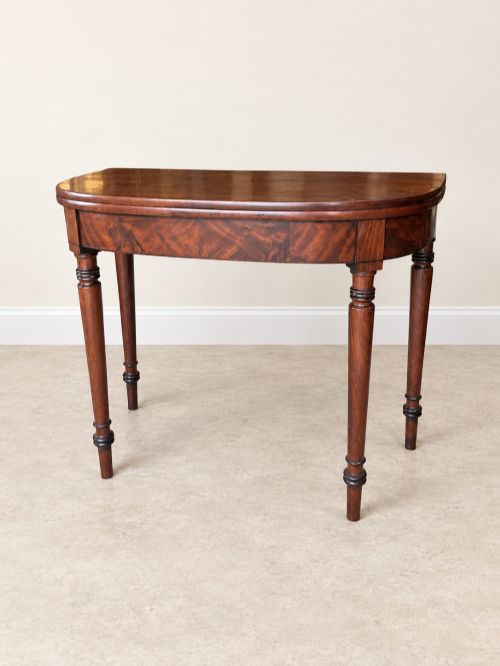
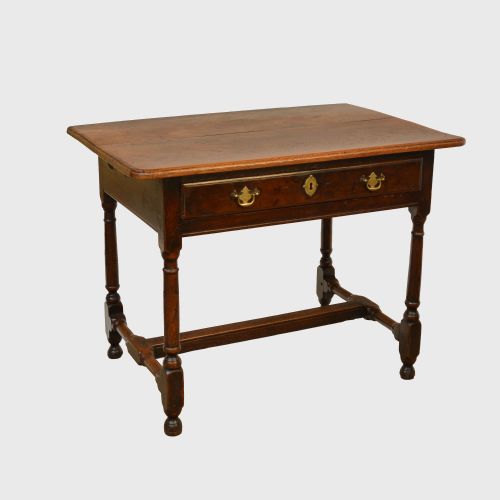
A dark wood console encompasses console tables, hall tables, and card tables spanning the Regency, Victorian, and Georgian eras. These pieces serve practical functions in hallways and reception rooms while displaying rich timber grains.
Buyers frequently encounter mahogany and rosewood examples originating from English and French workshops. The selection ranges from strict George III serpentine tea tables to French Empire console tables.
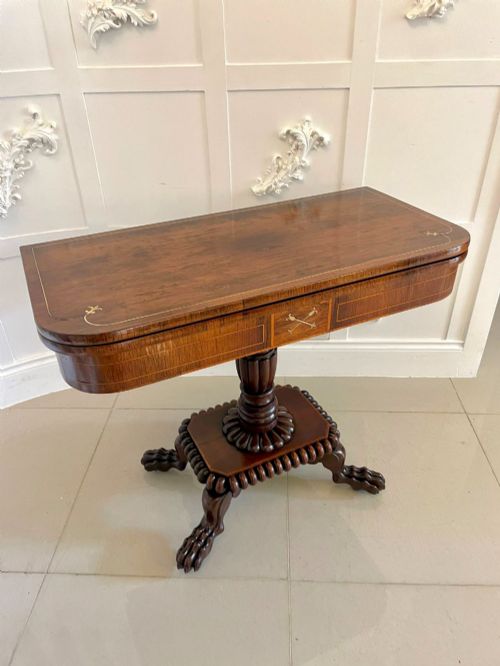
Form follows function across the inventory, with hinged tops on card tables and narrow depths suited for narrow entrance passages. The assortment balances formal serving surfaces with dual-purpose games tables.
How they were made
Cabinet makers utilised solid mahogany and rosewood alongside wood veneer surfaces applied to structural timbers. Timber selection focused on deep natural colour and prominent grain patterns.
Metal mounts in brass provide structural accents and decorative detailing on select pieces. Selected tables incorporate marble tops that offer contrasting cold surfaces above wooden frames.
Retail Price Guide 2026
Typical UK retail prices for dark wood console, calculated from the Sellingantiques database of over a million retail prices indexed since 2003. This retail price guide relies exclusively on Sellingantiques data; no external sources or auction records are used, so the figures do not describe the wider market.
Card tables often hide secret compartments beneath their folding tops, originally intended for stabling stray playing dice.
What varies in quality
Excellence in these tables rests upon timber selection and the precision of cabinet work. Superior examples demonstrate careful matching of wood veneers and crisp execution of period details.
Proportion and structural harmony separate standard workshop output from exceptional furniture. The integration of brass elements and marble inserts reveals the maker's commitment to materials.
The Dark Wood Console Glossary
- Console table
- A table designed to stand against a wall, traditionally supported by front legs or wall brackets. These pieces occupy hallways and principal reception rooms.
- Card table
- A folding table designed for playing games, featuring a hinged top that opens to reveal a baize-lined playing surface. Many examples date from the Georgian and Regency periods.
- Serpentine
- A furniture shape characterised by a curving front edge that undulates in a convex-concave-convex pattern. This contour appears on 18th century George III tables.
- Veneer
- A thin layer of figured wood applied to a secondary timber foundation to create decorative patterned surfaces. Cabinet makers utilised this technique to display rich grain figures.
- Regency
- An English design period spanning the early 19th century, known for classical restraint and archaeological revival motifs. Furniture from this era often incorporates rosewood and brass inlay.
Frequently Asked Questions
Where should I place a console table?
These tables find a natural home in entrance halls, living rooms, and dining spaces against a flat wall. Their narrow profile allows them to occupy circulation areas without obstructing movement.
They function well as display surfaces for lamps and decorative objects, or as serving tables during gatherings.
What is the difference between mahogany and rosewood?
Mahogany is a durable reddish-brown hardwood that cabinet makers utilised extensively throughout the Georgian and Victorian eras. It accepts carving well and maintains stability.
Rosewood offers a darker, heavily grained appearance with distinctive purple-brown tones, favoured during the Regency period for high-status furniture.
How do I care for antique wood surfaces?
Maintain antique timber by keeping pieces away from direct heat sources and strong sunlight, which can dry and fade the wood. Regular dusting with a soft, dry cloth preserves the polish.
Avoid silicone-based sprays, opting instead for traditional beeswax applications sparingly applied to nourish the timber grain.