
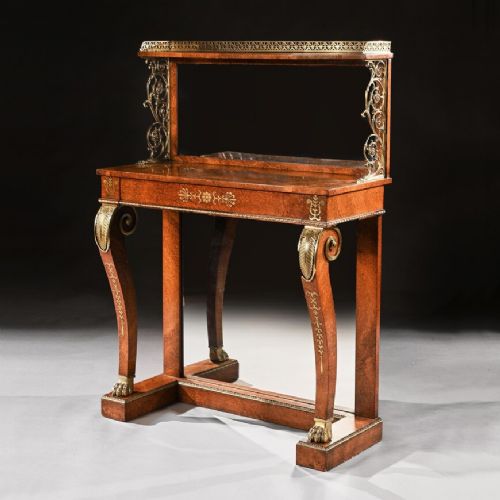
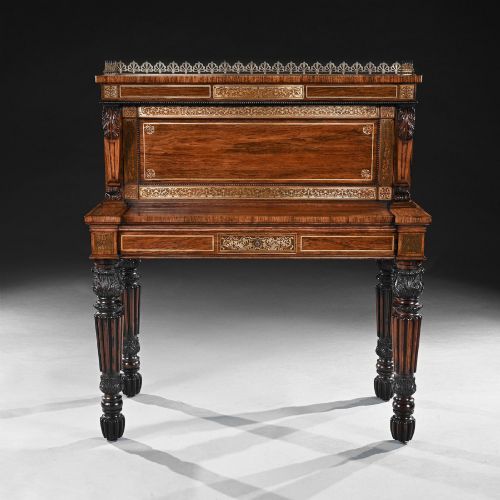
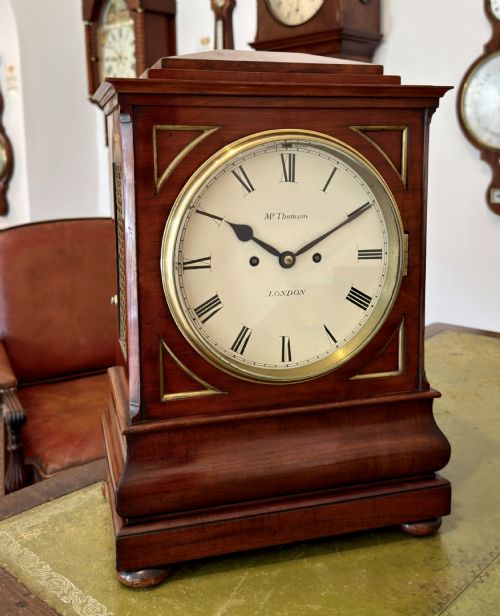
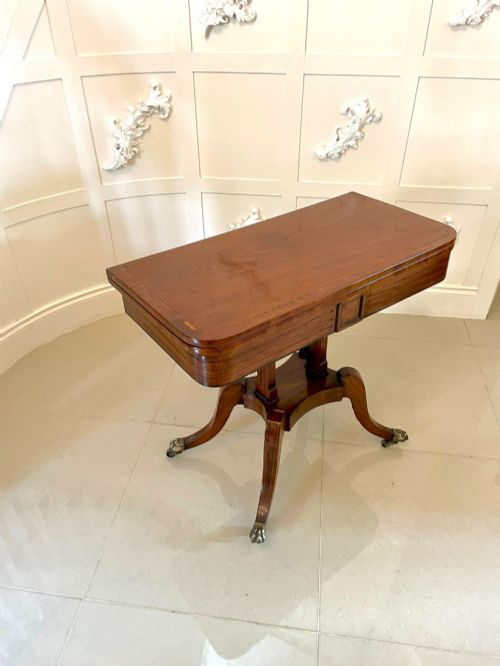

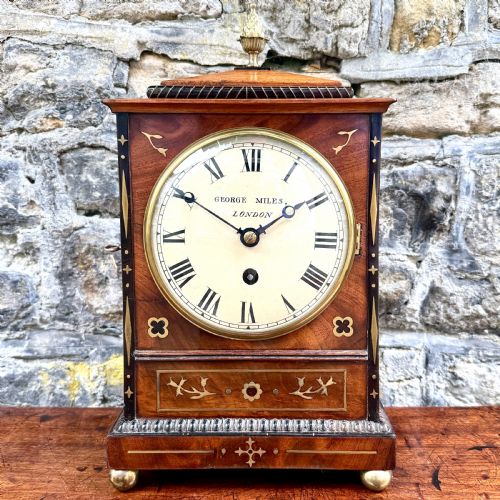
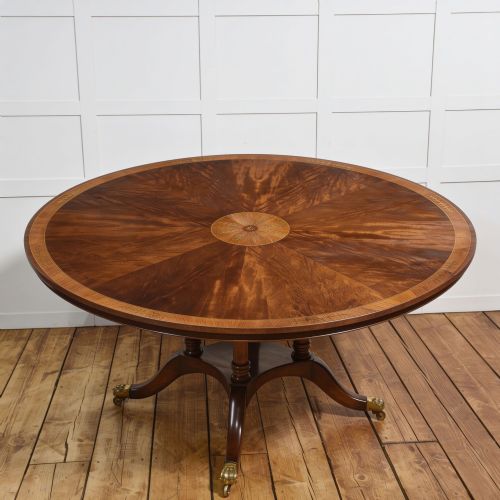
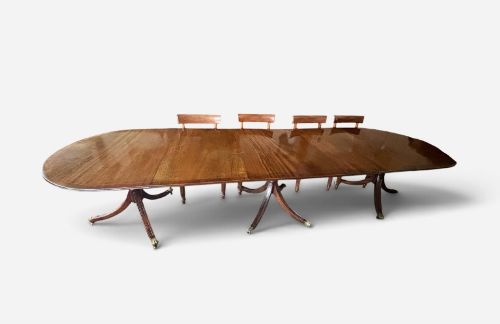
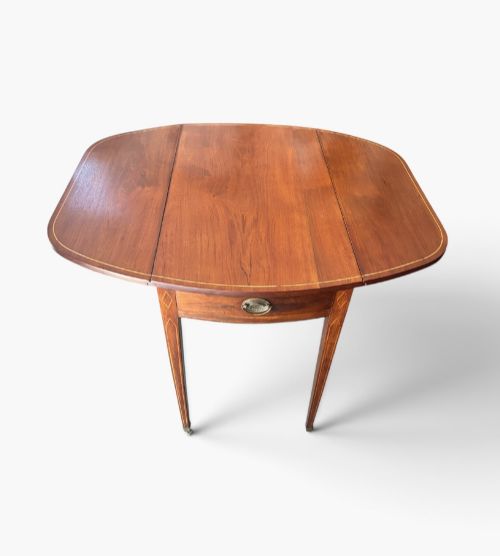
Regency Brass Inlaid Table
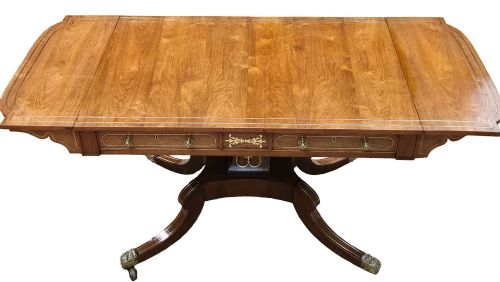
A regency brass inlaid table brings refined contrast and polished timber surfaces into a room.

Regency Brass Inlaid Table
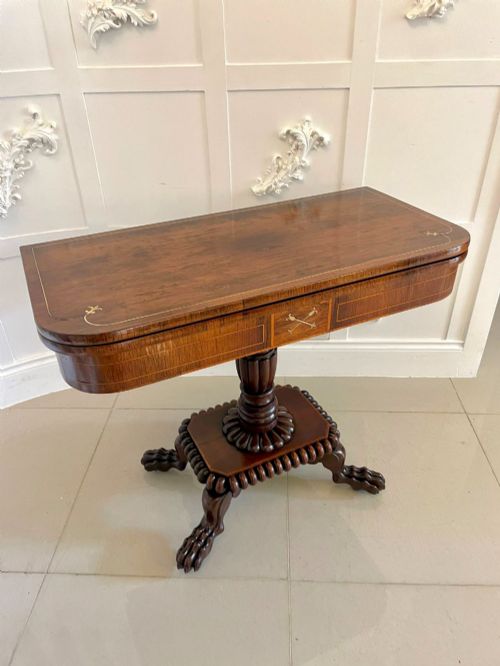
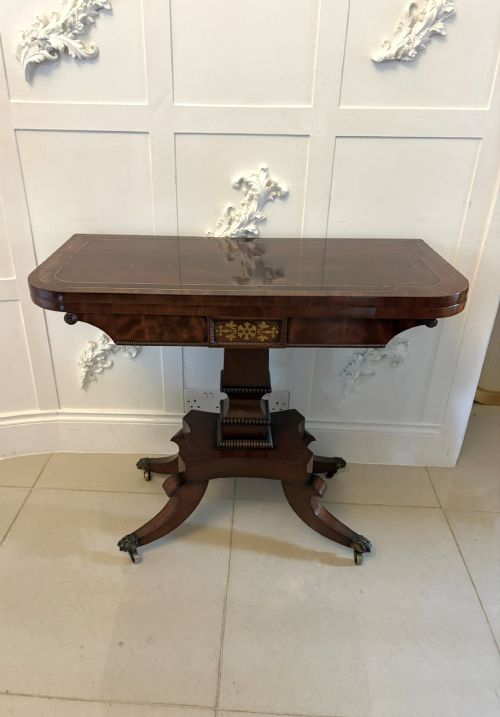
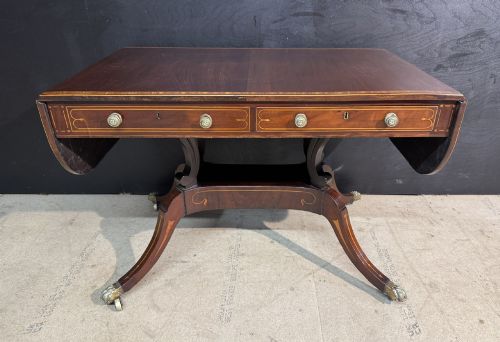
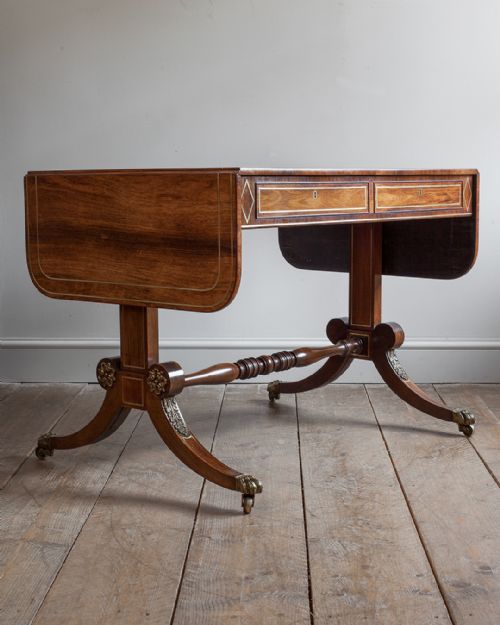
A regency brass inlaid table encompasses a variety of refined forms designed for dining, writing, and card games. Card tables, sofa tables, and circular centre tables dominate the selection, reflecting the domestic habits of the early nineteenth century.
Most examples originate from the Regency period, though later revivals from the twentieth century also appear. These tables combine utilitarian surfaces with decorative brass line inlay and brass mounts, serving as both functional furniture and focal points.
How they were made
Cabinetmakers utilised dense timbers such as rosewood and mahogany as the primary foundation for these surfaces, frequently applying veneers to achieve rich grain patterns. Artisans then recessed thin strips of brass into channels carved directly into the wood.
Contrasting woods like satinwood, boxwood, and ebony were often combined with the metal inlay to create geometric borders and scroll motifs. Structural stability was maintained through pedestal bases, scroll feet, and castors on movable tables.
Regency Brass Inlaid Table Retail Price Guide 2026
Typical asking prices for regency brass inlaid table among the pieces listed under this phrase on Sellingantiques today, from the lower quarter to the upper quarter. They describe what is for sale here now, not the wider market.
Many card tables contain hidden wells beneath their folding tops that once stored ivory betting counters and deck boxes.
What varies in quality
The precision of the brass inlay work dictates much of the visual success of the piece, separating tight, flush joints from wider channels where filler was required. Finer examples display meticulous hand-cut brass alongside carefully selected timber veneers.
Proportion and secondary details also separate standard production from master craftsmanship. Carved scroll pedestals, original brass castors, and well-figured amboyna or rosewood elevate the architectural presence of the table.
George Bullock·Gillows Oxford Street Workshop
The Regency Brass Inlaid Table Glossary
- Card table
- A folding table with a hinged top designed for games, typically featuring a baize-lined interior surface when opened.
- Sofa table
- A rectangular occasional table intended to stand directly in front of or beside a sofa, often fitted with drop leaves and small drawers.
- Crossbanding
- A decorative border of veneer laid perpendicular to the grain of the main surface, framing the outer edges.
- Sabots
- Metal shoes fitted to the base of furniture legs, providing both protection and decorative contrast.
- Pier table
- A flat-topped console table designed to sit against the wall between windows, frequently paired with a mirror above.
Regency Brass Inlaid Table: Frequently Asked Questions
How were card tables used originally?
These tables stood against room walls when folded shut to save space. When evening arrived, servants or hosts unfolded the top to reveal a baize-lined playing surface for whist or hazard.
After play concluded, the top was secured upright again. The internal well often held cards, counters, and small accessories.
Where should a sofa table go?
Sofa tables function well behind low seating or as freestanding writing desks in open spaces. Their finished backs and compact proportions allow them to sit away from walls.
Drop leaves let the surface expand when needed. They provide useful bedside or hallway display space without dominating a room.
How do I identify Regency styling?
Regency design draws inspiration from classical Greek and Roman architecture. Look for clean architectural lines, sabre legs, and classical mounts.
Dark exotic woods like rosewood provide contrast against bright brass inlay. This combination creates the characteristic crispness of the period.
How do I care for brass inlay?
Keep these pieces away from direct sunlight and steady heat sources to prevent timber shrinkage and veneer lifting. Use dry microfibre cloths for routine dusting.
Avoid liquid polishes that can seep under the metal strips. Gentle waxing preserves the natural sheen of both the timber and the brass.