


Georgian Rosewood Table
A georgian rosewood table brings warm grain and refined proportion to a room, offering functional elegance through folding card tops and drop-leaf designs.
Georgian Rosewood Table
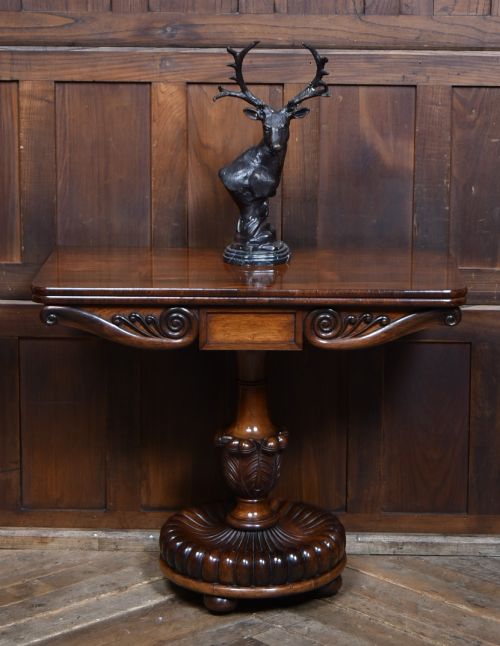
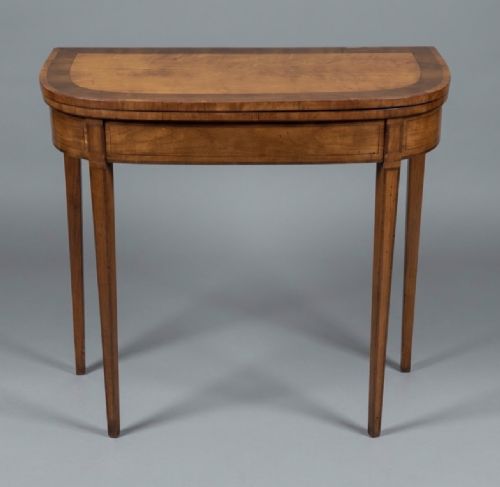
Card and games tables dominate the selection, featuring fold-over tops designed to sit flat against a wall when not in use.
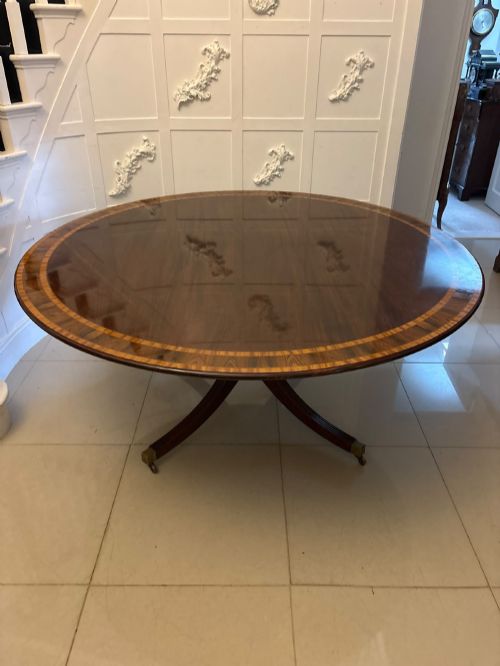
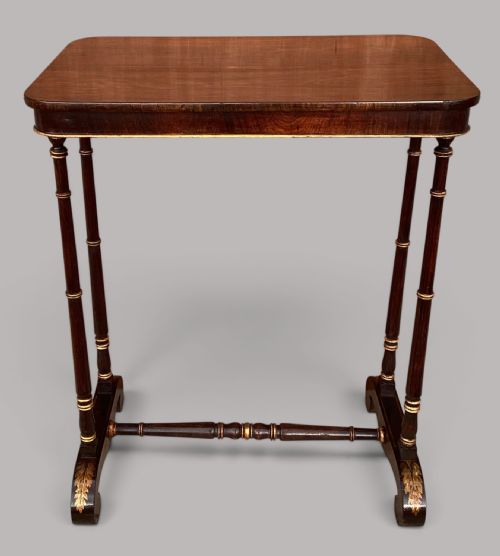
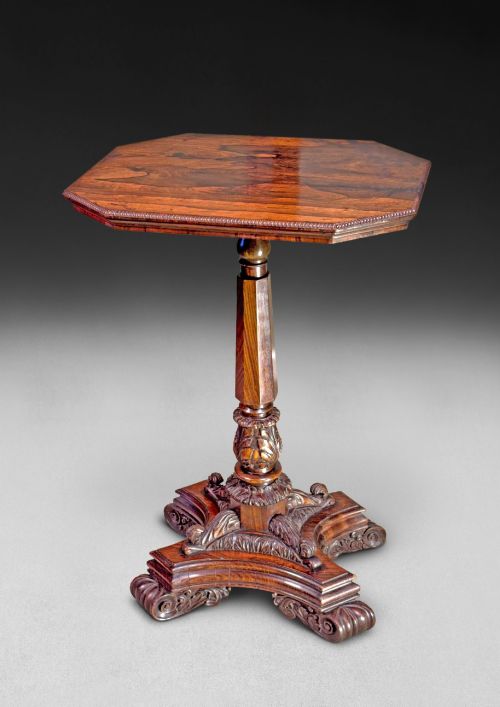
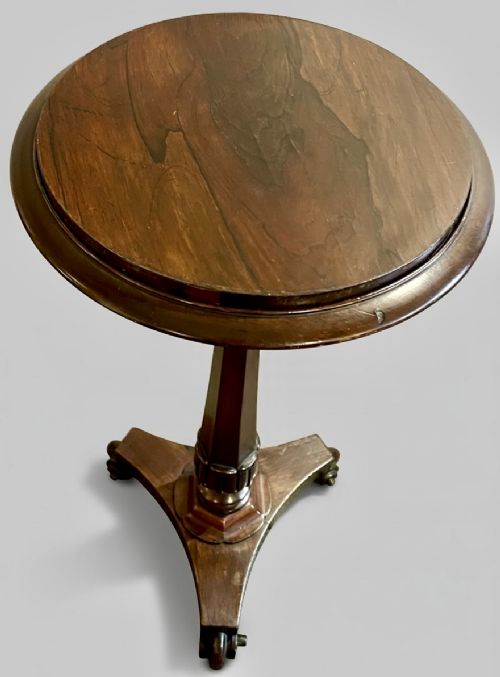
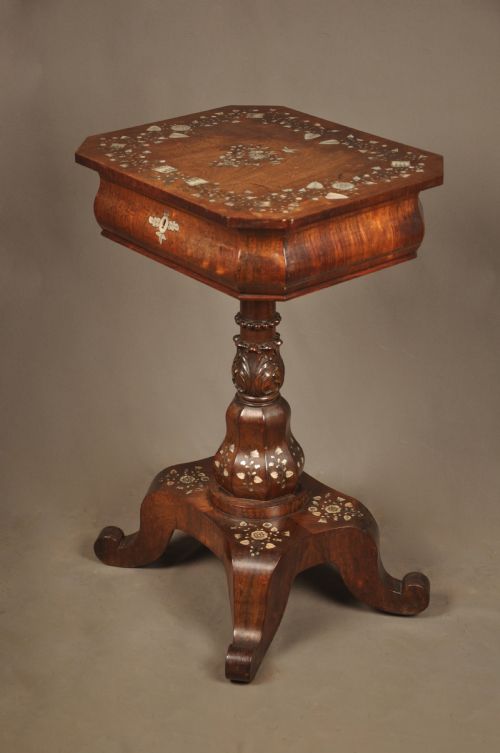
Occasional and centre tables provide smaller footprints, often resting on pedestals with triform or quadruple bases.
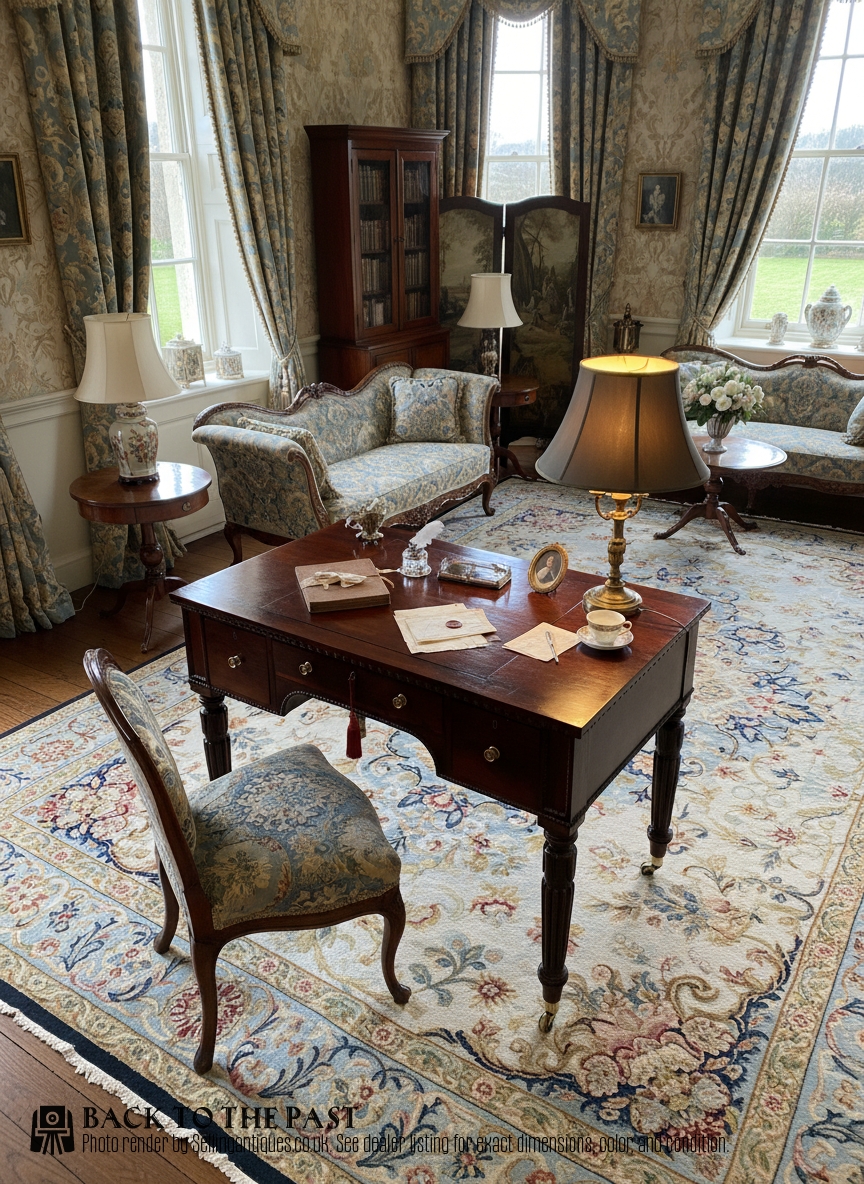
How they were made
Cabinet makers utilised dense, richly figured rosewood veneers laid over secondary structural timbers such as mahogany or pine.
Surface enrichment relied on contrasting inlay work, incorporating satinwood, ebony, boxwood, and brass strings or brass marquetry to frame the grain.
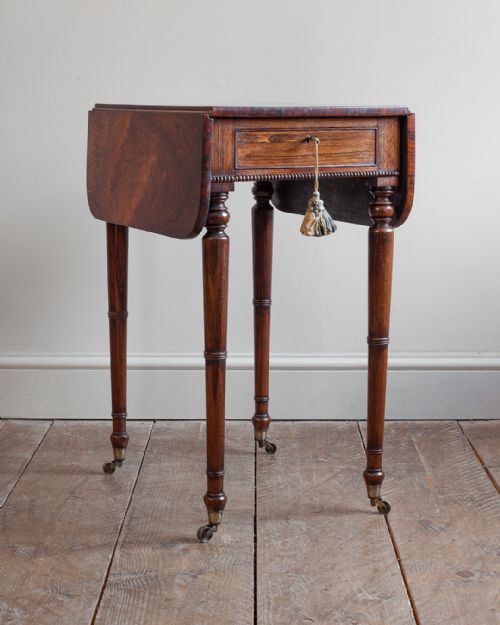
Turning, carving, and pedestal construction provided structural support, pairing concave legs with brass castors for mobility.
Georgian Rosewood Table Retail Price Guide 2026
Typical asking prices for georgian rosewood table among the pieces listed under this phrase on Sellingantiques today, from the lower quarter to the upper quarter. They describe what is for sale here now, not the wider market.
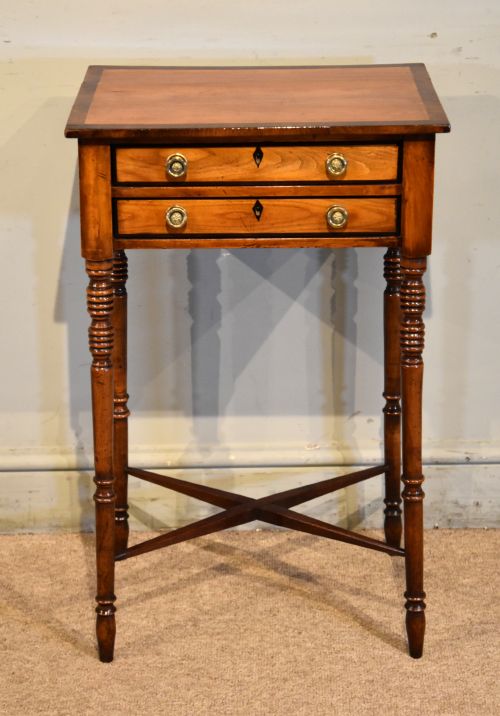
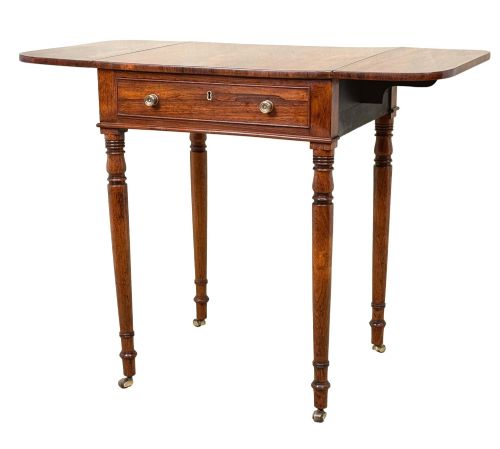
Dedicated needlework tables hide sewing compartments beneath drop leaves, keeping mending out of sight during tea.
What varies in quality
The selection of timber grain dictates visual depth, where symmetrical book-matched veneers command higher regard than plain or patchy surfaces.
Precision in brass inlay and secondary wood choice separate standard workshop production from master cabinet work.
Original mechanisms for fold-over leaves and pivoting tops operate with smooth friction, reflecting superior joinery.
Barber and North of York·Turner of London·Miles and Edwards·Gillows of Lancaster
The Georgian Rosewood Table Glossary
- Crossbanding
- A border of veneer laid with the grain running perpendicular to the main surface, often seen in contrasting lighter timbers.
- Fold-over top
- A hinged table surface that opens to double its area, frequently used for card or tea playing.
- Triform base
- A three-sided pedestal support providing stability beneath a central pillar.
- Satinwood
- A pale, lustrous timber utilised for contrasting stringing and geometric inlay details.
- Quartetto
- A set of four graduating nesting tables designed to slide beneath one another.
Georgian Rosewood Table: Frequently Asked Questions
How do I identify the Regency period?
Regency pieces often display classical influences, featuring brass inlay, reeded legs, and dark rosewood surfaces. The style spans the early nineteenth century.
Cabinet makers during this era favored architectural proportions and restrained ornamentation over heavy carving.
Where should I place a sofa table?
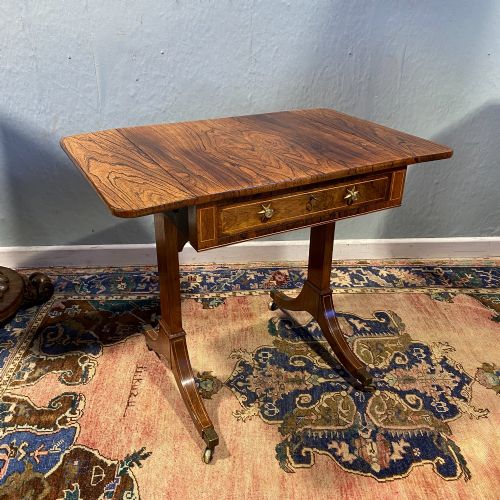
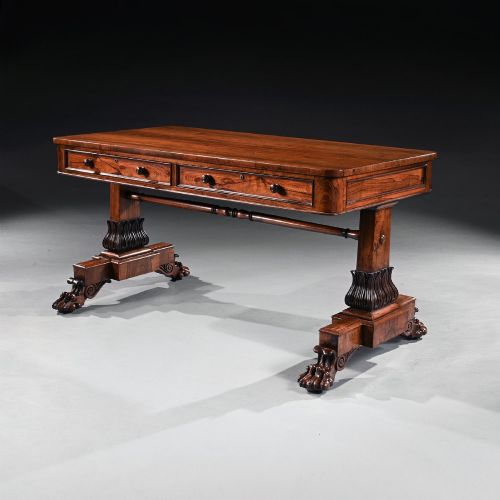
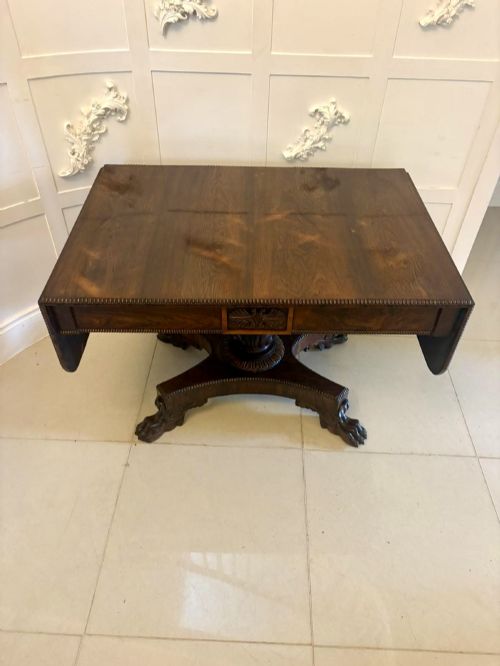
A sofa table traditionally stands behind the back of a sofa, utilising drop leaves to adjust its surface area. It also serves effectively as a freestanding desk or narrow writing surface.
Because the backs of these tables were often finished with the same care as the fronts, they look correct viewed from any angle in a room.
What is rosewood?
Rosewood is a heavy, durable tropical hardwood known for its deep colour and pronounced dark grain patterns. It took a high polish, making it a favourite for formal furniture.
Due to its distinct figure, artisans typically used it as a veneer rather than solid timber.