
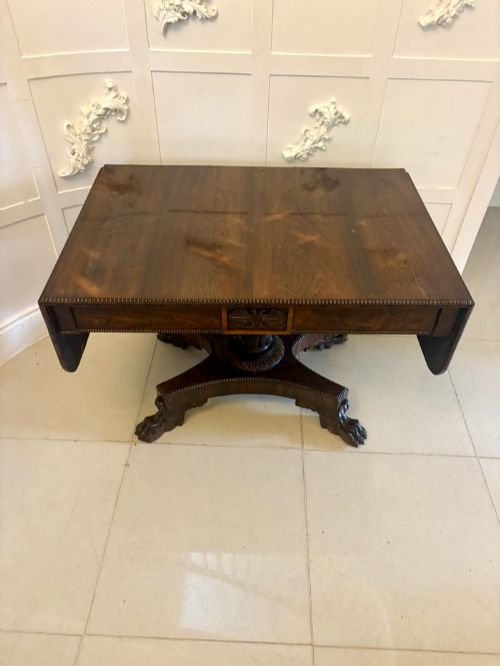

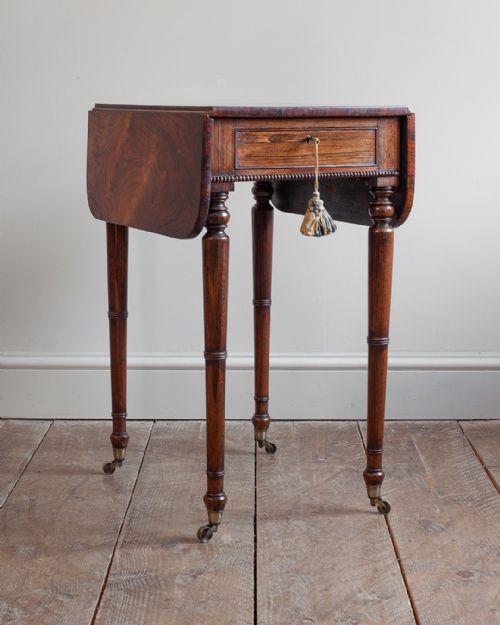
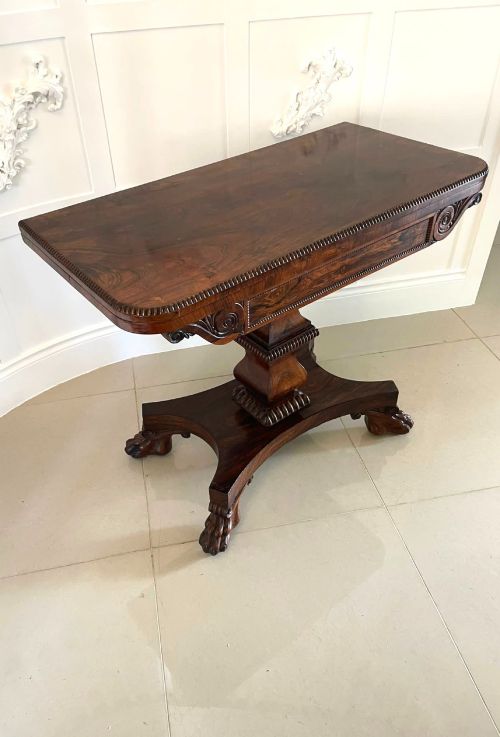
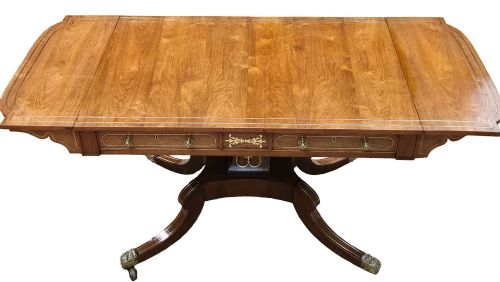
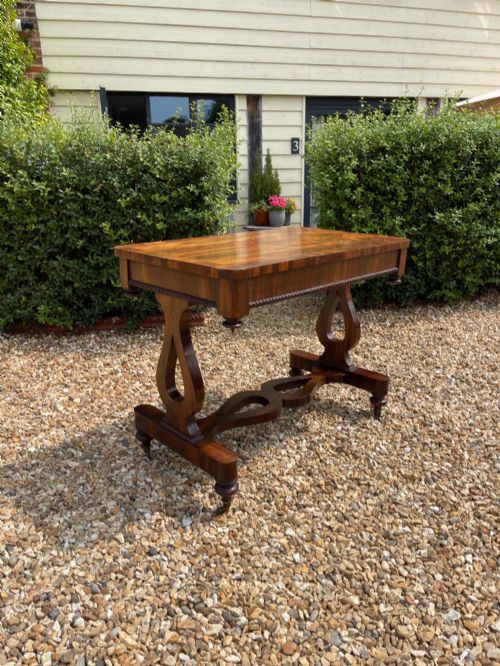
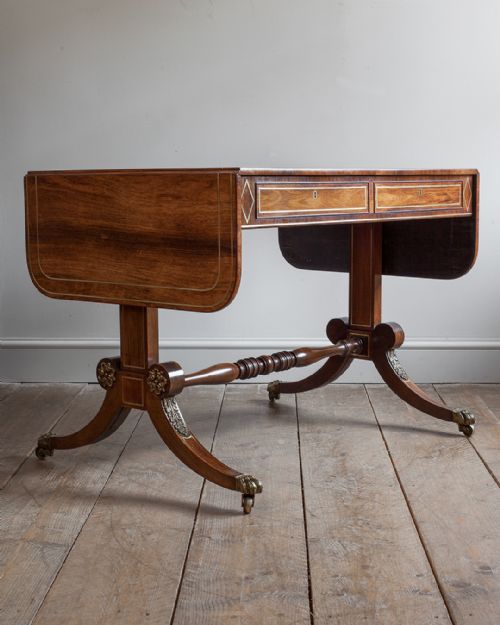
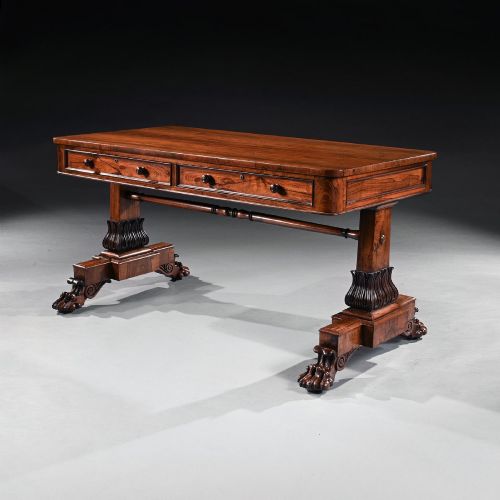
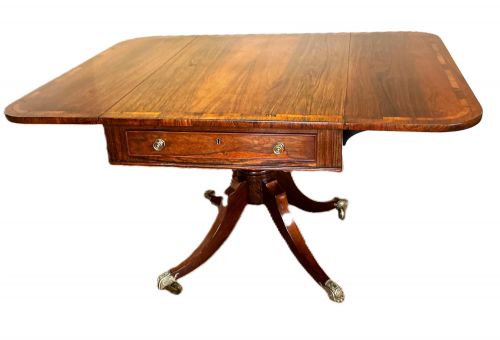
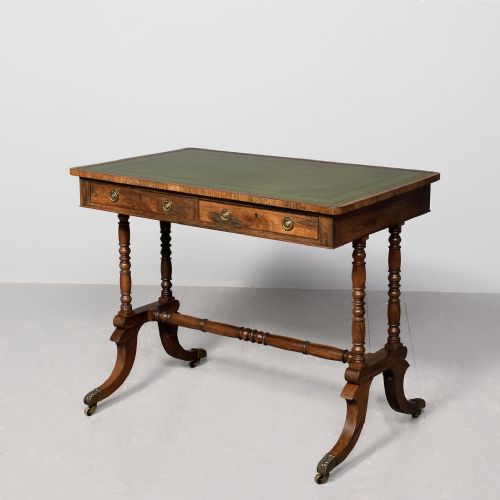
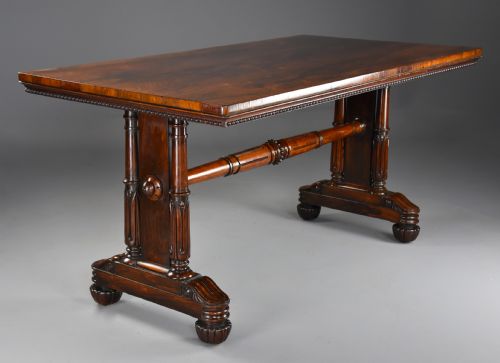
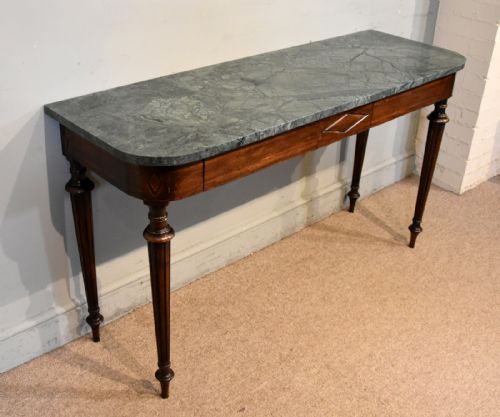
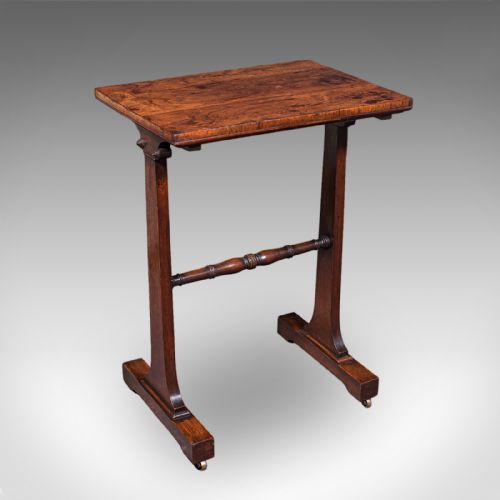


Regency Rosewood Sofa Table
These regency rosewood sofa table examples bring tactile warmth and architectural elegance to a room, offering adaptable surfaces designed originally to stand beside a sofa.
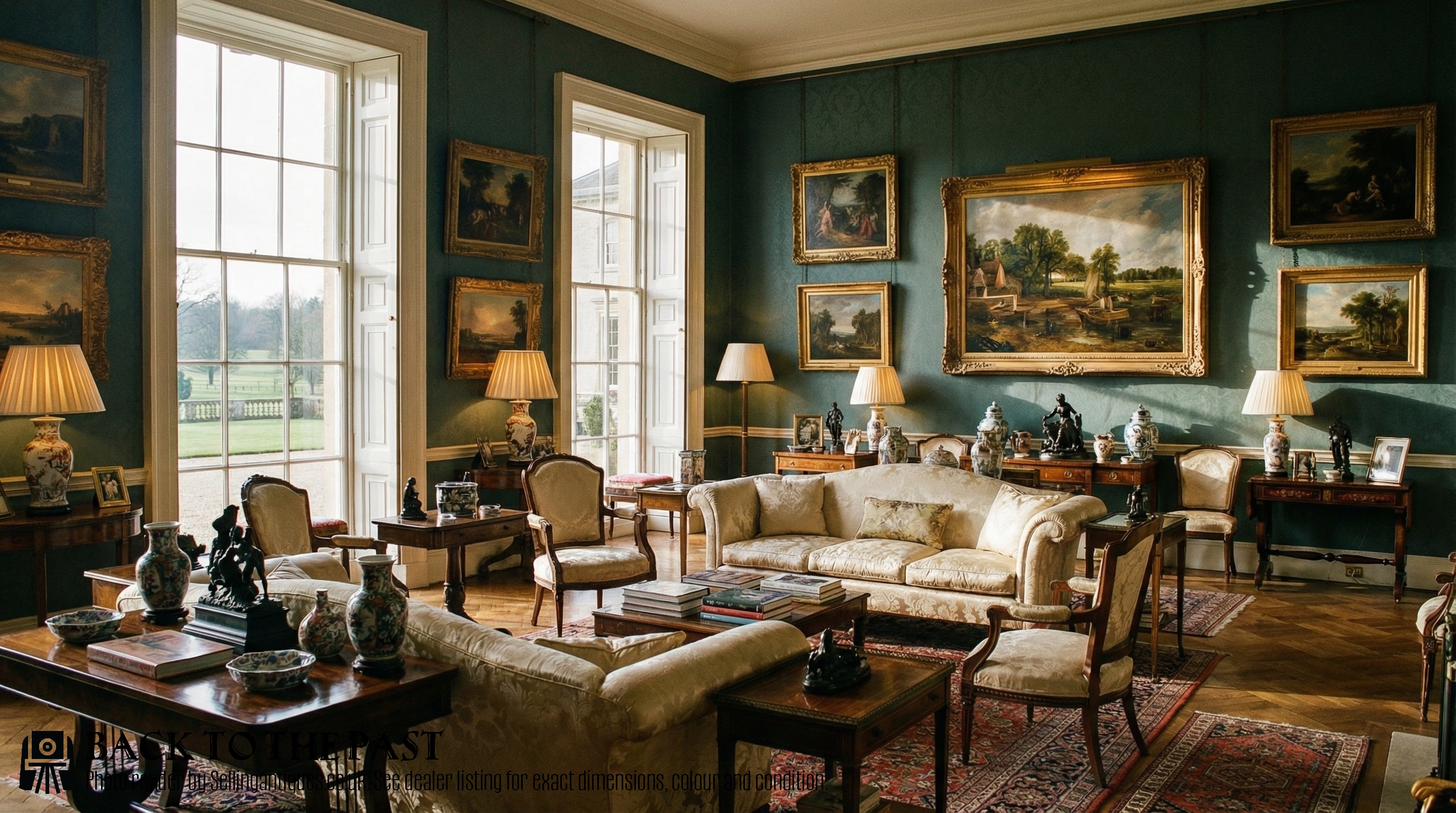
Regency Rosewood Sofa Tables
A regency rosewood sofa table represents a distinctive form of freestanding library or centre furniture originating from the late eighteenth century through the nineteenth century, including William IV variations. These pieces typically incorporate dual drop leaves and functional drawers, functioning as writing desks or occasional tables.
The versions most commonly encountered on this page belong firmly to the Regency and nineteenth-century periods, often displaying classic end support pedestals or pillar bases. Makers structured these tables to sit centrally in a room, meaning the back receives as much decorative attention as the front.
Evidence shows that while the core form remains consistent as a sofa or side table, makers occasionally expanded the utility towards bureau plat writing desks and hall serving furniture. Rosewood dominates these listings, frequently accompanied by contrasting brass inlay or marquetry details.
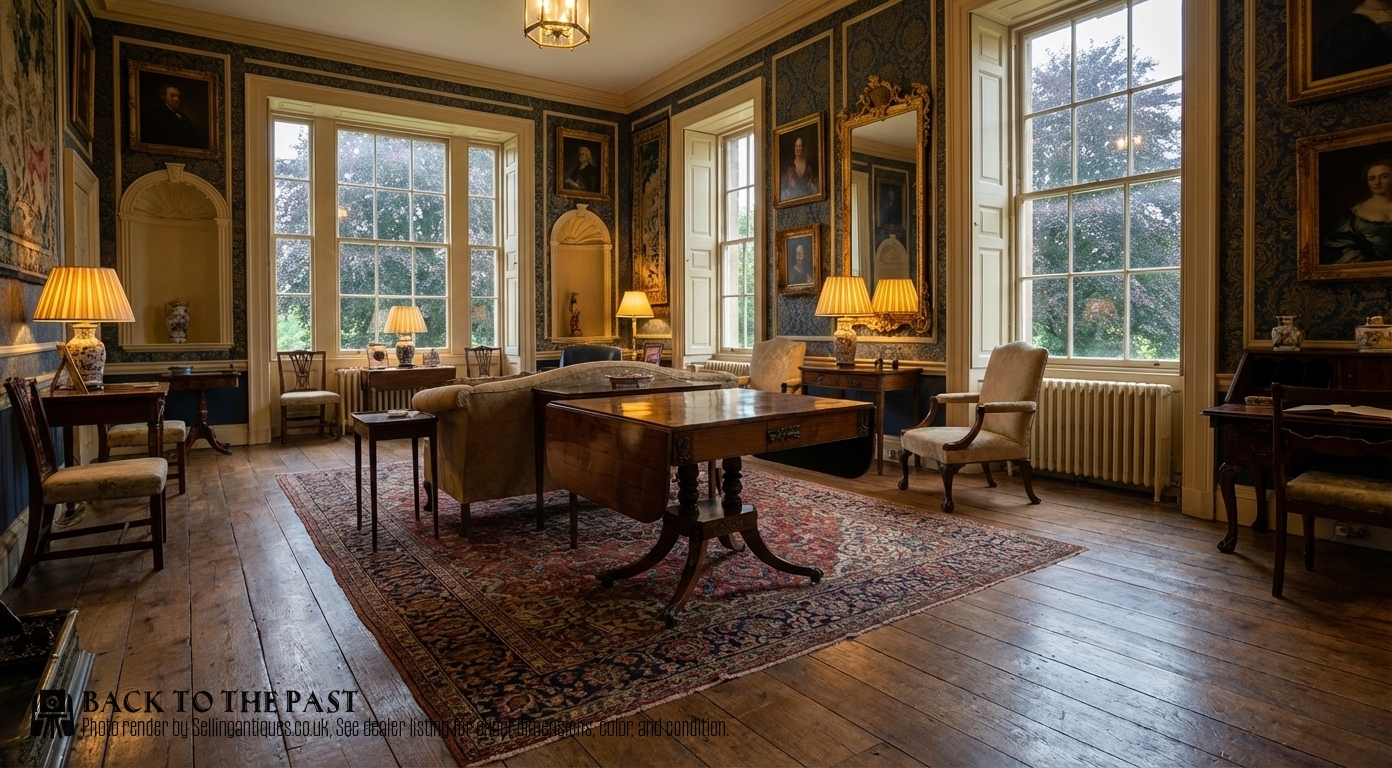
Materials and Construction
Cabinet makers utilised dense rosewood timber for its rich grain patterns and deep colour, often applying crossbanding, burr yew, boxwood, or casuarina to accentuate borders and drawer fronts. Ebonised wood details also appear alongside the primary rosewood surfaces.
Decorative embellishments frequently include precision-cut brass inlay arranged in classical geometric motifs across the top and frieze. Metal mounts, gilt elements, and specialised hardware such as distinctive handles and escutcheons complete the structural assembly.
Retail Price Guide 2026
Typical UK retail prices for regency rosewood sofa table, calculated from the Sellingantiques database of over a million retail prices indexed since 2003. This retail price guide relies exclusively on Sellingantiques data; no external sources or auction records are used, so the figures do not describe the wider market.
Listings record multiple instances of brass inlaid rosewood, alongside decorative marquetry and ebonised wood details.
Distinctions in Quality
The upper tier of these pieces reveals itself through the crispness of brass inlay work and the selective choice of figured rosewood veneers. Superior examples display meticulous attention to secondary timbers and stable, well-engineered drop-leaf hinge mechanisms.
Proportion and scale distinguish finer works, particularly in smaller formats and tables featuring distinct end supports or pedestal bases. Workshops associated with notable cabinet makers demonstrate a higher grade of joinery and more refined mounts than standard commercial output.
Gillows·John Mclean
The Regency Rosewood Sofa Table Glossary
- Sofa Table
- A long, narrow freestanding table traditionally designed to sit in front of a sofa, equipped with drop leaves on either end.
- Crossbanding
- A decorative border technique where veneer strips are laid perpendicular to the grain of the main surface.
- Escutcheon
- A protective plate surrounding a keyhole, often cast in brass or gilt metal on these tables.
- Drop Leaf
- A hinged flap on the side of a table that raises to extend the surface area when needed.
- Frieze
- The horizontal band situated directly beneath the tabletop, frequently housing one or two drawers.
Frequently Asked Questions
Where should I place a sofa table?
Because these pieces are finished on all sides for freestanding use, they sit comfortably behind a sofa, in the middle of a room, or against a wall as a slim console.
Their narrow depth also suits hallways and landings where floor space is limited, providing a surface for lamps or decorative objects without obstructing passage.
How do I care for rosewood surfaces?
Rosewood benefits from regular dusting with a soft, dry cloth and protection from direct sunlight to prevent the timber from fading.
Applying a traditional beeswax polish occasionally helps nourish the wood and maintain its deep lustre without building up heavy chemical residue.
Were these tables used for writing?
Many examples function equally well as writing tables, incorporating fitted drawers with compartments for stationery and inkwells.
The stable drop leaves provide additional space when opened, making them practical for correspondence while maintaining a compact footprint when closed.