
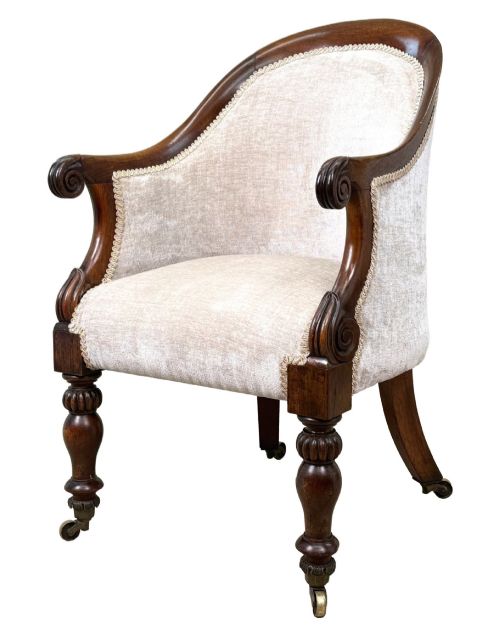
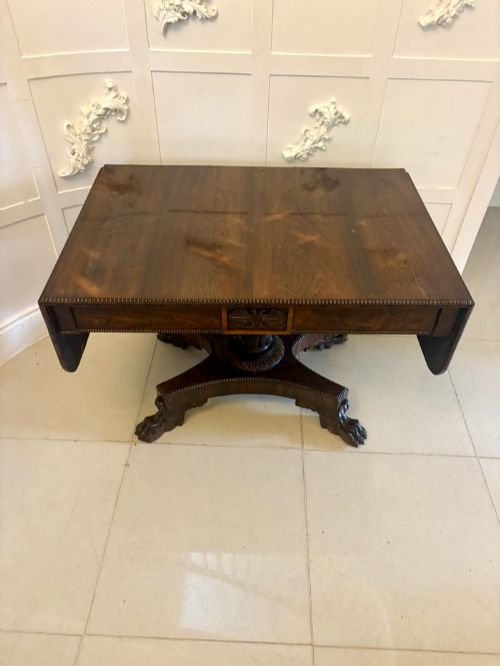

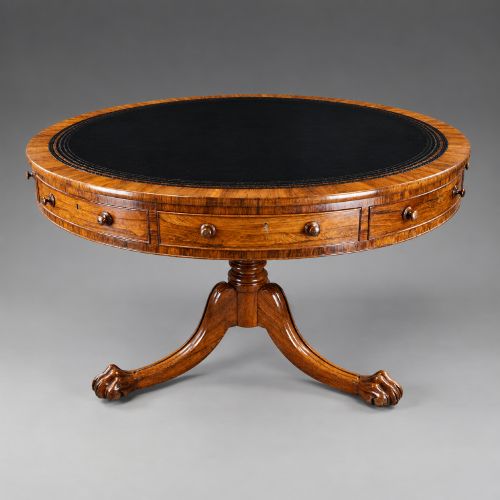
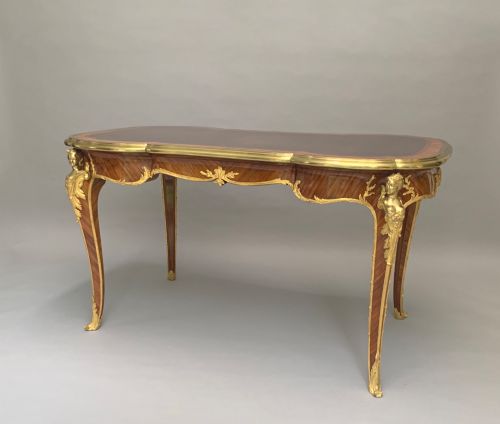
Rosewood Library Desk
A rosewood library desk offers rich grain and substantial presence, making it the focal point of any study through its timeless proportions.
Understanding the rosewood library desk
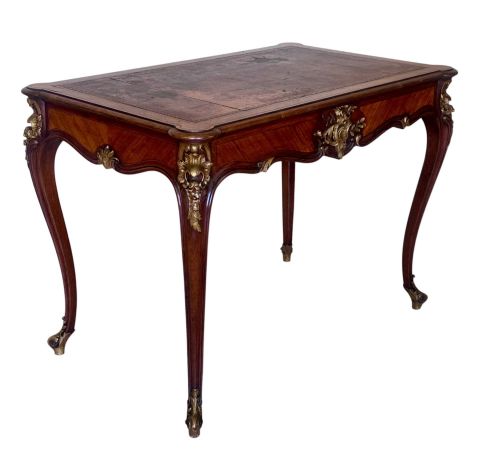
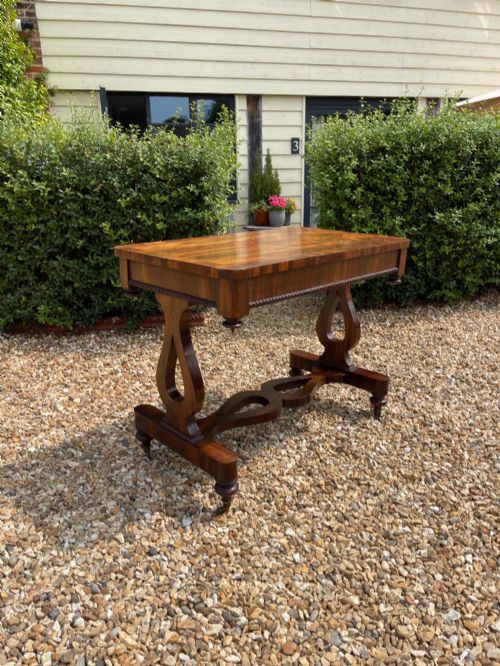
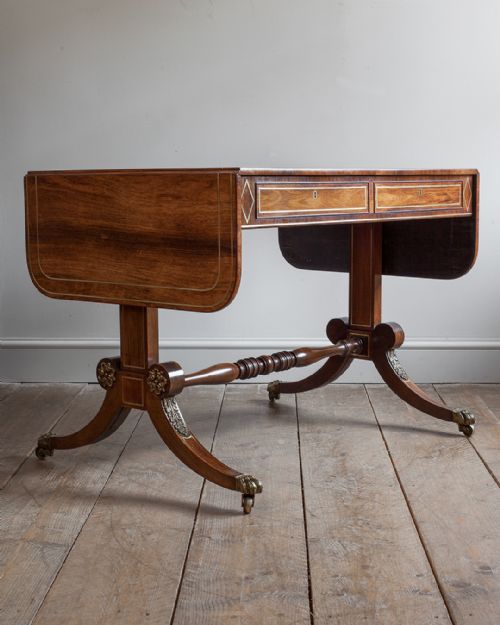
A rosewood library desk encompasses writing tables, library tables, and bureau plat forms designed for serious study and refined domestic interiors. These pieces appear across Regency, William IV, and George IV styles, spanning the nineteenth century.
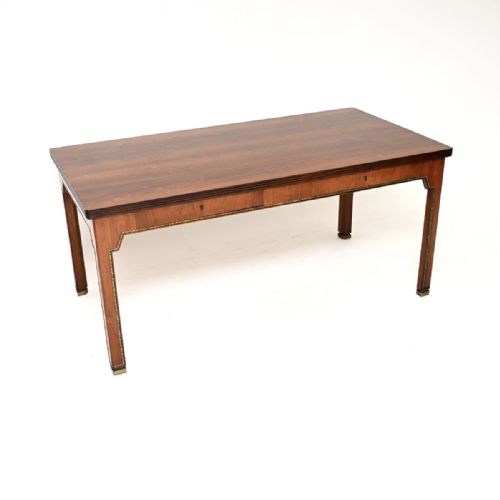
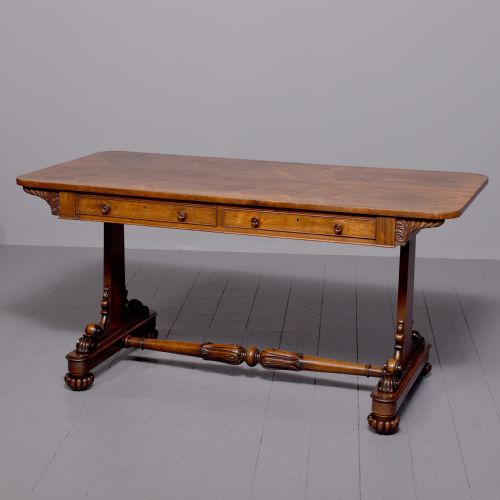
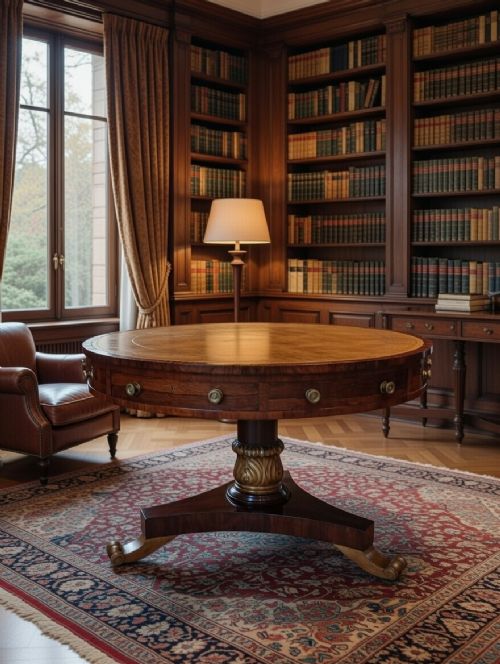
The pieces on this page are predominantly centre or writing tables and library desks, reflecting the formal requirements of nineteenth-century interiors. Their substantial construction and finished backs allow them to stand proudly in the middle of a room.
Makers and workshops of the period utilised rich timber figures and classic architectural details to create commanding pieces of furniture. Collectors seek out these tables for their combination of writing utility and decorative presence.
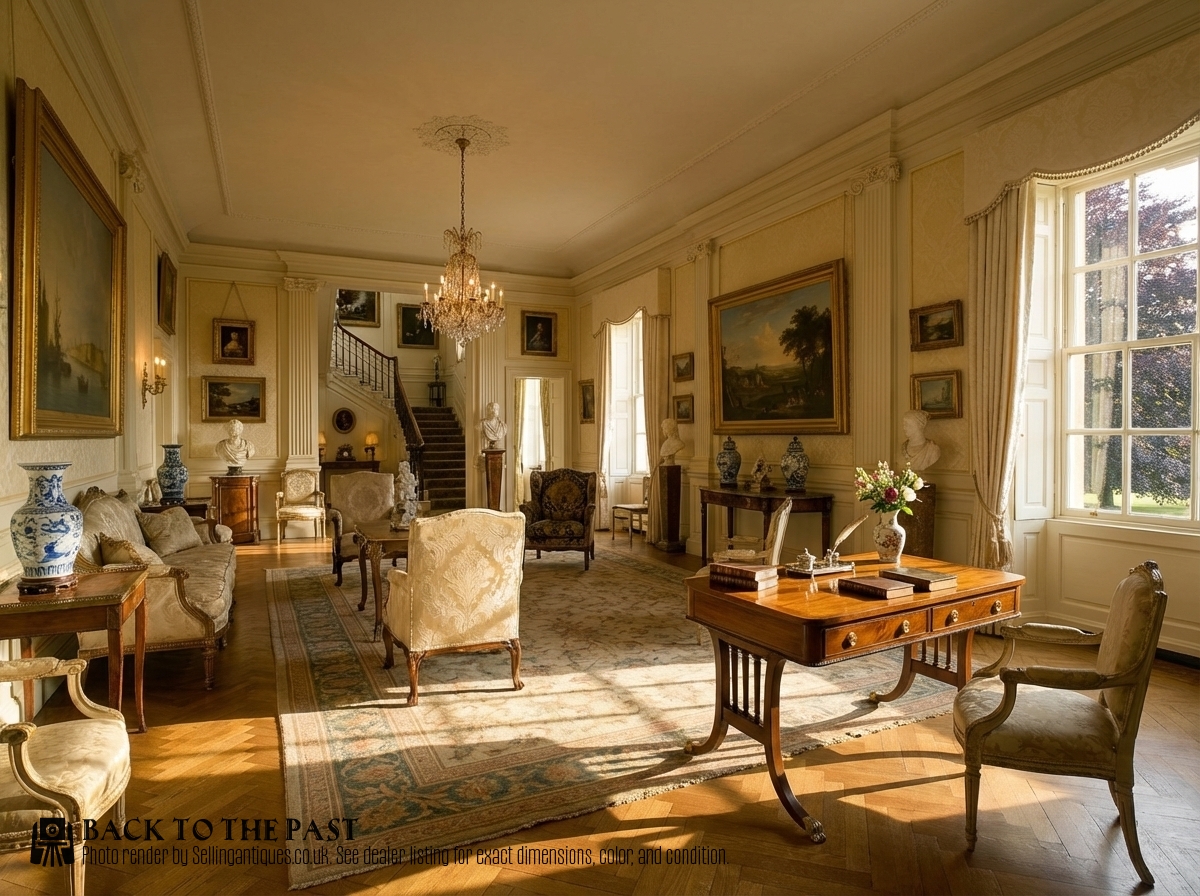
Materials and construction
The primary timber is rosewood, selected for its deep colour and dramatic grain patterns, often complemented by secondary structural woods. Cabinetmakers fashioned these desks with sturdy frames designed to support heavy volumes and daily correspondence.
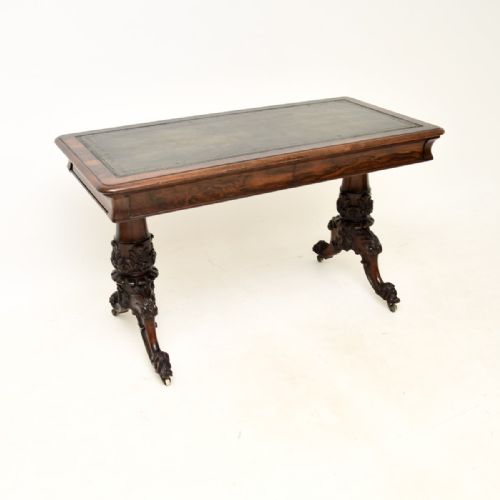
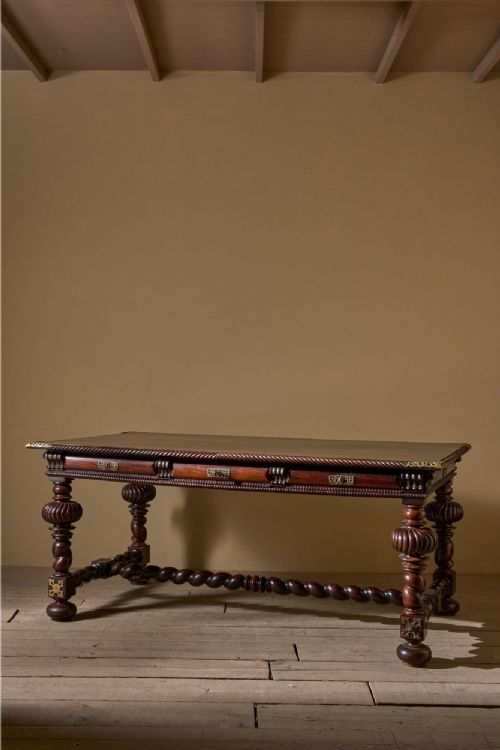
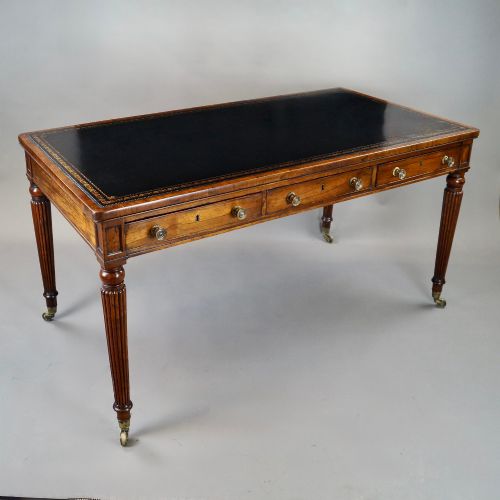
Surfaces frequently feature tooled leather or velvet inserts set into the writing top, providing a tactile contrast to the polished timber surround. Brass hardware, such as castors and key escutcheons, adds functional detail to the substantial forms.
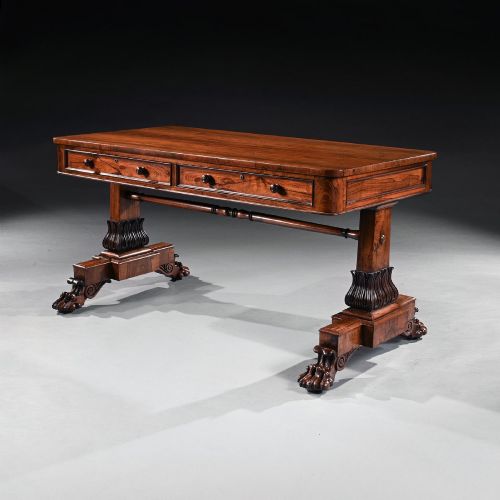
Carved elements, including lions paw feet and Gillows-style detailing, demonstrate the sculptural capability of nineteenth-century workshops. Joinery techniques ensured that large library tables remained stable and level over centuries of use.
Retail Price Guide 2026
Typical UK retail prices for rosewood library desk, calculated from the Sellingantiques database of over a million retail prices indexed since 2003. This retail price guide relies exclusively on Sellingantiques data; no external sources or auction records are used, so the figures do not describe the wider market.
Listings feature pieces spanning the Regency, William IV, and George IV periods, constructed primarily from rosewood with leather and brass details.
Assessing quality and craftsmanship
The upper tier of rosewood library desks displays superior timber selection, where the grain runs symmetrically across the main top surfaces and drawer fronts. Cabinetmakers of the highest order ensured that carved details, such as lions paw feet, were executed with crisp, deep relief rather than shallow moulding.
Proportion and the handling of secondary woods separate standard production from exceptional examples associated with Gillows style and quality. A well-balanced piece maintains visual harmony between its structural supports and the expansive writing surface above.
Gillows
The Rosewood Library Desk Glossary
- Rosewood
- A dense, heavy timber known for its dark colour and striking grain, highly favoured for fine cabinet-making in the nineteenth century. It takes a high polish and shows dramatic figuring.
- Library Table
- A large freestanding table designed for the centre of a room, often featuring drawers and finished on all sides for versatile placement. These pieces served both writing and reading functions in period homes.
- Regency
- An English design style spanning the early nineteenth century, characterised by classical restraint, architectural motifs, and refined proportions. It draws inspiration from ancient Greek and Roman forms.
- William IV
- A transitional style bridging the Regency period and the early Victorian era, marked by robust proportions and bold carved details. Furniture from this era often incorporates substantial scrolling and rich timber veneers.
- Bureau Plat
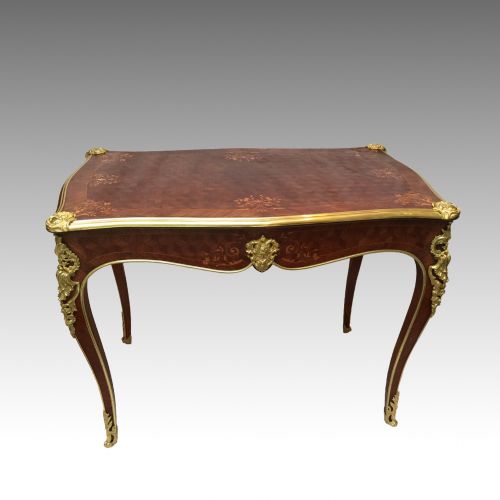
- A French-style writing table with a flat top and one or more drawers in the frieze, designed to stand away from the wall. This form offers generous knee clearance and a broad writing surface.
Frequently Asked Questions
How do I care for rosewood furniture?
Rosewood requires stable humidity and protection from direct sunlight to prevent the deep timber tones from fading or the polished surface from drying out. Regular dusting with a soft, dry cloth maintains the natural sheen without building up residue.
Avoid placing hot cups or damp items directly on the polished wood or leather inserts to preserve the historic finish.
How do I tell Regency from William IV?
Regency pieces generally exhibit lighter, more restrained classical proportions inspired by ancient antiquity, with crisp lines and subtle brass or carved accents. The overall aesthetic feels neat and architecturally precise.
William IV furniture tends towards heavier, more robust forms with bolder carving, such as substantial lions paw feet and pronounced scrolling details that anticipate Victorian taste.
Where should I place a library desk?
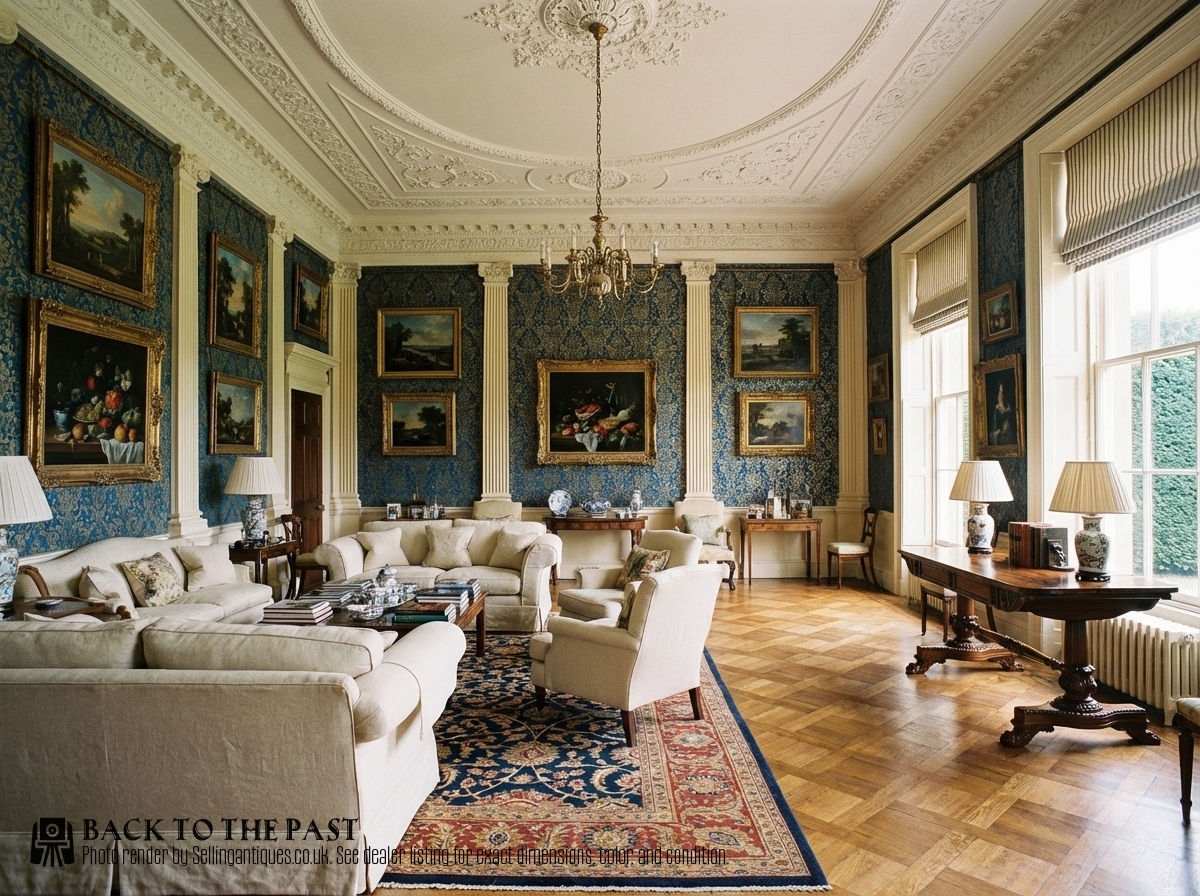
Library desks are traditionally designed as freestanding centre tables, meaning they look best positioned in the middle of a study or living room where all sides are visible. Their finished backs and refined detailing allow them to anchor a room visually.
Ensure there is adequate clearance around the piece for chairs and movement, allowing you to appreciate the proportions and carved details fully.