


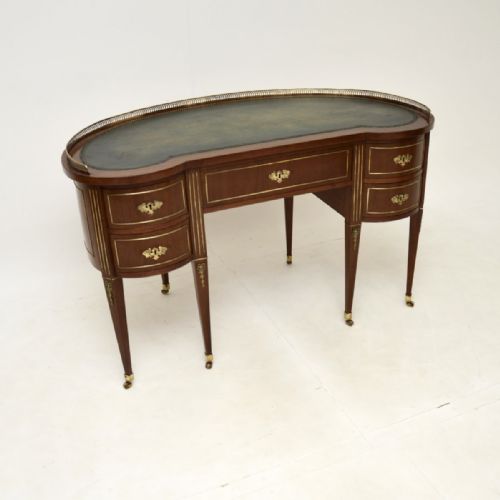
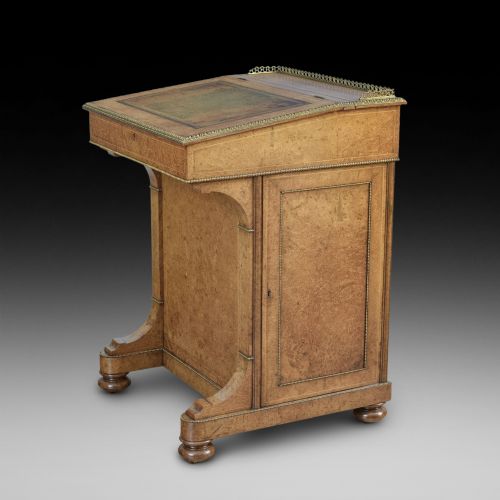
Brass Gallery Writing Desk
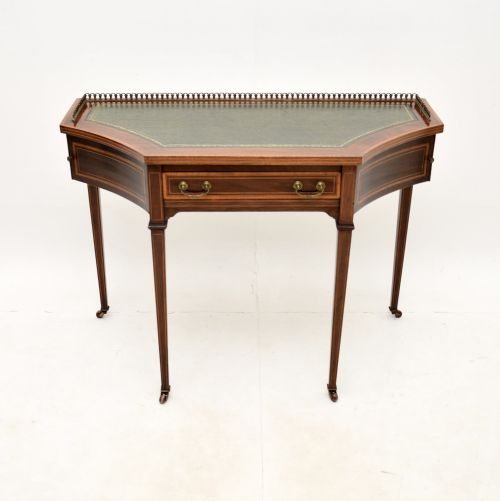
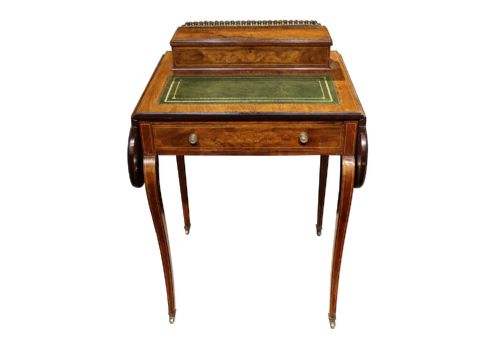
A brass gallery writing desk provides a refined surface for correspondence, defined by its raised metal rail.
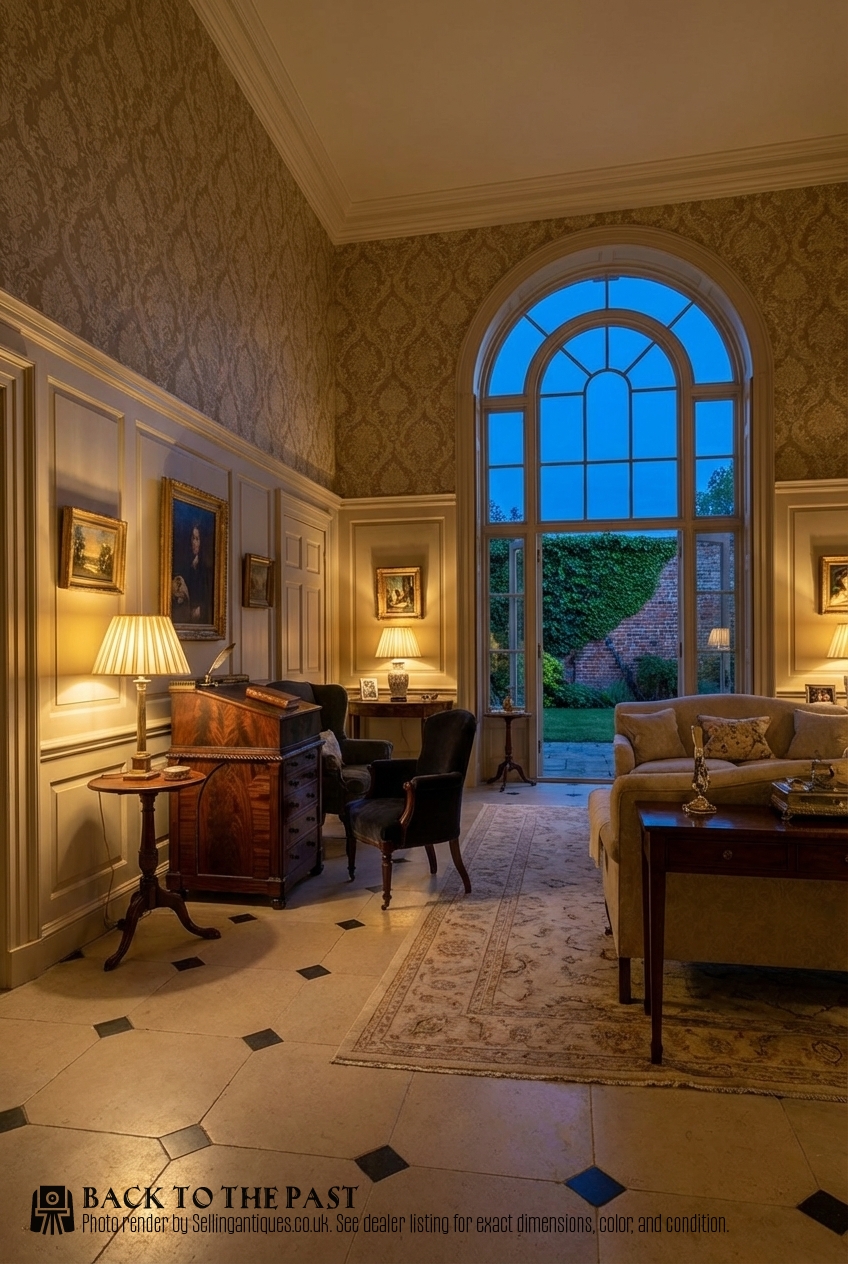
Brass Gallery Writing Desk
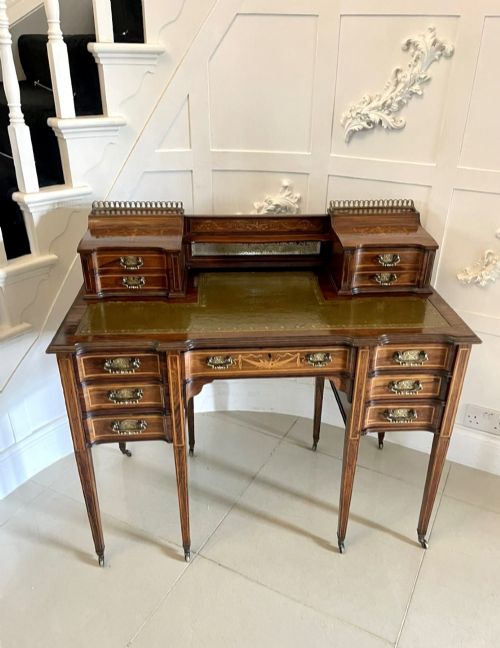
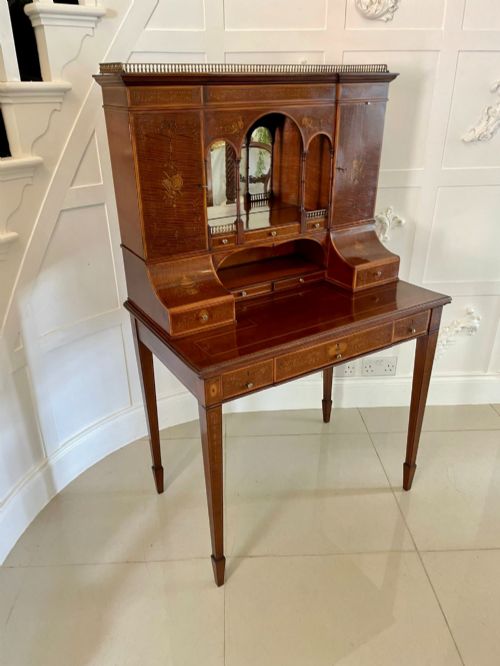
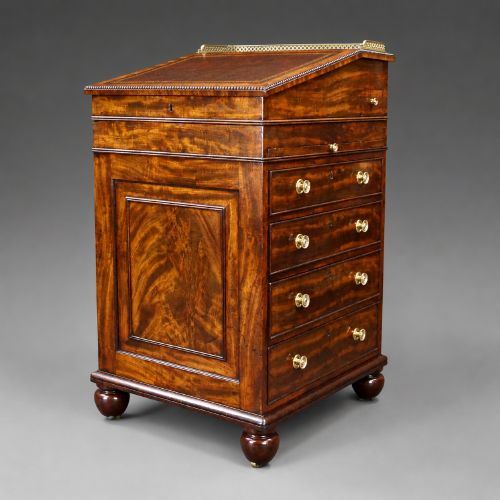
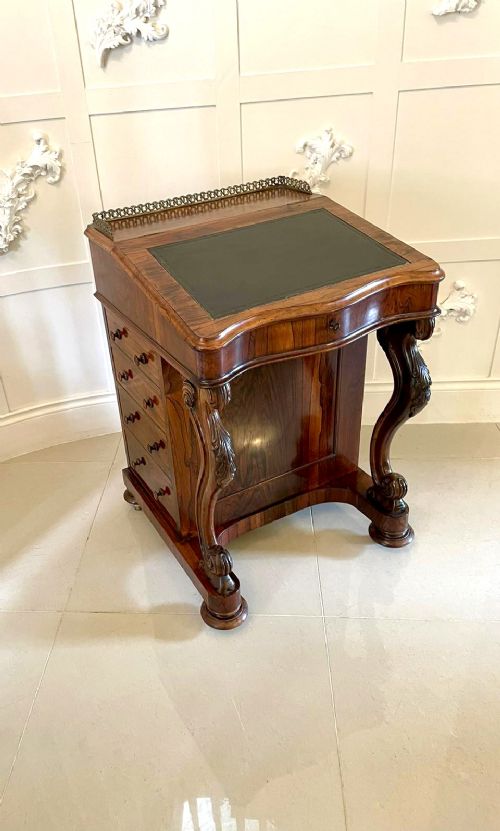
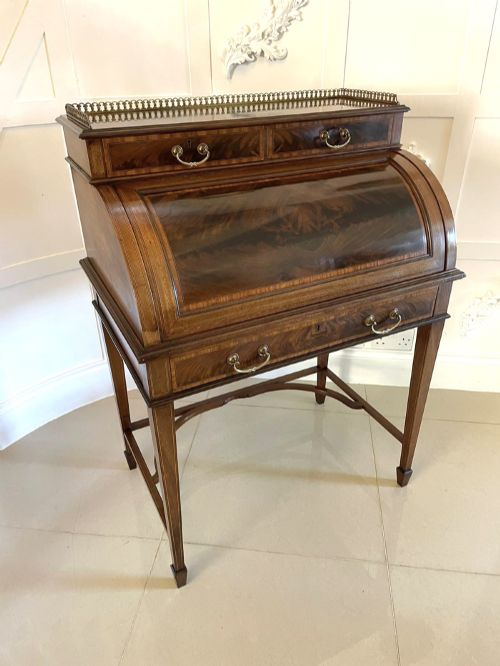
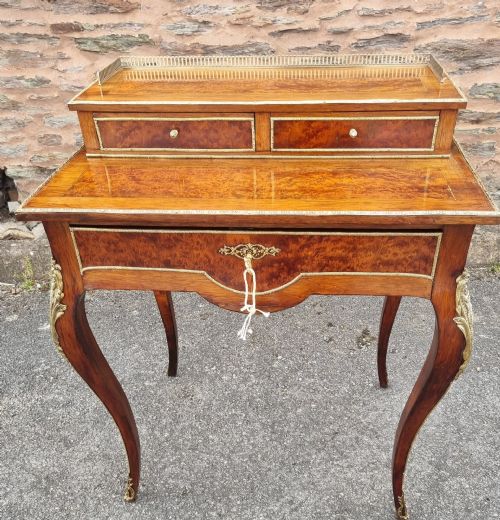
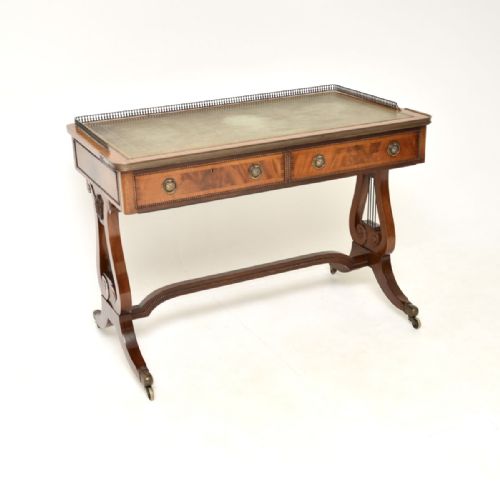
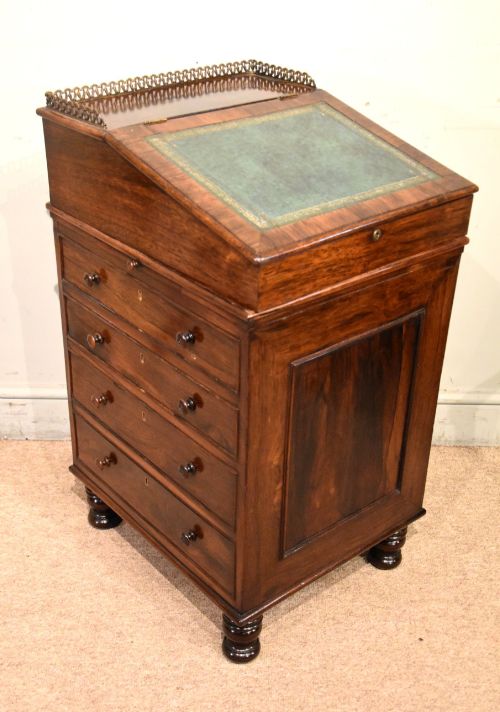
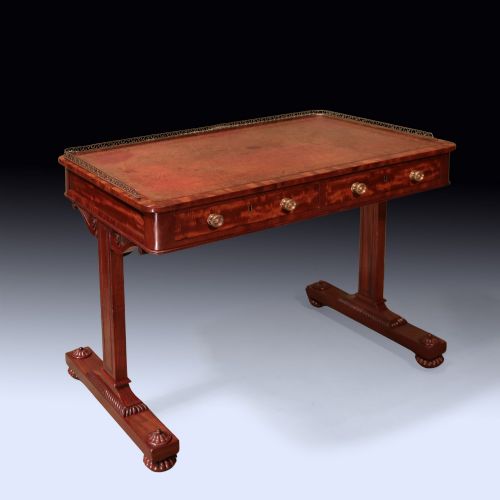
A brass gallery writing desk is a dedicated surface for correspondence and study, typically outfitted with a raised metal rail along the upper edge to secure papers and inkwells. These pieces appear across several eras, including the Regency, Victorian, and Edwardian periods, taking forms such as compact Davenports, larger pedestal tables, and elaborate Carlton House desks. Mahogany, rosewood, and satinwood form the primary carcass woods, often enriched with fine marquetry or crossbanding.
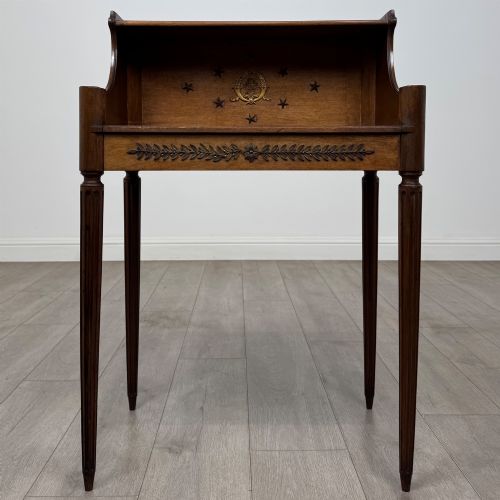
Buyers meet a wide variety of domestic writing furniture on this page, ranging from modest satinwood lady's tables to freestanding walnut cylinder desks. Edwardian Sheraton Revival examples sit alongside earlier 19th-century designs, reflecting shifts in interior fashion from formal Georgian lines to lighter, inlaid Edwardian pieces. Ormolu mounts and leather inset tops frequently complement the defining brass gallery.
The layout of these tables varies from simple writing surfaces to complex fitted interiors with pigeonholes and small drawers. Freestanding variants allow placement in the centre of a room, finished with polished timber on all sides rather than pushed against a wall.
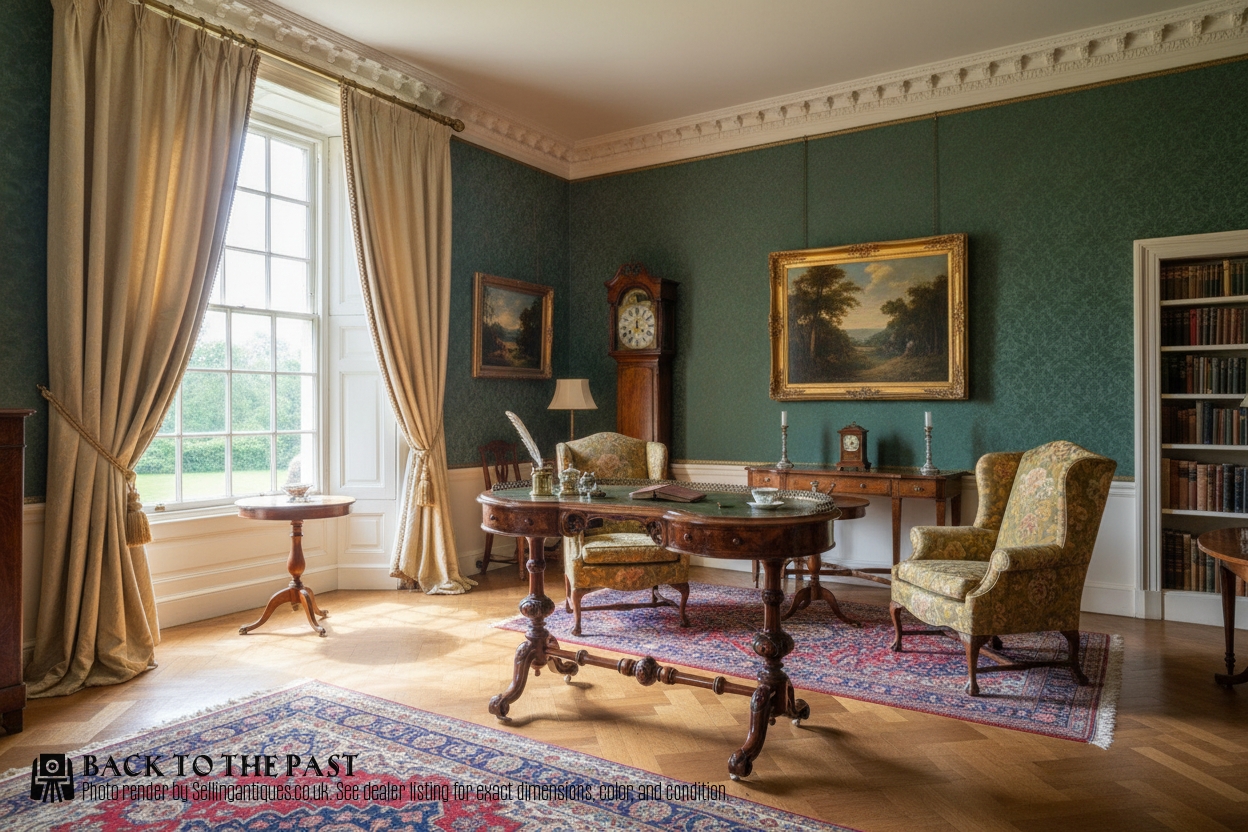
How they were made
Cabinetmakers constructed these desks using dense hardwoods like mahogany, rosewood, and pollard oak, often over sturdy pine or oak carcases. Veneers of satinwood, amboyna, and burr walnut provided decorative patterned surfaces, laid down with hot animal glues and hand-polished with shellac to create a deep French polish finish. Inlays utilised contrasting boxwood and ebony lines to trace geometric and floral motifs.
Brass galleries were cast or fabricated in sections, then screwed or pinned into the wooden upper framework to form a protective railing. Leather writing surfaces, often gold-tooled around the perimeter, were inset into the timber top to provide a smooth, resilient plane for ink pens. Ormolu mounts, cast in bronze and gilded, adorned French and neoclassical variants to accent corners and aprons.
Brass Gallery Writing Desk Retail Price Guide 2026
Typical asking prices for brass gallery writing desk among the pieces listed under this phrase on Sellingantiques today, from the lower quarter to the upper quarter. They describe what is for sale here now, not the wider market.
Estate managers required sturdy oak desks with functional sliding tops to keep muddy boots at bay while sorting estate accounts.
What varies in quality
The distinction between standard utility furniture and superior cabinetwork lies in the selection of timbers and the precision of internal construction. Finely figured flame mahogany or choice satinwood veneers indicate a higher tier of production, paired with secondary woods like solid oak rather than deal for drawer linings. Hand-cut dovetails on drawer boxes and original brass hardware signal workshop skill.
Design complexity also separates pieces, with sophisticated mechanisms in cylinder desks and Carlton House variations demanding advanced carpentry. The crispness of marquetry inlay and the weight of cast brass galleries rather than stamped sheet metal mark the upper range of craftsmanship.
Maple and Co·Gillows·Edwards and Roberts
The Brass Gallery Writing Desk Glossary
- Brass gallery
- A raised metal railing fitted to the top edge of a desk or table to prevent items from sliding off. It is typically cast or pierced.
- Davenport
- A compact pedestal desk featuring a sloping, hinged writing lid and drawers opening to one side. They gained immense popularity during the 19th century.
- Carlton House desk
- A horseshoe-shaped writing desk fitted with a tiered superstructure of small drawers and pigeonholes around the back and sides. This form dates back to the late 18th century and returned in Edwardian revivals.
- Cylinder desk
- A writing table featuring a curving quarter-circle wooden shutter that rolls back to reveal a pull-out writing slide and interior compartments. It conceals correspondence when closed.
- Ormolu
- Gilded bronze used for decorative mounts and accents on furniture, particularly popular in French neoclassical and Regency designs. The technique involves applying a gold amalgam to cast bronze.
Brass Gallery Writing Desk: Frequently Asked Questions
How do I use a Davenport desk?
The sloping top provides an angled surface for writing letters, while the interior compartment holds stationery and writing implements. Side drawers swivel or pull out to store documents.
Most Davenports are compact enough to serve as occasional writing desks in sitting rooms or bedrooms rather than primary office furniture.
Are these desks suitable for daily work?
Many period writing tables accommodate laptop use and modern correspondence, provided the writing height matches comfortable seating. Leather inserts offer a durable surface for daily tasks.
Care should be taken with antique polished finishes and leather surfaces when using modern pens or electronic equipment.
How do I distinguish Regency from Edwardian pieces?
Regency desks lean towards architectural severity, bold mahogany grains, and classical brass mounts inspired by antiquity. They date from the early 19th century.
Edwardian pieces, built around 1900, often revive earlier Sheraton styles with lighter satinwood inlays, delicate tapered legs, and refined proportions.