

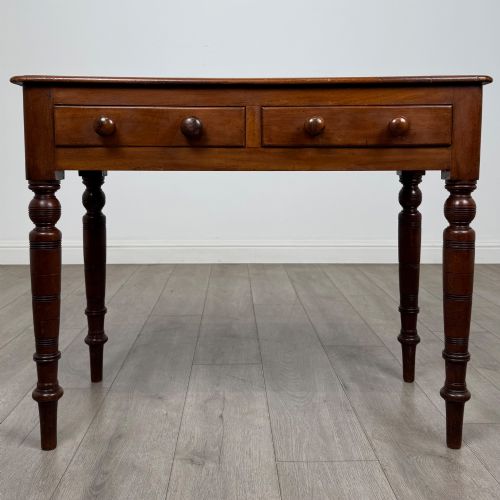
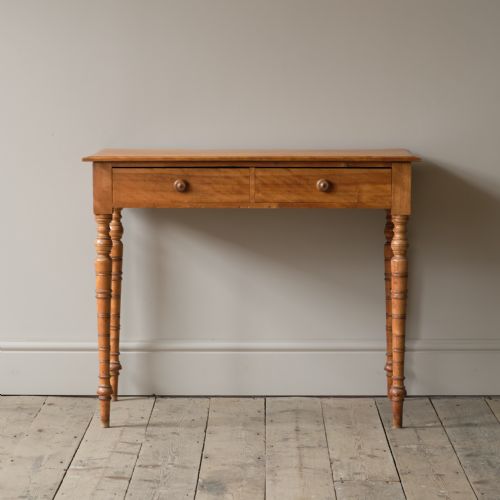
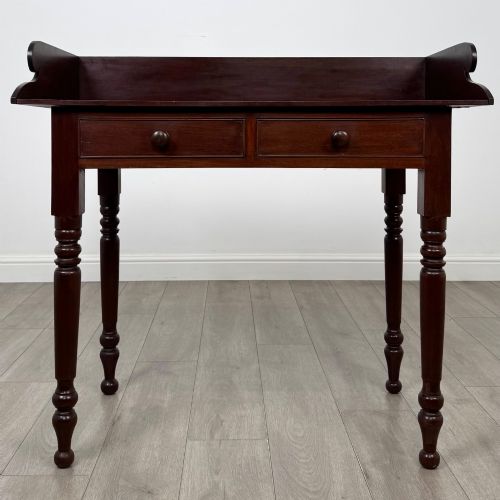
Two Drawer Writing Desk
A two drawer writing desk offers compact workspace and traditional craftsmanship, uniting practical storage with period character in any room.
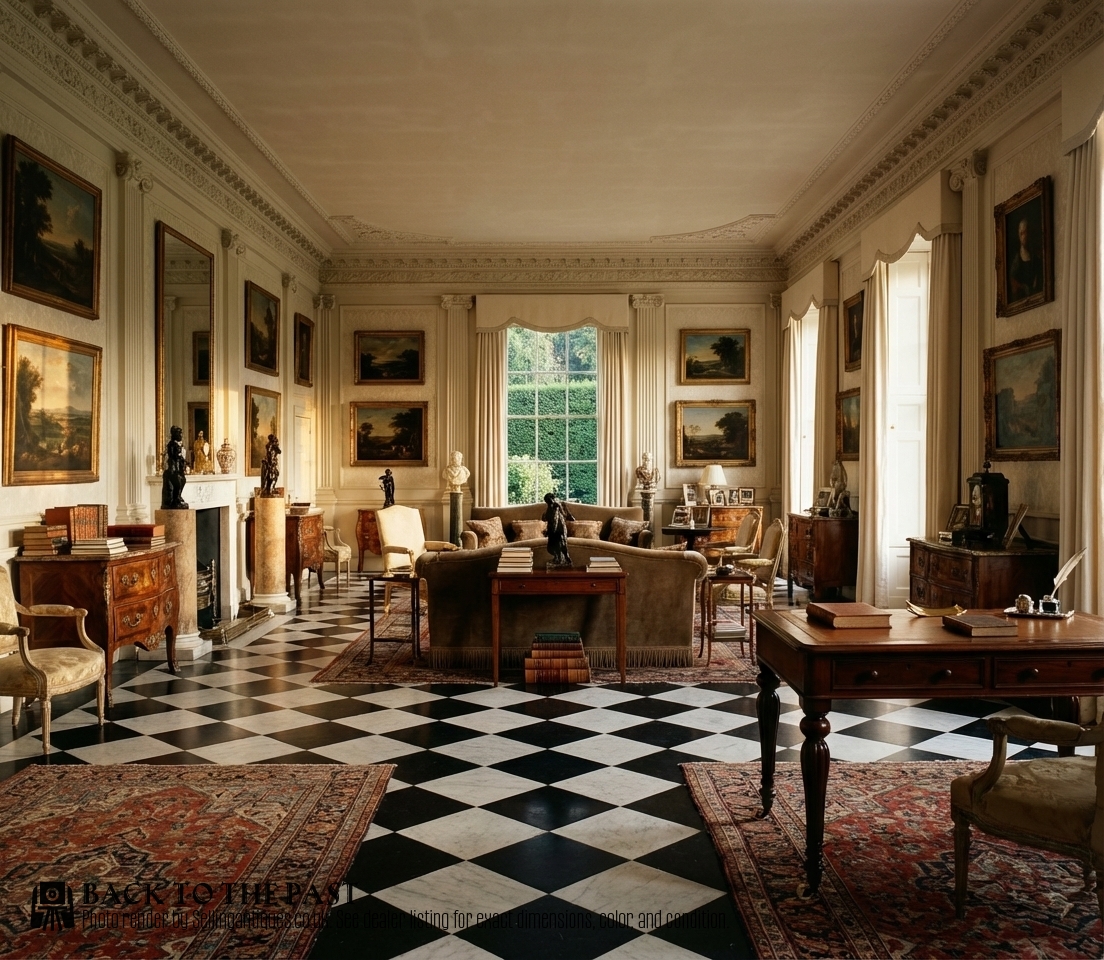
Two Drawer Writing Desk
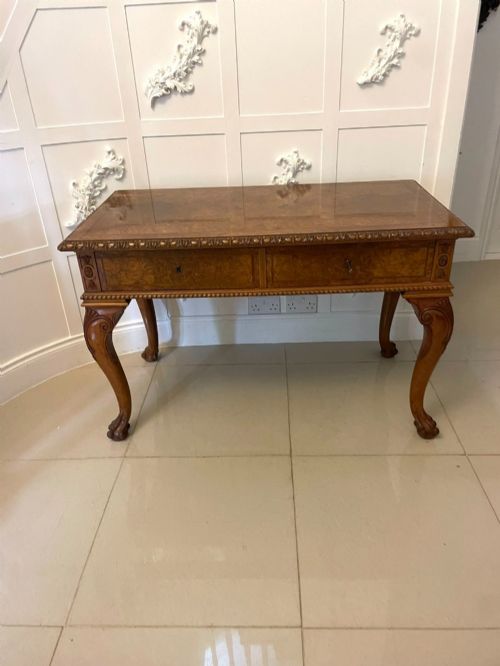
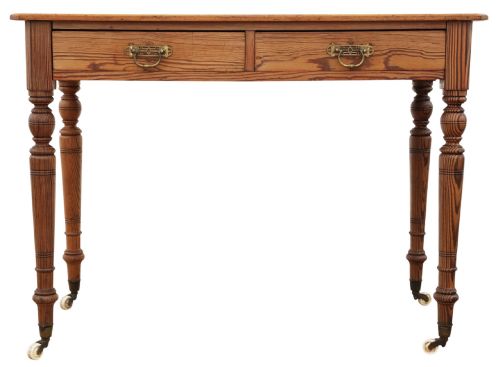
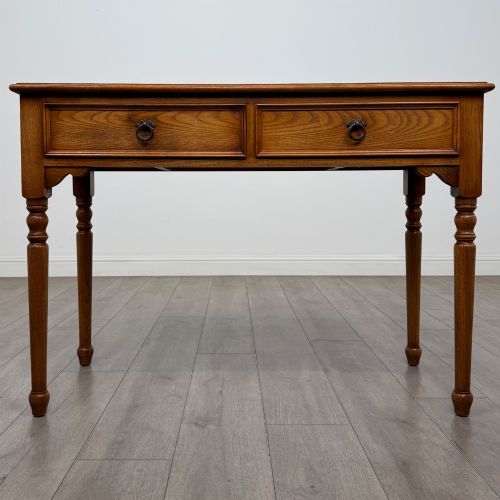
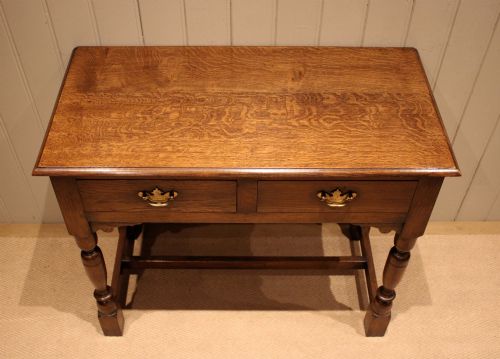
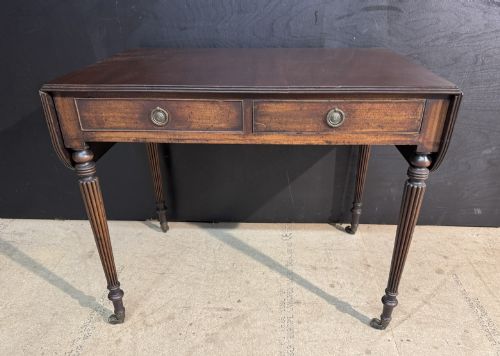
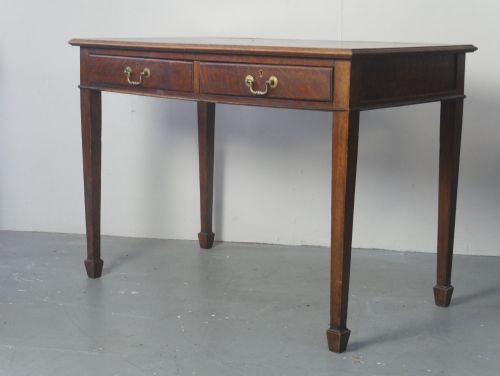
A two drawer writing desk brings together functional workspace and compact storage, taking the form of a writing table, side table, or occasional table fitted with twin drawers. When exploring this selection, buyers encounter pieces originating from the Georgian, Victorian, and Edwardian eras, alongside items from the 1920s.
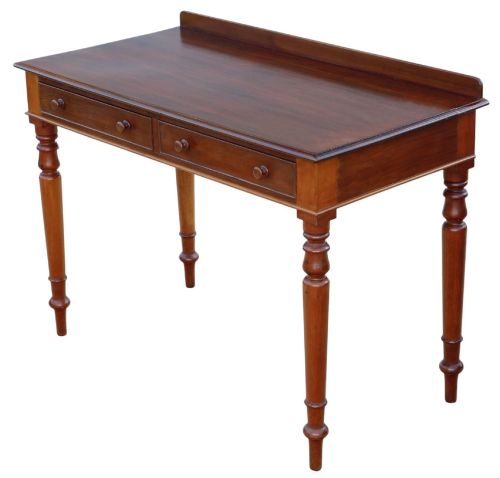
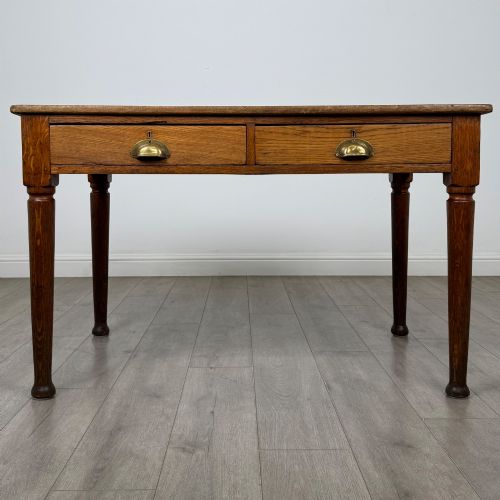
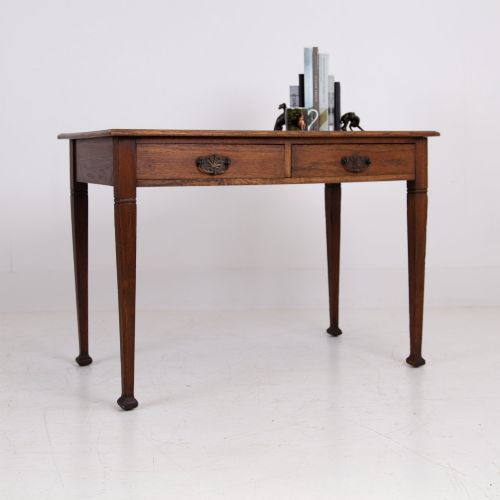
The most common examples on this page are constructed in mahogany and oak, frequently appearing as library tables, dressing tables, or side tables adapted for writing. Makers from the 19th century onward produced these items in various regional workshops, ranging from simpler utilitarian pieces to elaborate parlour furnishings.
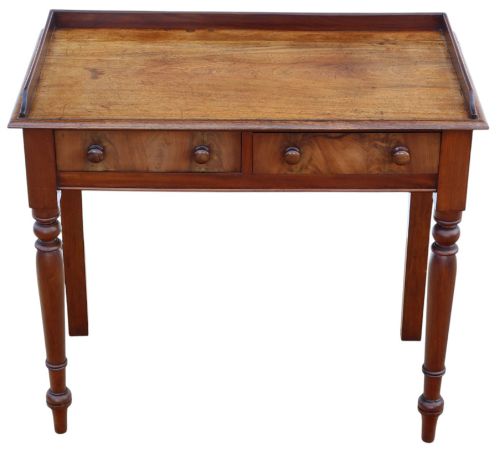
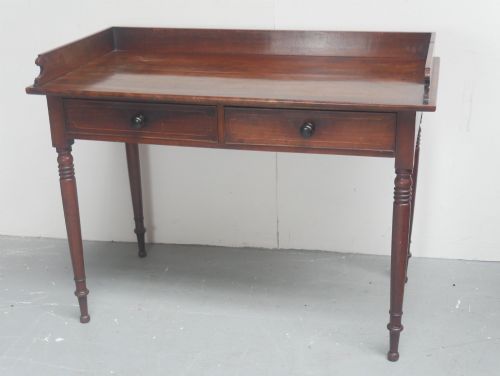
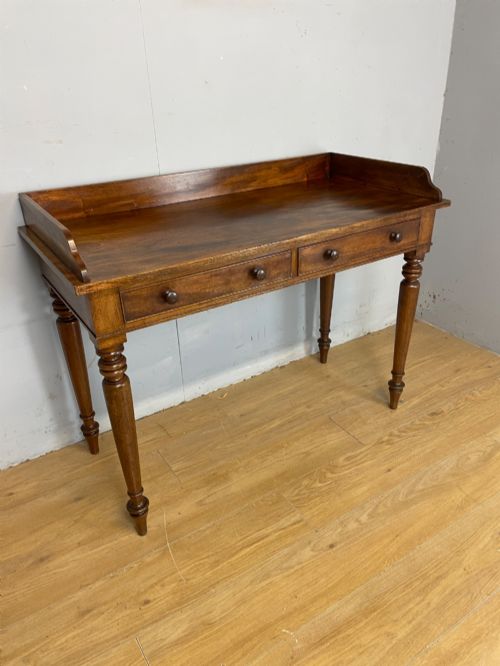
Structural variations include freestanding console formats, tray-top designs, and compact bureau bookcases. Buyers select these tables to serve as functional writing surfaces that fit easily into smaller domestic spaces while displaying period joinery.
Materials and Construction
Cabinet makers constructed these desks using native and imported hardwoods, principally mahogany, oak, walnut, and rosewood, occasionally incorporating secondary timbers like pine or birch for internal framing. Surfaces often display flame mahogany veneers, burr walnut figure, or satinwood panels, finished with hand-applied polish.
Drawer construction typically relies on traditional hand-cut dovetail joints, ensuring durability under daily use. Brass drop handles, knob pulls, or escutcheons secure the drawer fronts, while structural elements frequently incorporate turned legs, barley twist supports, or straightforward square framing.
Two Drawer Writing Desk Retail Price Guide 2026
Typical asking prices for two drawer writing desk among the pieces listed under this phrase on Sellingantiques today, from the lower quarter to the upper quarter. They describe what is for sale here now, not the wider market.
Several desks come equipped with inkstand companions, ensuring your stationery stays neatly organised while you compose letters by candlelight.
Standards of Execution
The distinction between standard and superior pieces rests upon timber selection, timber figure, and the precision of the cabinet maker's joinery. Fine examples display carefully matched veneers, flawless drawer runners, and thoughtful secondary wood choices inside the drawer carcase.
Decorative detailing elevates certain pieces above standard utility furniture, seen in turned barley twist legs, fine ebonised accents, or quality brass hardware. The integrity of the original polish and the crispness of carved or turned elements define the upper tier of the selection.
Heal and Son·Mein of Kelso·Hubert Simpson of Kendal·J A Mein Edinburgh Cabinet Maker·Gillows of Lancaster
The Two Drawer Writing Desk Glossary
- Dovetail joint
- A traditional interlocking woodworking joint used in drawer construction. It provides exceptional tensile strength and indicates skilled cabinet making.
- Flame mahogany
- A highly figured mahogany veneer featuring a flickering flame pattern. Cabinet makers reserved this timber for prominent surfaces like drawer fronts and tabletops.
- Escutcheon
- A decorative brass plate surrounding a keyhole. It protects the surrounding wood from wear and adds a polished metal accent to the drawer.
- Secondary wood
- The internal timber used for drawer linings and carcase backs where it remains hidden from view. Pine and oak frequently serve this purpose in British furniture.
- Barley twist
- A carved spiral column or furniture leg resembling twisted barley sugar. This decorative turning style appears frequently on 17th-century revival and later pieces.
Two Drawer Writing Desk: Frequently Asked Questions
What periods do these desks cover?
The available selection spans several distinct eras, beginning with the Georgian period around eighteen hundred, continuing through Victorian and Regency designs, and extending into Edwardian and nineteen twenties pieces.
Each period imparts characteristic proportions and timber choices, ranging from simple early mahogany tables to later oak and burr walnut variations.
How were two drawer desks used?
These tables served primarily as compact writing surfaces, library tables, or dressing tables in domestic settings. The twin drawers provided convenient storage for correspondence, writing implements, and personal documents.
Their versatile size allowed them to function as console tables in halls or as occasional writing desks in private chambers.
What woods should I look for?
Mahogany and oak dominate the selection, offering durability and traditional appearance. Walnut, rosewood, satinwood, and burr walnut appear on finer or more decorative examples.
Secondary timbers like pine or birch often form the interior drawer components.
How do I identify a Georgian desk?
Georgian examples often display clean classical proportions, understated mahogany or oak surfaces, and straightforward drawer construction with hand-cut dovetails. Leg styles on these pieces range from simple tapered forms to barley twist supports.
Examining the secondary timbers and interior construction helps confirm the period.