


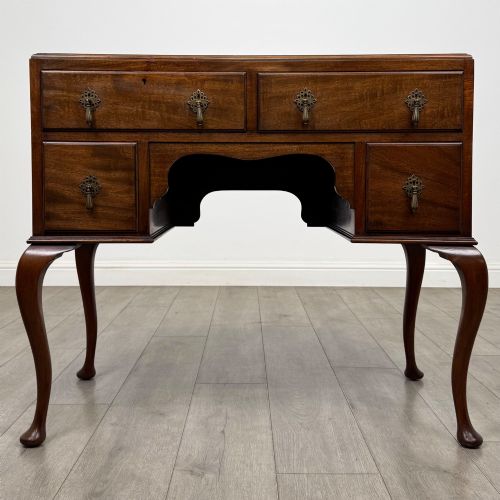
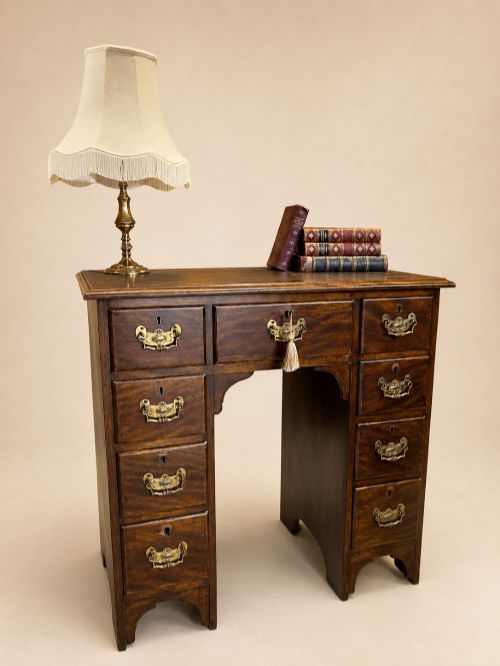
Mahogany Study Table
Mahogany study table pieces bring rich timber grain and period utility to a room, offering a solid surface designed for correspondence and reading.
Defining the mahogany study table
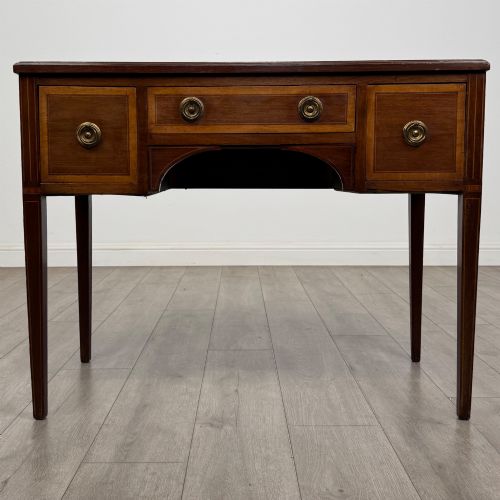
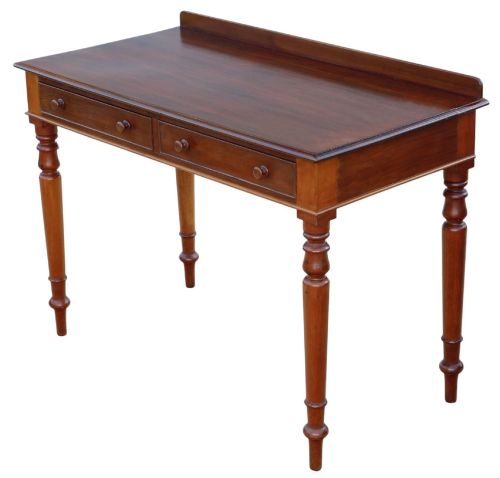
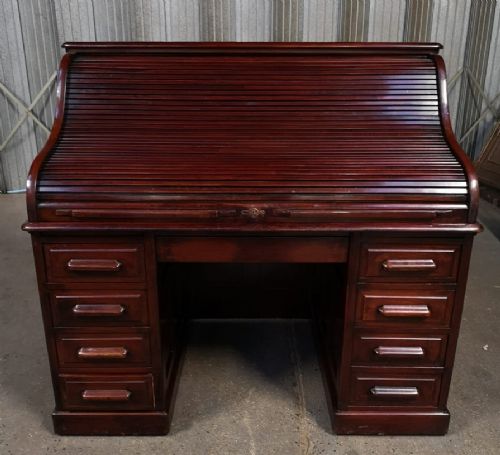
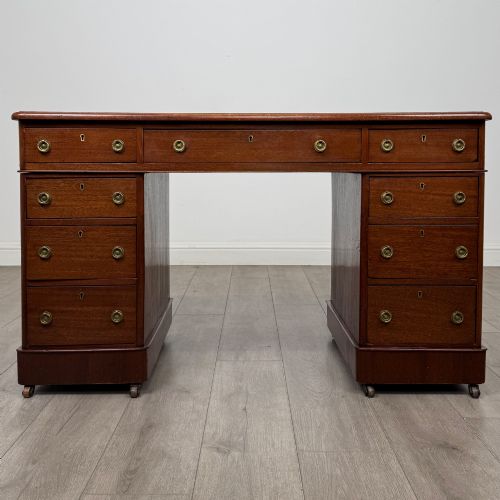
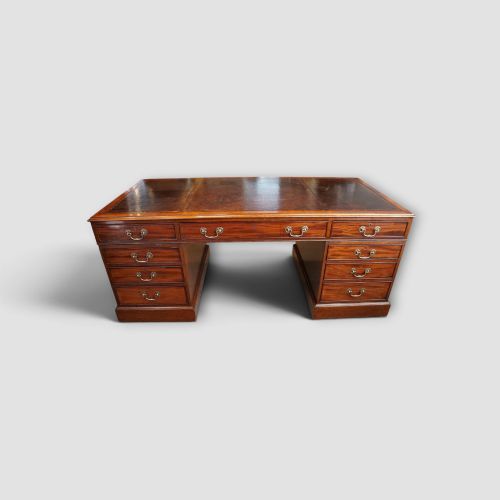
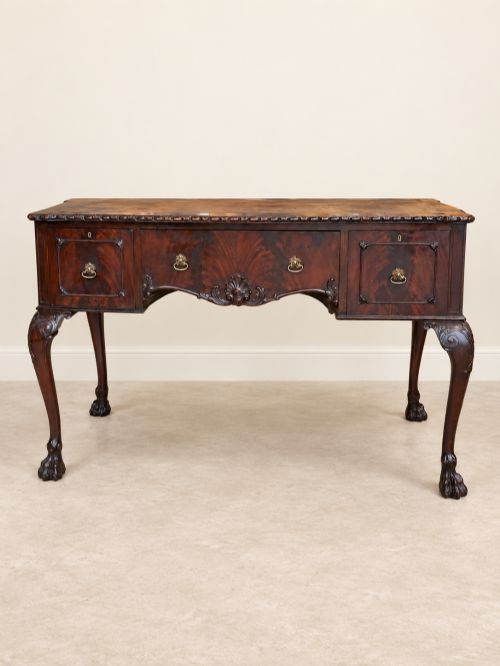
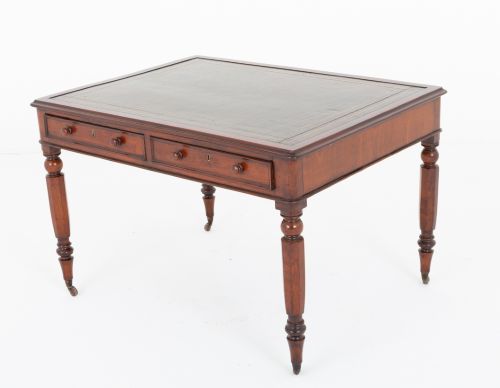
A mahogany study table serves as a functional workspace, appearing in forms such as writing desks, library tables, and pedestal desks. These pieces originate from various periods including the Regency era, Victorian times, and the Edwardian period.
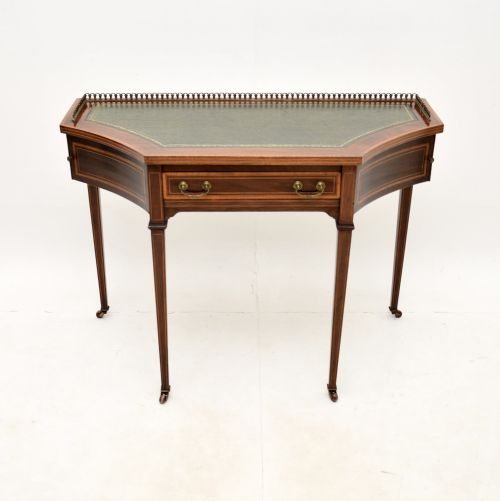
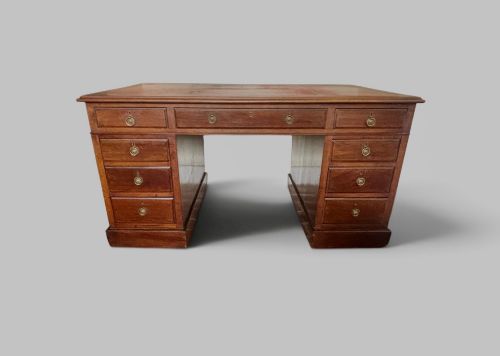
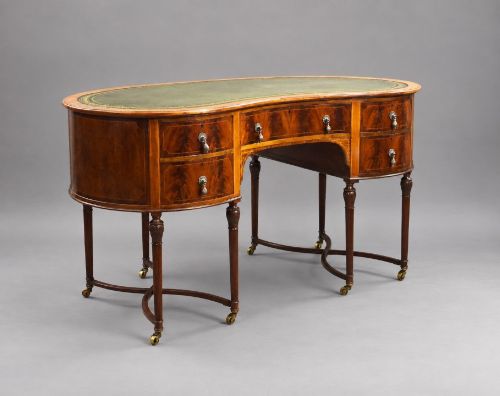
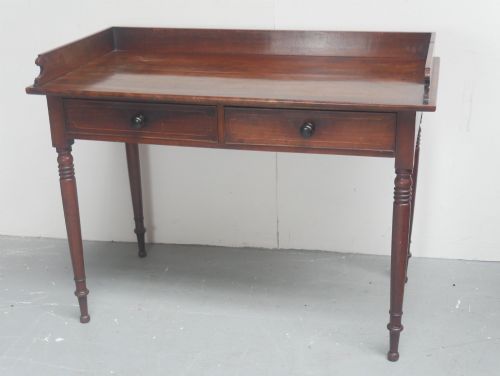
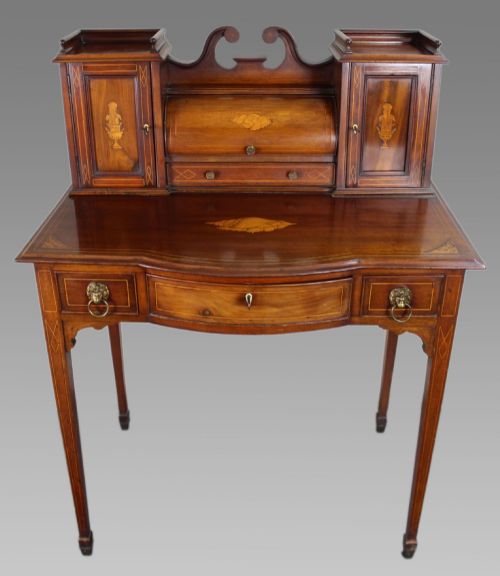
Buyers encountering these items on this page will frequently see writing desks and library tables constructed from solid timber or veneered surfaces. The forms range from kidney-shaped Edwardian examples to substantial rectangular Victorian library tables.
Originating primarily from English workshops, these items reflect the changing domestic and study requirements of the nineteenth and early twentieth centuries. The surviving examples demonstrate how writing furniture evolved to suit both grand libraries and smaller private studies.
Construction materials and techniques
Makers utilised primary timbers such as standard mahogany, flame mahogany, and dense Cuban mahogany to build these study tables. These woods were often selected for their deep colour and pronounced grain patterns.
Working surfaces frequently incorporate inset leather panels, providing a durable writing texture framed by the surrounding timber. Structural details commonly involve brass hardware, adding functional contrast to the dark wood.
Retail Price Guide 2026
Typical UK retail prices for mahogany study table, calculated from the Sellingantiques database of over a million retail prices indexed since 2003. This retail price guide relies exclusively on Sellingantiques data; no external sources or auction records are used, so the figures do not describe the wider market.
Some Edwardian tables feature curves snug enough to make writing feel like sitting inside a hug.
Assessing quality in construction and grain
Quality in these pieces rests upon the selection of timber, where highly figured flame mahogany or dense Cuban mahogany elevates the visual presence of the furniture. The handling of the wood grain across large surfaces distinguishes standard utility pieces from finer examples.
The integration of secondary materials, such as finely tooled leather writing surfaces and well-cast brass fittings, separates the better-executed tables from simpler workshop output. Construction integrity in the drawers and framing ensures the longevity of the piece.
The Mahogany Study Table Glossary
- Flame mahogany
- A veneer figure characterised by repeating flame-like patterns derived from branch junctions. This cut creates dramatic visual movement across the top of a table.
- Cuban mahogany
- A dense, heavy timber harvested in the Caribbean, known for its dark colour and fine grain. It was widely used in high-status furniture before supplies dwindled.
- Pedestal desk
- A form featuring two supporting banks of drawers beneath a rectangular writing surface. This layout provides substantial storage alongside the main workspace.
- Kidney-shaped
- A curved desk design popular in the Edwardian period, shaped to wrap around the user. This contour offers a distinct departure from traditional rectilinear tables.
Frequently Asked Questions
What is a mahogany study table used for?
These tables provide a dedicated surface for writing, reading, and administrative tasks in a home or library setting.
Historically, they served as central furniture pieces in studies and offices, combining workspace utility with formal appearance.
How do I identify a Regency study table?
Regency pieces often display classical proportions, clean lines, and restrained ornament reflecting early nineteenth-century design.
They rely on the natural grain of the mahogany rather than heavy carving to create visual interest.
Are these tables fitted with leather?
Many examples feature inset leather tops designed to provide a smooth, durable surface for writing.
These leather inserts are frequently bordered with blind tooling or gold leaf decoration.
How do I care for a mahogany table?
Keep the timber away from direct heat sources and strong sunlight to prevent the mahogany and leather from drying out.
Routine dusting with a soft cloth maintains the finish without needing heavy polishes.