


Cuban Mahogany Desk
Cuban mahogany desks are substantial writing pieces prized for their dense timber and rich figuring, built to last generations.
Understanding the cuban mahogany desk
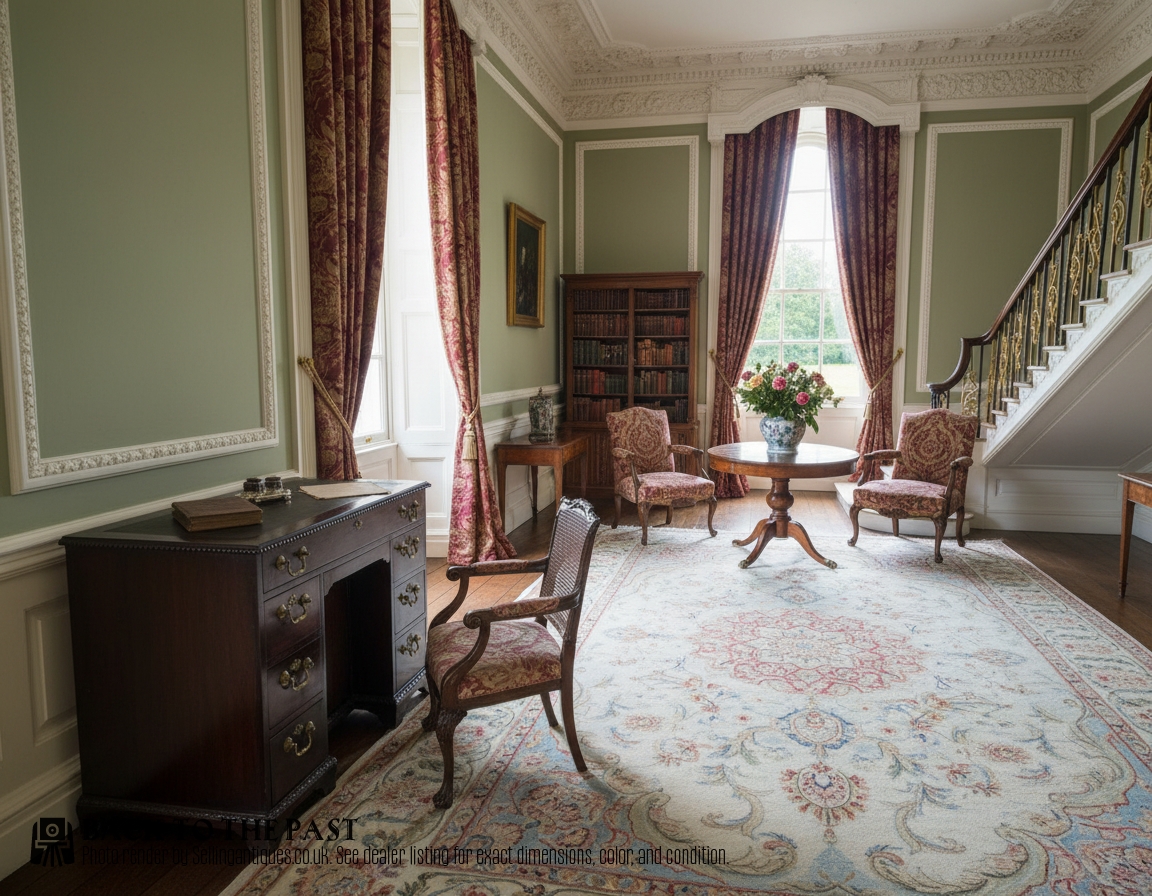
A cuban mahogany desk brings together dense colonial timber and formal cabinet making, appearing most frequently in Georgian kneehole forms and bureau bookcases. These pieces served as serious writing and storage furniture for libraries and private studies, constructed with deep drawers and fitted interiors.
The selection ranges from early Georgian bureau cabinets to nineteenth century partners pedestals, library writing tables, and matching desk chairs. Buyers encounter compact kneehole configurations as well as larger cylinder and pedestal writing tables originating from the eighteenth and nineteenth centuries.
Materials and construction
Makers utilised dense Cuban mahogany timber, known for its heavy weight and dark grain, paired with secondary woods for internal drawer linings. Brass handles, escutcheons, and occasional glass doors complete the hardware and fittings of these writing pieces.
Joinery methods relied on dovetailed drawer construction and solid timber panels, allowing pieces like bureau bookcases and kneehole desks to endure heavy daily use over centuries.
Retail Price Guide 2026
Typical UK retail prices for cuban mahogany desk, calculated from the Sellingantiques database of over a million retail prices indexed since 2003. This retail price guide relies exclusively on Sellingantiques data; no external sources or auction records are used, so the figures do not describe the wider market.
Distinctions in quality
The upper tier of pieces is distinguished by exceptional timber selection with striking natural figuring across large uninterrupted surfaces, alongside comprehensive internal fittings and original brass hardware. Master workshops demonstrated superior handling of proportions, particularly in complex forms like bureau bookcases and fitted kneehole desks.
Lesser examples display plain grain figures, replaced hardware, or significant timber repairs to the writing surface and drawer frames, altering the original integrity of the piece.
Jewell's of Holborn, London·Gillows of Lancaster
The Cuban Mahogany Desk Glossary
- Kneehole desk
- A compact writing desk featuring a central recessed space for the legs, flanked by pedestals of small drawers. This form became popular during the Georgian period.
- Bureau bookcase
- A tall cabinet combining a sloping writing flap that opens to reveal pigeonholes and small drawers, surmounted by glazed shelving. Early examples show fine joinery in Cuban mahogany.
- Partners desk
- A large pedestal writing table designed to accommodate two people sitting opposite each other, featuring drawers on both sides. These incorporate green leather writing surfaces in the historical record.
- Escutcheon
- A protective brass plate surrounding a keyhole on a drawer or cupboard door. They are often original cast brass on better pieces.
- Secondary wood
- The internal timber used for drawer linings, backboards, and carcase frames where Cuban mahogany was not displayed. Oak and pine appear commonly in these hidden structural roles.
Frequently Asked Questions
How do I identify a Georgian cuban mahogany desk?
Georgian examples typically display clean architectural lines, solid brass drop handles, and fine cockbeading around the drawer edges. The timber feels noticeably heavy and exhibits a deep, dark patina built up over generations.
Later Victorian pieces often incorporate cylinder rolls or pedestal formats, while eighteenth century items favour kneehole configurations and bureau formats with fitted internal compartments.
How should I care for a historic mahogany surface?
Maintain the timber by applying a traditional beeswax polish sparingly and buffing gently with a soft cloth to preserve the natural lustre. Avoid placing the desk near direct heat sources or strong sunlight, which can dry out the dense wood and fade the rich colour.
Use coasters and desk pads if writing directly on the wooden surface to protect the polish from moisture and friction.
Why is Cuban mahogany different from other mahogany types?
Cuban mahogany, also known as Spanish mahogany, is a denser and heavier hardwood with a darker, richer grain pattern than later harvested varieties. Its export was heavily restricted by the late eighteenth century, making authentic pieces highly sought after by collectors.
The slow growth rate of the timber produced exceptional stability and a deep reddish brown colour that matures gracefully over time.