
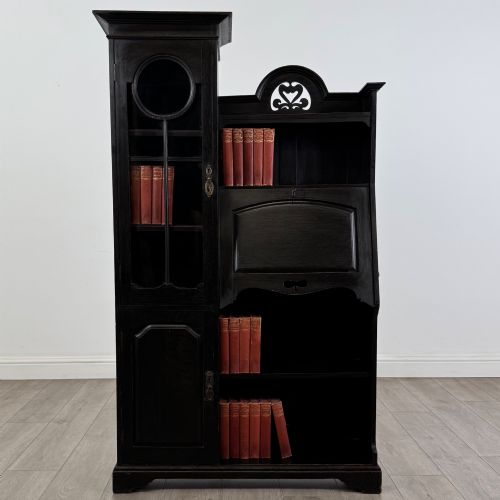
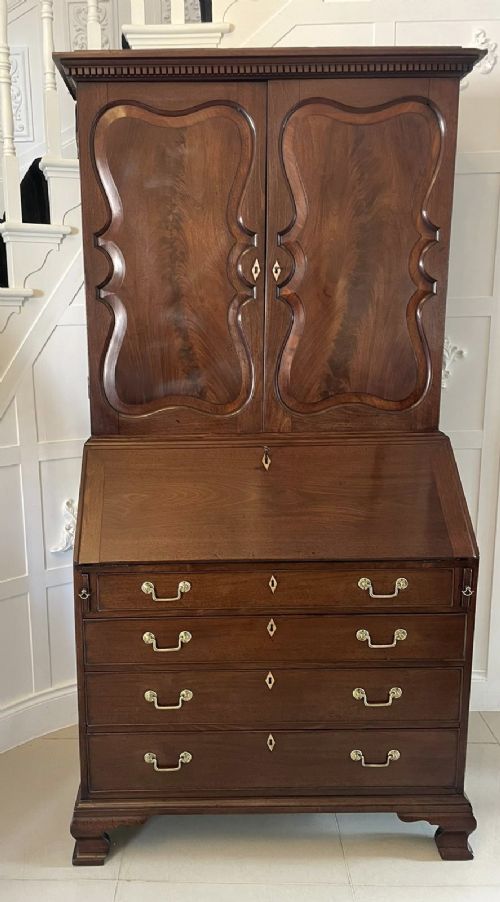
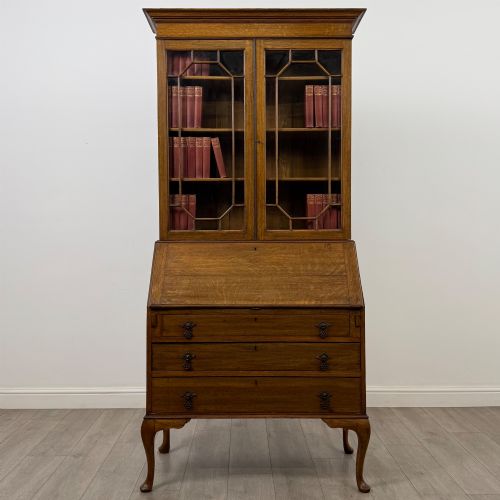
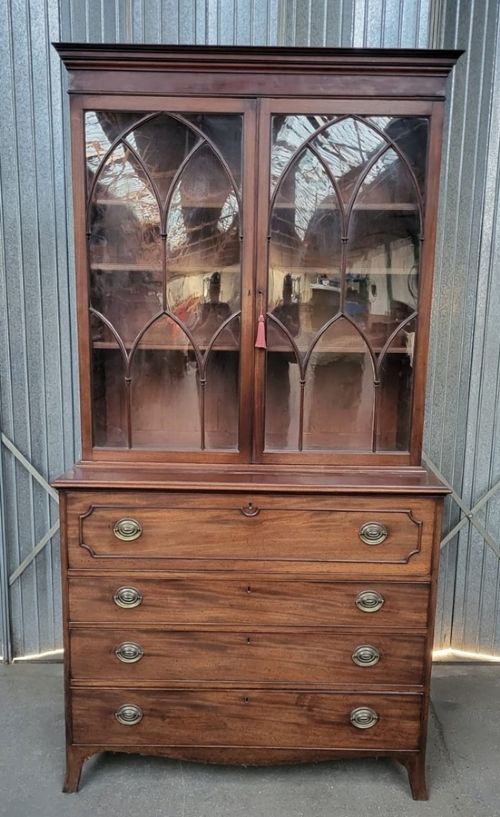


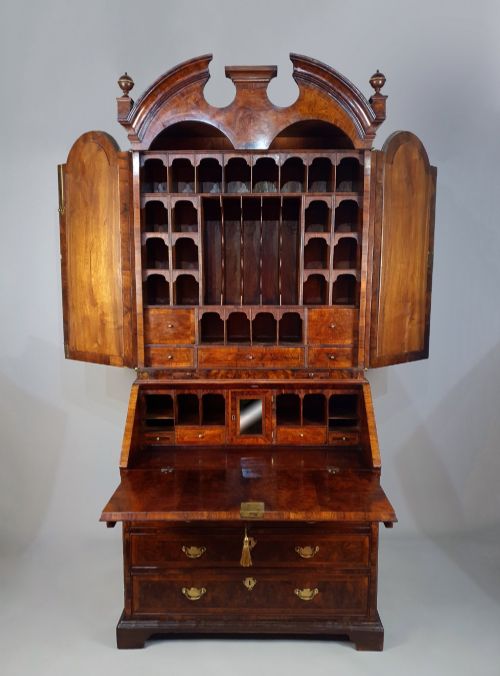
Antique Bookcase Desk
An antique bookcase desk combines a towering library cabinet with a fitted writing surface, offering both a place to read and a space to correspond.
Antique Bookcase Desk
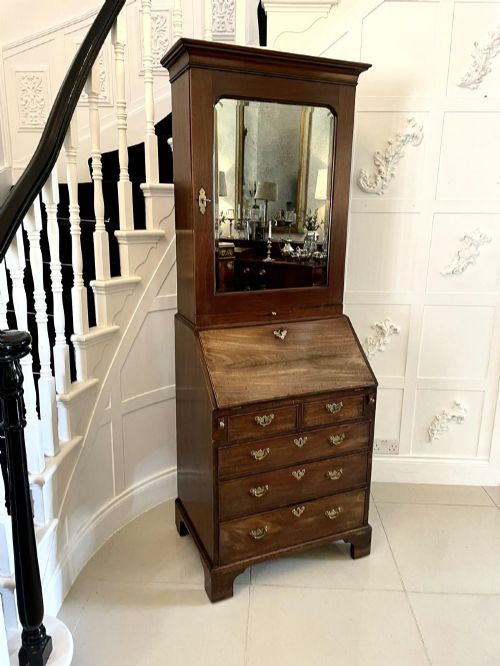
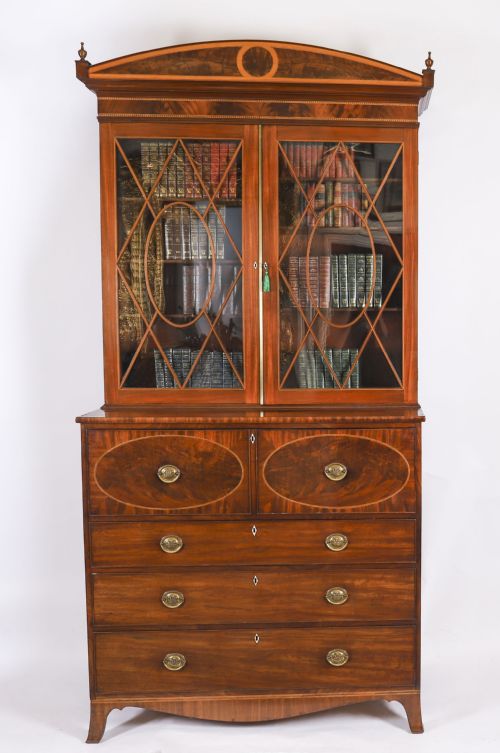
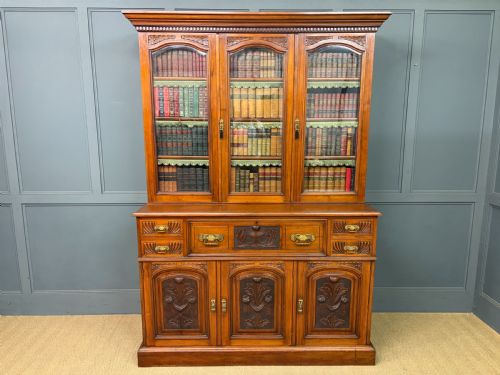
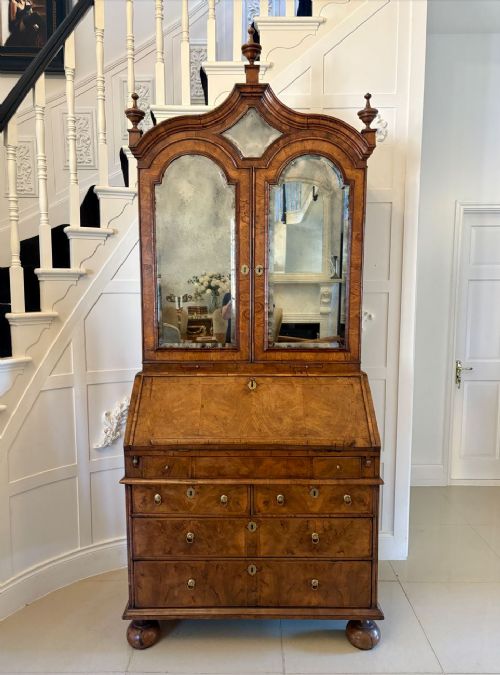
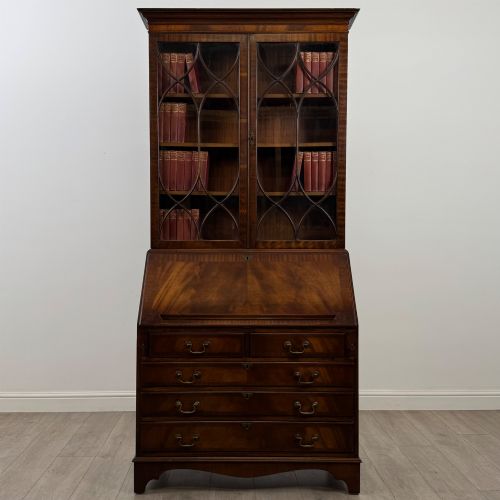
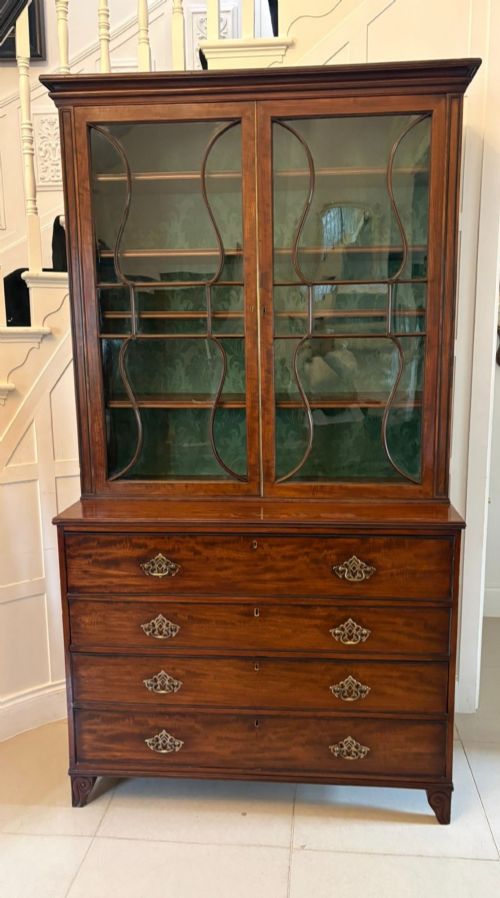
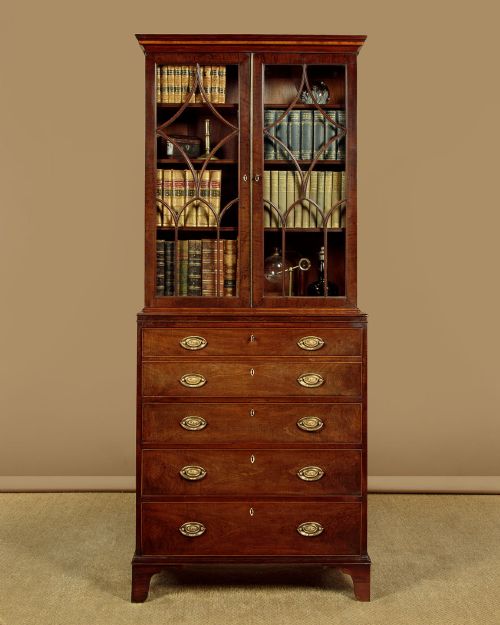
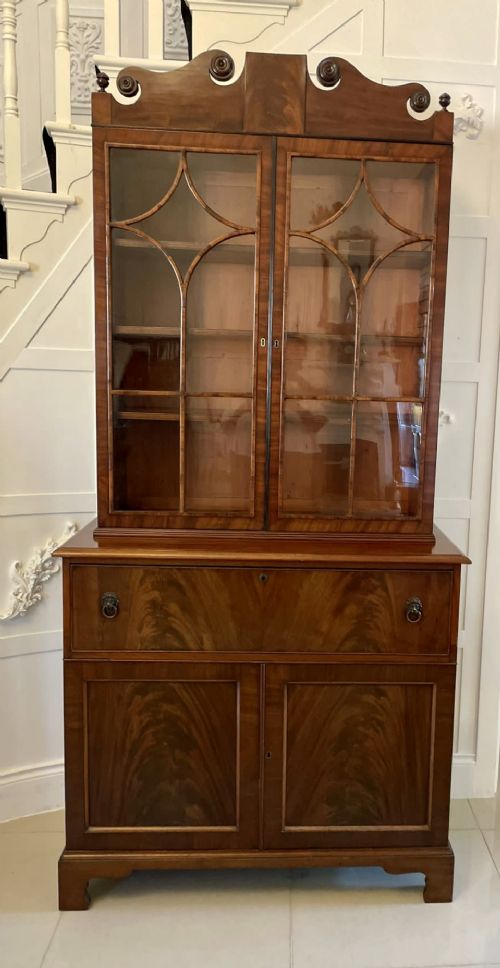
An antique bookcase desk merges upper glass-fronted or open shelving with a lower writing compartment, typically taking the form of a bureau bookcase or secretaire bookcase. These hybrid pieces served as functional libraries and private writing cabinets for centuries.
The versions most commonly met on this page span the Georgian, Regency, and Edwardian periods. They range from grand mahogany and burr walnut Georgian masterpieces to simpler oak and satinwood Edwardian examples.
Makers designed these dual-purpose items for parlours, studies, and libraries where floor space was at a premium. They allow owners to display leather-bound volumes while concealing paperwork behind a sloping flap or a pull-out drawer front.
Materials and construction
Cabinetmakers relied on dense hardwoods like mahogany, oak, and walnut to build the foundational carcase and shelving. Finer examples utilise burr walnut, flame mahogany, or satinwood veneers, often enhanced with delicate stringing and inlay.
Glazing bars divide the upper cabinet doors into geometric panes of glass, while brass hardware secures the doors and drawers. Internal writing sections feature concealed compartments, pigeonholes, and small drawers constructed with traditional dovetail joints.
Antique Bookcase Desk Retail Price Guide 2026
Typical asking prices for bookcase desk among the pieces listed under this phrase on Sellingantiques today, from the lower quarter to the upper quarter. They describe what is for sale here now, not the wider market.
Listings feature periods from the 17th century through the Edwardian era, constructed in oak, mahogany, walnut, and satinwood.
Evaluating craftsmanship and detail
The choice of timber grain defines visual quality, distinguishing plain boards from highly figured flame mahogany or intricately patterned burr walnut. Featherbanding and marquetry inlay require advanced woodworking skill, elevating the overall presence of the piece.
Interior complexity separates standard production from exceptional work. Fitted writing compartments featuring secret drawers, stepped pigeonholes, and leather-lined writing surfaces indicate superior workshop output.
George Oakley·Gillows·Hobbs and Co·Arthur Simpson of Kendal
The Antique Bookcase Desk Glossary
- Bureau bookcase
- A writing cabinet with a sloping fall-front desk enclosing a fitted interior, positioned beneath glazed bookcase doors. This form became popular during the early eighteenth century.
- Secretaire bookcase
- A piece featuring a pull-out drawer with a drop-front fitted writing desk rather than a sloping flap, paired with upper shelving. It maintains the clean exterior lines of a chest or cabinet.
- Glazing bar
- A narrow strip of wood or brass that holds individual panes of glass within a cabinet door. Astragal glazing bars feature a rounded profile.
- Burr walnut
- Timber taken from a tree growth that produces swirling, knotted grain patterns. Cabinetmakers sliced this wood into thin veneers for high-status furniture.
- Cartonnier
- A desktop filing cabinet designed to hold papers and documents. These pieces often incorporate decorative mounts and leather-covered boxes.
Antique Bookcase Desk: Frequently Asked Questions
How do I use a bureau desk?
Lower the sloping wooden flap or pull out the secretaire drawer to reveal the inner writing surface and pigeonholes. This creates a dedicated station for correspondence while keeping papers hidden when closed.
Fold the writing flap back up and secure the lock when finished to return the piece to a tidy bookcase cabinet.
Where should I place a bookcase desk?
Position the piece against a sturdy wall in a study, library, or living room where natural light aids reading and writing. Ensure the room has stable humidity levels to protect antique veneers and glass doors.
Leave adequate floor clearance in front of the cabinet to allow the writing flap to open fully and a chair to be pulled up comfortably.
How can I date my bookcase desk?
Examine the timber species, construction methods, and hardware styles to determine the likely era of manufacture. Walnut and featherbanding point toward early eighteenth-century work, while satinwood inlay often indicates the Edwardian period.
Look at the drawer construction and glass clarity for signs of period hand-craftsmanship versus later machine production.