


Regency Bureau Bookcase
A regency bureau bookcase combines a writing desk and a display cabinet, offering practical workspace and elegant storage for the home.

Regency Bureau Bookcase
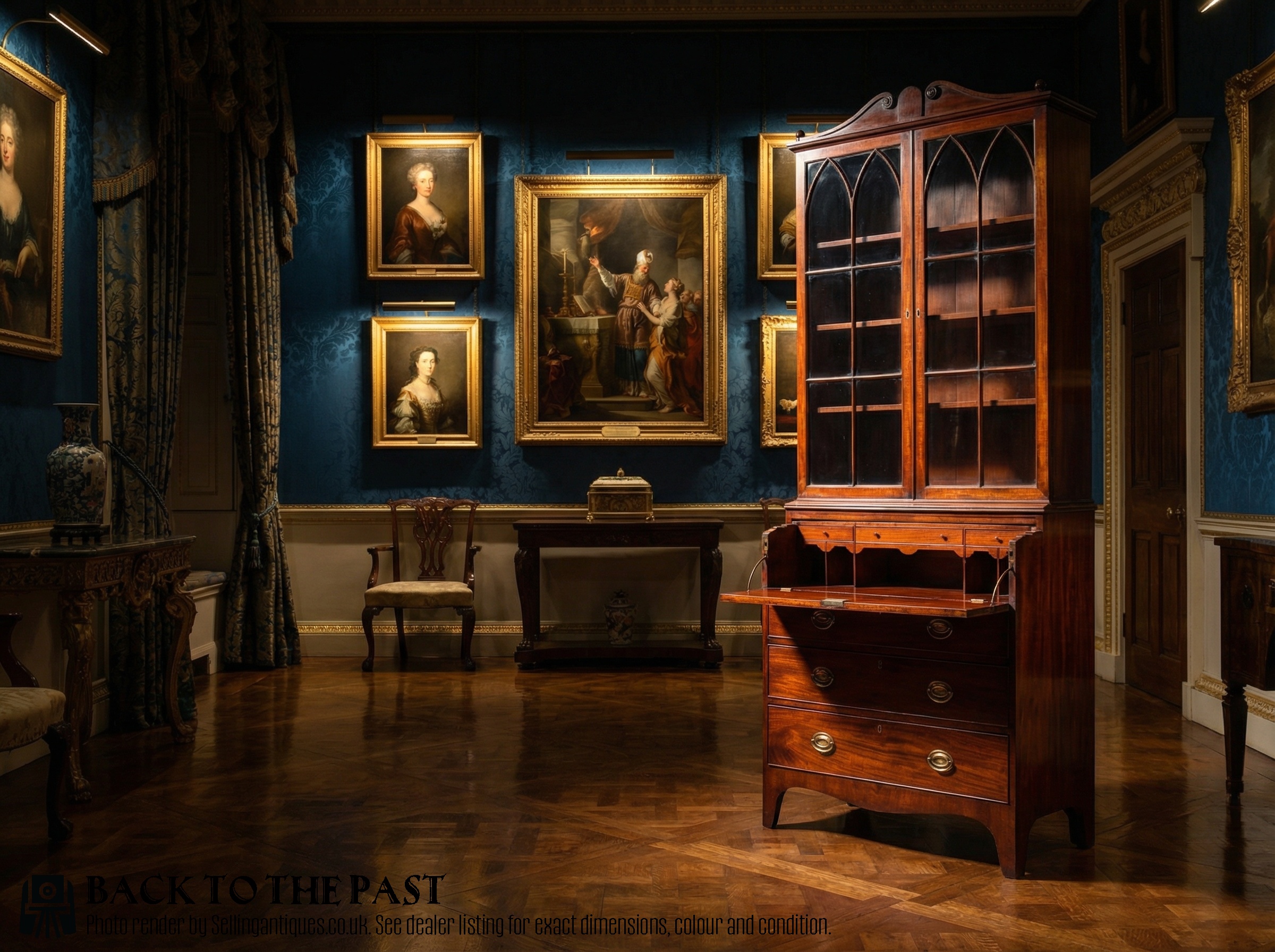
A regency bureau bookcase is a substantial piece of furniture designed for both study and display, typically combining an upper section of glazed shelving with a lower cabinet containing a writing drawer or desk. These pieces generally date from the late eighteenth century through the early nineteenth century, spanning the Georgian, Regency, and William IV periods.
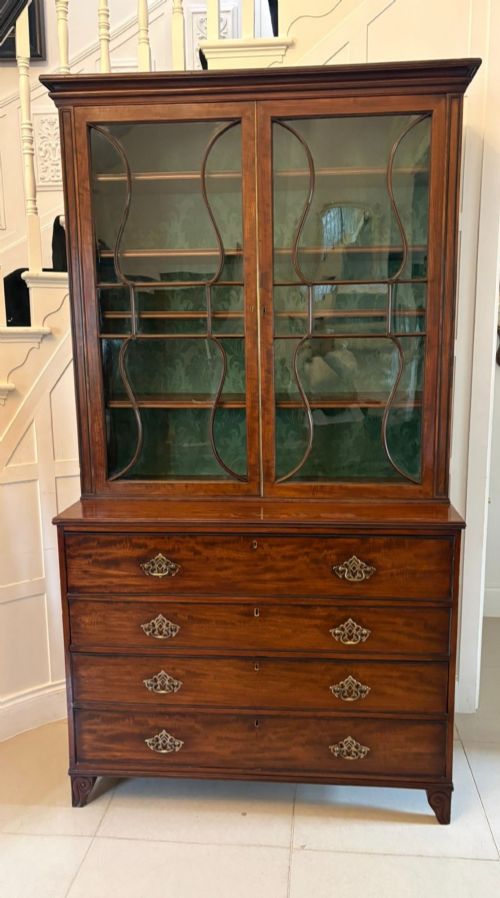
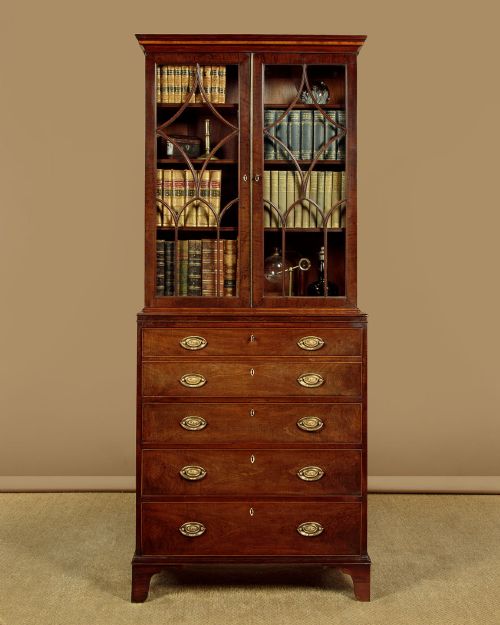
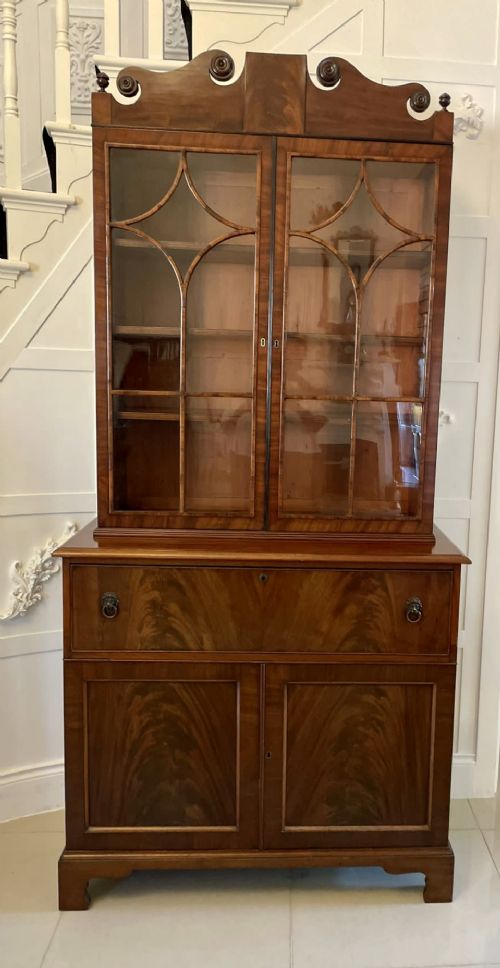
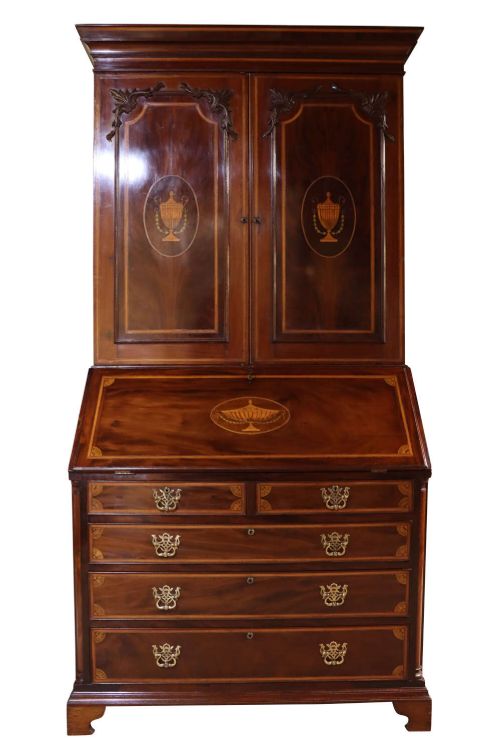
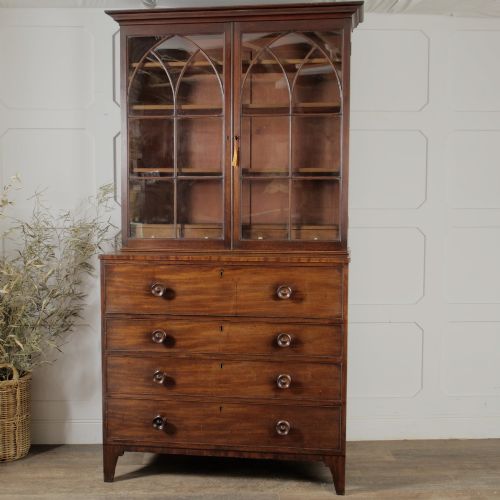
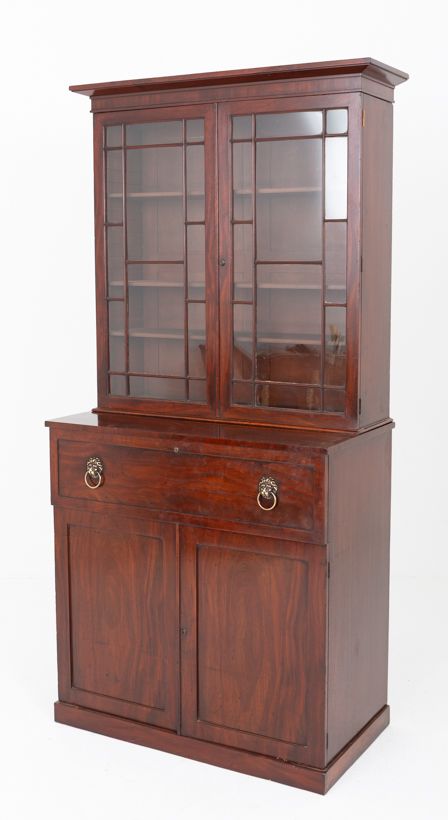
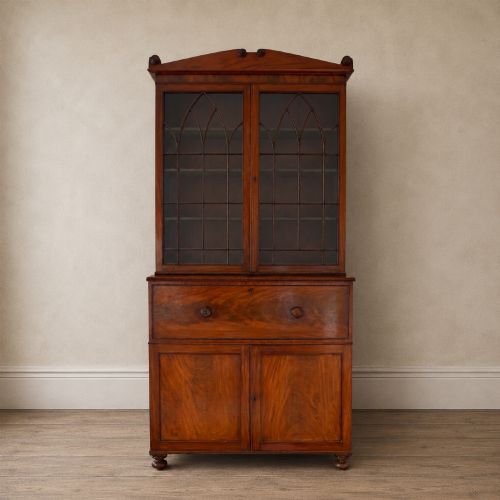
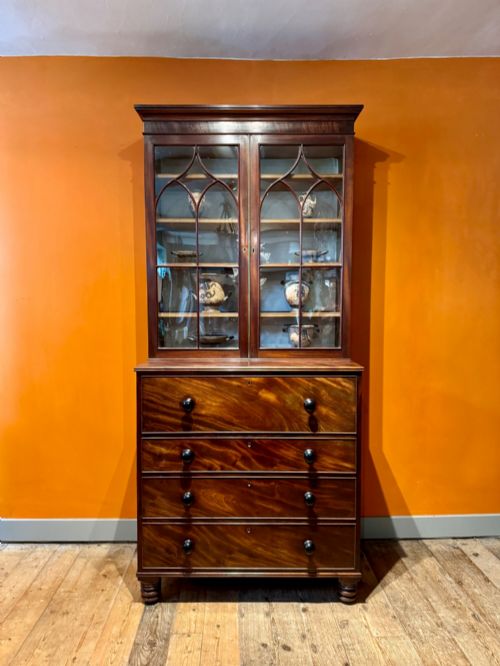
The most common version met on this page is constructed from mahogany, often featuring figured timber veneers, glass-fronted doors with astragal glazing bars, and a fitted interior with small drawers and pigeonholes. Variations range from grand scale breakfront models to compact dwarf cabinets and cylinder desks designed for specific rooms.
How They Were Made
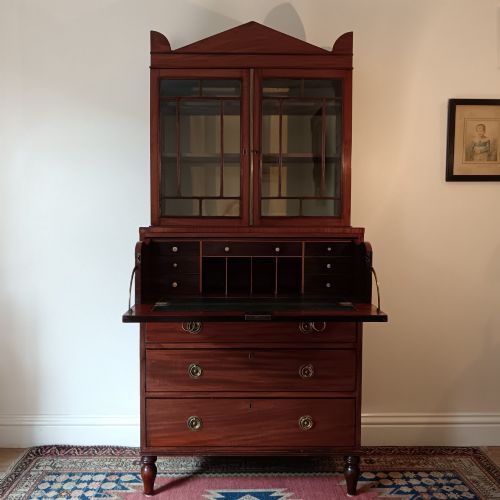
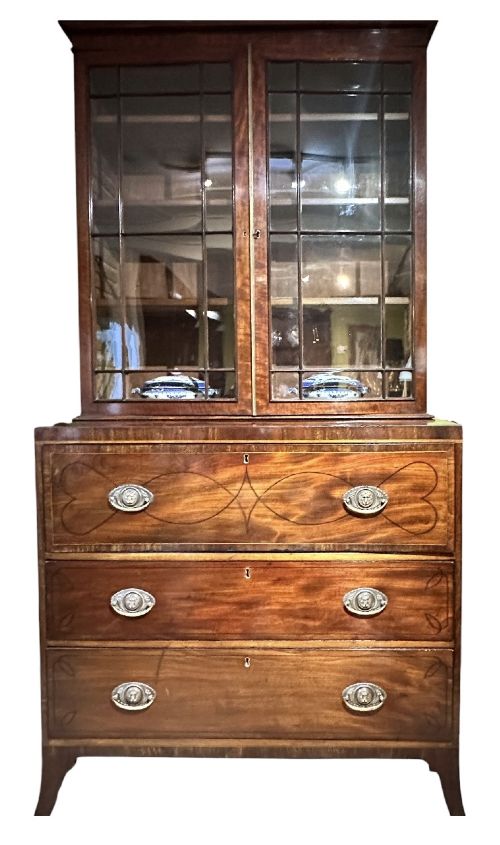
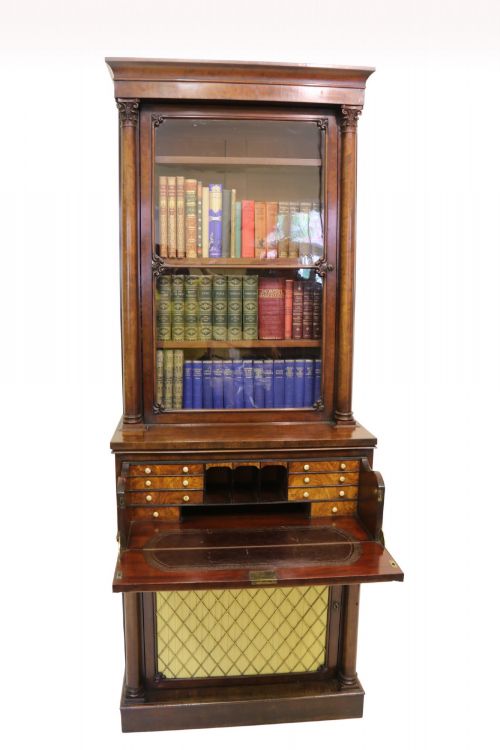
Cabinet makers utilised solid timbers alongside flame mahogany and satinwood veneers, applying precise wood inlay and brass details to accent the structure. The upper section relies on glass panes held within wooden astragal bars, while the lower writing section frequently employs a fall-front or drop-down drawer mechanism fitted with leather writing surfaces.
Internal components demonstrate meticulous joinery, incorporating secret compartments, small pigeonholes, and miniature drawers constructed with traditional dovetail joints. Secondary timbers such as oak or pine appear in drawer linings, while structural stability is maintained through heavy framing suited to support the weight of books.
Regency Bureau Bookcase Retail Price Guide 2026
Typical asking prices for regency bureau bookcase among the pieces listed under this phrase on Sellingantiques today, from the lower quarter to the upper quarter. They describe what is for sale here now, not the wider market.
Mahogany is the primary timber across these listings, occasionally accompanied by rosewood, satinwood, and intricate wood inlay.
What Varies in Quality
The distinction between ordinary and exceptional examples rests upon the selection of timber veneers and the crispness of the cabinet work. Pieces featuring highly figured flame mahogany, rosewood, or delicate satinwood inlay demonstrate superior craftsmanship compared to plain timber carcases.

George Oakley·Gillows of Lancaster
The Regency Bureau Bookcase Glossary
- Secretaire
- A writing drawer or compartment featuring a drop-down front that conceals pigeonholes and small drawers. This clever design allows a chest or bookcase to function as a fully equipped desk.
- Astragal
- Moulding strips used to divide glass panes within a cabinet door into smaller geometric sections. These delicate wooden bars provide structural support while creating a decorative grid pattern.
- Flame mahogany
- A distinct wood veneer cut from the branch junction of the mahogany tree, displaying a rippled, flame-like pattern. Cabinet makers reserved this decorative grain for the most prominent exterior surfaces.
- Fall-front
- A hinged writing flap that drops from a vertical position to form a horizontal desk surface. It usually rests on support lopers pulled out from the cabinet frame during use.
- Dwarf cabinet
- A shorter, more compact version of a standard bookcase or storage cabinet, designed to sit lower on the wall. These smaller proportions suited the room layouts of the nineteenth century.
Regency Bureau Bookcase: Frequently Asked Questions
How do I use the secretaire drawer?
The drop-down drawer front pulls outward and lowers to create a horizontal writing surface, supported by internal runners or desk arms. This mechanism reveals an integrated arrangement of small pigeonholes and miniature drawers.
Once finished writing, the flap lifts back into place and secures with a key, concealing the stationery and workspace entirely.
What is astragal glazing?
Astragal glazing refers to the network of narrow wooden bars that hold individual panes of glass within the upper cabinet doors. This technique creates a grid pattern that protects the books while displaying them clearly.
Most period examples feature timber bars shaped into fine mouldings, contrasting with the heavier frames found in later furniture.
How do I care for mahogany veneer?
Maintain mahogany surfaces by dusting gently with a dry, soft cloth and avoiding placement near direct heat sources or strong sunlight. These precautions prevent the timber veneers from drying out or splitting.
Occasional application of traditional beeswax helps nourish the wood and preserve the depth of the polished finish over time.
Are cylinder desks the same?
Cylinder desks feature a rounded, curving roll-top closure that slides backward to reveal the fitted writing interior, differing from the flat drop-front of a standard bureau. Both forms serve the same function of concealing a workspace when not in use.
Cylinder versions often appear within the same nineteenth-century cabinet formats and share similar internal arrangements of drawers and pigeonholes.