
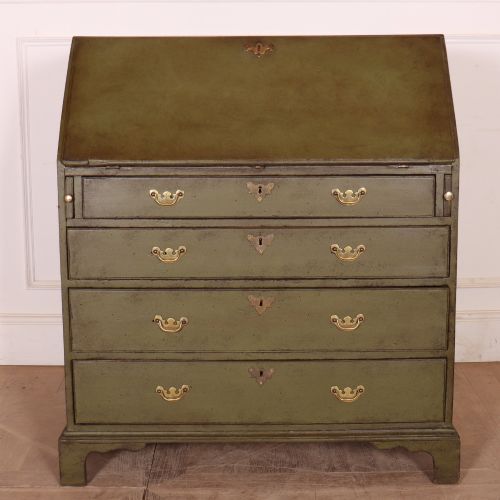


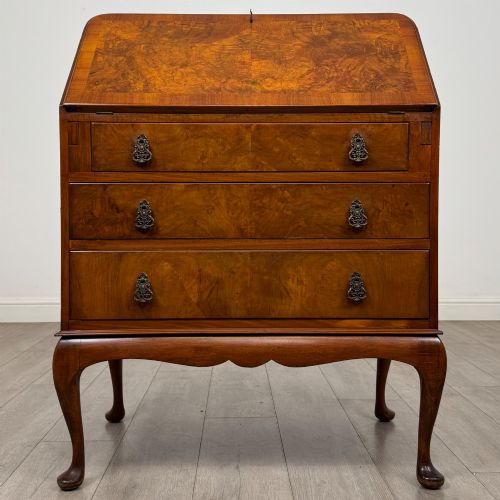
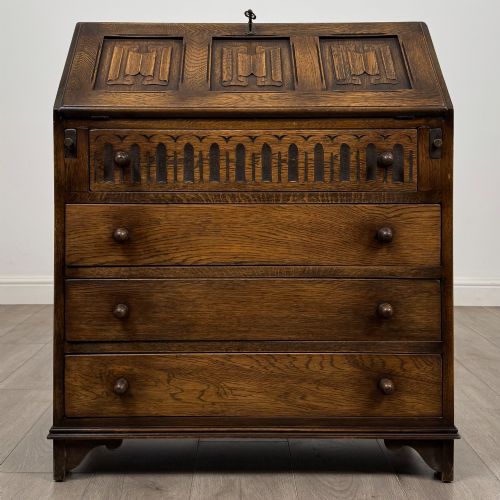
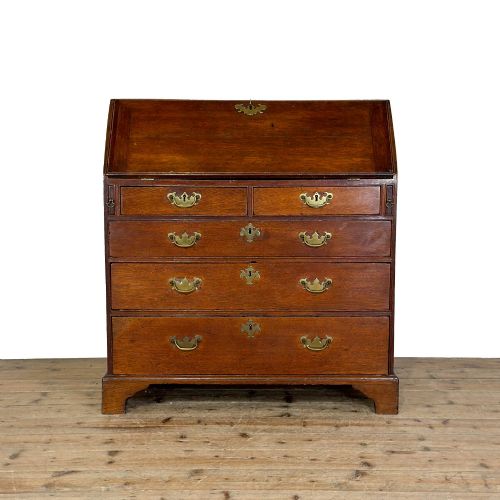
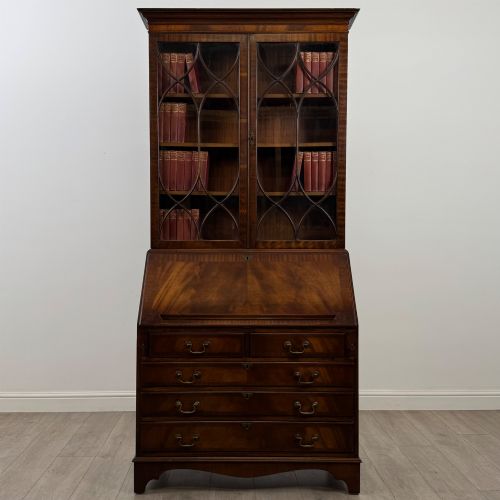
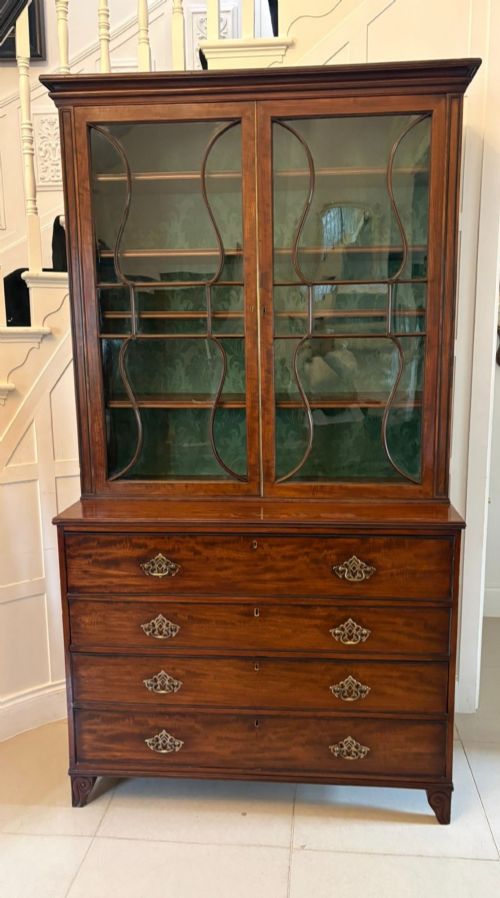
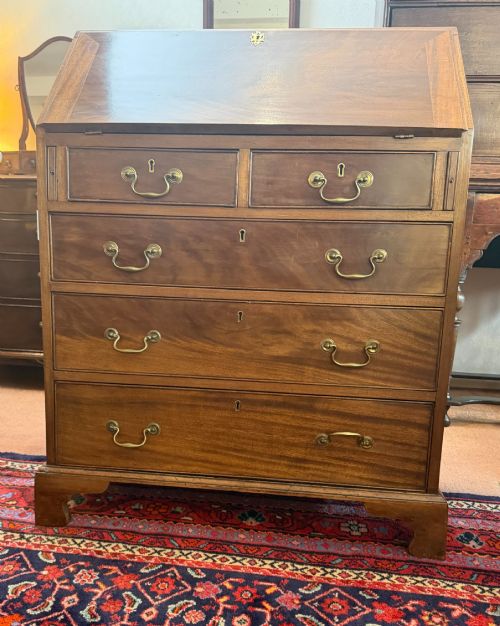
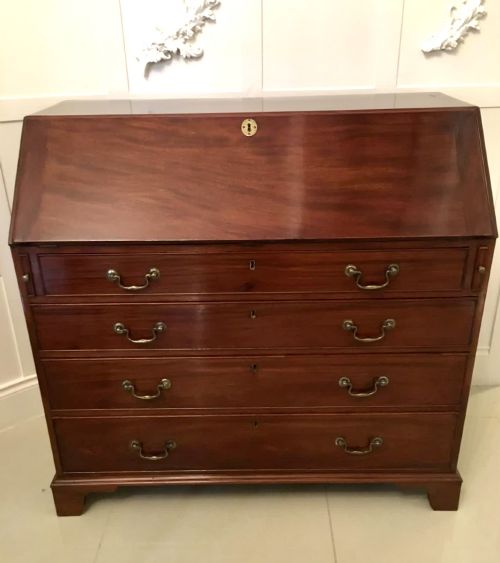
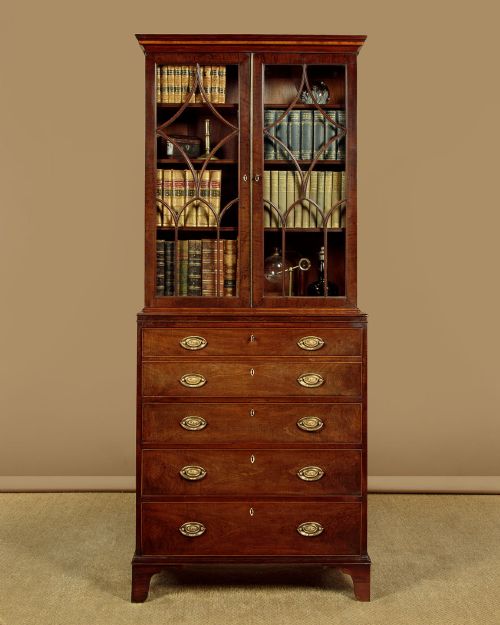
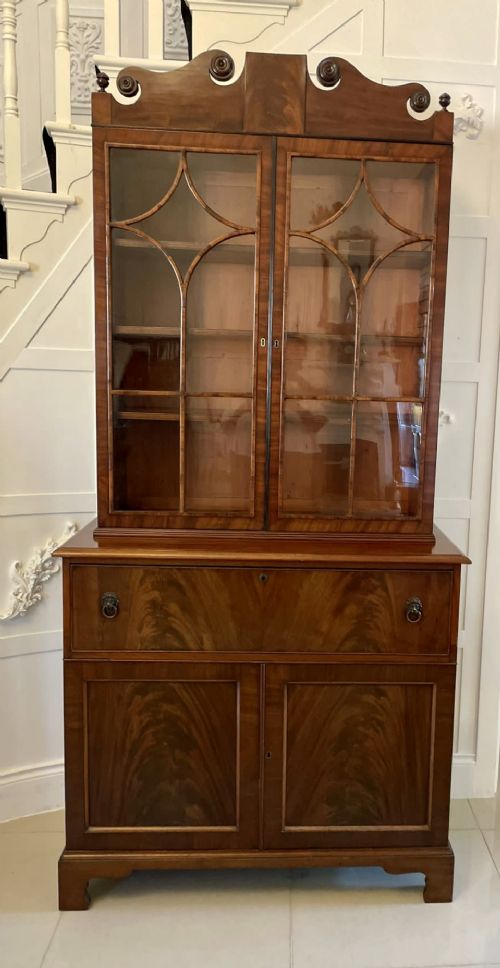
Vintage Writing Cabinet
A vintage writing cabinet brings traditional craftsmanship to a room, offering clever storage alongside a dedicated surface for correspondence.
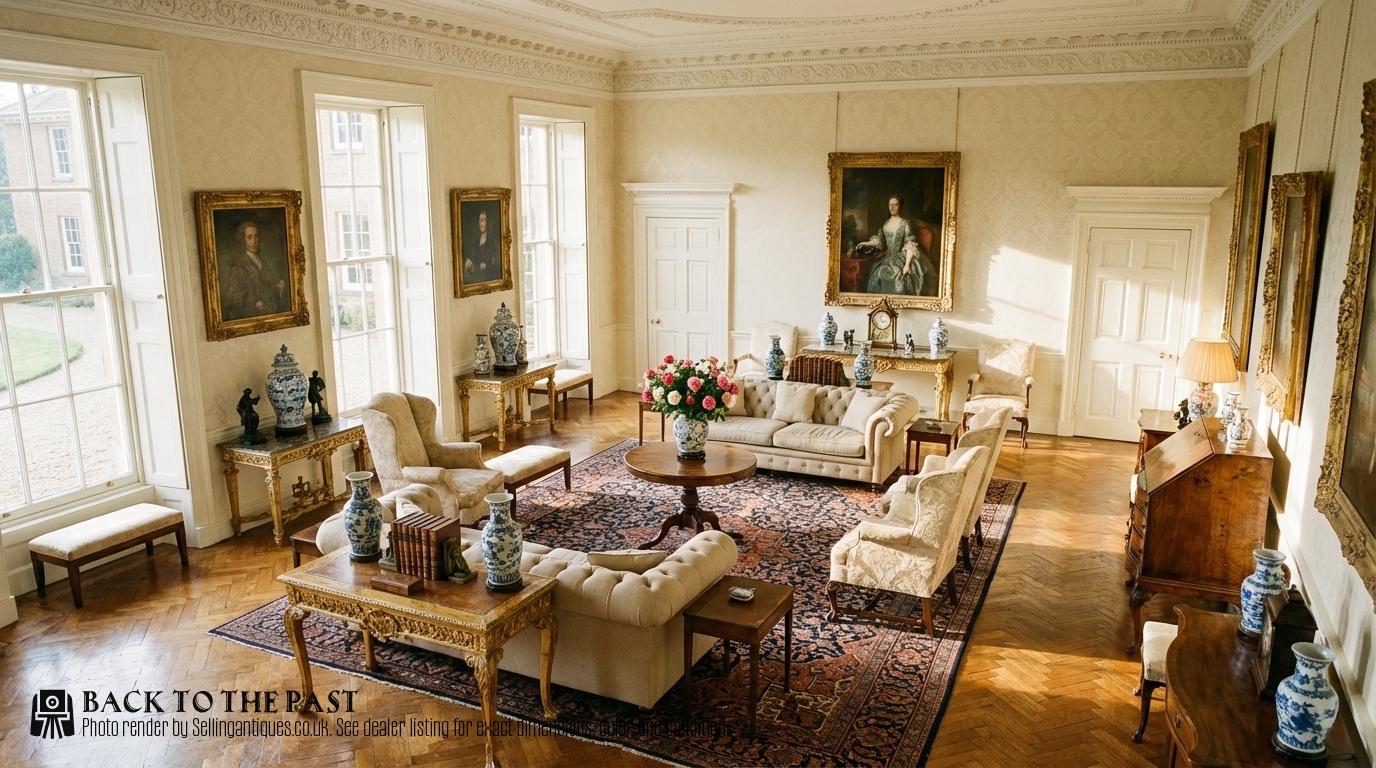
Vintage Writing Cabinet
A vintage writing cabinet combines a desk space with enclosed shelving or drawers, providing a practical workspace that shuts away clutter when not in use. When searching for a vintage writing cabinet, buyers encounter diverse forms ranging from compact fall-front desks to large bureau bookcases.
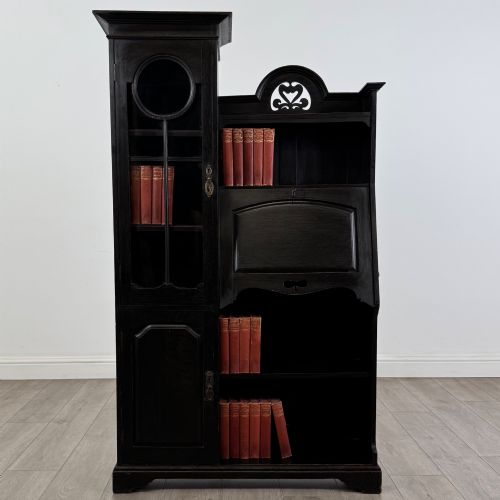
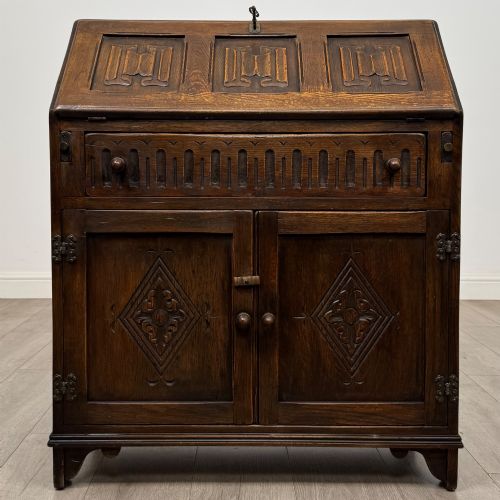
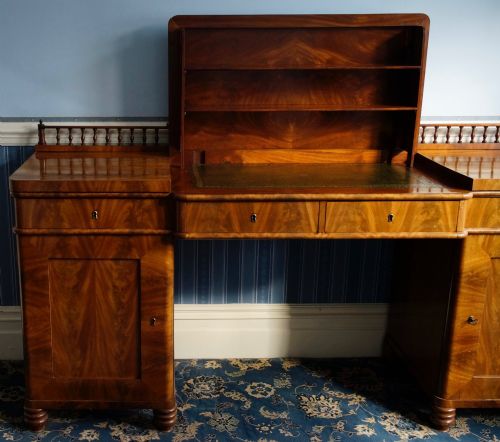
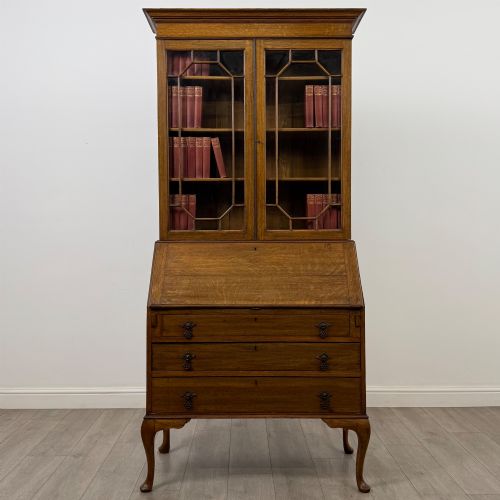
The pieces on this page span several centuries and styles, showing a strong representation of Edwardian oak designs alongside earlier Georgian and Regency mahogany examples. Bureau bookcases and drop-front desks dominate the selection, often incorporating glazed upper sections or fitted internal compartments.
Materials and construction methods
Cabinetmakers relied heavily on timber selection, utilising durable woods such as oak, mahogany, and walnut alongside decorative veneers like burr walnut and yew. Many pieces feature figured grain patterns on the fall-front flap to catch the eye when the desk is closed.
Secondary materials like brass provide handles, hinges, and escutcheons, while glass panels protect the upper bookcase sections. Joinery techniques varied from robust 18th-century construction to the lighter framing seen in Edwardian and Arts and Crafts examples.
Vintage Writing Cabinet Retail Price Guide 2026
Typical asking prices for vintage writing cabinet among the pieces listed under this phrase on Sellingantiques today, from the lower quarter to the upper quarter. They describe what is for sale here now, not the wider market.
Periods represented range from the 17th century through Georgian, Regency, and Victorian eras to Edwardian and Art Deco.
Distinguishing quality across the range
Quality rests in the precision of the internal fittings, where superior cabinets offer intricate pigeonholes, small hidden drawers, and neatly inlaid compartments behind the fall-front. The choice of timber grain and the crispness of carved details, such as linenfold panels, set finer pieces apart from simpler workshop output.
Structural integrity through the fall-front hinges and drawers determines everyday utility. Pieces that retain original glass, matching brassware, and well-balanced proportions command greater appreciation among collectors.
ARTHUR BASIL REYNOLDS·LARKIN
The Vintage Writing Cabinet Glossary
- Bureau
- A desk featuring a sloping hinged flap that drops down to form a writing surface, revealing small drawers and pigeonholes inside. This term is frequently used interchangeably with writing cabinet.
- Secretaire
- A piece of furniture containing a drawer or compartment designed for writing, often pulling out or dropping down to form a desk surface. It frequently pairs with a bookcase top.
- Fall-front
- A hinged panel that closes vertically against the front of a cabinet and lowers into a horizontal position to serve as a writing desk. It conceals the inner stationery compartments.
- Linenfold
- A style of carved wooden panelling that resembles folded folds of fabric or linen. This decorative motif appears often on oak furniture from the medieval period onwards.
- Escritoire
- A small writing cabinet or desk, often originating from French cabinetmaking traditions and featuring decorative marquetry or a marble top.
Vintage Writing Cabinet: Frequently Asked Questions
What is a vintage writing cabinet?
A vintage writing cabinet is a piece of furniture designed for correspondence, typically featuring a fold-down flap or pull-out drawer that serves as a writing desk.
These cabinets often include integrated shelving, small drawers, and pigeonholes to keep stationery organised and hidden when the desk is not in use.
How do I date a writing cabinet?
Dating relies on observing the timber species, construction methods, and stylistic details like hardware and carving. Georgian pieces often display different proportions and drawer linings compared to Edwardian or Arts and Crafts equivalents.
Examining the secondary woods inside the drawers provides further clues to the manufacturing period.
Where should I place a writing cabinet?
These cabinets suit studies, living rooms, and bedrooms where they provide a functional surface without dominating the floor plan. Placing them away from direct sunlight protects the timber veneers and polished finishes from fading.
Ensure there is enough clearance in front of the piece for the fall-front flap to open fully.
Are these cabinets practical for daily use?
Many buyers utilise them for laptop work or letter writing, as the enclosed compartments help keep modern technology out of sight. The sturdy construction of period hardwoods ensures they withstand regular daily interaction.
Care should be taken not to overload the drop-front writing surface beyond its structural capacity.