
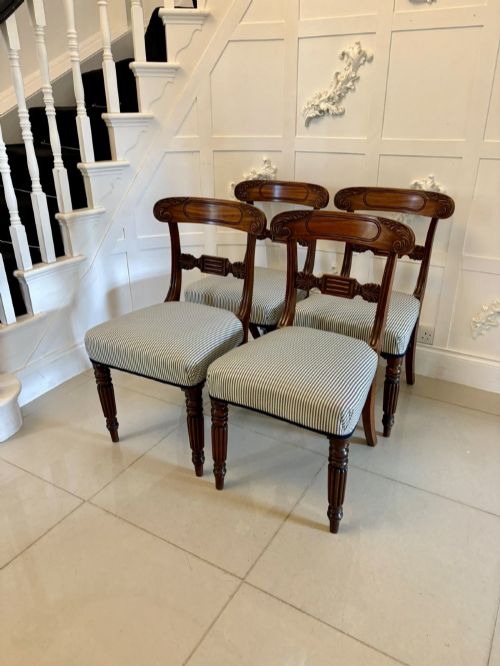
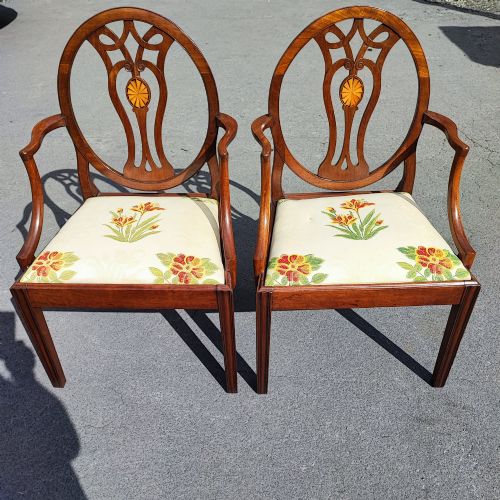
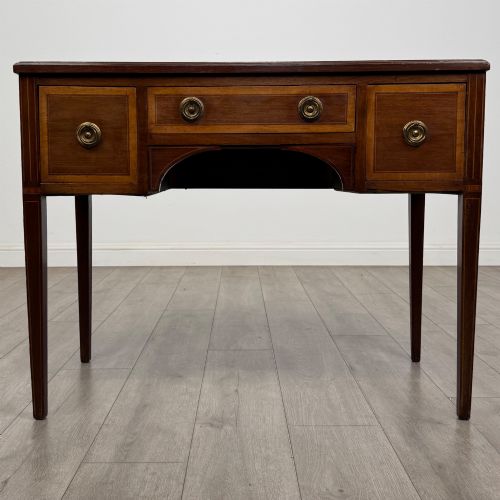
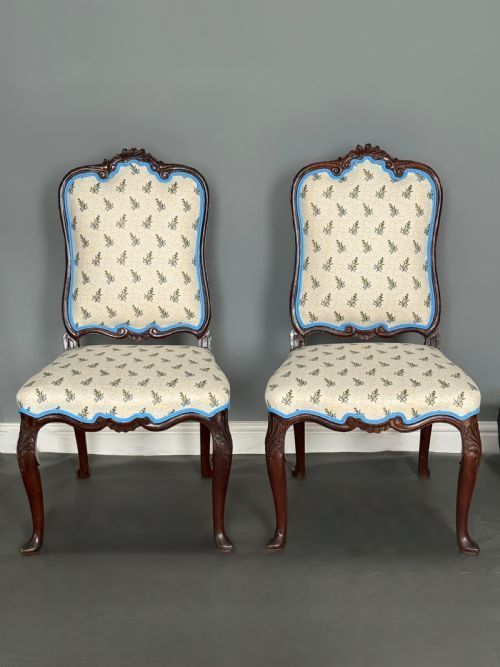
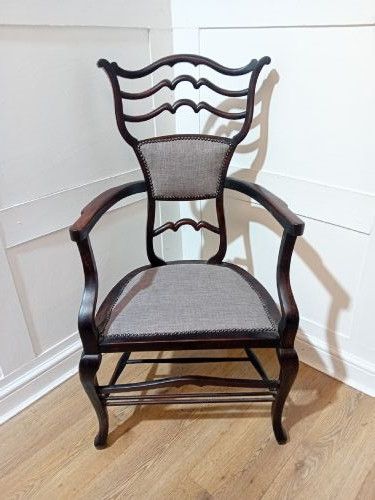
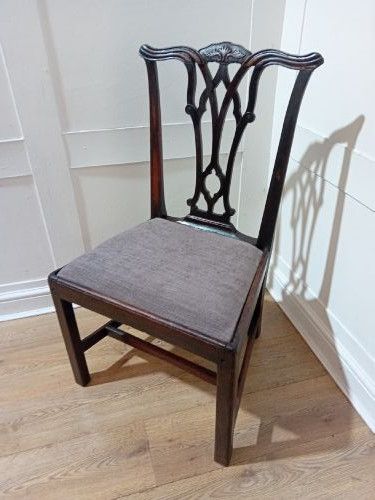

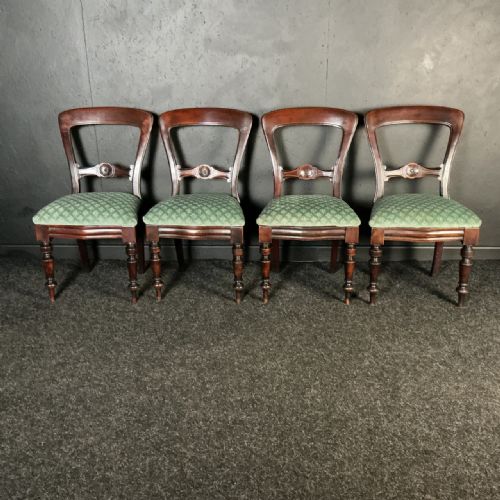
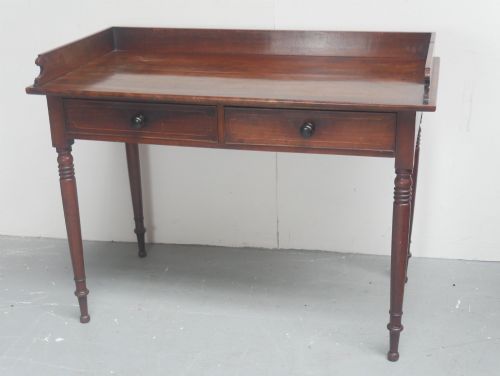
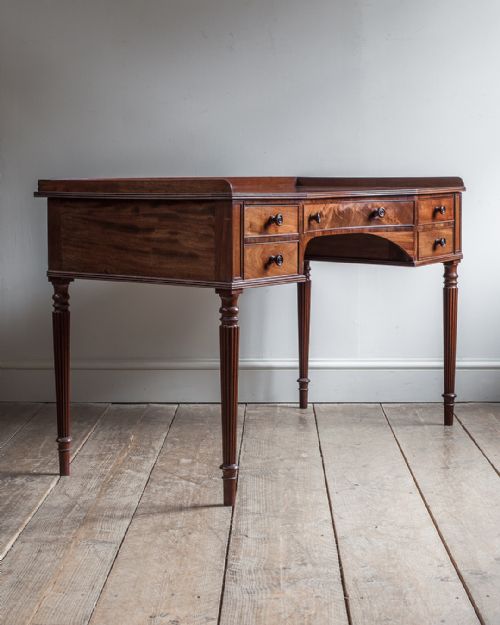
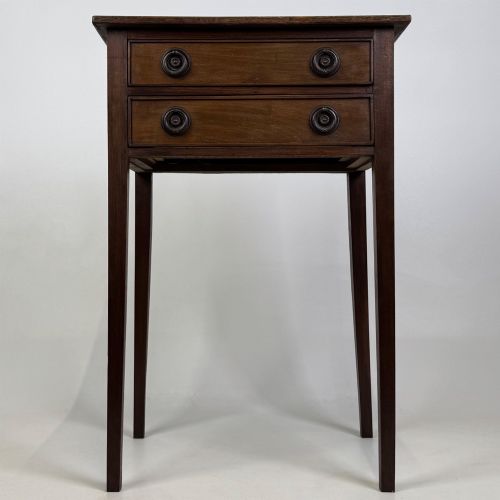
Mahogany Side Desk
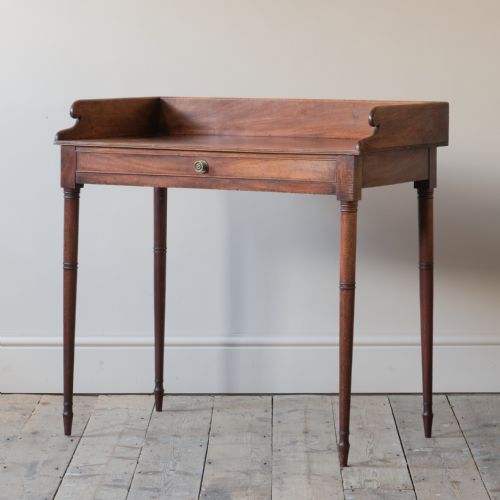
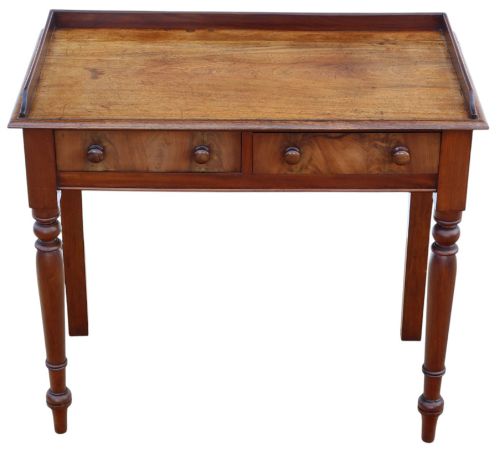
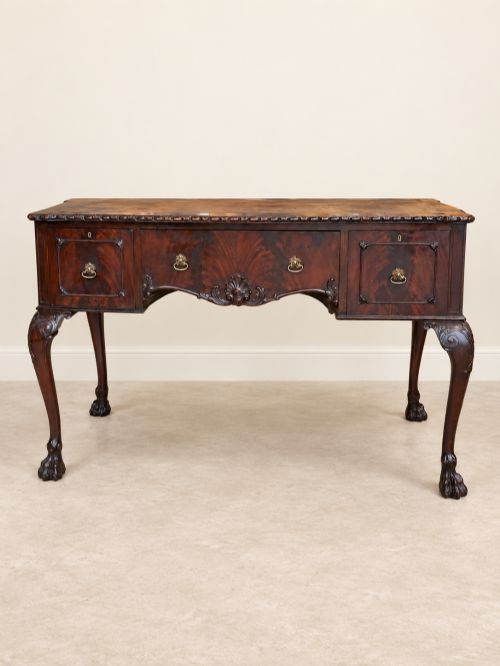
When hunting for a mahogany side desk, you are looking for versatile writing furniture that combines practical surface space with the rich warmth of figured timber.
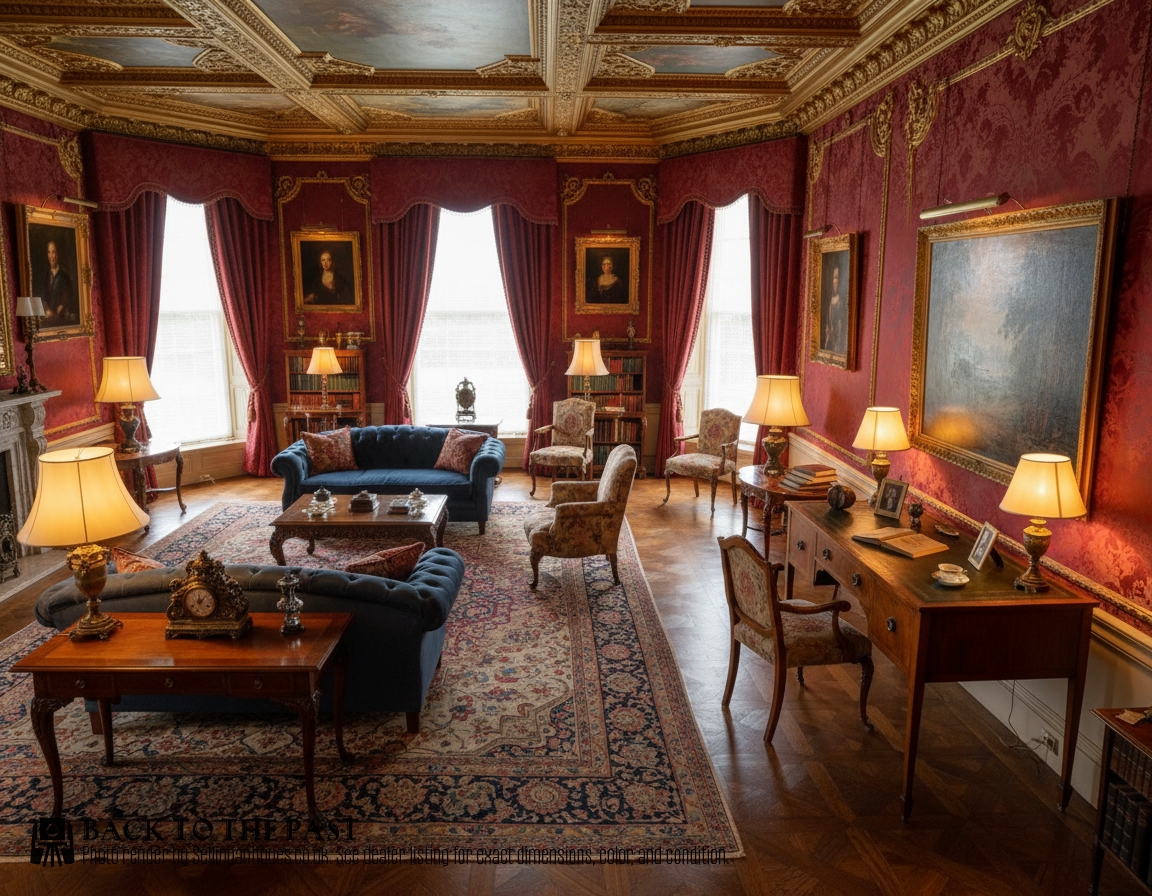
Mahogany Side Desk
A mahogany side desk bridges the gap between a formal writing table and a compact console, designed to sit neatly against a wall or float within a room. These forms frequently overlap in the historical record with side tables, writing tables, and lowboys adapted for correspondence.
The pieces available span multiple eras, most notably the Georgian, Regency, and Victorian periods, alongside Edwardian interpretations. You will frequently encounter compact two-drawer configurations alongside larger library and partners variants equipped with drawers on both sides.
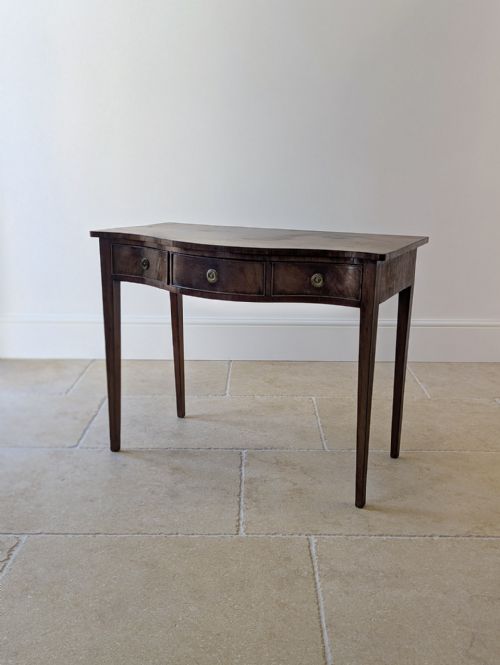
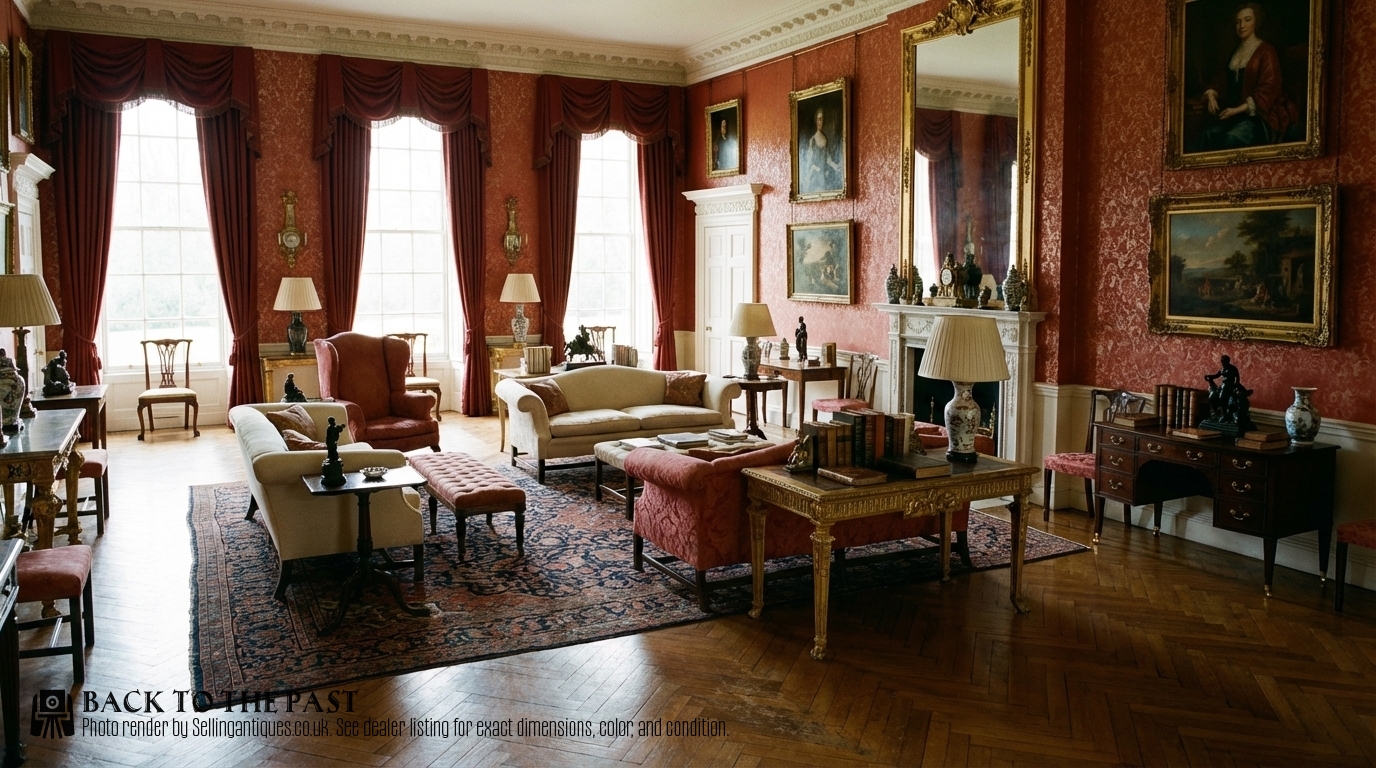
Makers often integrated fine details such as serpentine fronts, satinwood stringing, and inset leather writing surfaces. These hybrid pieces served multifunctional roles in reception rooms, morning rooms, and private libraries.
How they were made
Craftsmen relied primarily on solid mahogany and flame mahogany veneers applied to secondary pine or oak carcases to achieve rich surface movement and depth. Timber selection drove the aesthetic, utilising the natural grain patterns rather than heavy ornamentation.
Detailing frequently involved contrasting stringing and inlay work using boxwood and satinwood, often paired with cast brass handles and escutcheons. Writing surfaces were routinely inset with tooled leather or fabric inserts to provide a durable working plane.
Mahogany Side Desk Retail Price Guide 2026
Typical asking prices for mahogany side desk among the pieces listed under this phrase on Sellingantiques today, from the lower quarter to the upper quarter. They describe what is for sale here now, not the wider market.
Listings feature mahogany side desks across Georgian, Regency, Victorian, and Edwardian periods, incorporating brass, leather, and flame mahogany veneer.
What varies in quality
Quality rests heavily on the selection of the timber and the precision of the cabinetmaking, particularly in the matching of flame mahogany veneers across drawer fronts. Superior examples exhibit seamless drawer construction with hand-cut dovetails and original brass hardware.
The finesse of secondary details such as boxwood stringing, crossbanding, and hand-carved edge moulding distinguishes standard utility furniture from high-end commission pieces. Proportion and structural integrity dictate whether a desk maintains its balance and presence over centuries of use.
Gillows·Maple and Co·M Willson·Charles Andrea Nosotti·Gill and Reigate
The Mahogany Side Desk Glossary
- Flame mahogany
- A veneer cut from the fork of the mahogany tree where the branch meets the trunk, producing a dramatic, flickering flame-like pattern. It was highly prized by Georgian and Regency cabinetmakers for primary display surfaces.
- Partners desk
- A large double-sided writing table designed with drawers and cupboards accessible from both faces, allowing two people to work opposite one another. These often feature inset leather writing surfaces and substantial pedestal bases.
- Lowboy
- A small eighteenth-century dressing or writing table featuring a shallow drawer configuration set upon relatively tall legs. They typically display classic Georgian proportions and fine timber framing.
- Stringing
- Thin inlay lines of a contrasting lighter wood, such as boxwood or satinwood, embedded flush into the darker mahogany surface. This technique creates delicate geometric borders around drawer fronts and tabletops.
- Serpentine
- A gently curved front or tabletop featuring a convex centre flanked by concave ends, creating an undulating outline. It demands exceptional skill from the woodworker to shape and veneer accurately.
Mahogany Side Desk: Frequently Asked Questions
How do I identify a partners desk?
A partners desk is distinguished by drawers and cupboards accessible from both the front and the back of the piece, allowing two people to sit opposite each other.
They generally feature a larger scale, often with pedestals or banks of drawers supporting a wide top inset with leather.
Where were side desks placed?
These versatile tables were typically positioned against a drawing room wall, beneath a window, or used in reception rooms for handling correspondence.
Because many are finished on all sides, they could also float within the room rather than staying anchored strictly against a wall.
How do I care for the leather top?
Keep the leather surface away from direct sunlight and excessive heat to prevent the material from drying out and cracking over time.
Gentle dusting with a dry cloth and occasional application of appropriate leather balsam will maintain the suppleness and tone of the writing surface.
How do I distinguish Georgian from Victorian pieces?
Georgian furniture generally displays restrained classical proportions, subtle cockbeading, and clean architectural lines rooted in eighteenth-century design principles.
Victorian pieces often introduce heavier proportions, more robust carvings, darker finishes, and mechanical innovations like locking flaps or sliding mechanisms.