



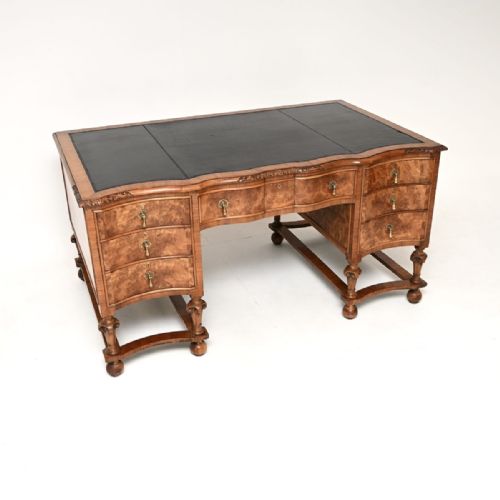
Victorian Leather Desk
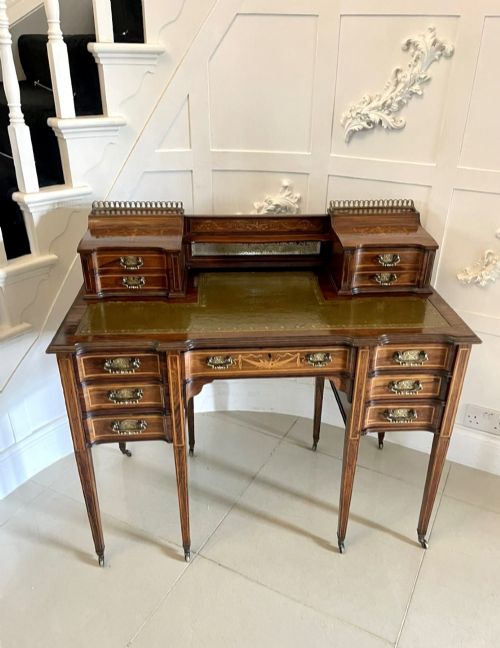
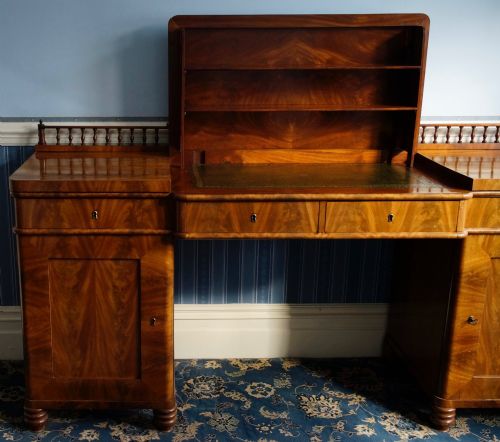
When choosing a victorian leather desk, you are acquiring a substantial workspace defined by figured timber and a durable hide writing surface.

Victorian Leather Desk
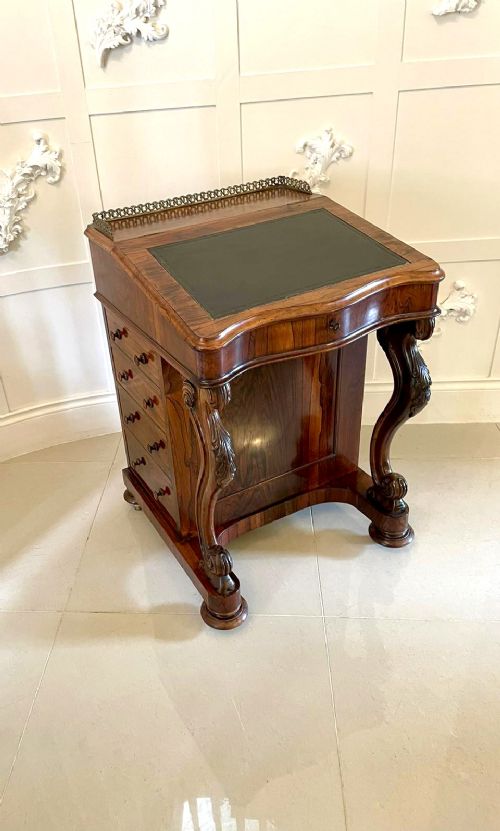
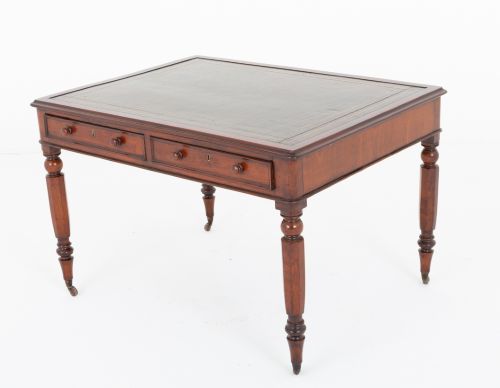
A victorian leather desk encompasses practical writing furniture built during the nineteenth century, ranging from compact davenports to large partner tables and pedestal forms.
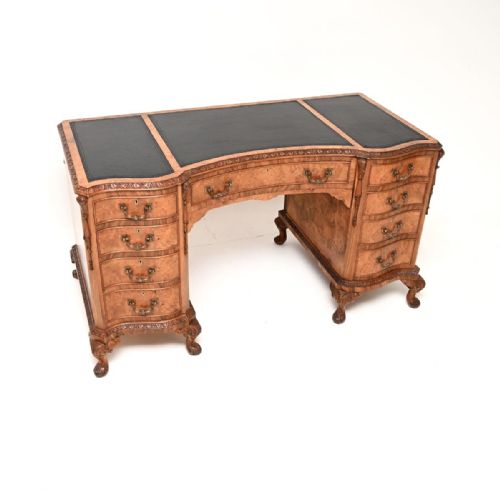
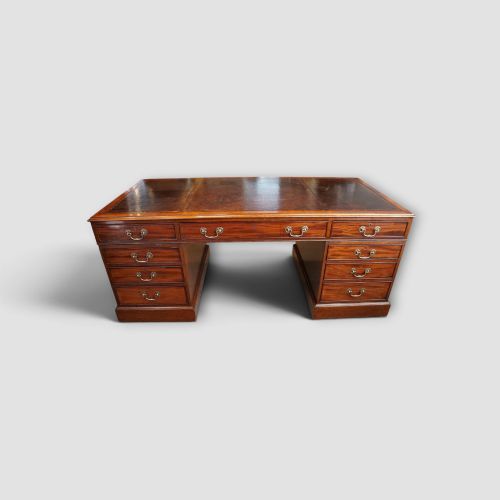
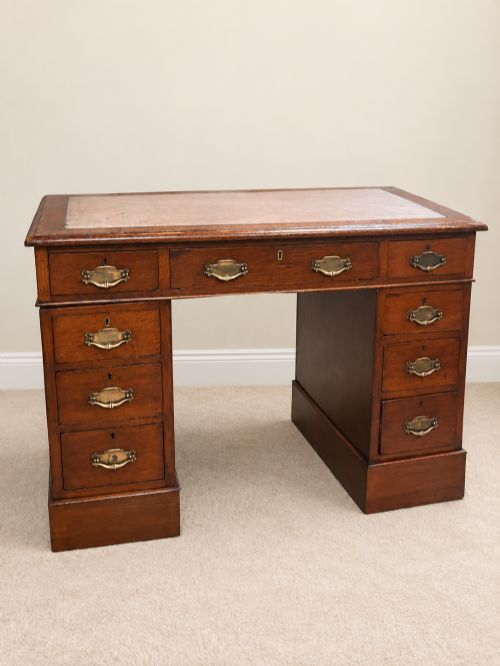
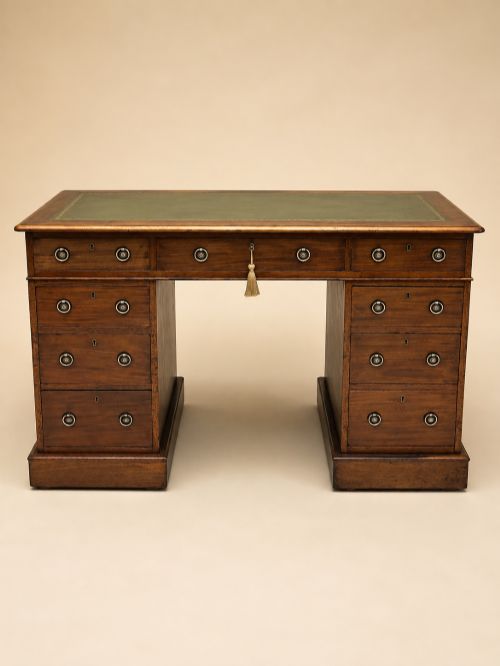
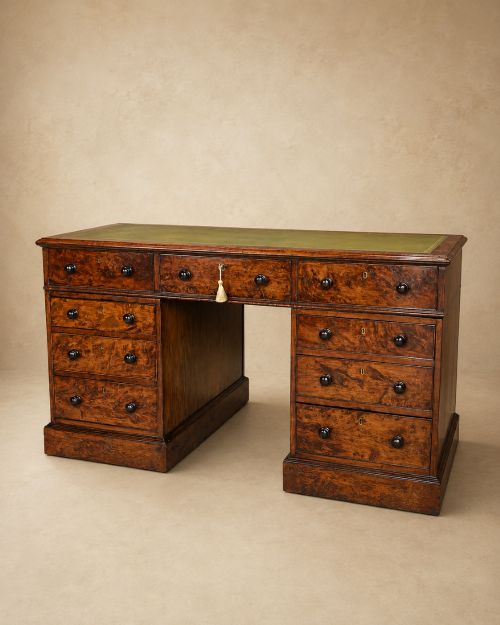
The most common variants found here are mahogany and walnut pedestal desks equipped with central kneeholes and multiple smaller drawers flanking the sides.
Many examples feature inset panels of gilt-tooled leather, providing a smooth, durable writing plane that distinguishes these pieces from plain wooden tables.
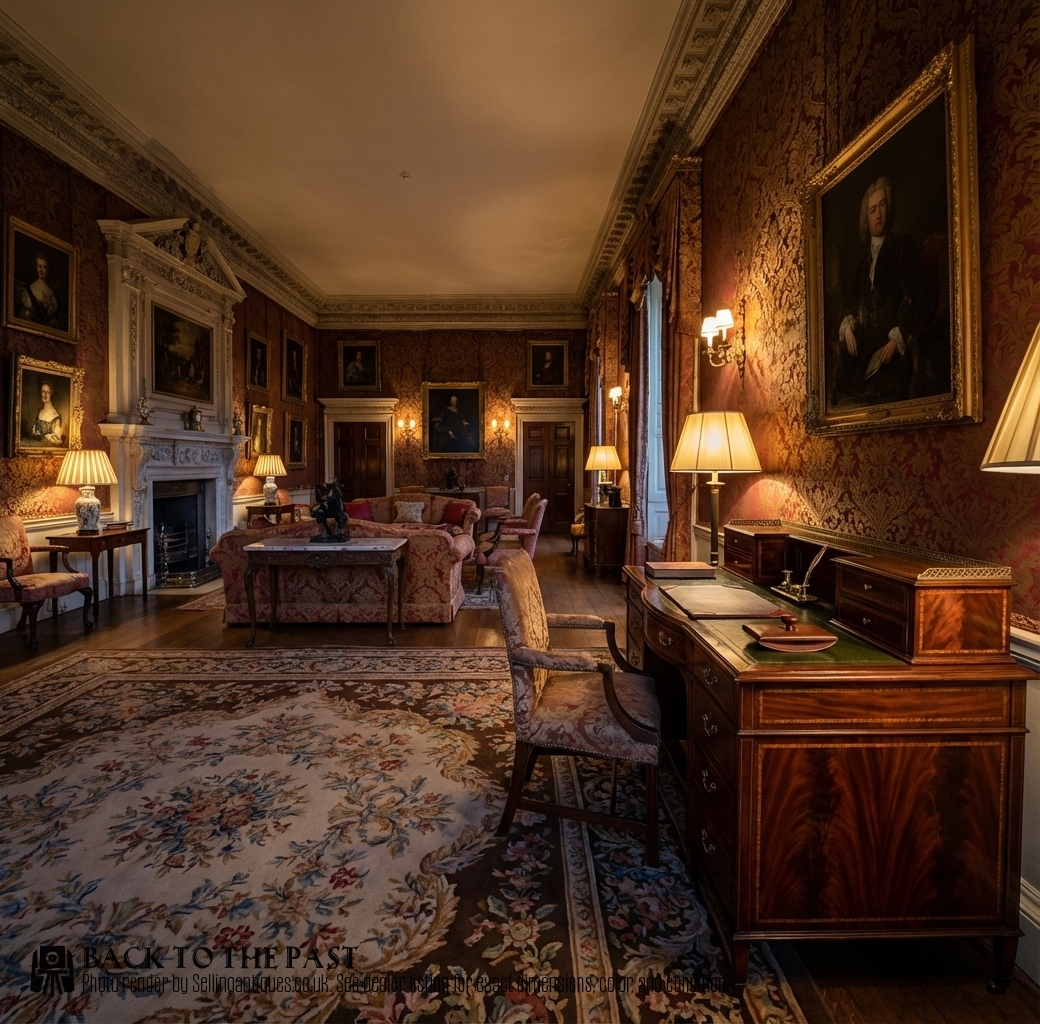
How they were made
Cabinet makers built these pieces using dense hardwoods like mahogany, oak, and walnut, frequently applying burr walnut veneers to primary display surfaces for decorative grain patterns.
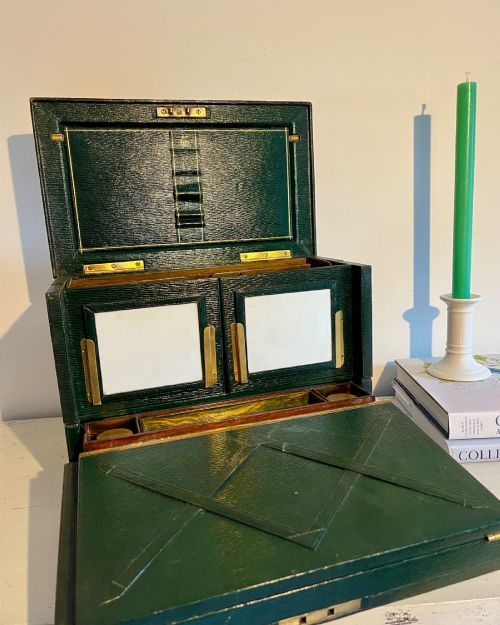
The writing surfaces incorporate vegetable-tanned leather hides affixed to wooden panels, often ornamented around the perimeter with gold leaf tooling.
Brass hardware, including drawer pulls, campaign handles, and castors, appears alongside iron fittings on internal drawer mechanisms.
Victorian Leather Desk Retail Price Guide 2026
Typical asking prices for victorian leather desk among the pieces listed under this phrase on Sellingantiques today, from the lower quarter to the upper quarter. They describe what is for sale here now, not the wider market.
Listings feature woods including mahogany, oak, walnut, burr walnut, and rosewood combined with tooled leather inserts.
What varies in quality
Quality rests upon the selection of timber, seen in the depth of the mahogany grain and the symmetry of burr walnut veneers across the drawer fronts.
Superior execution shows in secondary timbers used for drawer linings, hand-cut dovetail joints, and the crispness of any applied carvings or brass mountings.
The finish of the leather surface, the precision of the gilt tooling, and the integrity of the original locking mechanisms separate standard utility pieces from finer examples.
Trollope and Sons·Maple and Co·Johnstone and Jeanes·Charles Andrea Nosotti·Henri Jacot
The Victorian Leather Desk Glossary
- Skiver
- The leather panel inset into the top of a desk to provide a writing surface. It is frequently decorated with gilt tooling along the outer border.
- Pedestal desk
- A heavy piece of furniture comprising two banks of drawers supporting a single desktop. It typically includes a central kneehole.
- Davenport
- A compact writing desk featuring a sloping, hinged writing surface and a bank of drawers opening to the side. They often incorporate stationery compartments.
- Gilt-tooled
- Decoration applied to leather or bookbindings using heated brass tools and gold leaf. This technique creates metallic impressions along the margins of the writing surface.
Victorian Leather Desk: Frequently Asked Questions
What is a partners desk?
A partners desk is a wide, double-sided workspace featuring drawers and cupboards on both the front and back elevations. These large tables allowed two individuals to work facing each other.
They appear primarily in substantial libraries and offices from the nineteenth century, constructed in mahogany, oak, or walnut with inset leather tops.
How do I care for the leather top?
The leather writing surface benefits from occasional cleaning with a slightly damp cloth followed by a neutral leather cream. Avoid harsh solvents that can strip the original colour or damage the gilt tooling.
Keep the desk away from direct sunlight and excessive heat sources to prevent the hide from drying out and cracking over time.
What is a Davenport desk?
A Davenport is a small, compact writing desk with a sloping desktop that lifts to reveal storage compartments. A set of drawers typically opens to one side of the cabinet.
Cabinet makers produced these pieces in walnut and rosewood during the Victorian period for use in smaller drawing rooms and parlours.
Are pedestal desks modular?
Most pedestal desks separate into three distinct sections for transport: two heavy drawer pedestals and a single top surface containing the main writing area. This modular construction allowed nineteenth-century cabinet makers to maneuver large pieces up staircases and through doorways.
The desktop simply lifts off the pedestals once internal securing screws or bolts are released.