
Black Leather Desk
A black leather desk brings dark, tactile writing surfaces and rich timber frames to a study, uniting practical workspace with period character.
What these pieces are
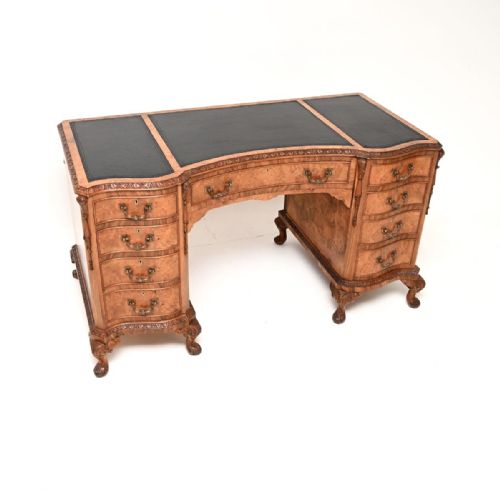
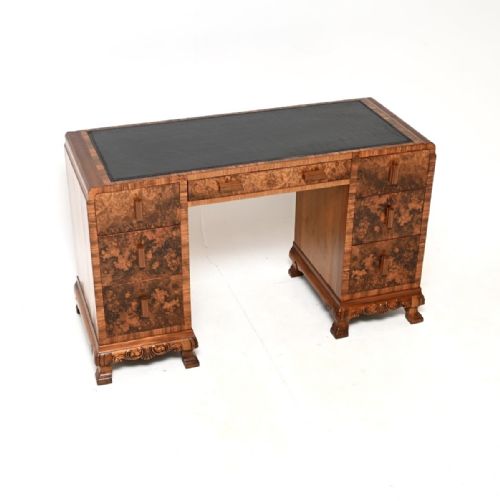
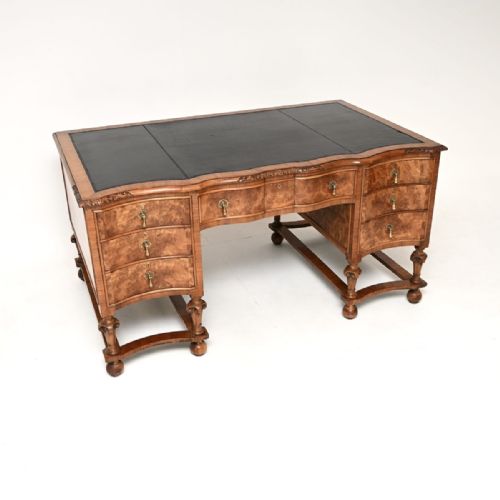
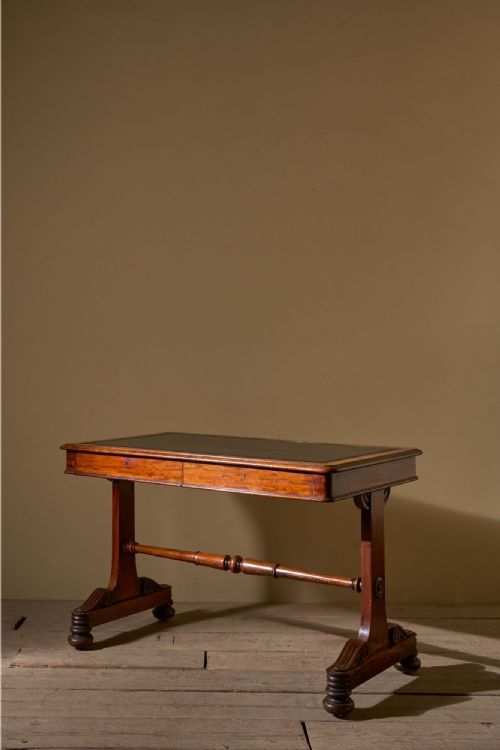
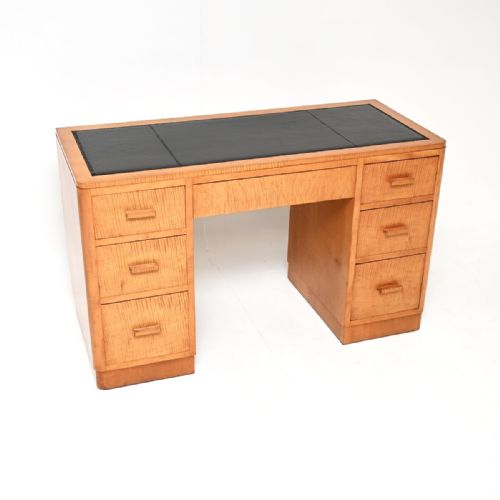
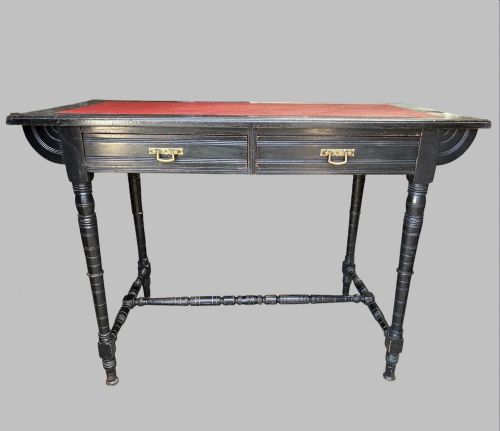
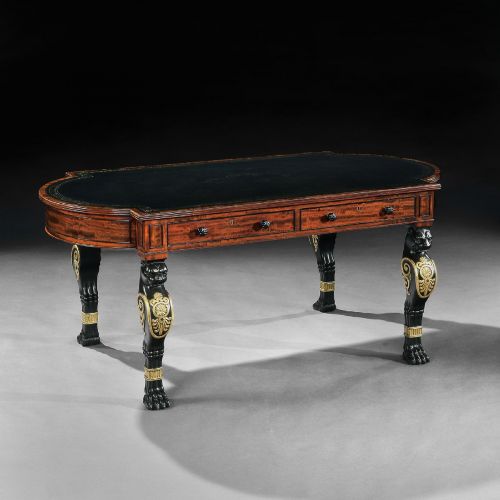
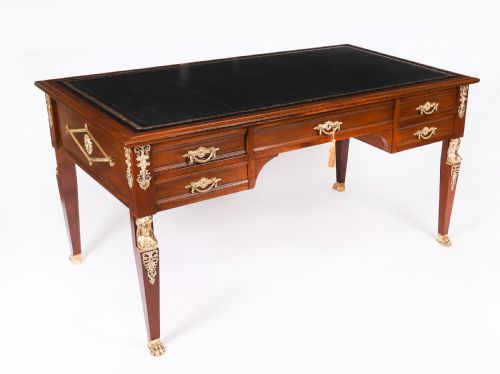
A black leather desk encompasses a range of writing furniture, from compact pedestal desks to larger library and partners tables designed for domestic studies and offices. These pieces frequently appear in Victorian, Edwardian, and early twentieth-century interpretations, including Queen Anne Revival, Aesthetic Movement, and Empire styles.
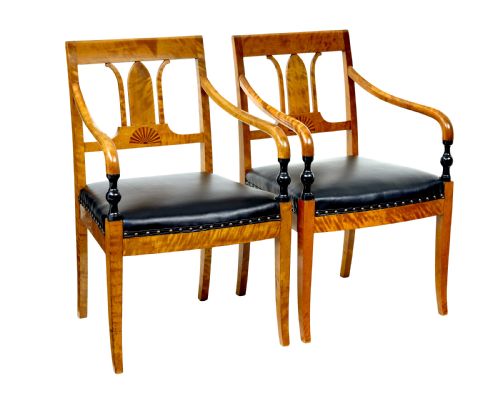
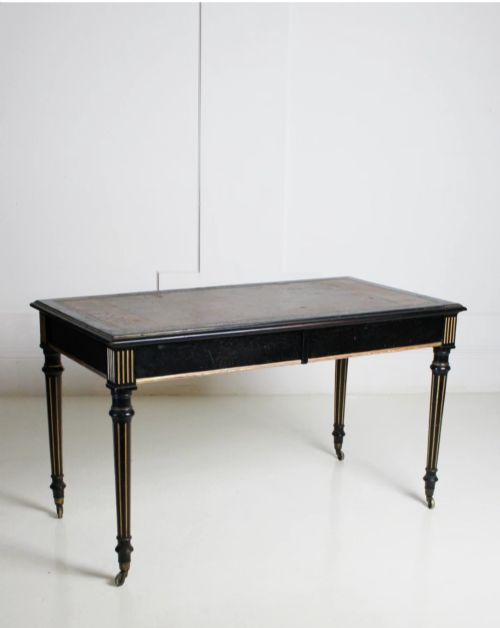
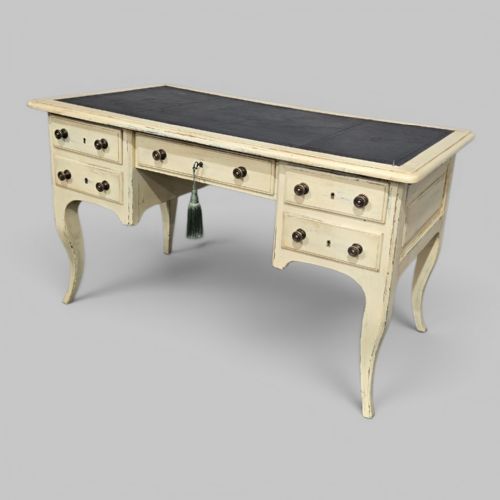
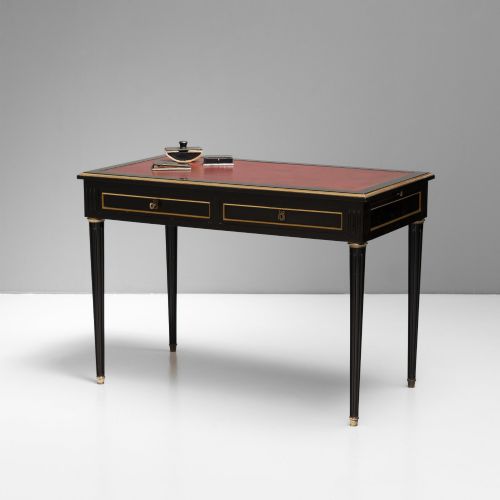
The most common form on this page is the pedestal desk or writing table, constructed in timbers such as mahogany, walnut, ebonised wood, and satin birch. These surfaces provide the durable writing area that collectors and writers seek for daily use or interior display.
How they were made
Cabinet makers utilised dense hardwoods like mahogany, oak, and walnut for the structural frames, drawers, and pedestals, often finished with polished surfaces or ebonised details. Writing surfaces were inset with black leather or hide, frequently bordered with gilt tooling.
Hardware details such as brass handles, escutcheons, and castors were incorporated to aid mobility and functionality on pedestal desks and writing tables. Joinery relied on traditional dovetailing for drawers and robust internal framing to support heavy timber tops.
Retail Price Guide 2026
Typical UK retail prices for black leather desk, calculated from the Sellingantiques database of over a million retail prices indexed since 2003. This retail price guide relies exclusively on Sellingantiques data; no external sources or auction records are used, so the figures do not describe the wider market.
Listings feature timbers including mahogany, burr walnut, ebonised wood, and satin birch across nineteenth and twentieth-century periods.
What varies in quality
Quality rests in the selection of timbers and veneers, such as figured walnut and burr walnut, matched against the precision of the cabinet work and the crispness of any gilt tooling on the leather. Finer examples display harmonious proportions and original hardware that complement the period style.
Johnstone & Jeanes·George Smith
The Black Leather Desk Glossary
- Pedestal desk
- A form of desk comprising two independent drawer pedestals supporting a single top. This layout provides substantial storage beneath the writing surface.
- Partners desk
- A large desk designed for two people to sit opposite one another, featuring drawers and cupboards on both sides. These were traditionally used in libraries and boardrooms.
- Writing table
- A freestanding table with one or more drawers, finished on all sides for placement in the centre of a room. It offers a lighter alternative to the pedestal desk.
- Ebonised wood
- Timber treated with a dark stain or finish to imitate ebony. This technique was popular in nineteenth-century aesthetic and revival furniture.
- Gilt tooling
- Impressed gold leaf patterns applied around the border of leather writing surfaces. It adds a decorative flourish to the working area.
Frequently Asked Questions
What is a partners desk?
A partners desk is a large, double-sided writing table designed for two people to work opposite each other, featuring drawers and cupboards accessible from both faces.
These pieces typically date from the nineteenth century and were created for studies, libraries, and offices where colleagues or partners shared a workspace.
How do I identify a Victorian desk?
Victorian desks are identified by dense timbers like mahogany, walnut, and oak, combined with solid brass hardware, hand-dovetailed drawers, and inset black leather tops.
Stylistic cues range from heavy early Victorian forms to later Aesthetic Movement designs and Queen Anne Revival influences.
Are black leather tops original?
Many nineteenth-century desks retain their original leather or hide surfaces with period tooling, while others have been fitted with replacement leather over time.
Both original patinated surfaces and replacement hide are common, depending on the working history and preservation of the individual piece.
Where should I place a writing table?
A writing table is finished on all sides, making it suitable for placement in the centre of a study or room rather than pushed against a wall.
This freestanding nature allows access to the drawers from the front while displaying the polished timber back to the room.