
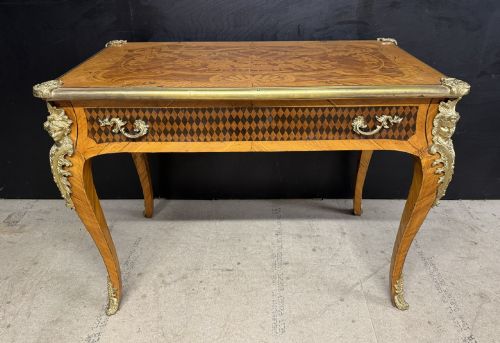
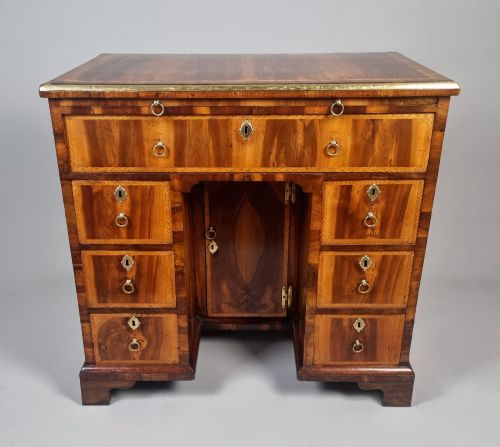
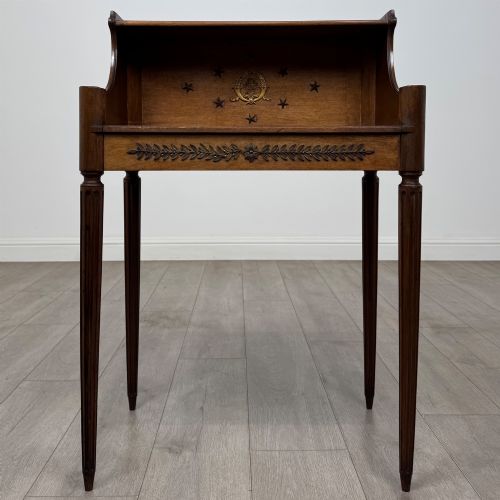
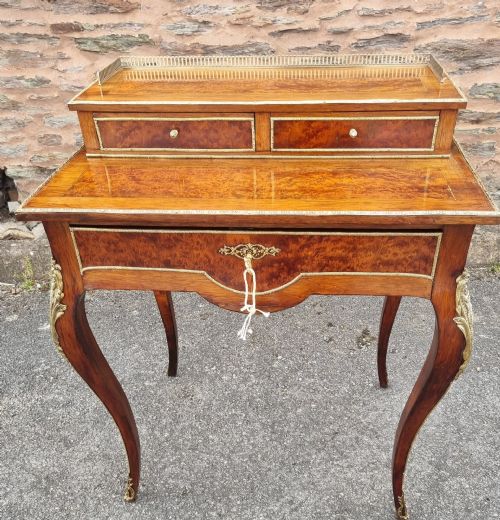

Brass Mounted Writing Table
These pieces combine polished timber and gleaming metal fittings to create a practical workspace.
Brass Mounted Writing Table
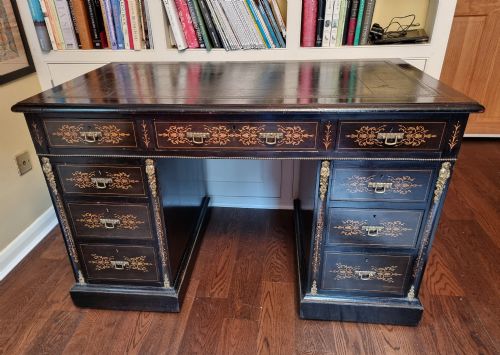
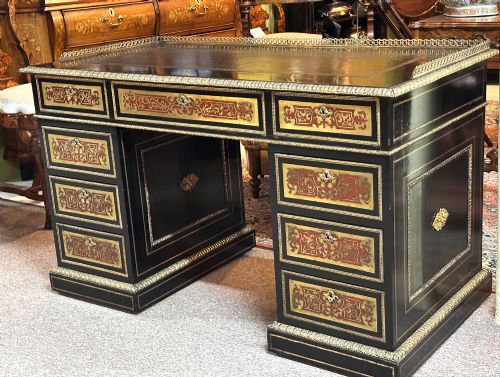
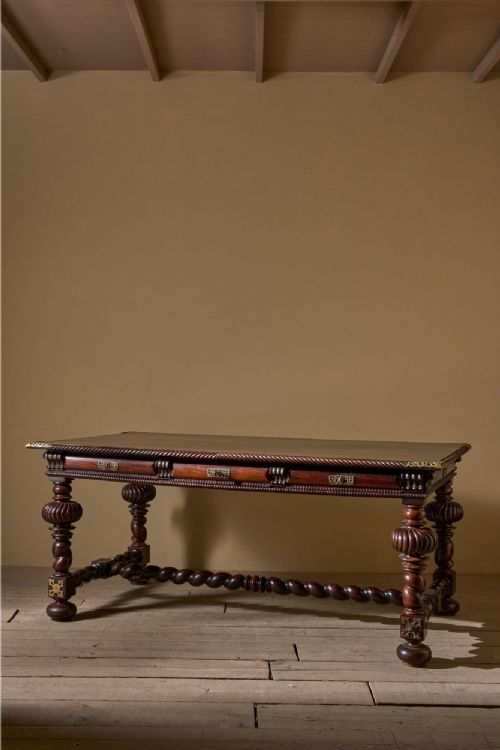
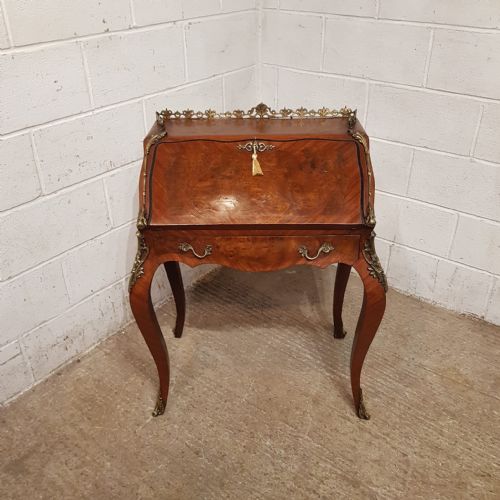
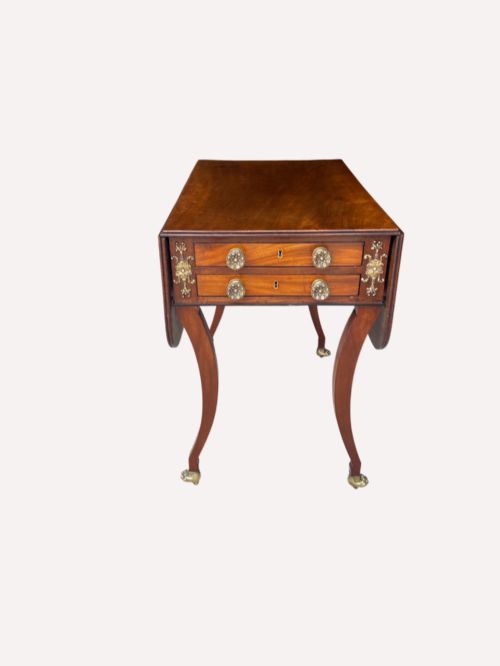
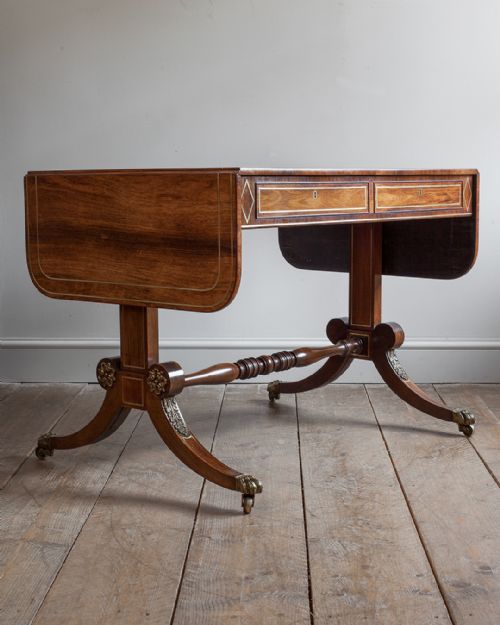
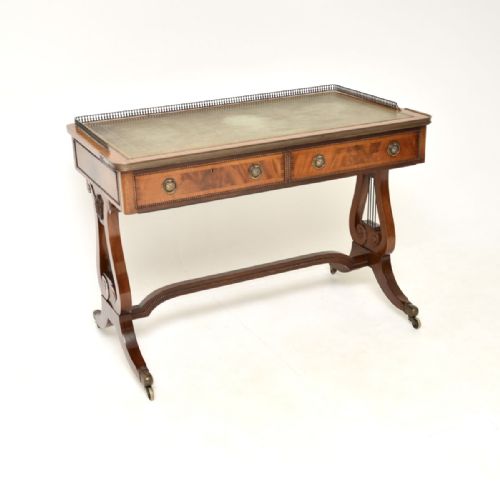
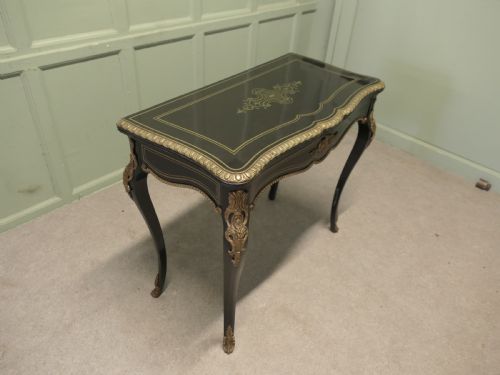
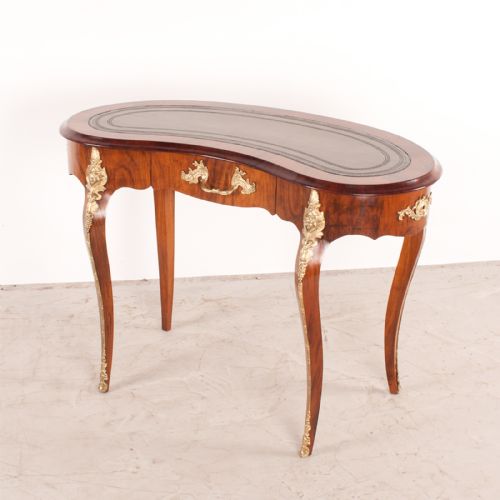
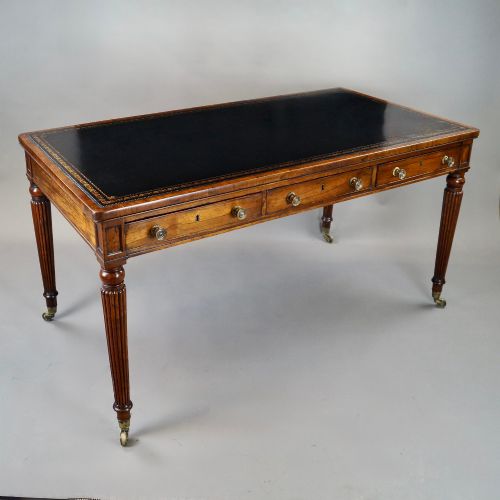
A brass mounted writing table serves as a functional workspace, typically featuring a leather or inset writing surface framed by timber and accented with metal mounts, banding, or inlay. These items appear in various forms on this page, including freestanding desks, bureau plat designs, and sofa tables.
The materials span multiple periods and regions, showing strong representation from the Regency and Victorian eras alongside French revival styles. Woods such as rosewood, mahogany, and walnut provide the primary structure, while brass and ormolu supply the characteristic metal detailing.
Buyers seeking a brass mounted writing table will encounter both English craftsmanship and French workshop productions. The designs range from streamlined drop-flap tables to ornate marquetry pieces outfitted with intricate brass banding.

Materials and Construction Methods
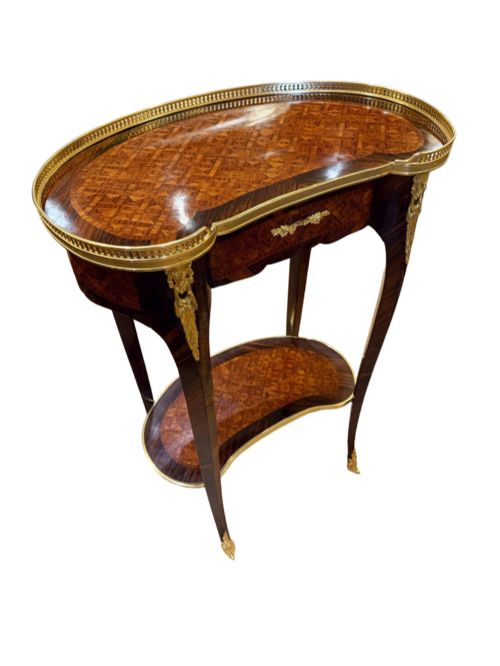
Cabinet makers utilised dense hardwoods including mahogany, rosewood, and walnut as the foundational body for these tables. In many French examples, kingwood, tulipwood, and amboyna veneers cover oak or pine carcasses, arranged in marquetry or parquetry patterns.
Metal decoration forms a defining characteristic, employing cast ormolu, gilt bronze, and sheet brass. Craftsmen inlaid brass stringing directly into the timber surfaces or secured cast mounts with small pins to edge drawers, legs, and tops.
Brass Mounted Writing Table Retail Price Guide 2026
Typical asking prices for brass mounted writing table among the pieces listed under this phrase on Sellingantiques today, from the lower quarter to the upper quarter. They describe what is for sale here now, not the wider market.
Listings feature woods such as rosewood, mahogany, walnut, kingwood, and ebonised timber alongside brass and ormolu mounts.
Assessing Quality in Construction and Detail
Quality rests in the crispness of the brass casting and the precision of the metal inlay relative to the surrounding wood. Superior pieces exhibit tight joints where brass stringing meets timber, alongside finely chased ormolu mounts that retain their original definition.
The choice of secondary timbers and the depth of the primary veneer layers also distinguish finer examples from standard production. Master workshops employed substantial mahogany or rosewood and executed interior drawer linings with hand-cut dovetails rather than machine-made joints.
Edwards & Roberts·Donald Ross·Maison Millet·Gillows
The Brass Mounted Writing Table Glossary
- Ormolu
- Gilt bronze mounts applied to furniture. The technique involves a mercury amalgam applied to bronze, heated to leave a gold layer.
- Bureau Plat
- A freestanding double-sided writing desk featuring drawers within the frieze. These tables traditionally stand away from walls.
- Marquetry
- Decorative patterns formed by fitting together thin veneers of various woods, metals, or shells. Artisans glue these intricate designs onto the carcass of the table.
- Parquetry
- Geometric wood mosaic work used for floors and tabletops. This technique creates repeating patterns like cubes or chevrons using contrasting timbers.
- Bonheur-Du-Jour
- A small lady's writing desk featuring a tiered superstructure with shelves or small drawers above the main writing surface.
Brass Mounted Writing Table: Frequently Asked Questions
Where do I place a brass mounted writing table?
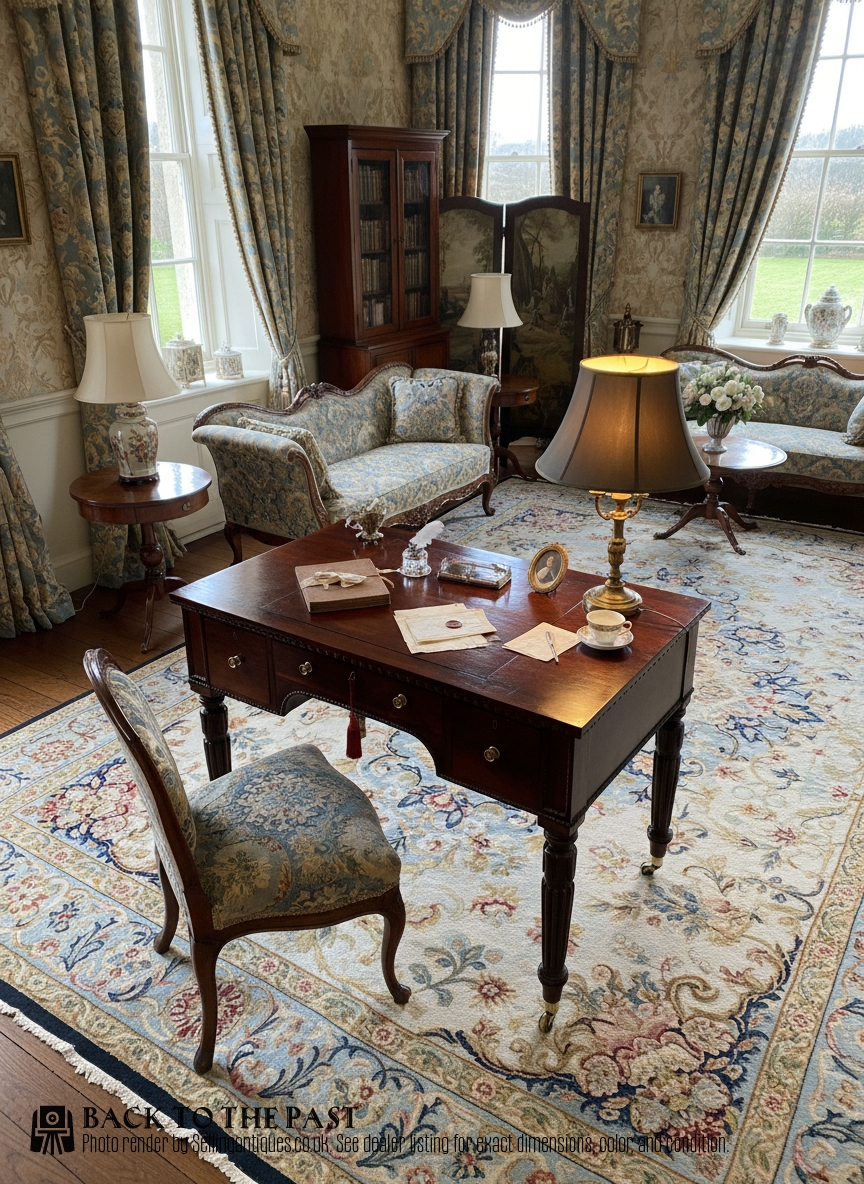
These tables adapt well to studies, living rooms, and bedrooms depending on their scale. Freestanding versions with finished backs suit central room placements.
Smaller formats function effectively as occasional desks or decorative display surfaces against walls.
How do I care for the leather top?
Leather writing surfaces require minimal moisture and regular dusting to prevent drying and cracking. Specialist leather balms help maintain suppleness over time.
Avoid placing hot cups or liquids directly on the leather to prevent staining the hide.
What is the difference between ormolu and brass?
Ormolu consists of cast bronze treated with a gold amalgam finish, offering a richer golden tone and finer sculptural detail. Brass is a copper and zinc alloy used for flat inlay, banding, and structural mounts.
Finer desks frequently combine both materials for different decorative purposes.
How do I identify a French piece from an English one?
French examples often incorporate extensive marquetry, kingwood veneers, and cast ormolu mounts in Louis revival styles. English tables tend to rely on solid mahogany or rosewood with cleaner geometric brass inlay.
Internal construction details and secondary timbers also clarify the origin of manufacture.