

French Rococo Desk
A French rococo desk brings curved lines and rich timber veneers to a study, offering a workspace rooted in nineteenth-century craftsmanship.
French Rococo Desk
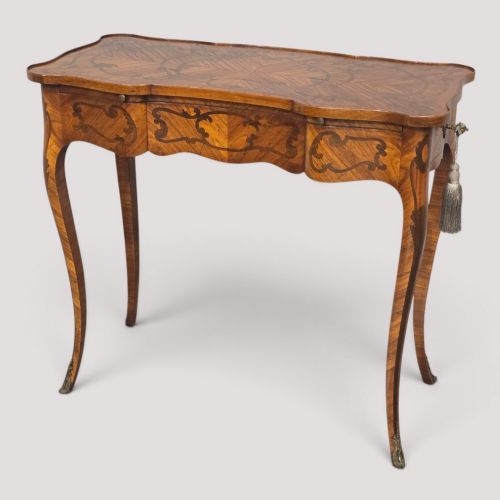
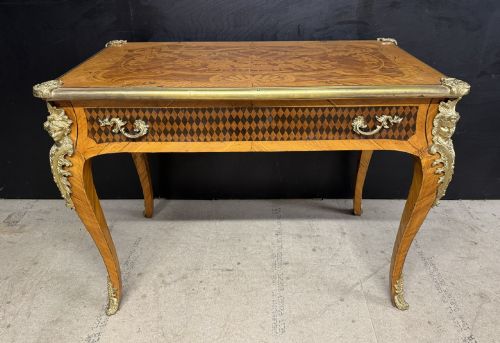
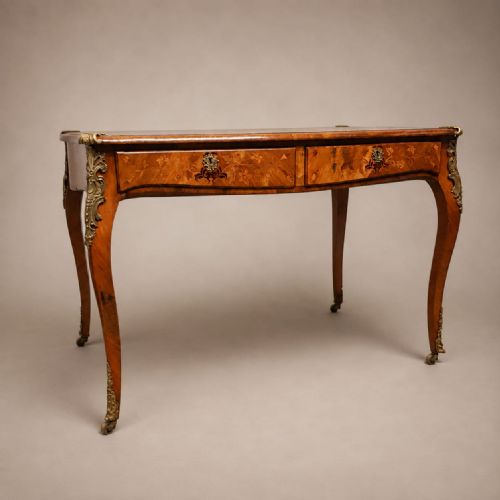
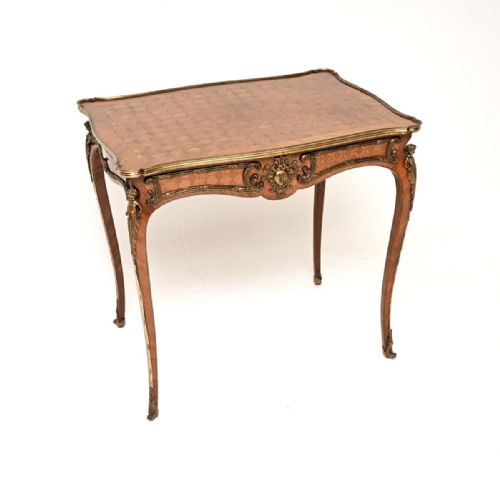
When searching for a french rococo desk, a buyer encounters pieces primarily from the nineteenth century, including the Victorian era, alongside revivals of Louis XV styles. These writings tables and bureaus often feature serpentine outlines and freestanding forms designed to sit centrally within a room rather than against a wall.
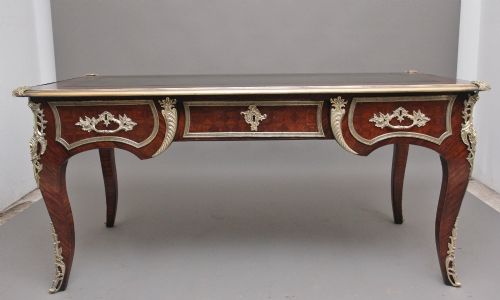
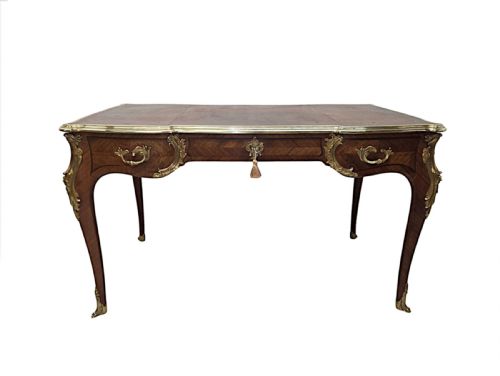
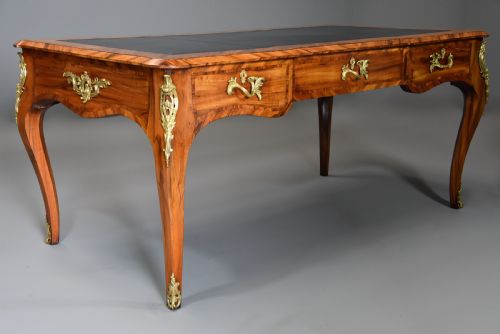
The version met most frequently on this page is the bureau plat, a flat-topped writing table typically fitted with drawers and often retaining its original leather writing surface. Alongside these stand larger partners desks and smaller writing desks decorated with marquetry or parquetry.
Origins trace back to French workshops and English interpretations influenced by continental taste, spanning dates from eighteen-eighty to nineteen-ten. The vocabulary of the form relies heavily on asymmetry, C-scrolls, and natural motifs typical of the rococo revival.
Materials and construction
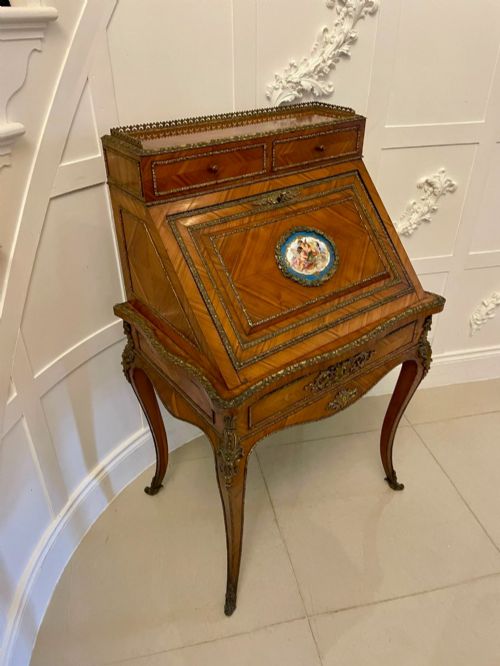
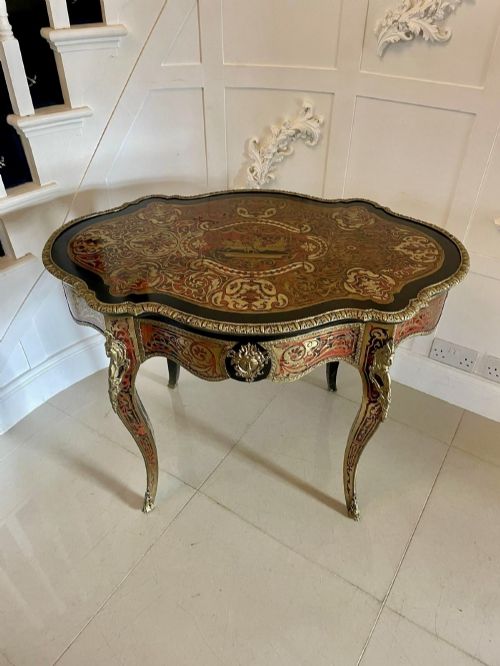
Cabinet makers utilised dense hardwoods such as kingwood and walnut as the primary carcase materials, frequently applying intricate marquetry and parquetry veneers in geometric or floral patterns. Satinwood and goncalo alves also appear across these surfaces, providing contrasting tones.
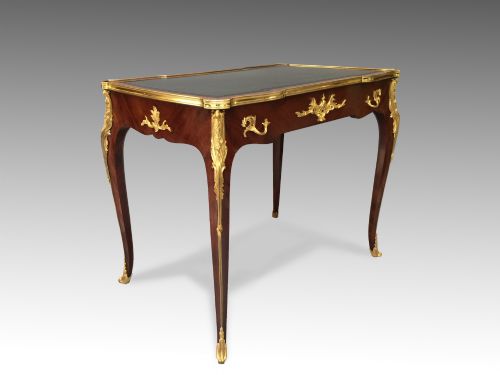
Cast ormolu and gilt bronze mounts define the aesthetic, applied to corners, legs, and drawer edges to accentuate the curved contours. Leather inserts provide the working surface for the desk top, complemented by brass and glass elements where appropriate.
French Rococo Desk Retail Price Guide 2026
Typical asking prices for french rococo desk among the pieces listed under this phrase on Sellingantiques today, from the lower quarter to the upper quarter. They describe what is for sale here now, not the wider market.
Several desks hide compartments originally intended for private correspondence and inkwells.
What separates the best pieces
Quality rests upon the crispness of the gilt bronze or ormolu mounts and the precision of the timber inlay. Finer examples display hand-chased metalwork with sharp detail and seamless veneer matching across complex serpentine curves.
Signatures from notable makers or retailers distinguish exceptional pieces from standard production, as do fully finished backs that allow the desk to stand independently. The depth of hand-carved woodwork and the preservation of original leather surfaces further elevate a piece.
François Linke·Edwards and Roberts·Achille Brocot·CH. Jeanselme and Co·Durand·Millet
The French Rococo Desk Glossary
- Bureau plat
- A freestanding writing table with a flat top, usually lined with leather and fitted with one or more rows of drawers beneath the surface.
- Ormolu
- Gilt bronze ornamentation applied to the mounts, feet, and handles of furniture to highlight decorative details.
- Marquetry
- The art of applying decorative pieces of veneer to a structure to form intricate floral or pictorial designs.
- Parquetry
- Geometric wood inlay work arranged in patterns such as cubes or chequers across the top or sides of a desk.
- Serpentine
- A furniture contour that curves outward then inward, creating a gentle wave shape characteristic of rococo design.
French Rococo Desk: Frequently Asked Questions
What is a bureau plat?
A bureau plat is a flat-topped writing table designed to stand freely in the middle of a room rather than against a wall.
These pieces typically feature finished backs and multiple drawers beneath the writing surface, which is often inset with leather.
How do I identify a revival piece?
Revival pieces from the nineteenth century imitate eighteenth-century Louis XV styles using period-appropriate timber veneers like kingwood and walnut.
Examine the construction methods and metal casting techniques, which often reflect Victorian manufacturing standards rather than original rococo workshop practices.
Where should I place these desks?
Because many of these tables feature finished backs and decorated sides, they suit central placements within a study or library.
Ensure the room maintains stable humidity levels to protect the wood veneers and the delicate ormolu mounts from environmental stress.
What timber was used?
Makers utilised kingwood, walnut, and satinwood as primary hardwoods for constructing the carcase and applying decorative veneers.
These timbers were chosen for their rich grain patterns and ability to accept complex marquetry and parquetry designs.