


Early 20th Century Desk
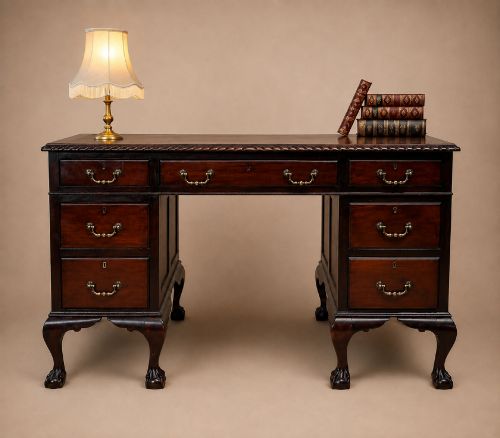
When sourcing an early 20th century desk, you select from solid oak, mahogany, and walnut forms designed for rigorous daily clerical work or private study.
Early 20th Century Desk
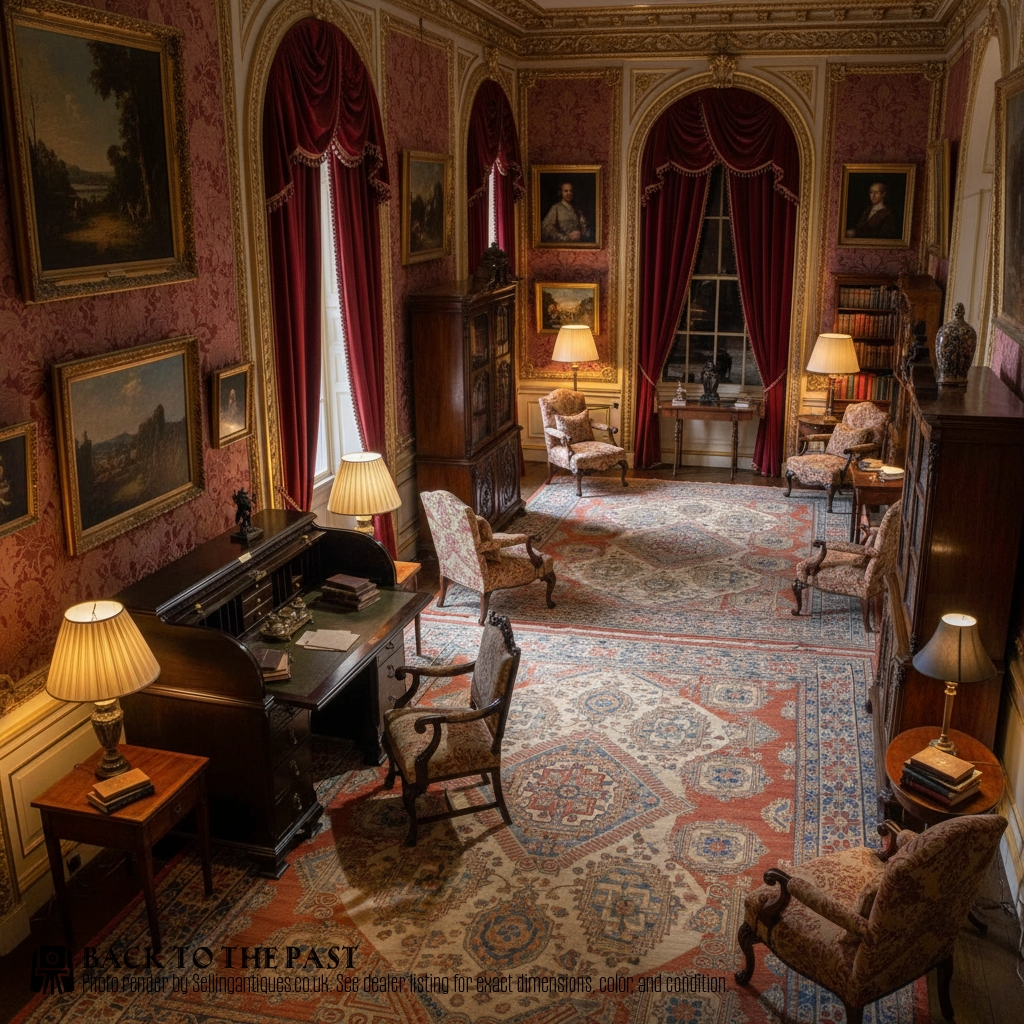
An early 20th century desk encompasses utilitarian bankers' tables, twin-pedestal writing surfaces, and robust swivel chairs originating from the Edwardian period through the 1930s. Buyers searching this phrase encounter hardworking commercial office furniture alongside domestic library tables executed in rich timbers.
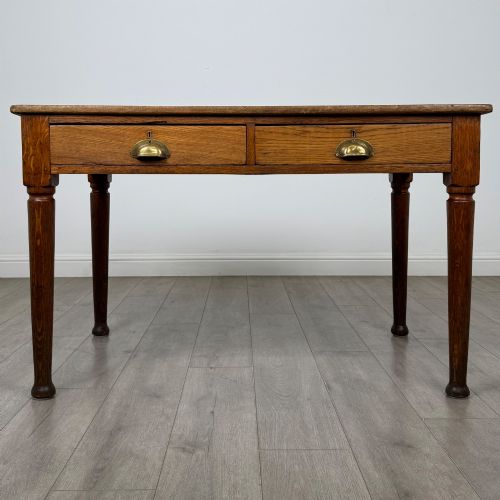
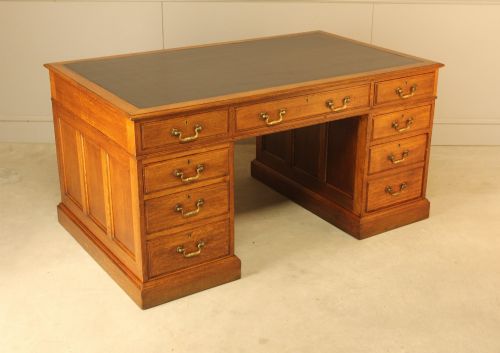
The selection ranges from simple single-pedestal oak models to elaborate burr walnut partners desks and roll top variants. Heavy construction and functional drawer arrangements define the category, reflecting the administrative expansion of the era.
Materials and Construction
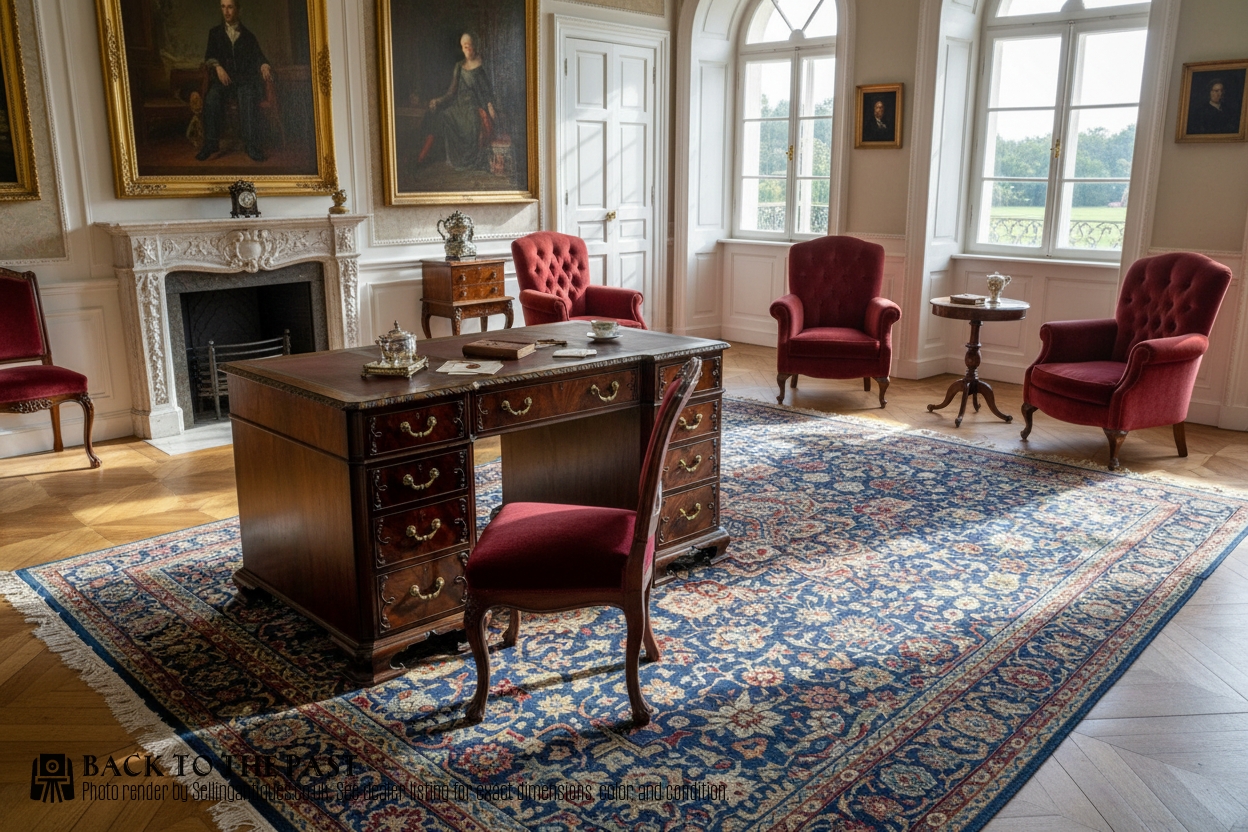
Cabinet makers utilised dense hardwoods such as oak, mahogany, walnut, and pitch pine to ensure structural longevity under heavy daily use. Surfaces often incorporated inset leather writing panels, while drawer construction relied on tight dovetail joints.
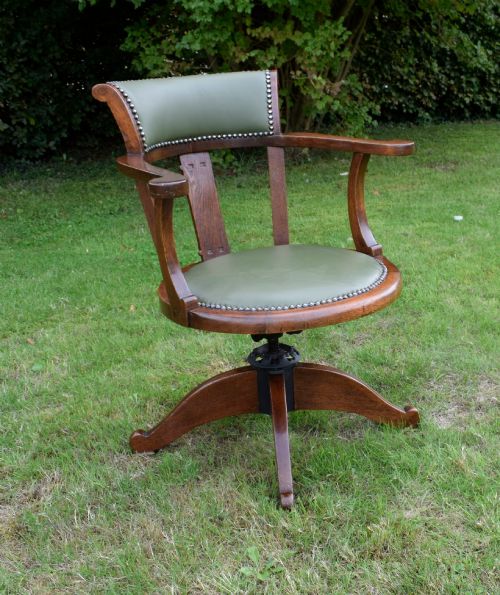
Swivel and reclining desk chairs integrated cast iron mechanisms with wooden seats, sometimes upholstered in leather. Brass hardware, including handles and locks, completed the utilitarian yet polished manufacture.
Early 20th Century Desk Retail Price Guide 2026
Typical asking prices for early 20th century desk among the pieces listed under this phrase on Sellingantiques today, from the lower quarter to the upper quarter. They describe what is for sale here now, not the wider market.
Early office workers could swivel, tilt, and roll across the parquet floor in cast-iron-sprung armchairs designed specifically to combat Monday morning fatigue.
Factors of Quality
The distinction between standard commercial units and superior examples lies in timber selection, such as figured burr walnut versus plain pine, and the complexity of the pedestal configuration. Twin-pedestal and partners desks represent higher craftsmanship than single-pedestal variants.
Original hardware, working locking mechanisms, and retained leather inserts elevate a piece above altered or heavily restored items. Maker attribution, through stamps or badges, further separates standard workshop output from premier London and regional makers.
Wylie & Lochhead Glasgow·Walker and Hall·Tiffany Studios New York·Simpoles of Manchester·Globe Wernicke
The Early 20th Century Desk Glossary
- Partners Desk
- A large double-sided writing table designed for two people to work opposite one another, featuring drawers and cupboards on both faces.
- Pedestal Desk
- A freestanding writing table supported by two banks of drawers resting on the floor, usually flanking a central kneehole space.
- Roll Top Desk
- A form fitted with a slatted tambour shutter that slides down to enclose the writing surface and pigeonholes.
- Swivel Chair
- A revolving desk armchair, often mounted on a central cast iron spindle and four or five-leg base with castors.
Early 20th Century Desk: Frequently Asked Questions
What distinguishes a partners desk from a standard pedestal desk?
A partners desk provides workspace and storage on both sides, allowing two individuals to sit face-to-face.
Standard pedestal desks place drawers against a solid back panel, restricting use to a single seated position.
How do I identify a swivel desk chair from this era?
These chairs combine a revolving wooden seat with a mechanical cast iron spider base and castors.
Many incorporate tilting mechanisms that allowed the occupant to lean back while seated at the desk.
Were these desks used in homes or offices?
Makers produced these forms for both corporate environments, such as banks and railway offices, and private domestic studies.
Commercial models tended toward utilitarian oak, while domestic writing tables utilised decorative mahogany and walnut veneers.
What maintenance does a leather writing surface require?
Original leather insets benefit from gentle cleaning and application of neutral wax or leather dressing to prevent cracking.
Avoiding excessive direct sunlight preserves the colour and supple texture of the hide.