
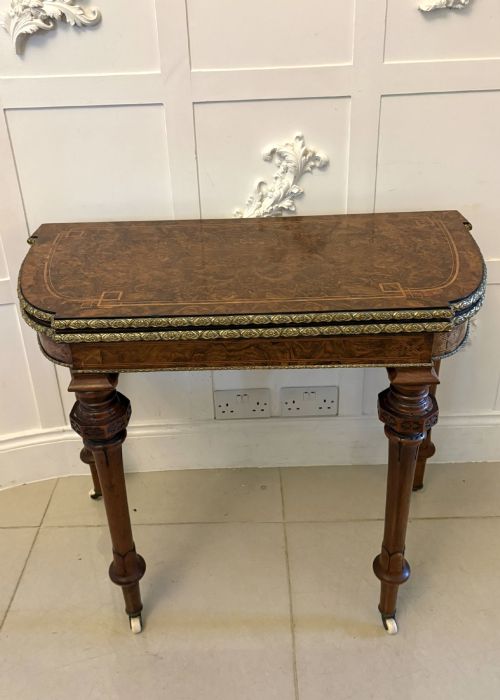
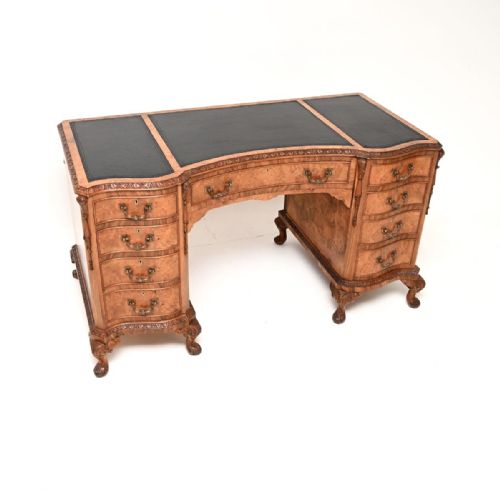


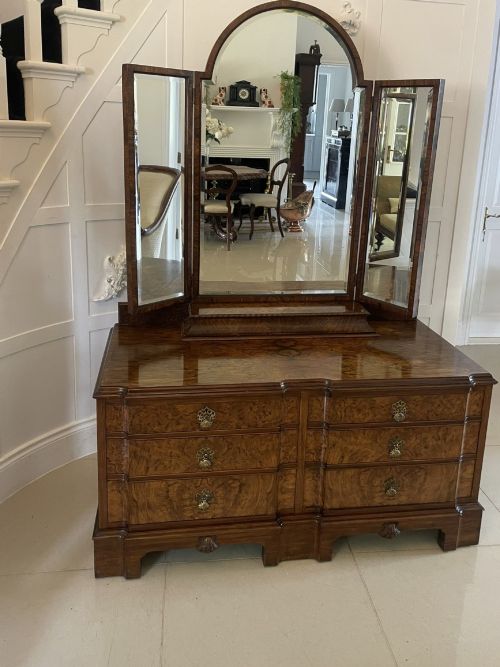
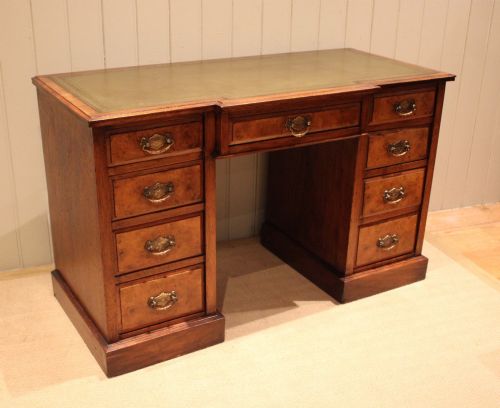
Edwardian Walnut Desk
An edwardian walnut desk offers practical workspace wrapped in rich timber figure, bringing character to a study.
Edwardian Walnut Desk
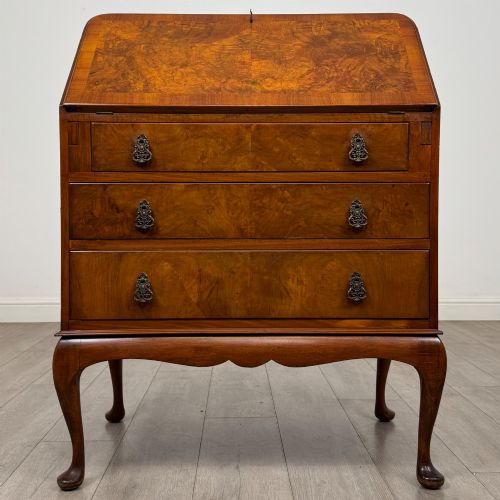
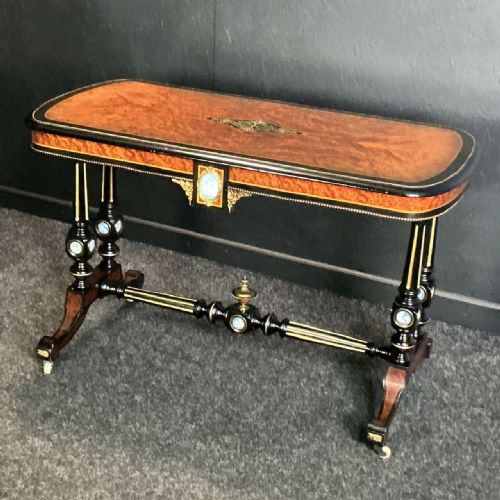
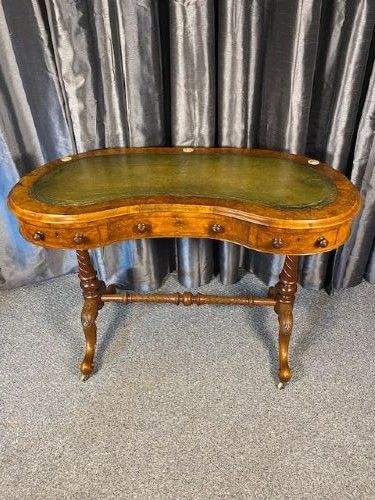
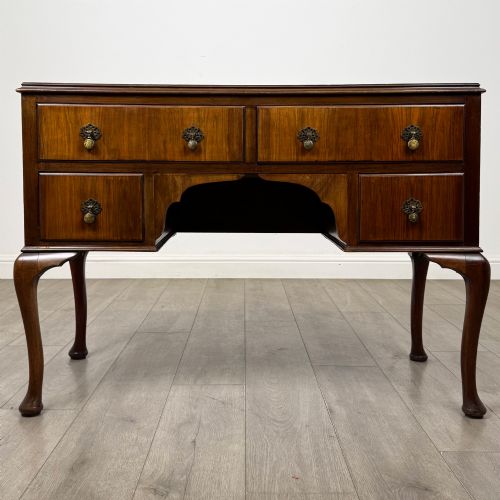
When searching for an edwardian walnut desk, buyers encounter robust pedestal formats, compact kneehole writing tables, and refined bureau models designed for domestic studies. The pieces originate primarily from the early twentieth century, carrying the hallmarks of Edwardian craftsmanship alongside revival influences such as Queen Anne styling.
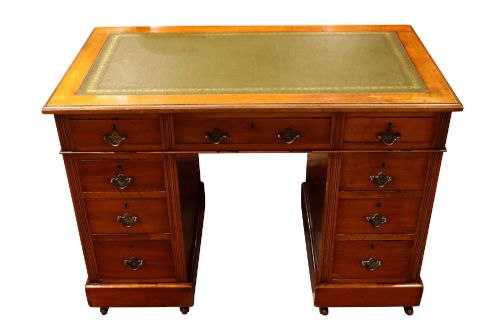
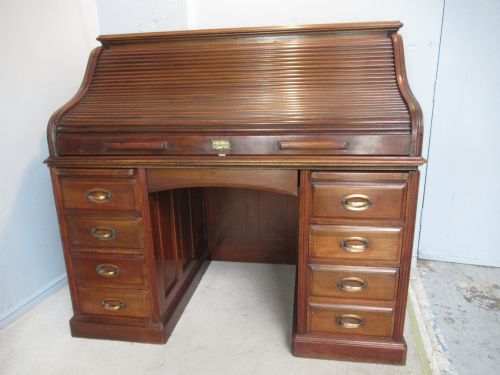
Pedestal configurations dominate the selection, featuring multiple banks of drawers flanking a central recess for seating. Writing tables and smaller ladies' variants appear frequently, offering lighter proportions while retaining the distinctive grain of the primary timber.
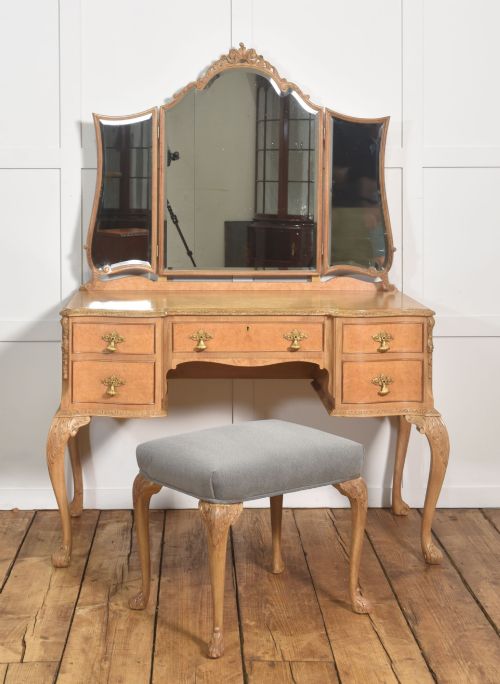
Surviving examples bridge the transition from late Victorian heaviness to lighter, more restrained Edwardian sensibilities. Buyers meet both straightforward functional office pieces and highly decorative examples finished in figured or burr veneers.
Evaluating the Range
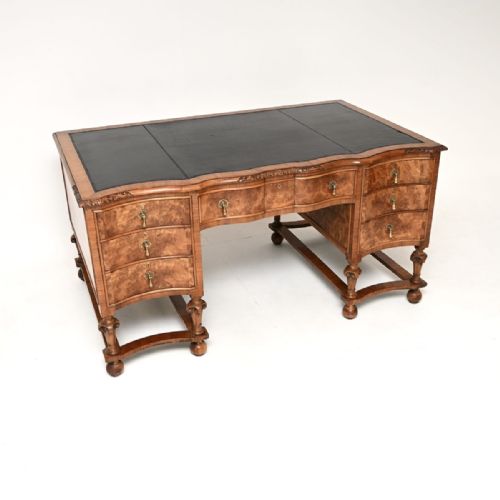
Quality separates through the selection and matching of timber veneers across large surfaces, where symmetrical burr patterns indicate superior cabinet work. The crispness of carved details and the integration of secondary timbers inside drawer boxes reveal the original workshop's standard.
Hardware preservation and the survival of original leather writing inserts significantly influence the overall integrity of a piece. Finer examples retain working locks with matching keys and smooth-running drawer construction without timber shrinkage.
Edwardian Walnut Desk Retail Price Guide 2026
Typical asking prices for edwardian walnut desk among the pieces listed under this phrase on Sellingantiques today, from the lower quarter to the upper quarter. They describe what is for sale here now, not the wider market.
Some Edwardian desks come equipped with perpetual calendar attachments, ensuring nobody ever loses track of the day.
Maple and Co·Wylie and Lochhead Glasgow·Edwards and Roberts·Hindley and Sons·Charles Tozer·Walker and Hall·Angus of London
The Edwardian Walnut Desk Glossary
- Burr walnut
- A prized timber harvested from tree growths that produces intricate, swirling grain patterns. Cabinet makers prized these veneers for decorative desk surfaces.
- Pedestal desk
- A freestanding writing table supported by two vertical banks of small drawers. This configuration provides substantial storage alongside a central seating space.
- Kneehole desk
- A compact writing desk featuring a central recessed space for the legs flanked by cupboards or drawers. They suit smaller studies while offering practical surface area.
- Bureau
- A sloping flap desk that opens to reveal a fitted interior of small compartments and pigeonholes. Edwardian versions frequently utilise figured walnut veneers.
- Ormolu
- Gilded bronze mounts applied to furniture for decorative enrichment. They appear on select revival pieces matching the walnut carcasses.
Edwardian Walnut Desk: Frequently Asked Questions
How do I maintain the leather top?
Clean the leather surface gently using a damp cloth without harsh chemicals, then apply a neutral leather cream to preserve suppleness. Avoid placing hot mugs or unprotected liquids directly onto the hide.
Regular light dusting prevents abrasive particles from settling into the grain. Wax polish should be kept away from the leather insert to avoid staining.
Are these desks suitable for daily computer work?
Many Edwardian desks accommodate modern laptops and paperwork easily, provided the working height and knee clearance match your chair. Compact writing tables offer sufficient depth for screens without dominating a room.
Ensure you check internal drawer dimensions if you plan to store keyboards or electronic accessories. Protect the walnut surface from charging cables and hard bases using felt pads.
How can I distinguish Edwardian from Victorian walnut?
Edwardian walnut furniture generally exhibits lighter proportions and less ornate carving than its Victorian predecessors. Makers embraced simpler lines while continuing to utilise rich burr veneers.
Victorian pieces often lean towards heavier construction and darker finishes with Gothic or French revival influences. Examining the interior secondary woods often confirms the transition in manufacturing eras.