


Dark Walnut Desk
A dark walnut desk brings rich timber tones and enduring workspace utility into a room, spanning periods from William and Mary to the Edwardian era.
What these pieces are
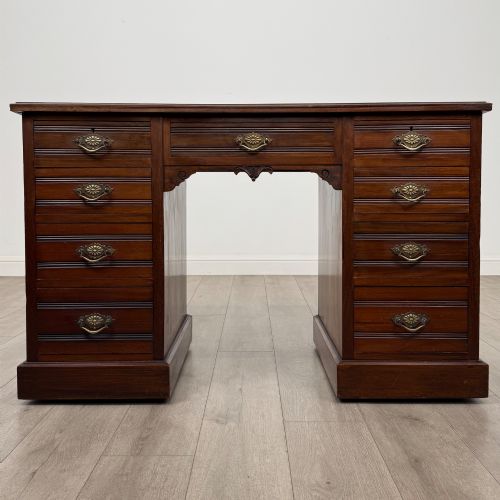
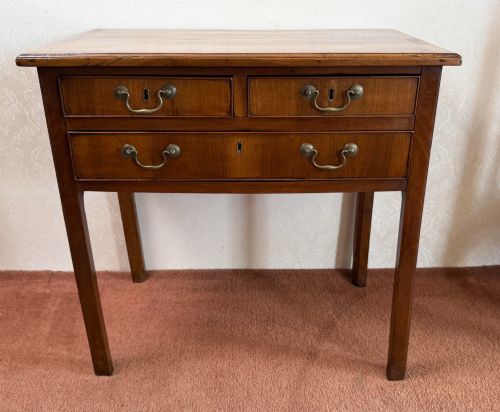
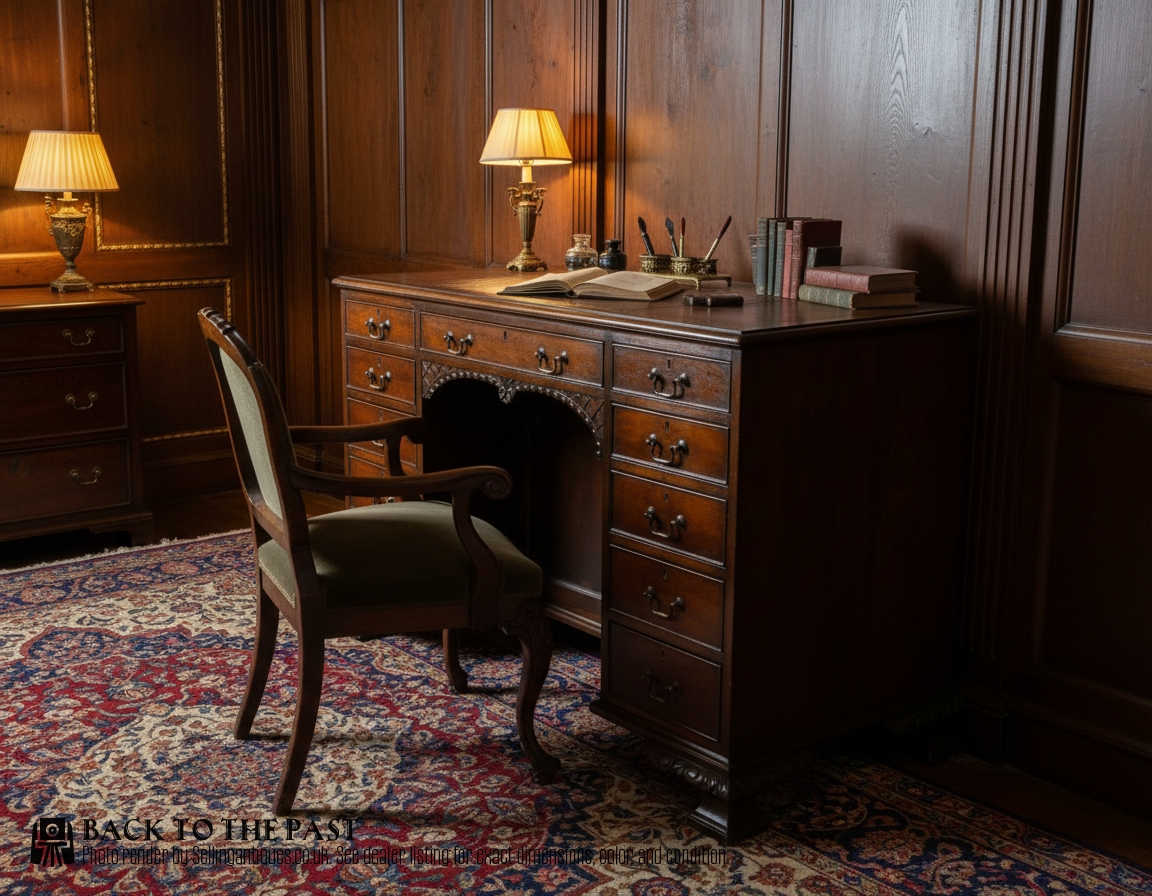
A dark walnut desk encompasses various functional writing furniture forms, including pedestal writing desks, bureau cabinets, and kneehole desks. These pieces serve as practical workspaces while anchoring a room with deep timber hues.
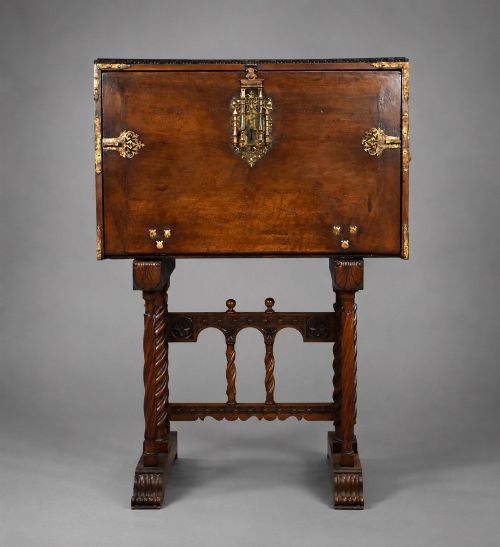
The dark walnut desk selection spans several distinct eras, featuring early seventeenth-century William and Mary examples alongside nineteenth-century Victorian pieces and twentieth-century Scandinavian designs. Bureau bookcases and inlaid bureau plat forms also appear among the offerings.
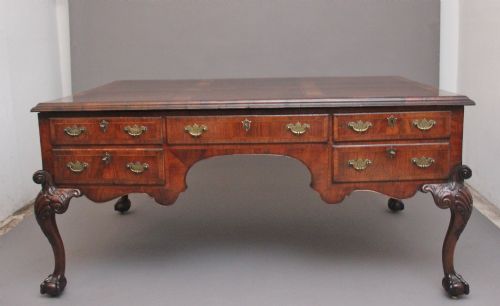
Edwardian dark walnut pedestal desks represent a common form within this group, offering traditional proportions suited for daily use. Alongside these, French Rococo revival and Dutch Baroque styles introduce varied regional craftsmanship.
How they were made
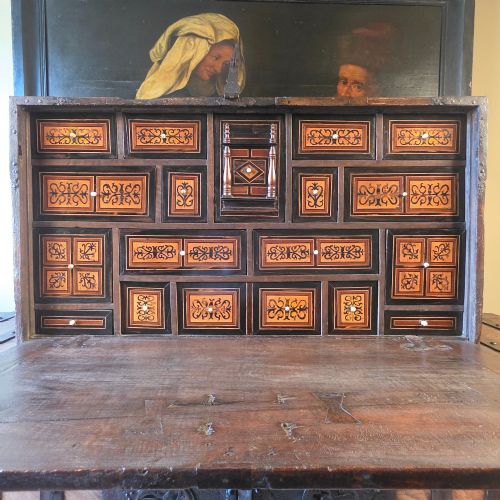
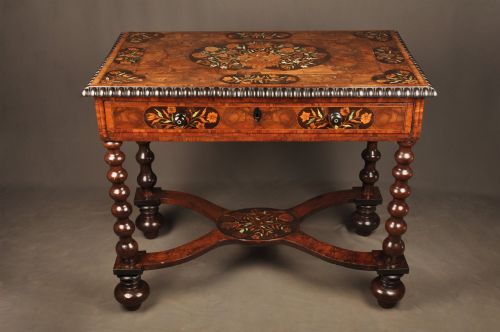
Walnut serves as the primary timber across these pieces, frequently enhanced by secondary materials such as oak, fruitwood, and kingwood. Artisans incorporated intricate marquetry and inlay work to decorate the exterior surfaces.
Metal mounts in brass and ormolu provide structural hardware and decorative accents, particularly on French and bureau plat models. Leather panels often inset the writing surfaces to offer a durable writing plane.
Retail Price Guide 2026
Typical UK retail prices for dark walnut desk, calculated from the Sellingantiques database of over a million retail prices indexed since 2003. This retail price guide relies exclusively on Sellingantiques data; no external sources or auction records are used, so the figures do not describe the wider market.
The listings span seven distinct historical periods, from the seventeenth century through to Scandinavian early twentieth-century design.
What varies in quality
The refinement of the timber figure and the complexity of the marquetry distinguish exceptional examples from standard production. Superior execution shows in the seamless integration of secondary woods and the crispness of carved details.
Quality also rests in the preservation of original hardware, such as brass handles and ormolu mounts, alongside the integrity of fitted interior compartments within bureau bookcases.
The Dark Walnut Desk Glossary
- Pedestal desk
- A freestanding writing table supported by two pedestals of drawers with a central opening.
- Bureau bookcase
- A writing cabinet featuring a sloping fall-front desk combined with upper shelving or storage enclosed by doors.
- Bureau plat
- A flat-topped French writing table, typically freestanding with cabriole legs and gilt-metal mounts.
- Marquetry
- Decorative veneer patterns formed by fitting together thin pieces of wood and other materials to create pictorial or geometric designs.
Frequently Asked Questions
What is a pedestal desk?
A pedestal desk is a heavy writing table supported by two columns of drawers, providing substantial storage beneath the work surface. This layout forms a sturdy centrepiece for a study or library.
Pedestal examples appear across Edwardian and Victorian periods in this selection. They offer an enclosed workspace with deep central kneeholes.
How do I date a walnut desk?
Dating relies on examining the construction methods, hardware types, and prevailing decorative styles of the era. Seventeenth-century pieces display different joinery and timber selection compared to Edwardian revivals.
Secondary woods like oak or fruitwood also offer clues to the origin and period. Stylistic markers such as French Rococo or Dutch Baroque influence provide further chronological context.
Where were bureau bookcases used?
Bureau bookcases combined writing and storage functions, serving domestic and administrative needs in studies and principal rooms. The upper shelving housed books or papers while the sloping desk provided a surface for correspondence.
These combination pieces range from eighteenth-century marquetry versions to earlier seventeenth-century cabinet forms. Their dual purpose made them central items in historical interiors.
How do I care for walnut timber?
Walnut benefits from stable room environments away from direct sunlight and extreme humidity fluctuations. Regular dusting with a soft cloth preserves the finish of the dark timber.
Avoid chemical polishes that can build up on antique surfaces over time. Gentle maintenance protects both the primary walnut and any delicate marquetry inlay.