
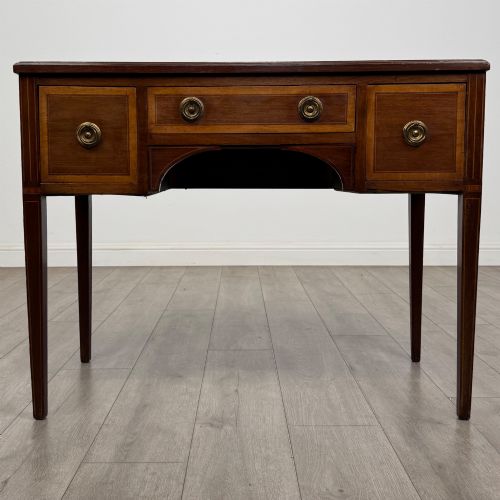
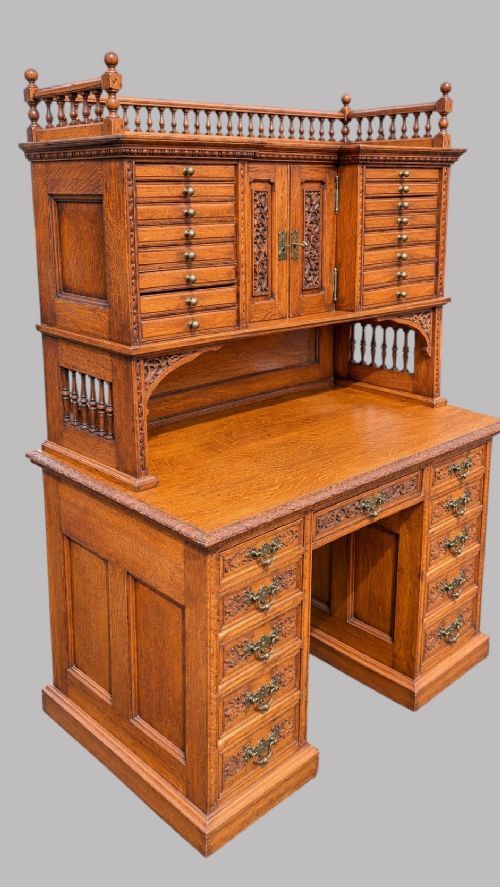
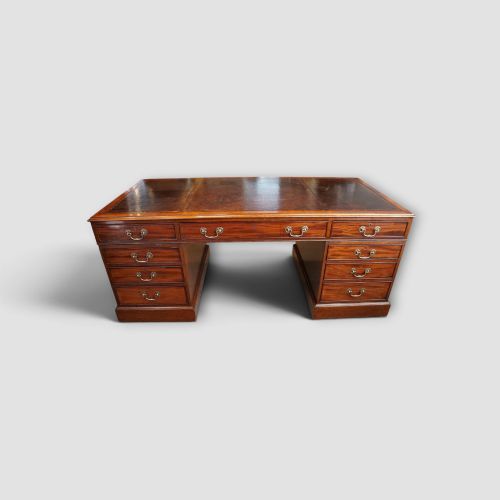
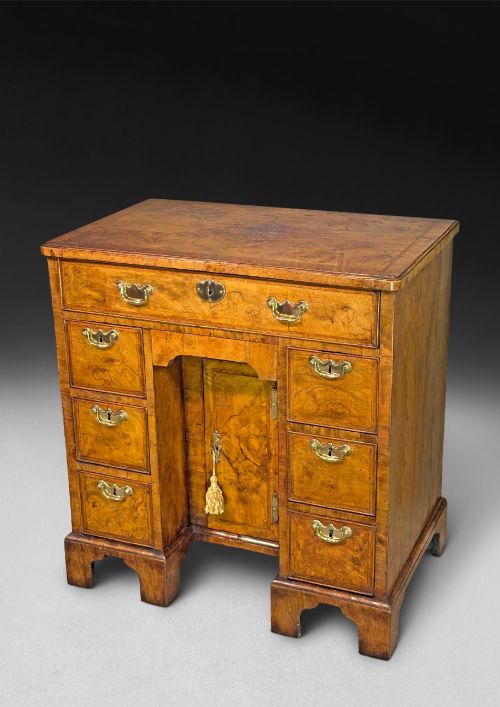


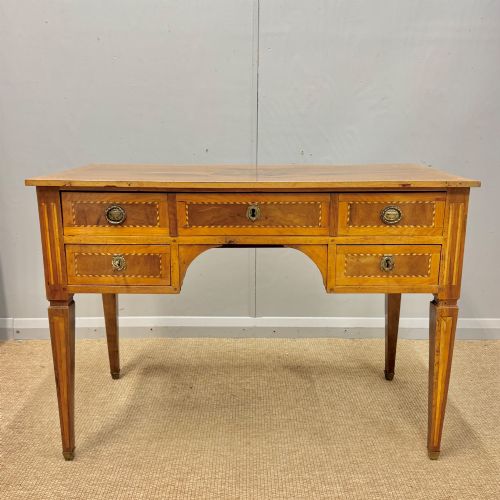
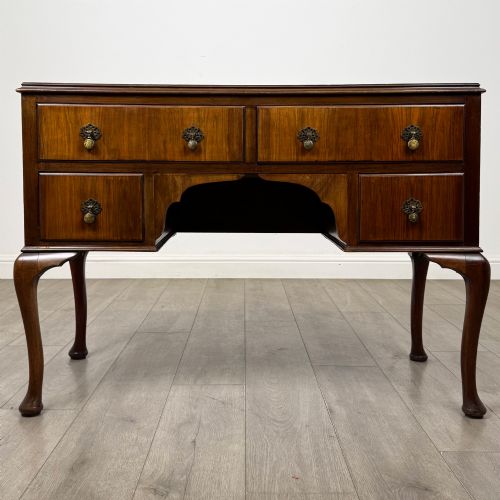
Kneehole Writing Table
These kneehole writing tables are compact timber desks with central recessed cupboards, offering practical drawers and refined proportions for study use.
Understanding the kneehole writing table
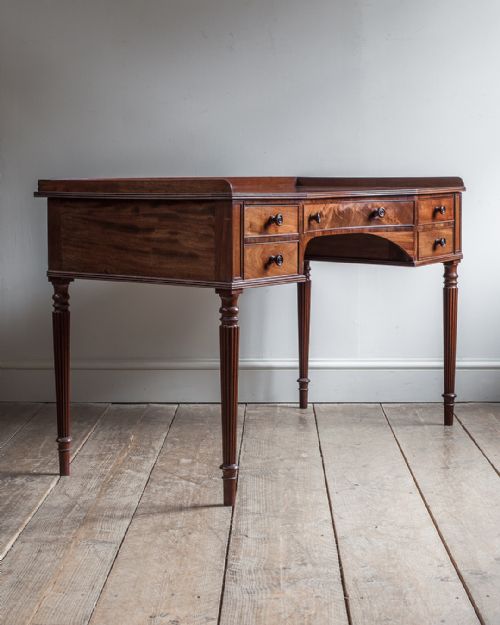
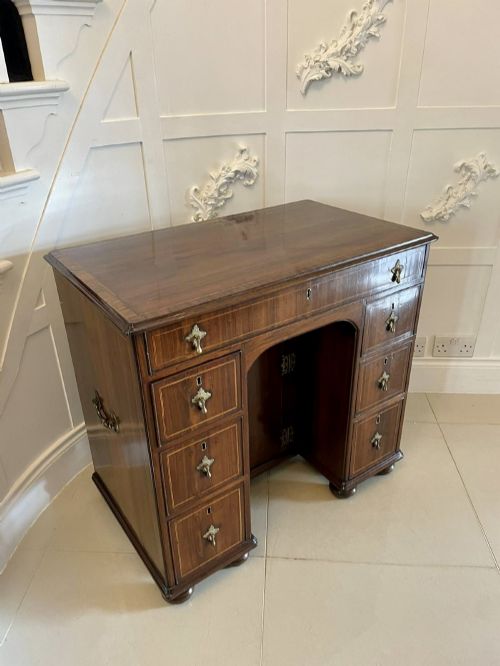
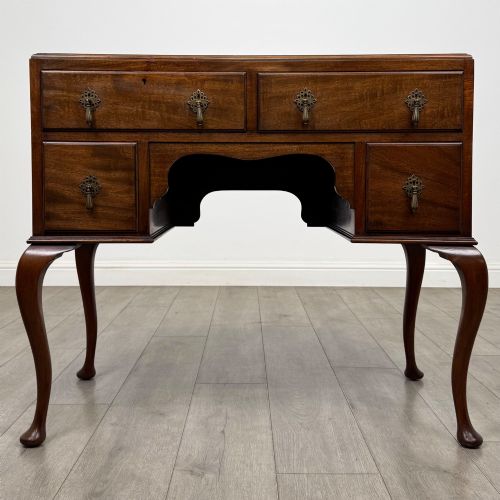
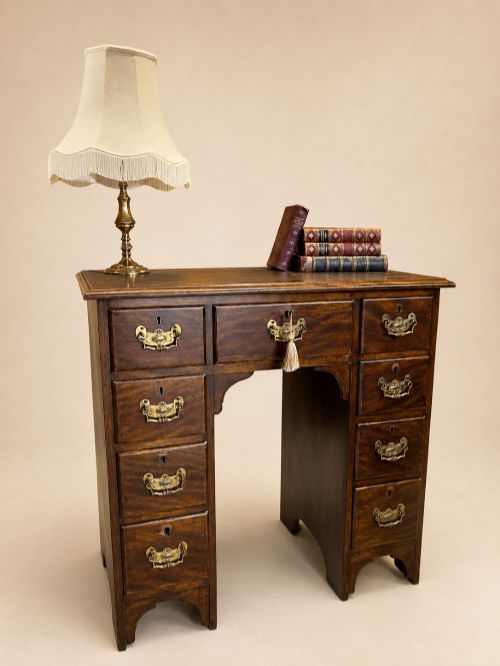
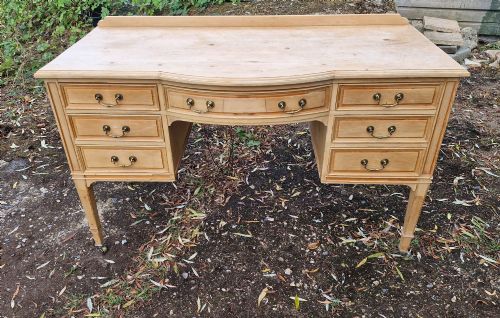
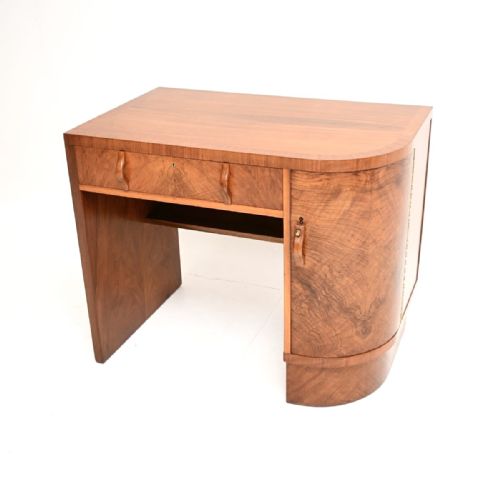
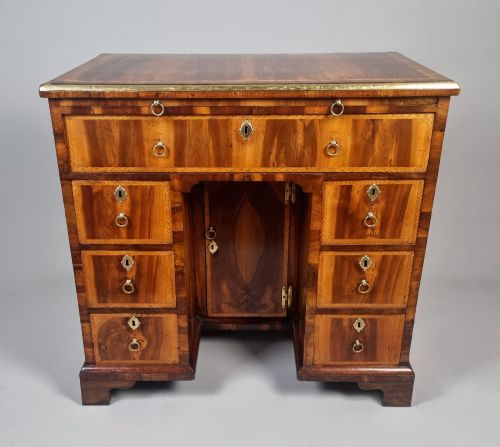
A kneehole writing table provides a compact workstation featuring a recessed central well beneath the writing surface, flanked by pedestals of smaller drawers. When buyers search for a kneehole writing table, they encounter various period interpretations ranging from eighteenth-century Georgian examples to Victorian and Edwardian revivals.
Mahogany remains the predominant timber across these forms, alongside burr walnut, satinwood, oak, and tulipwood. The listings display diverse stylistic influences including Regency, Chippendale, Louis XVI, and George III revivals.
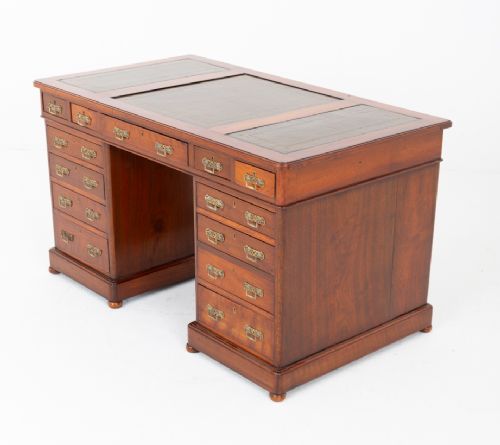
The layout typically incorporates a single long drawer above the kneehole recess, with smaller drawers stacked in the side pedestals. This specific pedestal arrangement distinguishes the form from standard twin-pedestal partners desks and simpler writing tables.
Materials and construction
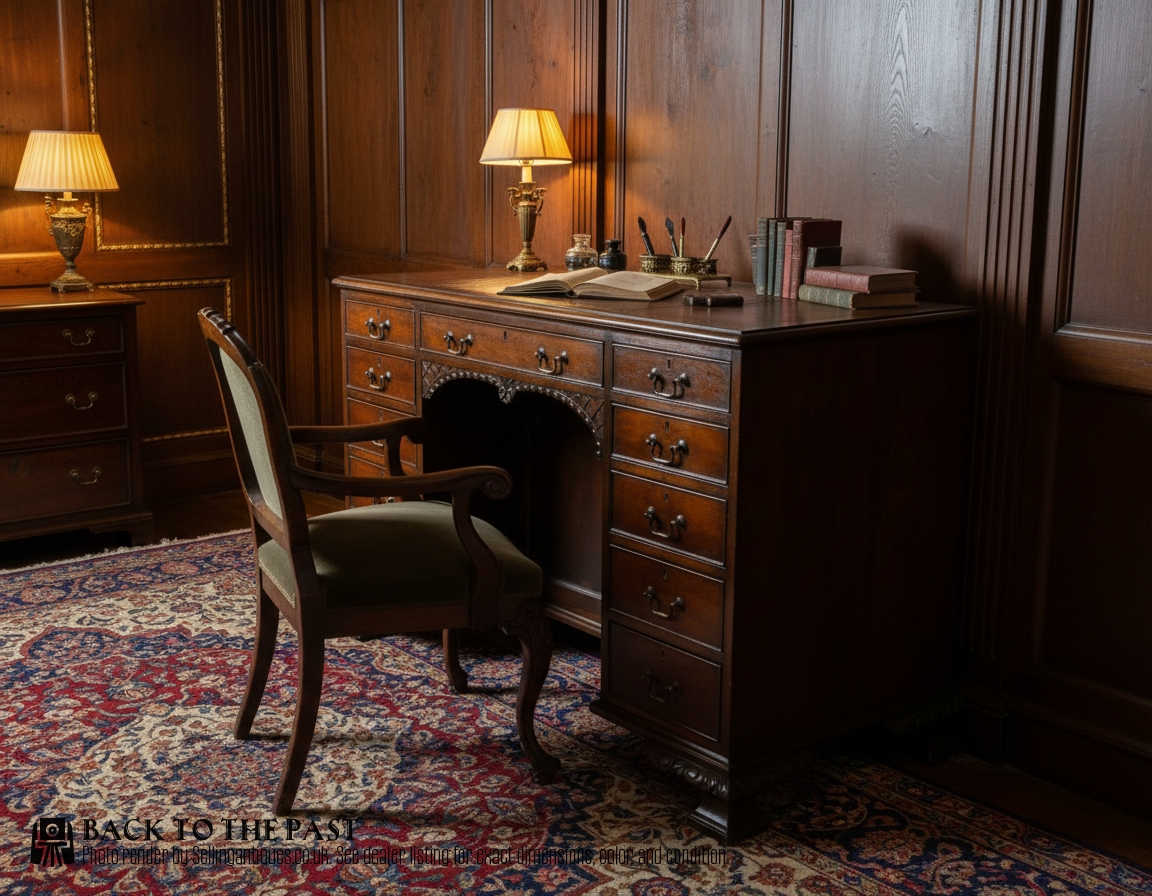
Cabinetmakers constructed these desks using solid timbers and decorative veneers applied to secondary woods, incorporating mahogany, walnut, and satinwood. Grain selection dictated the visual impact on primary surfaces, particularly with figured burr walnut and book-matched mahogany.
Brass hardware, including swing handles and escutcheons, secures the drawer fronts, while occasional ormolu mounts accent revival pieces. Writing surfaces frequently feature inset leather panels tooled with gilt borders.
Internal drawer construction relies on traditional hand-cut dovetails and oak or pine linings. Carved details appear on specific revival styles, ranging from Chinese-inspired motifs to classical moulding.
Retail Price Guide 2026
Typical UK retail prices for kneehole writing table, calculated from the Sellingantiques database of over a million retail prices indexed since 2003. This retail price guide relies exclusively on Sellingantiques data; no external sources or auction records are used, so the figures do not describe the wider market.
Some kneehole desks conceal a secret central compartment hidden deep within the kneehole recess behind the top drawer.
Distinctions in quality
Quality rests in the precision of the cabinetwork and the choice of timber veneers, where book-matching and symmetrical grain patterns elevate the piece. The depth and warmth of the polished finish reveal the underlying care taken in preparation and execution.
Hardware integrity and the smoothness of drawer operation distinguish superior examples from standard workshop production. Maker attribution, whether through branded signatures or distinctive construction traits associated with workshops like Gillows or Shapland and Petter, influences the standing of a desk.

Shapland and Petter of Barnstaple·Waring and Gillow·Gillows of Lancaster and London
The Kneehole Writing Table Glossary
- Kneehole
- A recessed space beneath the top of a desk designed to accommodate the user's legs. This central well is typically flanked by banks of drawers.
- Pedestal
- A structural column of drawers supporting one side of the writing surface. Pairs of these form the structural sides of the desk.
- Escutcheon
- A protective plate surrounding a keyhole, usually made of brass. It prevents the timber surrounding the lock from sustaining damage over repeated use.
- Dovetail
- An interlocking joint used in drawer construction, formed by interlocking wedge-shaped fingers. This method provides high tensile strength.
- Book-matching
- A technique where adjacent veneer slices are mirrored to create a symmetrical pattern across a surface. Cabinetmakers utilised this to highlight wood grain.
Frequently Asked Questions
What is a kneehole writing table?
A kneehole writing table is a desk featuring a recessed central opening beneath the top surface, flanked by vertical stacks of drawers on both sides.
This configuration offers a compact footprint while maintaining substantial storage capacity for writing materials and documents.
How were kneehole desks used?
These desks served primarily for private correspondence, study, and household administration in libraries, parlours, and home offices.
The central kneehole allowed the user to sit squarely before the desk while accessing side drawers without standing.
How do I distinguish Georgian from Victorian pieces?
Georgian pieces typically exhibit restrained classical proportions, understated bracket feet, and solid mahogany or figured veneer construction without heavy ornamentation.
Victorian and later revival pieces often incorporate denser carving, bolder grain selection, and broader stylistic influences such as French Louis XVI motifs.
Are these desks suitable for modern study use?
Their modest proportions make them well suited for contemporary study spaces and home offices where floor space is at a premium.
The surface and drawer arrangements accommodate modern writing materials while providing traditional aesthetic character.