

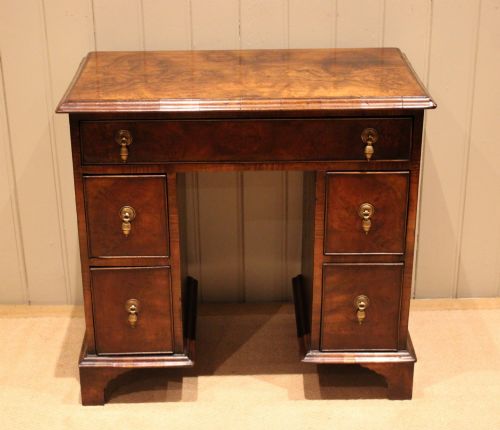
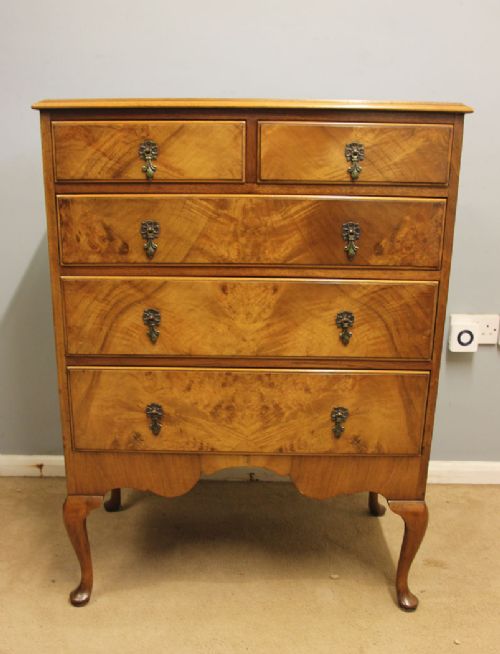
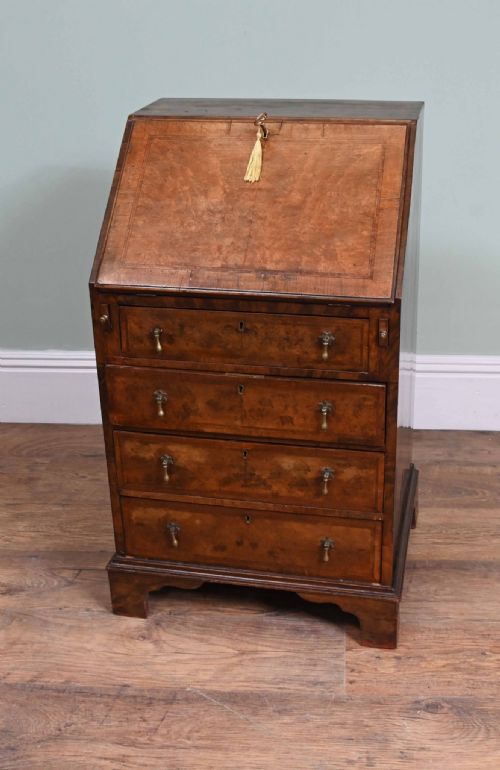
Traditional Walnut Bureau
Traditional walnut bureau writing furniture brings historic craftsmanship and rich timber grain to domestic interiors.
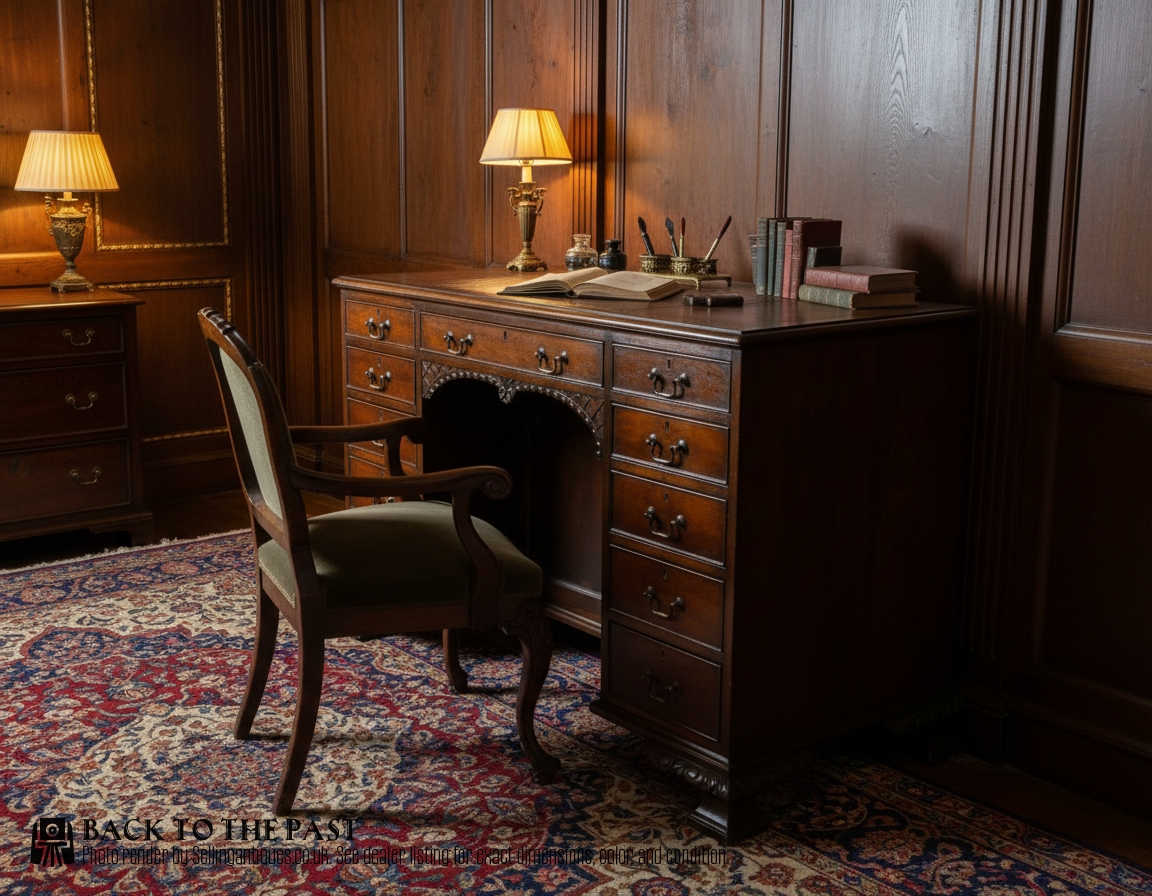
Traditional Walnut Bureau
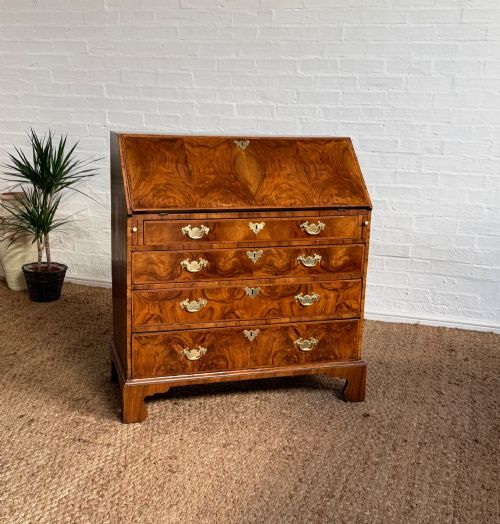
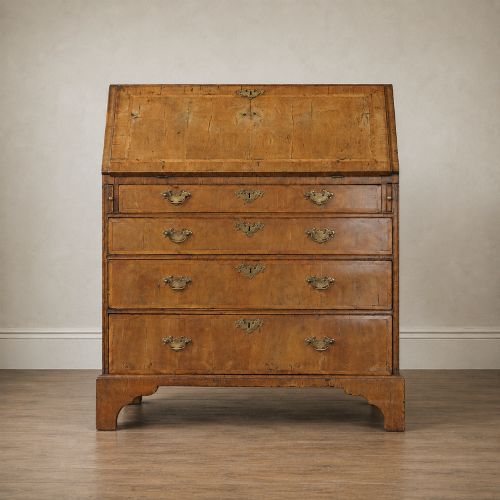
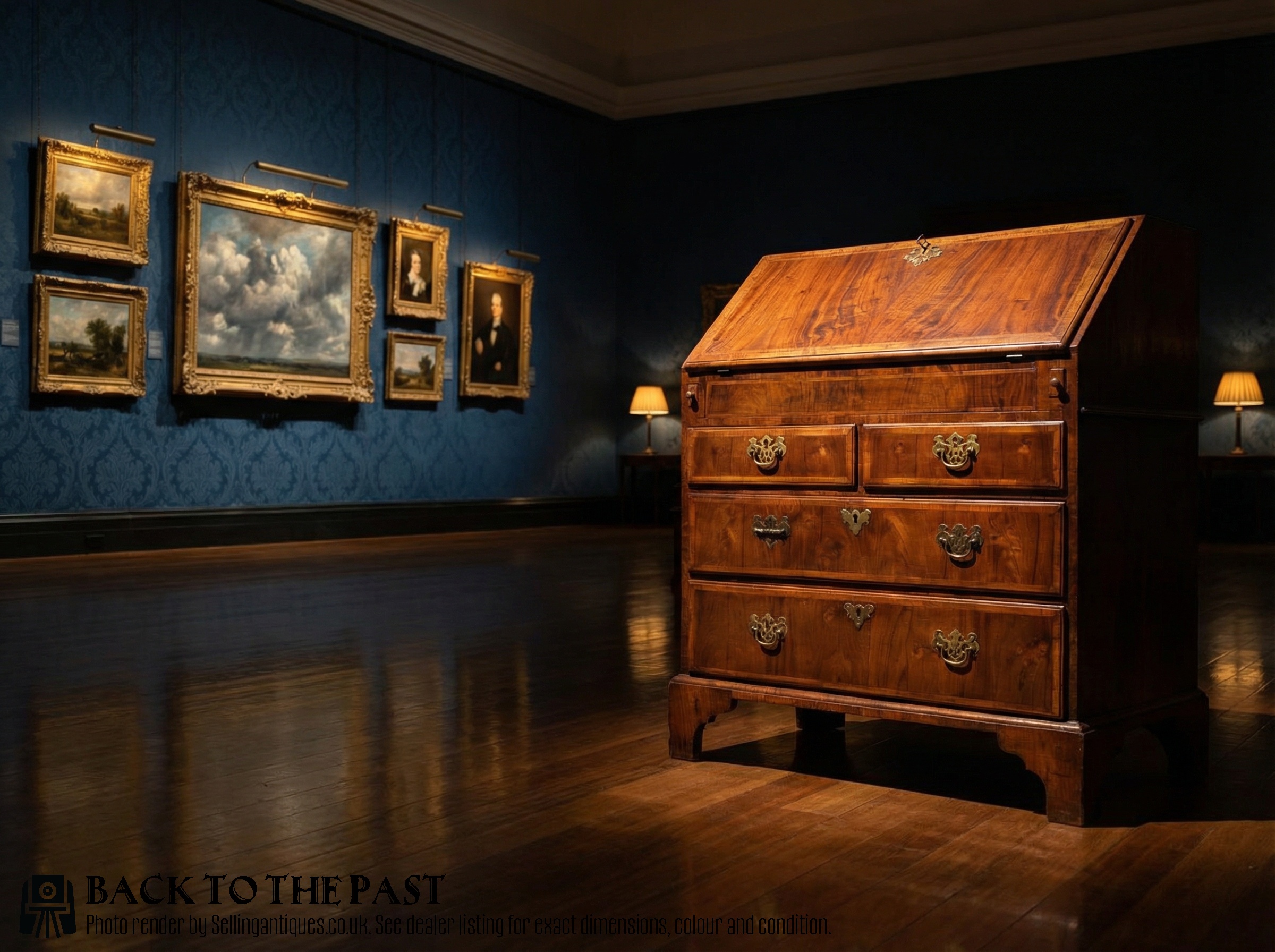
A traditional walnut bureau combines a sloping writing flap with internal compartment drawers and tiered storage below. These writing pieces emerge across eighteenth-century Georgian eras and reappear through later revival periods.
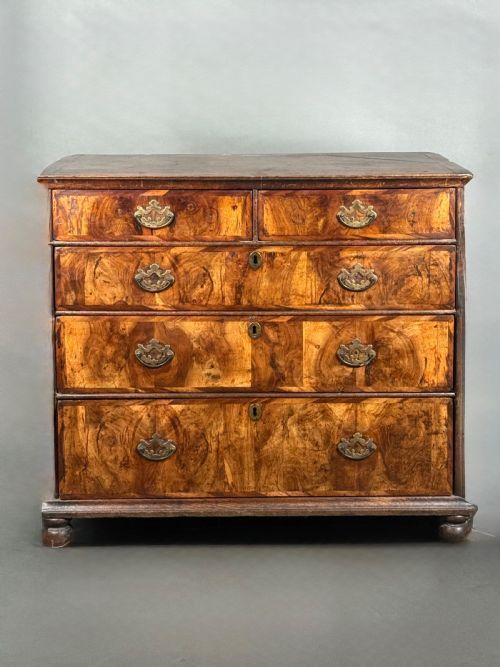
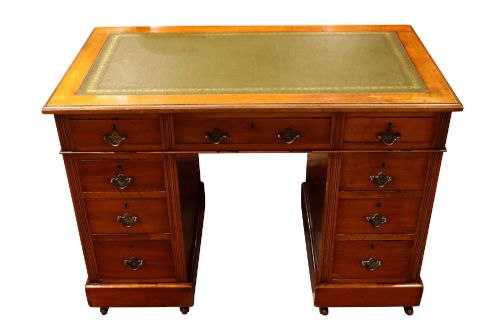
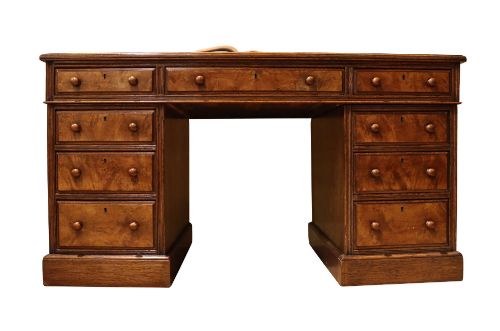
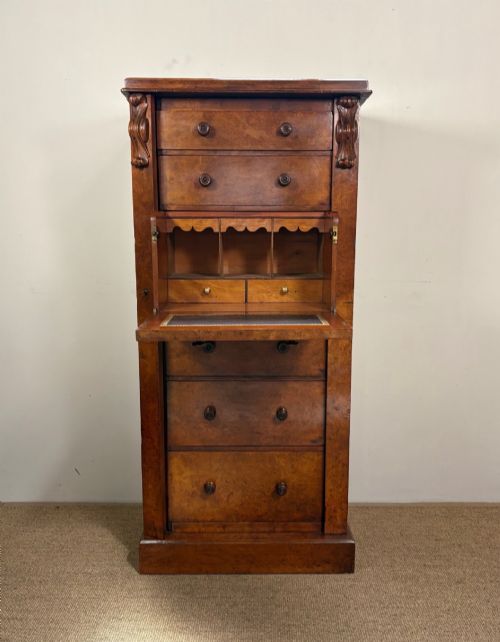
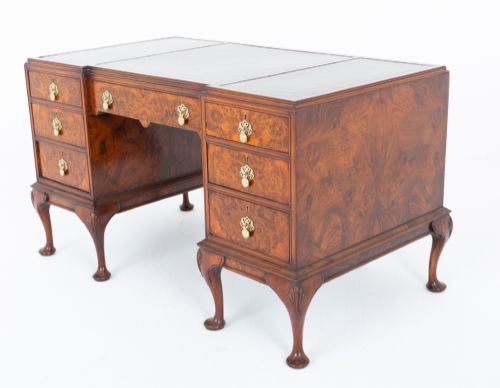
The inventory on this page contains numerous examples spanning early eighteenth-century Queen Anne designs to Edwardian and Victorian interpretations. Alongside standard drop-front writing desks, related walnut writing tables, pedestal desks and bureau bookcases appear.
Buyers seeking a traditional walnut bureau will encounter figured veneers, banded borders, and fitted pigeonholes designed for correspondence. Regional variations include Dutch marquetry decoration alongside simpler English cabinetwork.
Materials and construction
Cabinetmakers constructed these writing pieces using solid oak or fruitwood framing overlaid with figured walnut or burr walnut veneers. Brass hardware including batwing handles, escutcheons, and hinges secures the drawers and fall fronts.
Writing surfaces frequently integrate inset panels of tooled leather in red or green shades. Specialised techniques such as floral marquetry and feather banding distinguish elaborate examples from plain timber carcasses.
Traditional Walnut Bureau Retail Price Guide 2026
Typical asking prices for traditional walnut bureau among the pieces listed under this phrase on Sellingantiques today, from the lower quarter to the upper quarter. They describe what is for sale here now, not the wider market.
Some bureaus conceal secret drawers behind sliding pigeonhole partitions for holding private letters.
Judging quality in walnut writing furniture
Quality rests upon the selection and matching of timber veneers across the fall front and drawer facades. Uniform grain patterns and symmetrical burr figuring indicate superior cabinetmaking.
Internal arrangement complexity also separates standard pieces from finer work. Deeply stepped pigeonholes, secret compartments, and secondary woods such as oak demonstrate high-grade construction.
Wylie & Lochhead Glasgow
The Traditional Walnut Bureau Glossary
- Burr walnut
- A prized timber harvested from tree growths, yielding intricate swirling patterns utilised for decorative veneer panels on bureau fronts.
- Bureau bookcase
- A tall cabinet combining a sloping writing desk compartment below with shelving enclosed by doors above.
- Feather banding
- A decorative inlay technique using narrow strips of veneer arranged in a herringbone formation around drawer perimeters.
- Kneehole desk
- A compact writing table featuring a central recessed space for the user's legs flanked by banks of drawers.
- Marquetry
- Elaborate pictorial inlay work using various tinted woods and floral motifs across the exterior surfaces.
Traditional Walnut Bureau: Frequently Asked Questions
How do I use a bureau?
The sloping writing flap folds down to provide a flat surface for correspondence while concealing internal pigeonholes and small drawers.
Lower drawers remain accessible for paper storage and household documents when the writing flap is closed.
How do I identify a Georgian bureau?
Eighteenth-century examples typically feature feather-banded drawer fronts, bracket feet, and solid oak internal framing beneath walnut veneers.
Later revival pieces built during the Victorian or Edwardian eras often display machine-sawn secondary timbers and different internal construction methods.
Where should I place a walnut desk?
Position the piece away from direct sunlight and heat sources to prevent the walnut veneers from drying out or fading over time.
Allow sufficient clearance behind the fall front so the writing flap rests level when lowered.
What is a Davenport desk?
A Davenport is a compact Victorian writing desk featuring a sloping top and side drawers.
This form provides a smaller footprint than standard kneehole desks while offering similar storage capacity.