






Bookmatched Walnut Chest
A bookmatched walnut chest brings symmetrical grain patterns and rich warmth to a room, offering both generous storage and striking visual character.
Bookmatched Walnut Chest
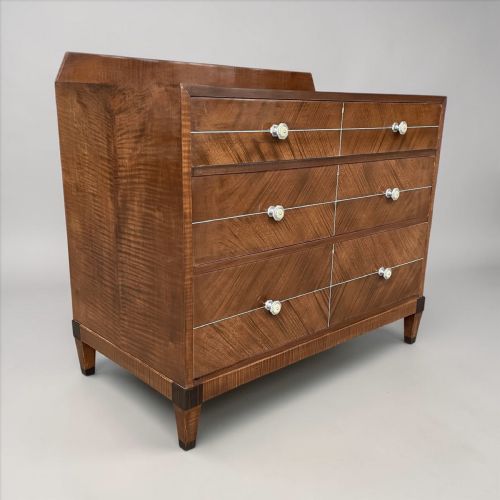
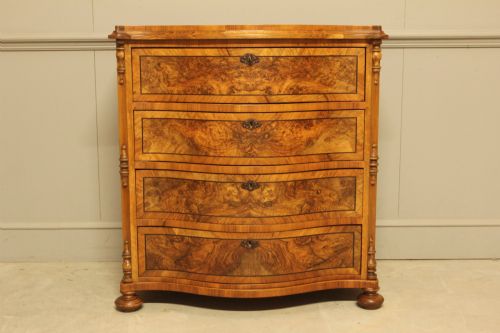
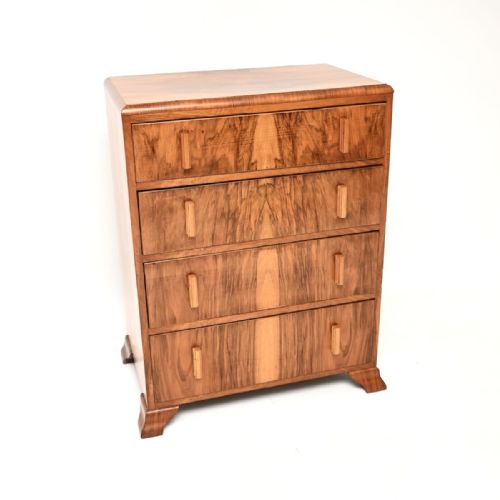
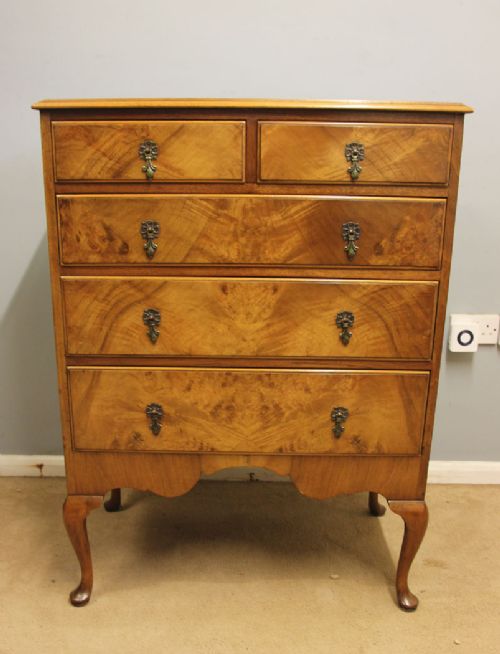
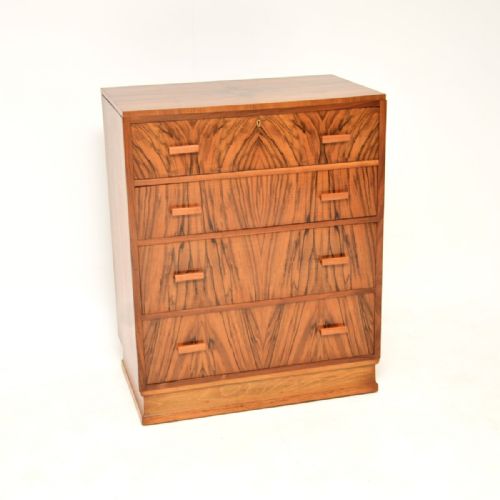
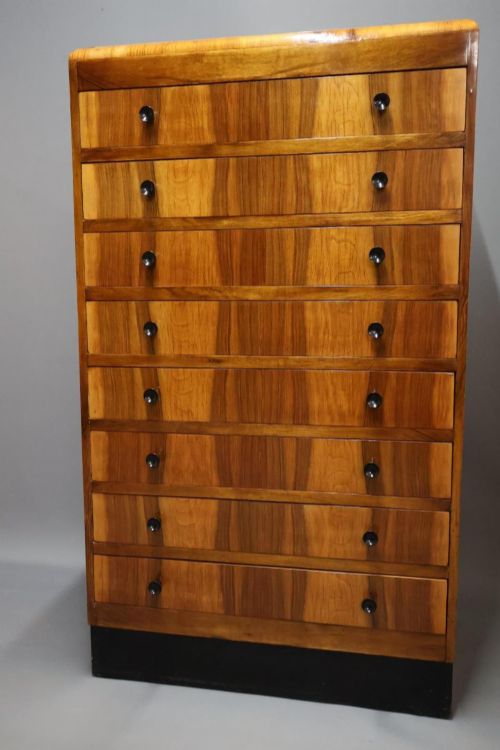
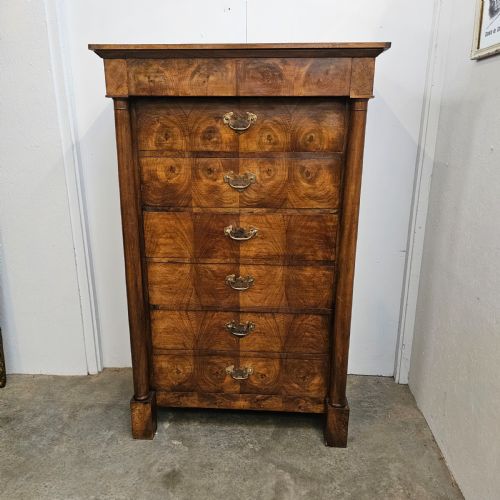
A bookmatched walnut chest presents drawers configured for storage, finished with striking timber veneers. The bookmatching technique mirrors grain patterns across a centre line to create symmetrical visual motifs.
The pieces appearing in this category span the nineteenth century, the nineteen-twenties, and the nineteen-thirties. Examples range from French Empire and Victorian pieces to Art Deco designs and Queen Anne style items.
Forms include tall chests with six drawers, secretaire chests, and chests featuring five drawers. Materials encompass plain walnut, burr walnut, and figured walnut veneers, frequently paired with brass or metal hardware.
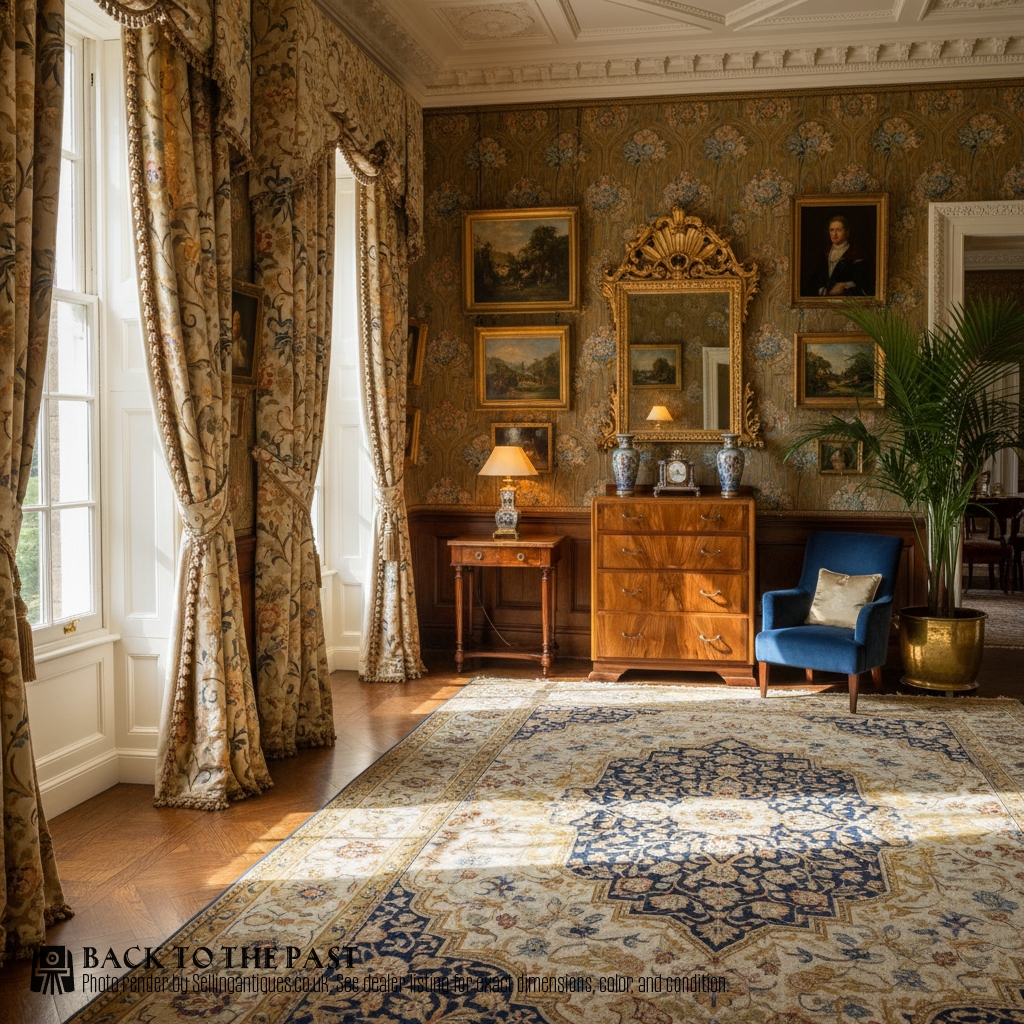
How they were made
Cabinet makers constructed these pieces using solid timber frames overlaid with walnut veneer, burr walnut, or figured walnut. Slicing thin layers of timber allowed artisans to mirror the grain across the central axis.
Metal fittings such as brass handles and hardware secured the drawers and doors. Traditional joinery techniques formed the internal carcase and drawer boxes to ensure stability across the nineteenth and twentieth centuries.
Bookmatched Walnut Chest Retail Price Guide 2026
Typical asking prices for bookmatched walnut chest among the pieces listed under this phrase on Sellingantiques today, from the lower quarter to the upper quarter. They describe what is for sale here now, not the wider market.
Burr walnut forms when a tree experiences stress, resulting in knotty, swirling timber that cabinet makers prize for its chaotic beauty.
What varies in quality
The skill of the veneer selection dictates the visual impact of the piece. Master craftsmen aligned the grain symmetrical patterns precisely, whereas lesser examples display irregular grain matching.
The choice between plain walnut, burr walnut, and figured walnut influences the depth of the finished surface. Finer iterations display intricate figuring and careful timber selection across every visible drawer front and surface.
The Bookmatched Walnut Chest Glossary
- Bookmatched
- A woodworking technique where two adjoining veneer surfaces are mirrored to reflect each other. This creates symmetrical patterns across the front of a chest.
- Burr walnut
- Timber taken from a tree growth that produces intricate, swirling grain patterns. It is highly valued for decorative furniture surfaces.
- Secretaire chest
- A form of chest incorporating a fitted writing drawer that folds down. It combines drawer storage with a compact writing desk.
- Veneer
- A thin layer of superior wood applied to a secondary timber base. This method allows cabinet makers to utilise decorative grains efficiently.
Bookmatched Walnut Chest: Frequently Asked Questions
What is a bookmatched walnut chest?
A bookmatched walnut chest is a drawer-based storage unit featuring symmetrical wood grain patterns across its front surfaces. These pieces utilise thin veneers of walnut to create balanced visual designs.
Such items appear across various periods including the nineteenth century, the nineteen-twenties, and the nineteen-thirties. They combine practical storage with decorative timber work.
How do I date these chests?
Dating relies on stylistic clues and construction methods inherent to specific eras. Nineteenth-century examples often lean towards French Empire or Victorian aesthetics, while nineteen-twenties and thirties pieces frequently exhibit Art Deco characteristics.
Examining the hardware, such as brass fittings, and the underlying timber carcase helps clarify the period of manufacture.
Where were these chests used?
These chests functioned primarily as bedroom or dressing room furniture for storing clothing and personal items. Secretaire variants also served dual purposes as compact writing desks in studies or living spaces.
Their decorative wood grain allowed them to stand as focal points in period interiors.
How do I care for walnut veneer?
Walnut veneer benefits from stable room temperatures away from direct sunlight and excessive moisture. Regular dusting with a soft, dry cloth preserves the polished finish of the timber.
Avoiding harsh chemical cleaners ensures the historical surface remains intact and protected.