

1930s Chest of Drawers
A 1930s chest of drawers brings geometric proportion and striking timber figure into a room, offering practical storage with distinct period character.
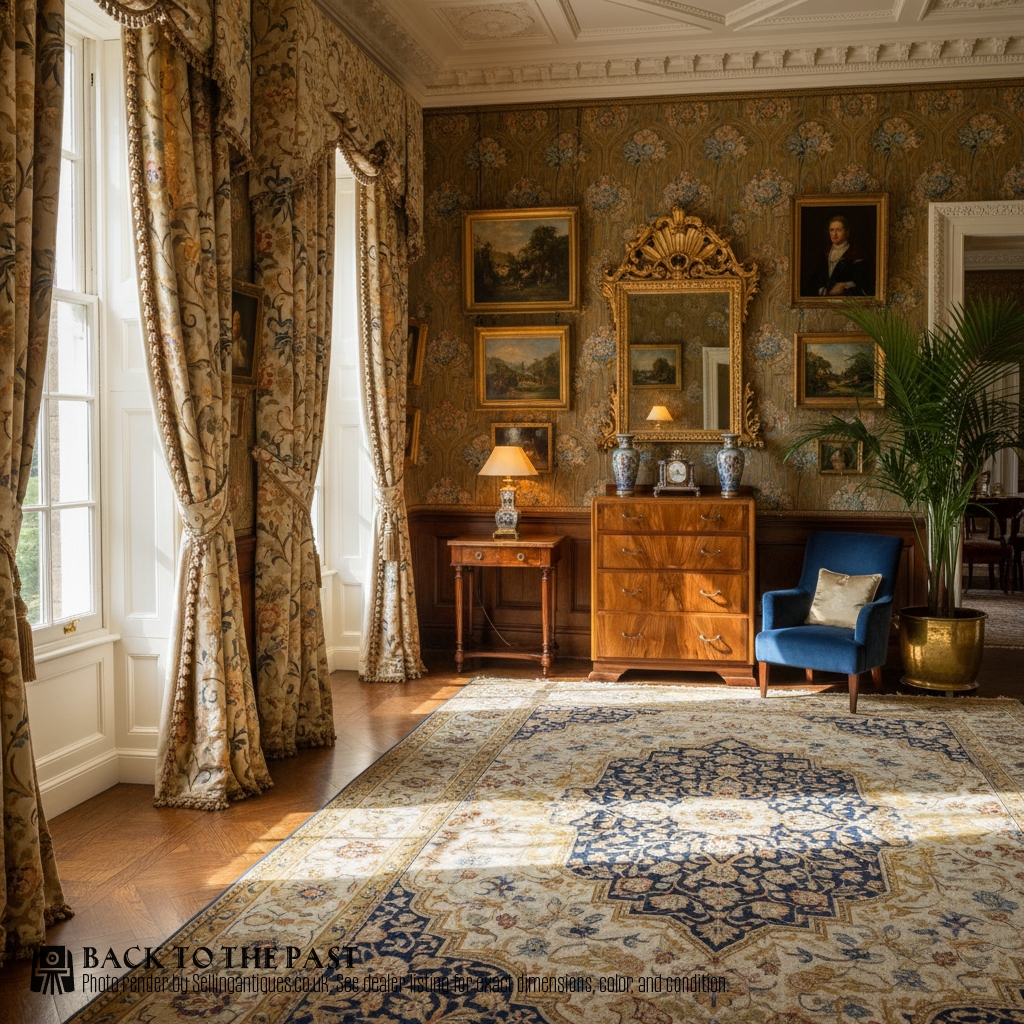
1930s Chest of Drawers
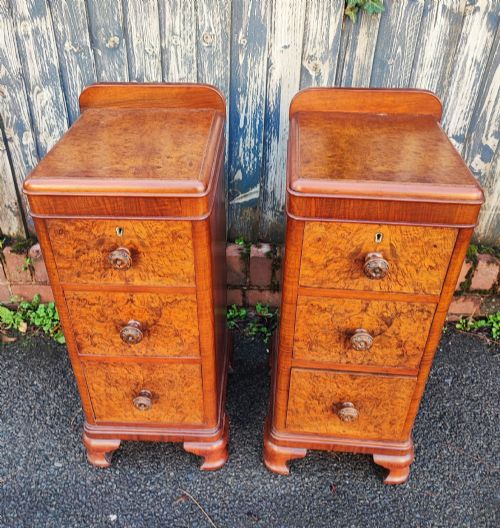
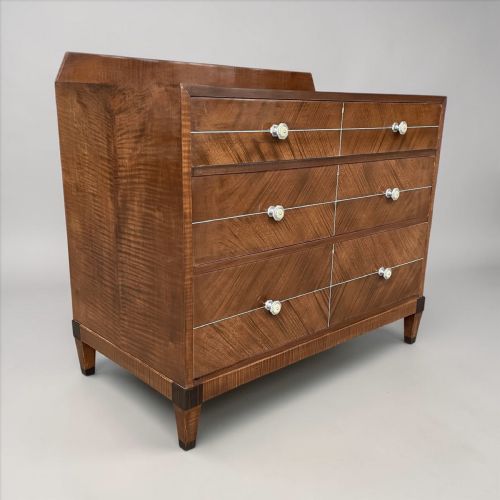
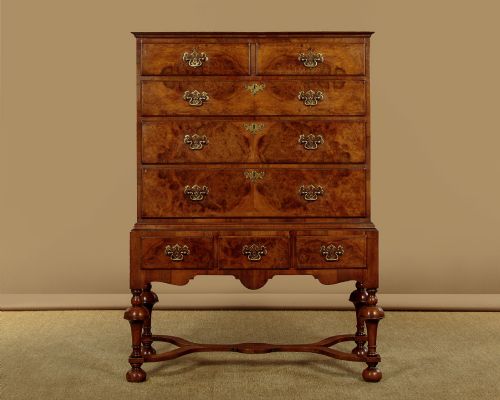
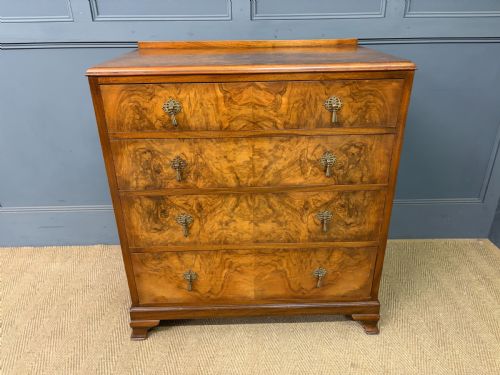
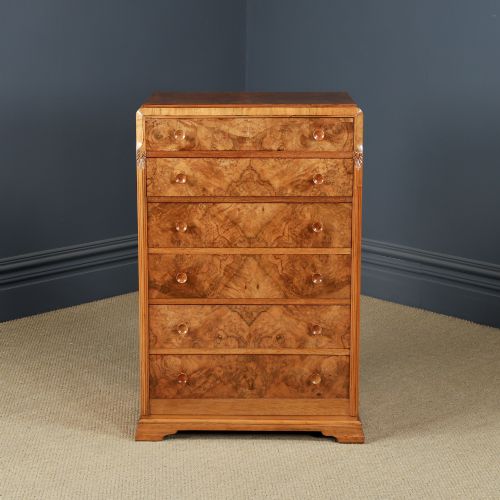
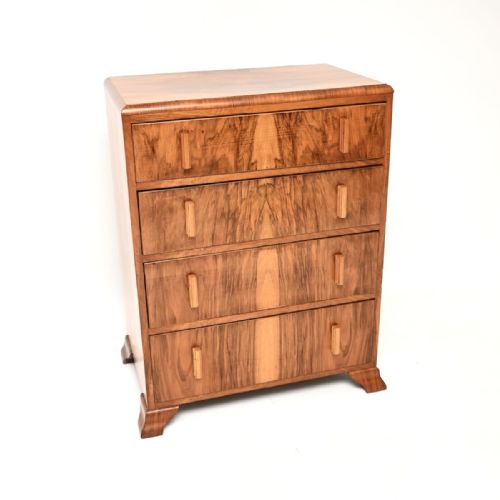
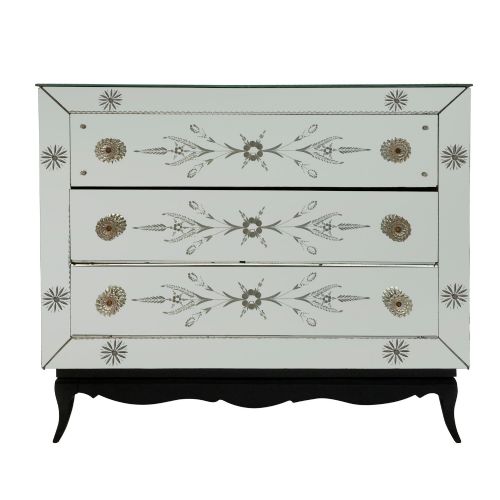
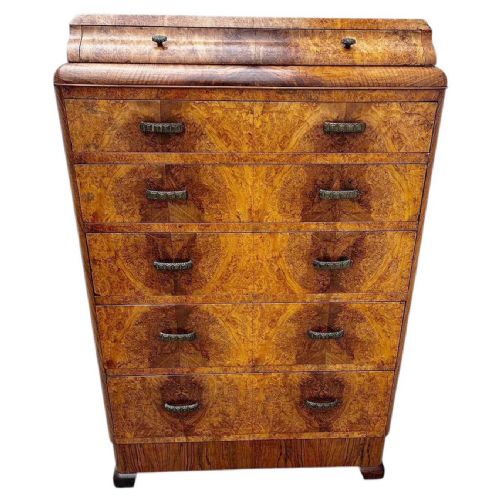
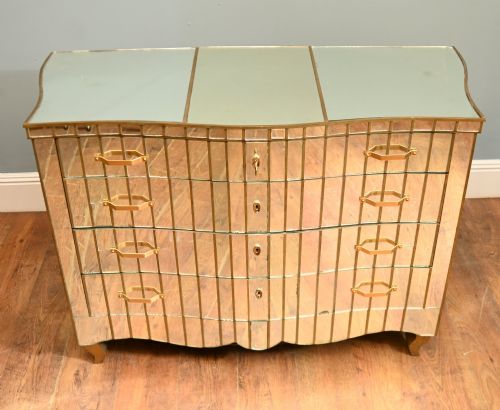
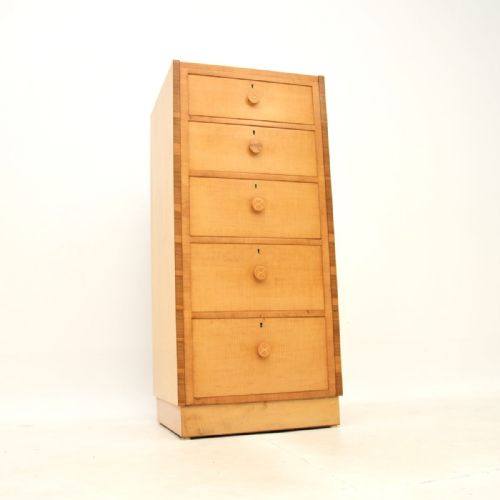
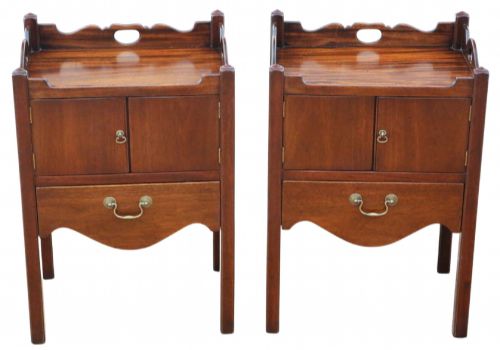
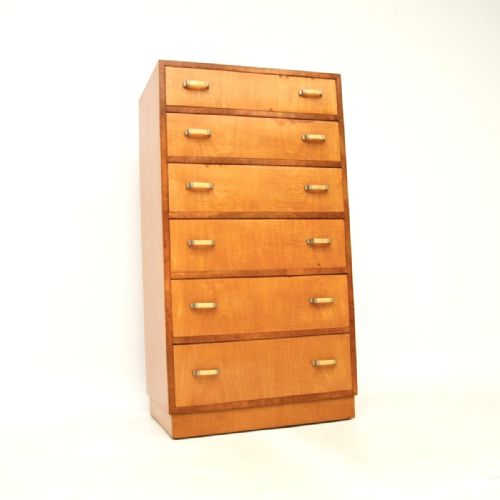
A 1930s chest of drawers spans several distinct stylistic movements, though Art Deco examples dominate the selection. Pieces range from compact bedside cabinets and tallboys to substantial commodes and matching dressing chests.
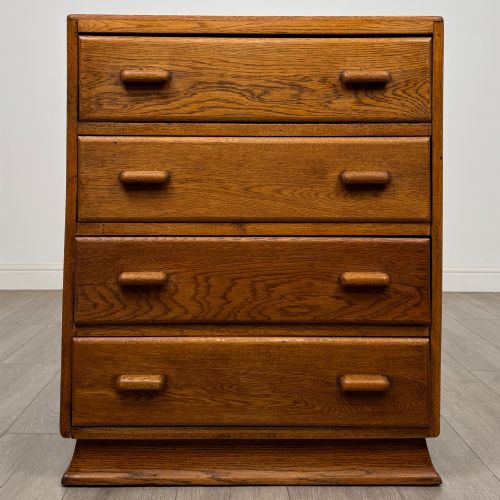
Origins stretch across English, French, and Anglo-Indian workshops, encompassing periods from the Edwardian era through the 1940s. Buyers frequently encounter oak and walnut constructions, often configured with multiple graduated drawers or tall cabinet doors.
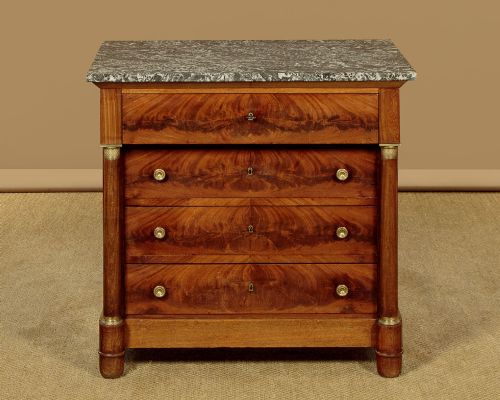
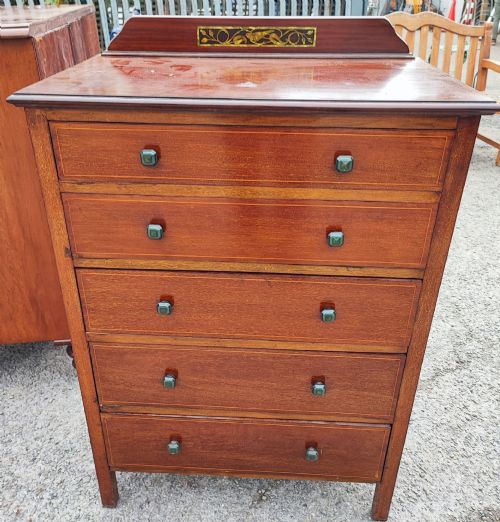
The form adapts to varied domestic spaces, appearing in straightforward vernacular oak as well as elaborate French designs featuring marble tops or parchment-covered drawer fronts.
How they were made
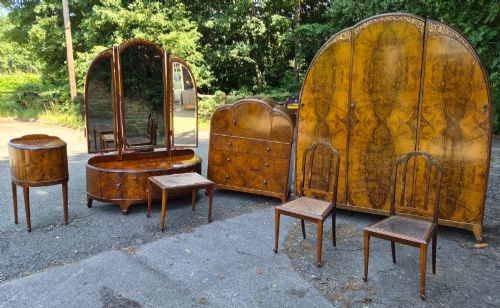
Cabinet makers utilised solid timbers alongside complex veneers to achieve tactile depth on flat surfaces. Walnut, burr walnut, oak, and satinwood predominate, frequently selected for striking natural grain patterns.
Surface treatments included liming, bleaching to blonde shades, ebonising, and marquetry inlay. Metal and brass hardware, alongside bakelite details, functionalised the drawers and cabinets.
1930s Chest of Drawers Retail Price Guide 2026
Typical asking prices for 1930s chest of drawers among the pieces listed under this phrase on Sellingantiques today, from the lower quarter to the upper quarter. They describe what is for sale here now, not the wider market.
Listings feature woods including walnut, oak, satinwood, sycamore, palisander, and bird's eye maple.
What varies in quality
Construction standards differentiate standard production items from pieces produced by notable makers and specialised design houses. The selection of timber veneers, particularly figured walnut and bird's eye maple, determines visual impact.
Joinery execution and the integration of specialised materials, such as parchment fronts, inset marble tops, or carved detailing, separate straightforward utility furniture from high-design examples.
Hille·Gomme·Frank Taylor & Co.·Heal & Sons·Betty Joel·B Cohen & Sons
The 1930s Chest of Drawers Glossary
- Tallboy
- A tall chest of drawers, often combining a cabinet or wardrobe section above standard drawers. This form maximises vertical storage capacity while maintaining a compact floor footprint.
- Commode
- A low chest of drawers or cabinet of French origin. These pieces frequently incorporate decorative veneers or marble tops.
- Veneer
- A thin layer of figured wood adhered to a secondary timber base. This technique allows cabinet makers to display symmetrical grain patterns across large surfaces.
- Marquetry
- The art of applying pieces of veneer to a structure to form decorative patterns and pictures. It requires precise cutting and fitting of varied timber species.
- Art Deco
- A design style characterised by streamlined geometric shapes, symmetry, and rich materials. It heavily influenced bedroom furniture production during the interwar period.
1930s Chest of Drawers: Frequently Asked Questions
Are these chests suitable for modern bedrooms?
Their varied proportions allow them to fit easily into contemporary spaces, offering practical storage without overwhelming a room. Compact bedside versions suit smaller layouts, while tallboys provide vertical capacity.
The diverse selection of finishes, from blonde maple to dark ebonised wood, helps coordinate with existing interior palettes.
What is the difference between a tallboy and a standard chest?
A tallboy typically incorporates additional height, often pairing a set of drawers with an upper cupboard or wardrobe section. This configuration provides greater storage capacity within a narrow footprint.
Standard chests maintain a lower profile, prioritizing surface top space for lamps or mirrors.
How do French pieces differ from English ones?
French examples from this period often utilise exotic hardwoods, marble tops, and contrasting elements like parchment-covered drawers. They lean towards decorative commode forms with distinct continental flair.
English designs frequently emphasise clean oak or figured walnut construction, drawing on modernist or traditional revival aesthetics.