
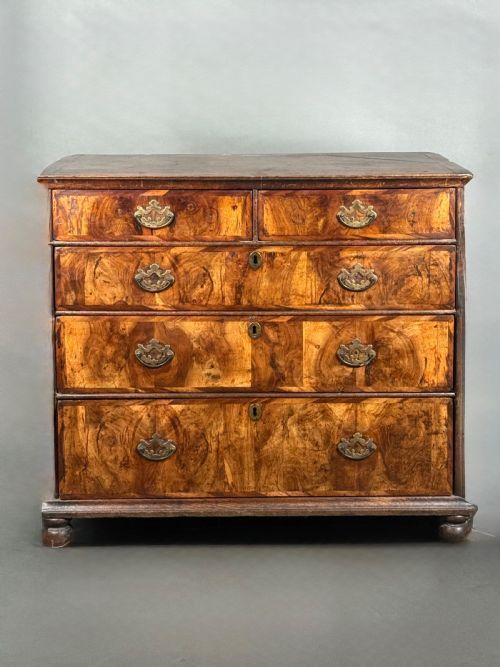
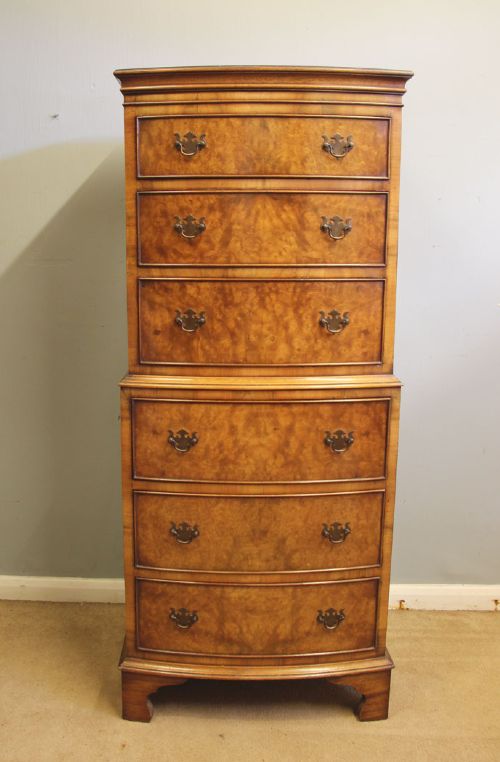
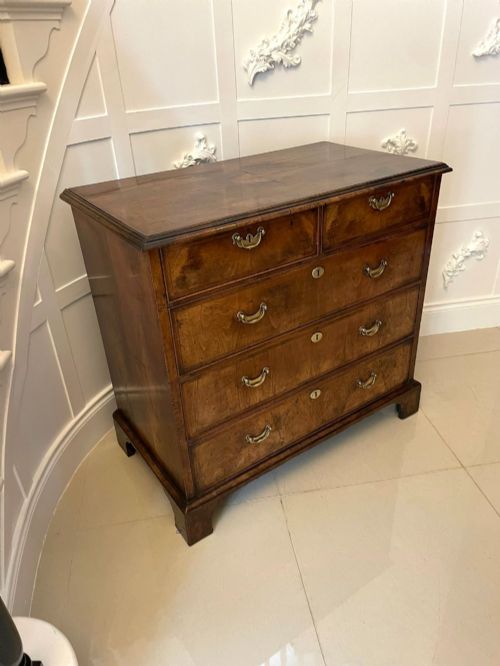
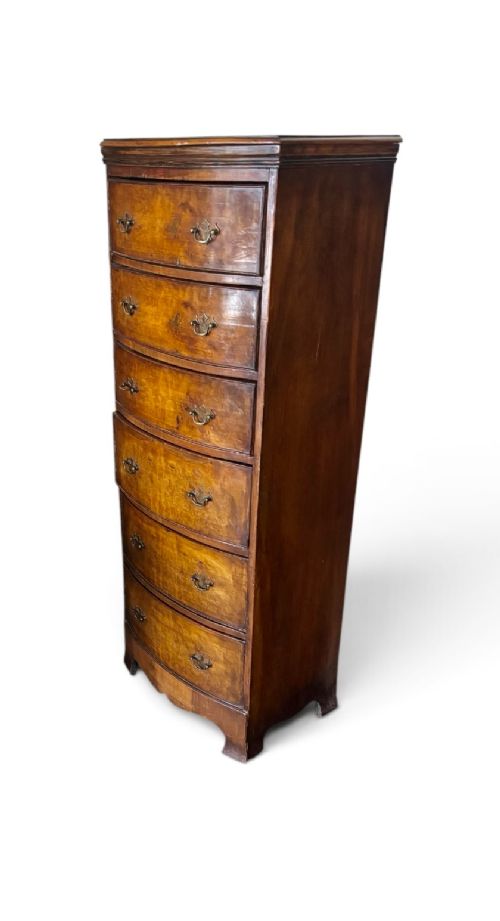
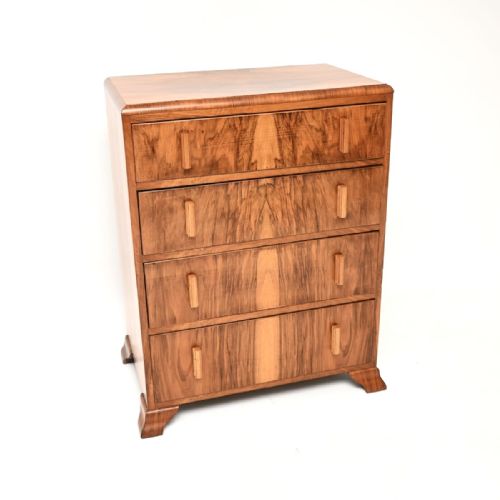
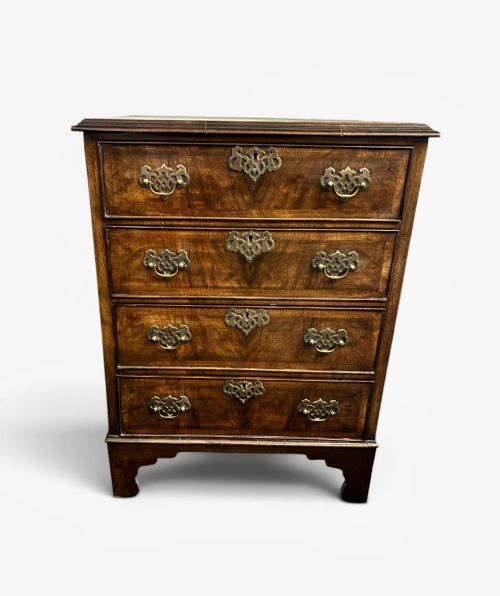
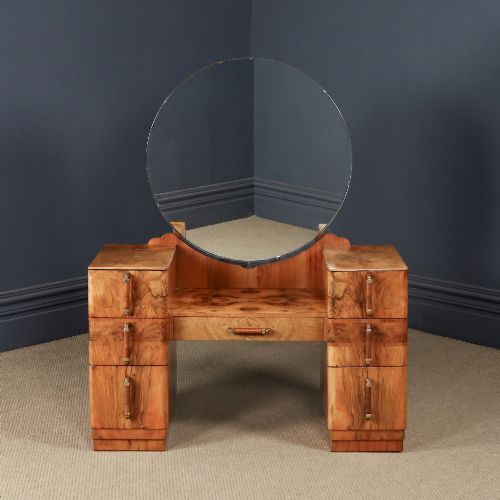
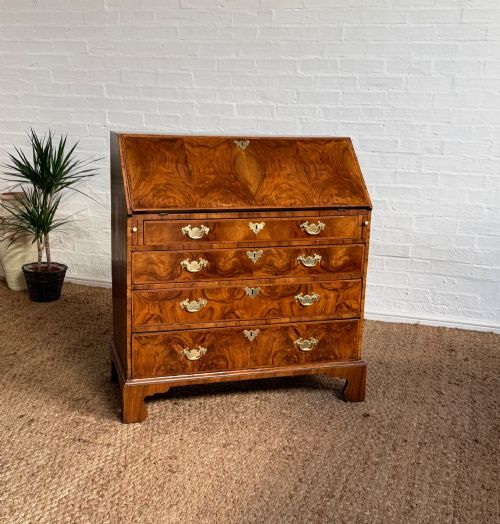
Figured Walnut Chest
A figured walnut chest brings rich grain patterns and warm tones to an interior, offering practical storage with exceptional cabinet work.
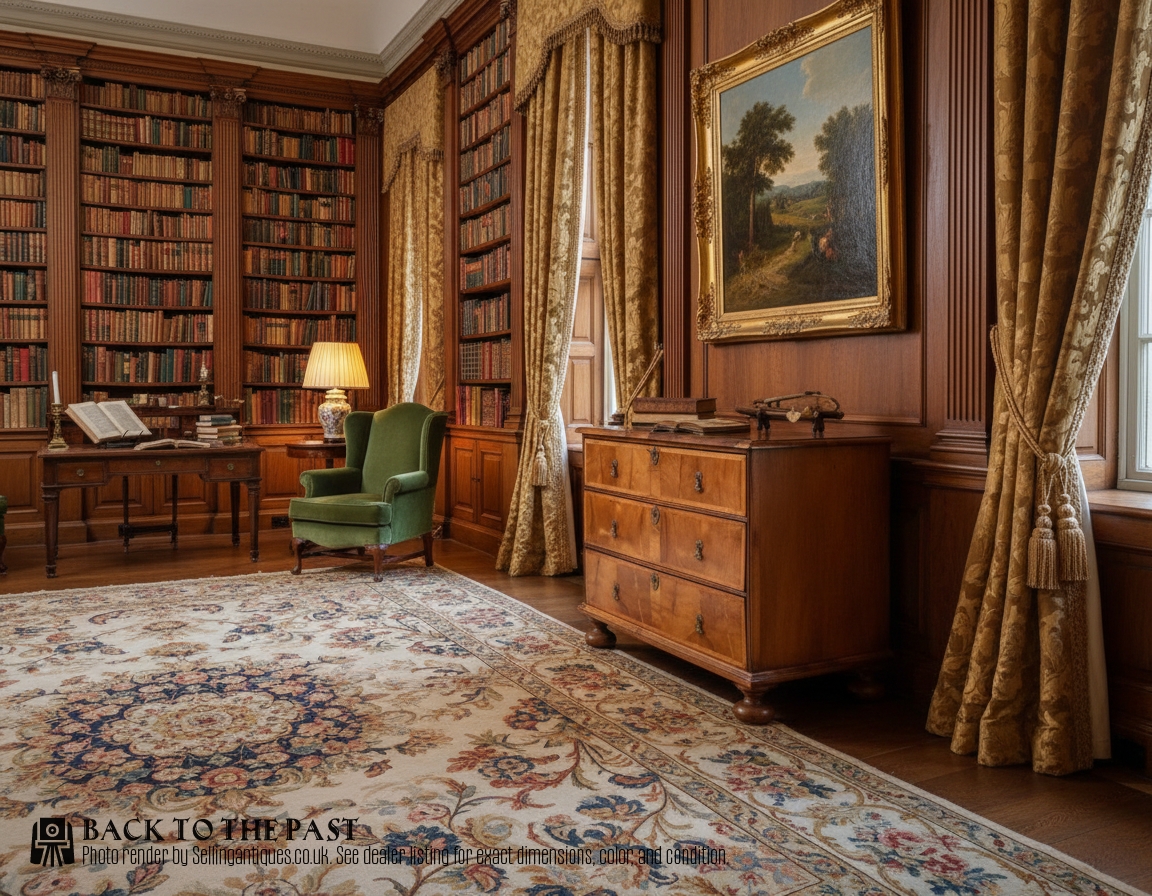
What a figured walnut chest is
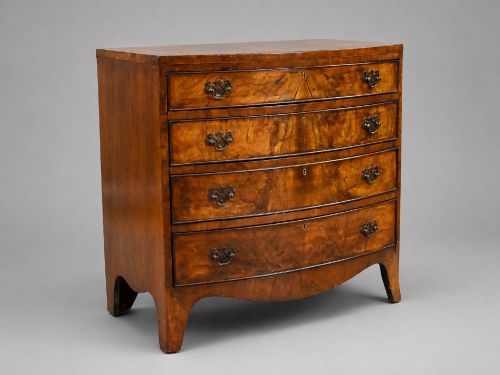
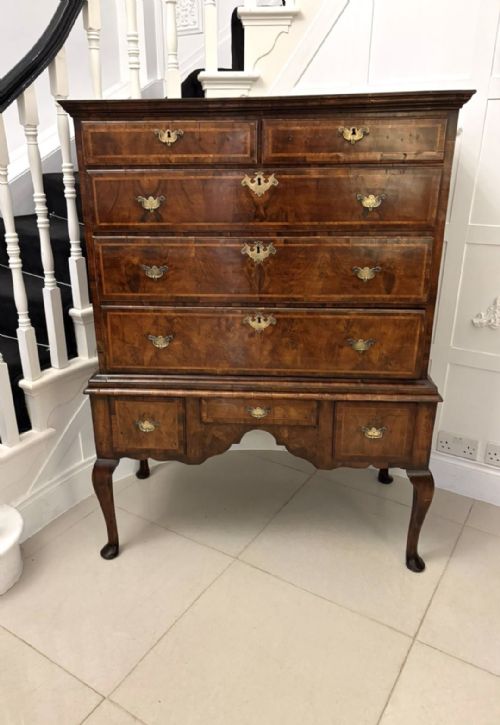
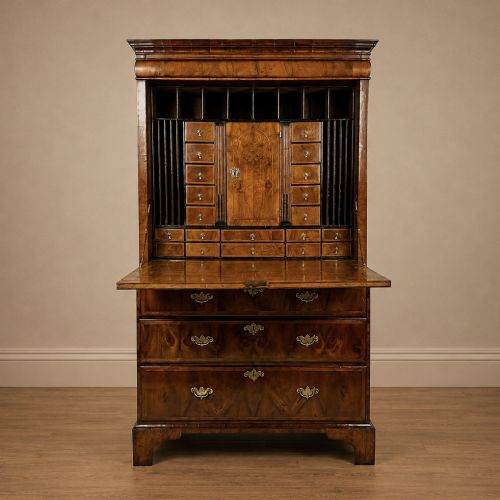
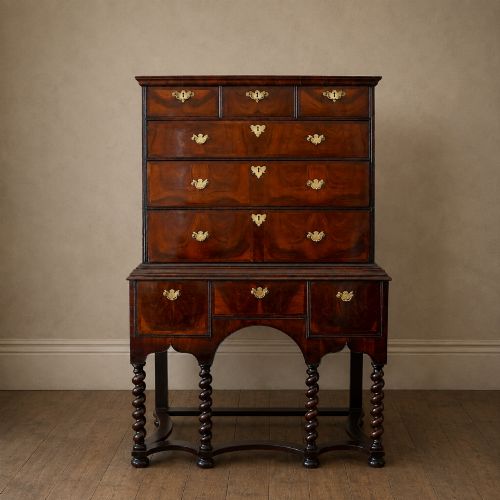
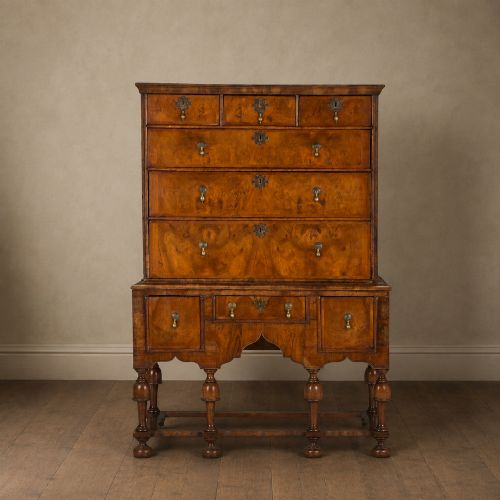
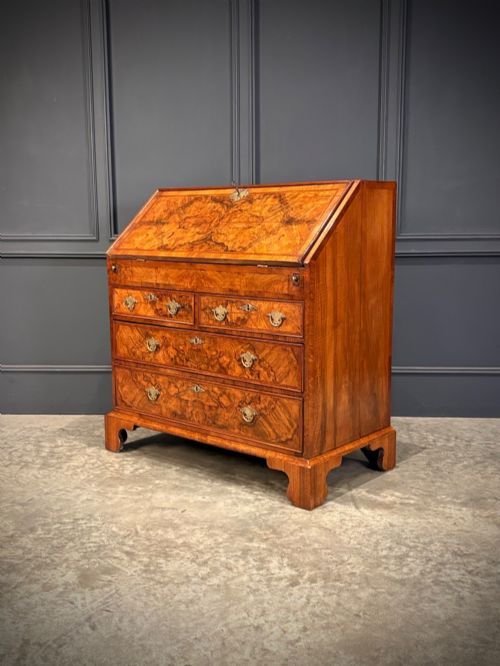
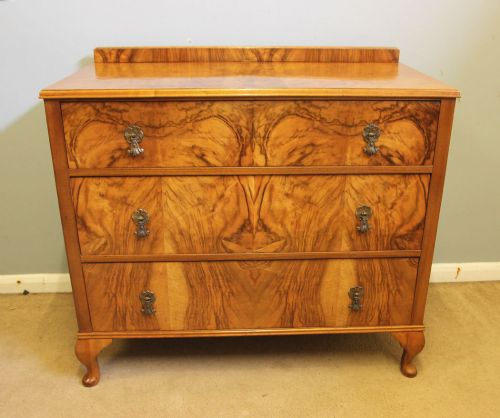
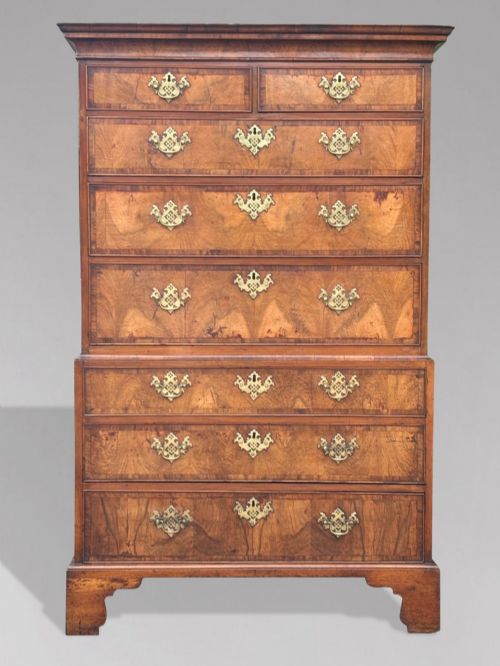
A figured walnut chest provides versatile storage in forms ranging from compact chests on stands to large tallboys and bachelors pieces. When searching for a figured walnut chest, buyers encounter pieces spanning the seventeenth century through the Victorian era and the Art Deco period, with eighteenth-century examples appearing frequently.
The selection includes chests of drawers, chests on stands, and chests on chests, alongside specialised forms like Wellington and campaign chests. These items display distinct regional and period characteristics, connecting seventeenth-century craftsmanship with later nineteenth- and twentieth-century interpretations.
Indicators of quality
Quality rests in the selection and matching of the walnut veneers across the drawer fronts and top surfaces, where symmetrical grain alignment elevates the visual impact. The crispness of inlay work and the retention of original brass hardware distinguish superior examples from standard production.
Construction methods, including dovetail joints on drawers and the structural integrity of the underlying oak or walnut carcase, dictate long-term durability. Cohesion between the stand and the upper chest on elevated forms marks the distinction between unified original design and later adaptation.
Retail Price Guide 2026
Typical UK retail prices for figured walnut chest, calculated from the Sellingantiques database of over a million retail prices indexed since 2003. This retail price guide relies exclusively on Sellingantiques data; no external sources or auction records are used, so the figures do not describe the wider market.
Listings feature walnut, burr walnut, oak, and brass across pieces spanning the seventeenth century to the Art Deco era.
Druce And Co Portman Square
The Figured Walnut Chest Glossary
- Burr walnut
- A veneer sliced from the knotty growth of a walnut tree, yielding an intensely swirled and mottled grain pattern. This material was prized for high-status cabinet work.
- Cross-banding
- A decorative border technique where thin strips of veneer are laid perpendicular to the grain of the main surface. It creates a framed effect on drawer fronts and tops.
- Feather inlay
- A banding technique utilising small pieces of veneer arranged in a herringbone or V-shaped pattern. Makers used this detail to edge drawer perimeters.
- Tallboy
- A tall chest of drawers, sometimes configured as a chest on chest or a wardrobe combination. It maximises vertical storage capacity while maintaining a compact footprint.
Frequently Asked Questions
How do I date a figured walnut chest?
Dating relies on examining construction methods, drawer dovetails, handle styles, and overall proportions. Earlier pieces often feature oak carcases and feather banding, while later revivals adopt different secondary timbers.
Hardware configurations and foot styles, such as bracket feet or cabriole legs on stands, further clarify the period of manufacture.
What is the difference between a chest on chest and a tallboy?
A chest on chest consists of two stacked carcases, usually with smaller drawers at the top and larger ones below. A tallboy generally refers to a single tall unit or a wardrobe chest combination.
Both forms provide substantial vertical storage while displaying decorative veneered drawer fronts.
How should I care for walnut veneer furniture?
Protect the surfaces by keeping them away from direct sunlight and maintaining stable room humidity to prevent veneer lifting. Regular dusting with a soft, dry cloth preserves the finish.
Avoid commercial silicone sprays and harsh chemical polishes, using traditional wax sparingly when the wood appears dry.
Where does burr walnut come from?
Burr walnut is harvested from growths or excrescences on walnut trees where the grain grows in a deformed, swirling manner. This wild growth creates complex patterns when sliced into thin veneers.
Cabinet makers utilised these decorative sections on prominent surfaces like drawer fronts and table tops.