

Carved Cabriole Leg Chest
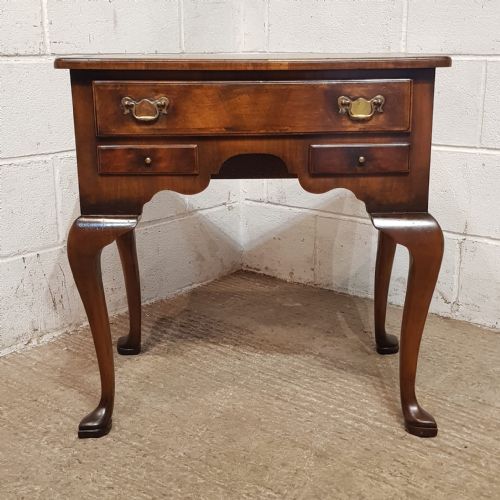
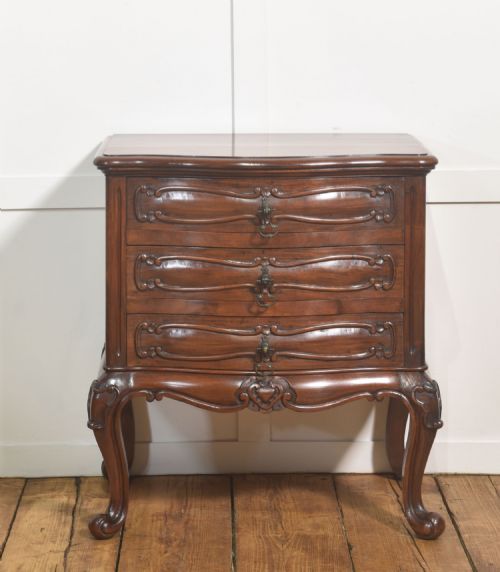
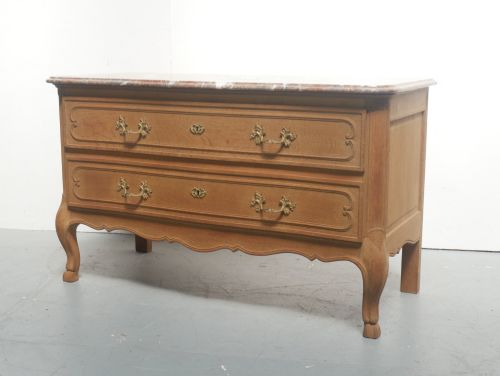
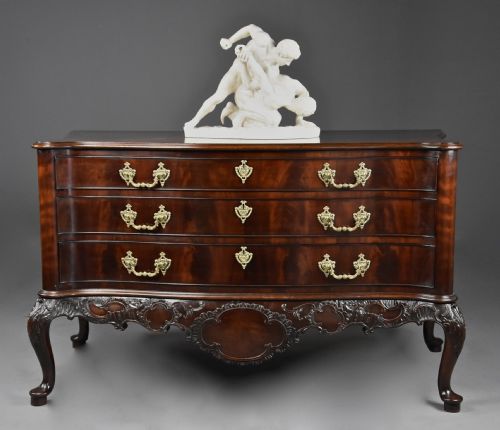
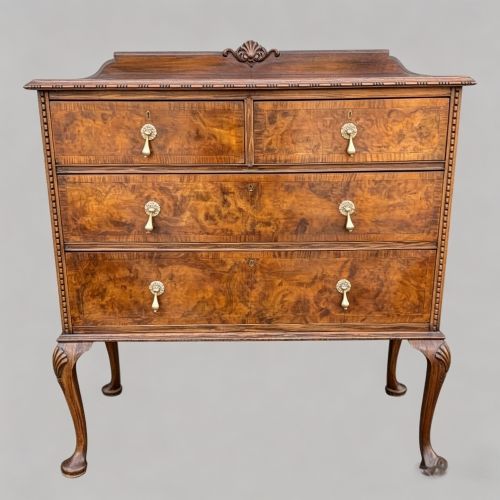
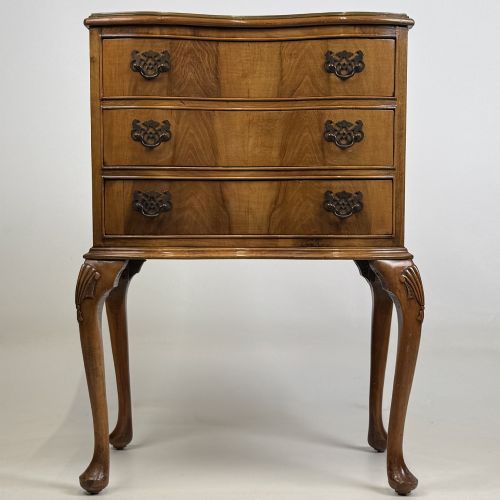
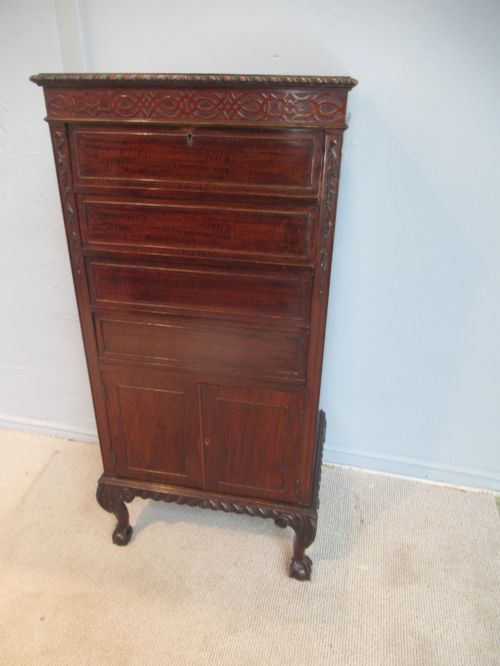
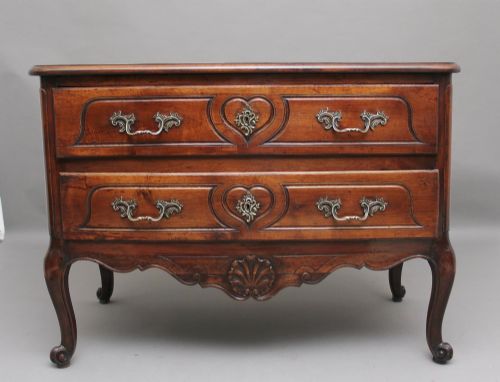
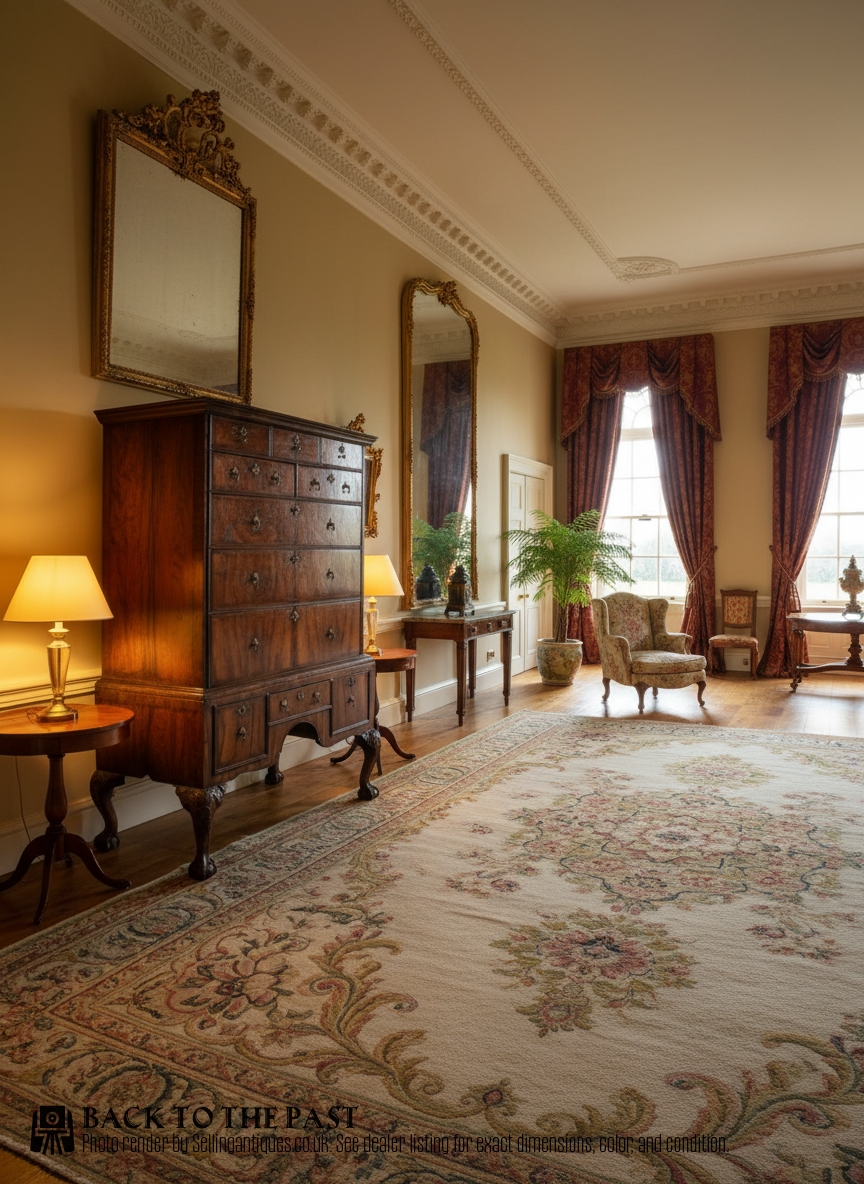
These carved cabriole leg chest examples are substantial storage pieces defined by graceful curved supports and figured timber surfaces.
What a carved cabriole leg chest is
A carved cabriole leg chest is a storage piece raised on sinuous supports, combining drawer space with distinctive leg silhouettes. These items appear in formats including chests of drawers, tall chests, cabinets, and chests on stands.
The pieces on this page span several eras, originating from the 18th century, Victorian period, Edwardian era, and the early 20th century up to 1930. Buyers encounter styles labelled as Queen Anne, George I, and George II, alongside general antique designations.
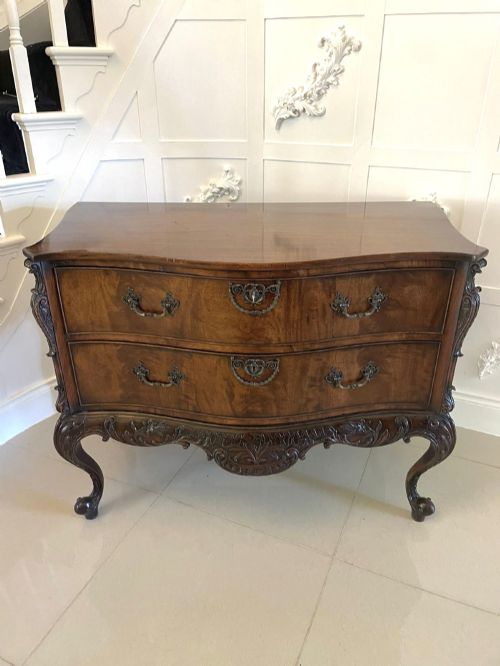
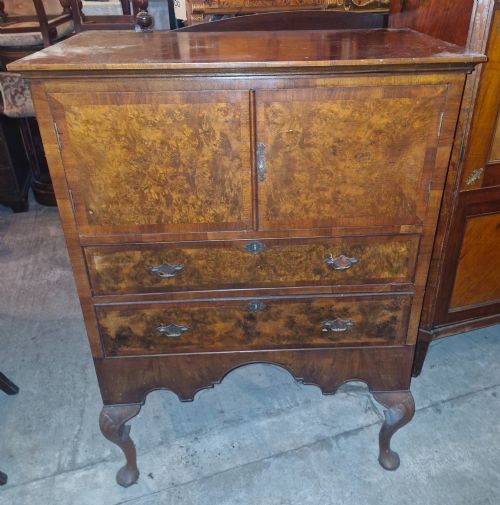
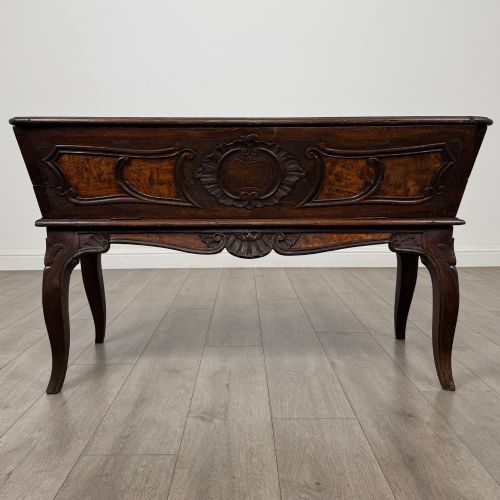
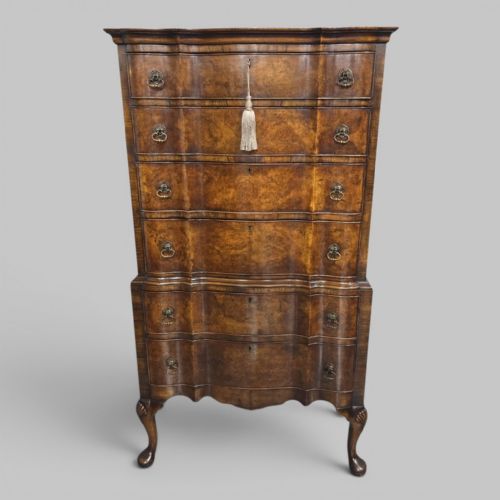
Forms range from standard chests of drawers to elaborate chests on stands, incorporating concave and serpentine front profiles. Many incorporate elevated stands beneath the main drawer section, creating a lighter visual presence than traditional box bases.
How they were made
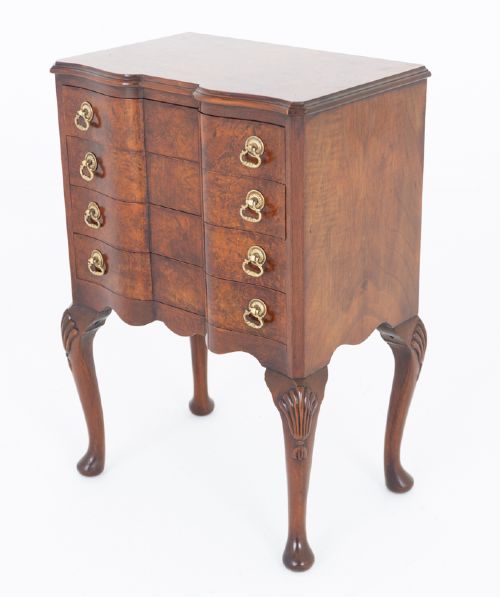
Construction relies heavily on walnut, burr walnut, and mahogany timbers, often enhanced with decorative veneer work to highlight the natural grain patterns. The use of burr walnut veneer creates rich, mottled surface figures across the drawer fronts and primary panels.
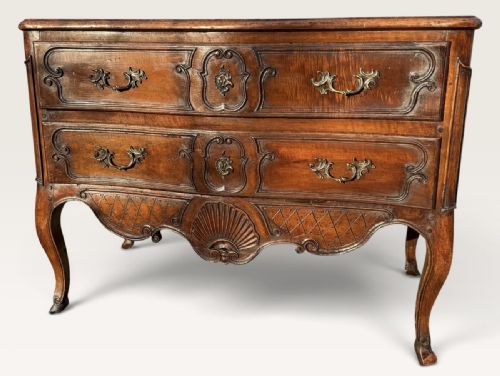
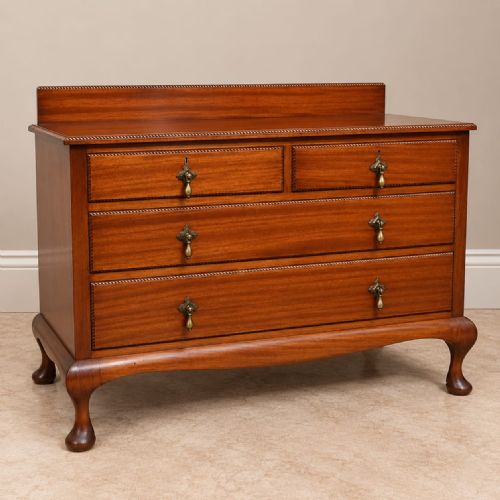
Hardware details include brass handles fitted to the drawer faces, complementing the dark tones of the wood. The characteristic cabriole supports feature carved detailing, lifting the primary timber body off the floor upon curved legs.
Retail Price Guide 2026
Typical UK retail prices for carved cabriole leg chest, calculated from the Sellingantiques database of over a million retail prices indexed since 2003. This retail price guide relies exclusively on Sellingantiques data; no external sources or auction records are used, so the figures do not describe the wider market.
Some chests feature serpentine curves that ripple across the front like a wooden wave.
What varies in quality
Quality reveals itself in the selection of timber veneers and the crispness of the carved details on the cabriole supports. Pieces featuring highly figured burr walnut or carefully shaped serpentine and concave fronts represent a higher tier of craftsmanship.
The structural integration of the chest body with its stand or legs dictates the overall refinement of the piece. Superior examples maintain balanced proportions between the upper storage section and the supporting base.
The Carved Cabriole Leg Chest Glossary
- Cabriole leg
- A furniture support that curves out in a convex shape and tapers inward in a concave shape, mimicking an animal leg. This form became prominent during the early 18th century.
- Burr walnut
- Timber sliced from walnut tree growths, producing intricate, swirling grain patterns. Cabinetmakers prize this material for decorative veneer surfaces.
- Serpentine front
- A furniture face featuring a convex centre flanked by concave curves, or vice versa. This undulating contour requires advanced woodworking skill.
- Chest on stand
- A storage chest elevated upon a separate or integrated frame with legs. This form lifts the drawers higher off the ground.
- Mahogany
- A durable tropical hardwood with a reddish-brown colour used extensively for antique cabinetry. It accepts fine carving and polished finishes.
Frequently Asked Questions
What periods do these chests come from?
The pieces span the 18th century, Victorian era, Edwardian period, and the early decades of the 20th century up to 1930.
Stylistic influences draw heavily on Queen Anne and Georgian design vocabularies, particularly George I and George II aesthetics.
What woods are used?
Construction primarily utilises walnut, burr walnut veneer, and mahogany timbers.
Brass is also incorporated for drawer handles and operational hardware.
How do chests on stands differ?
A chest on stand pairs a drawer section with an elevated frame beneath, creating a taller silhouette supported by legs.
Standard chests sit directly on the floor or on shorter feet attached to the base cabinet.
What is a serpentine front?
A serpentine front is an undulating drawer configuration featuring alternating convex and concave curves across the width.
This shaped profile adds visual movement and depth to the piece.