
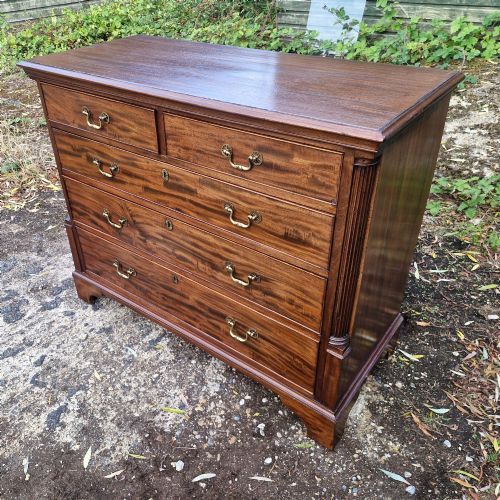
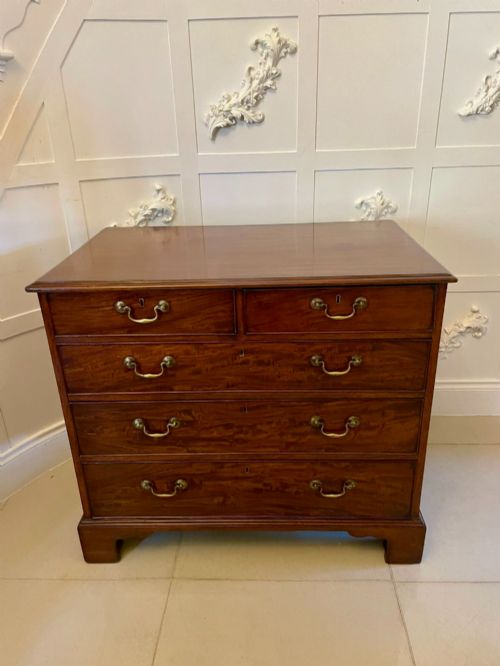
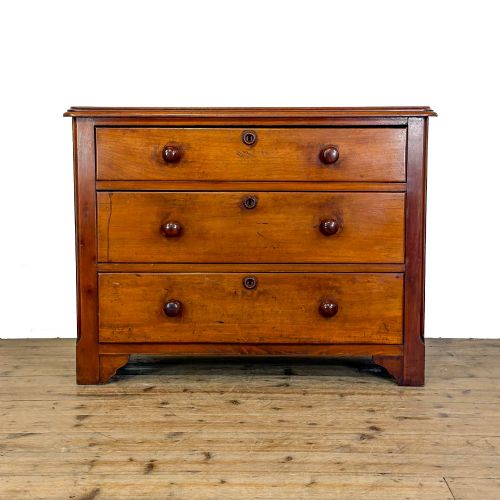
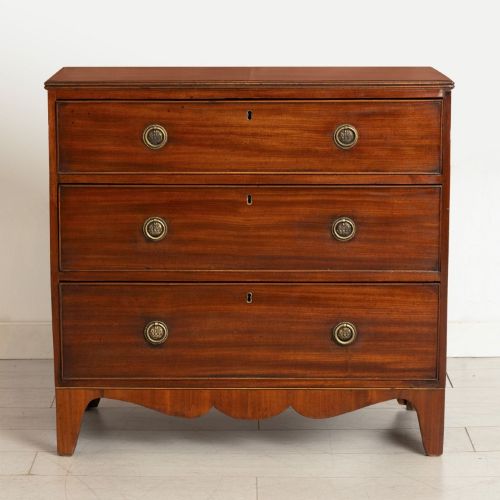
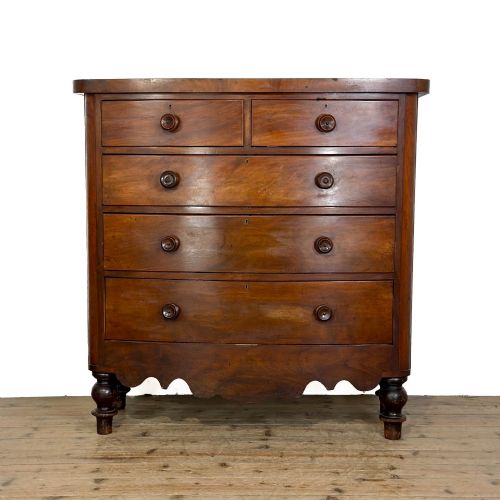
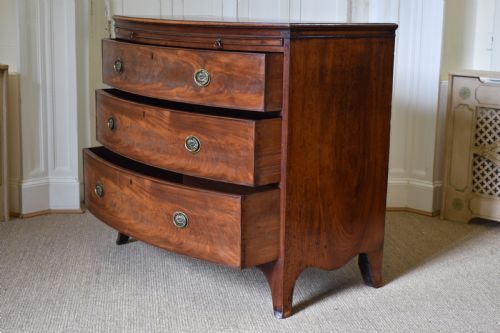
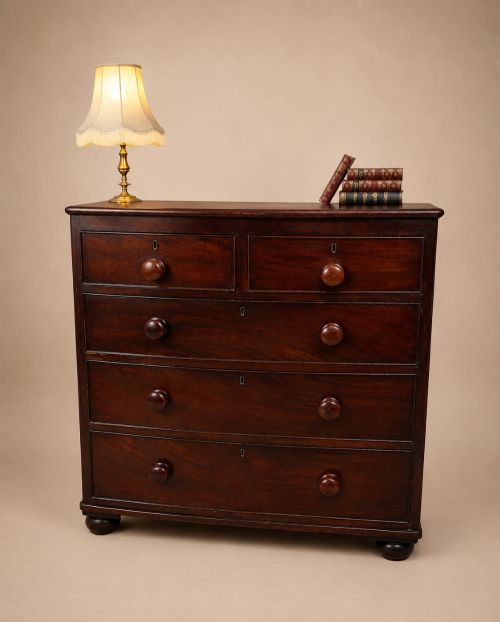
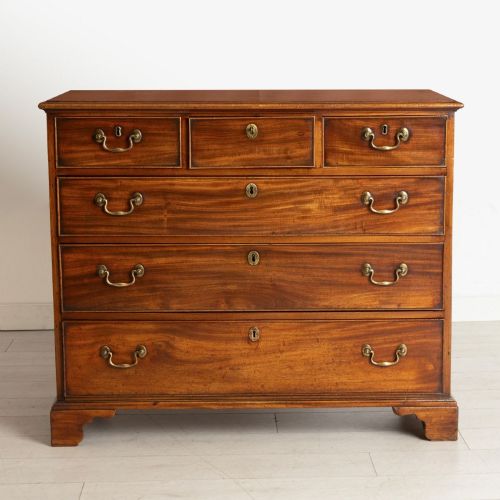
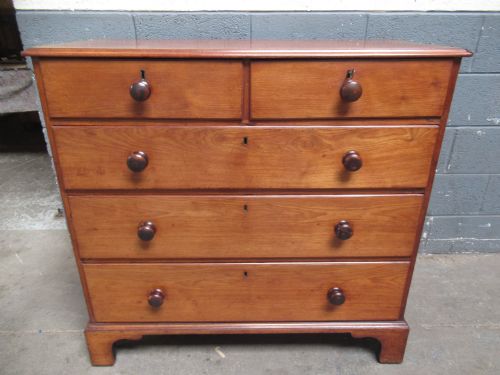
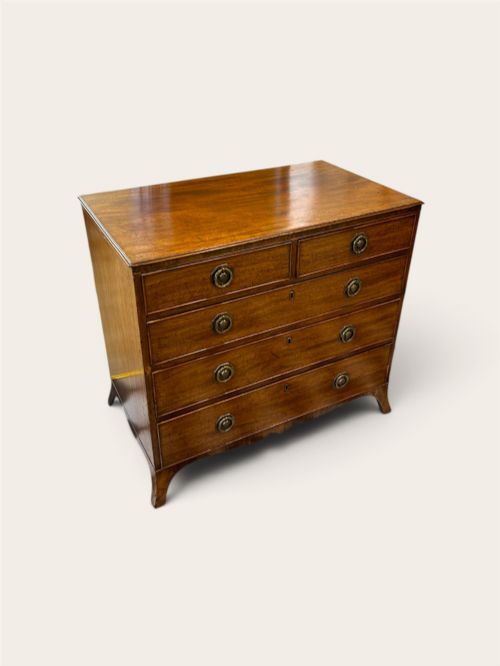
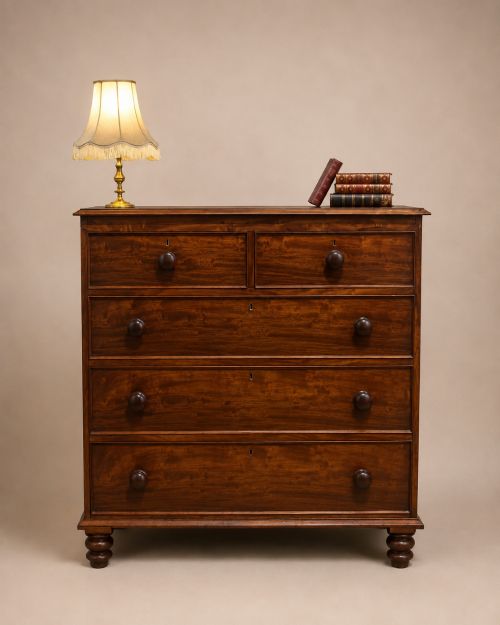
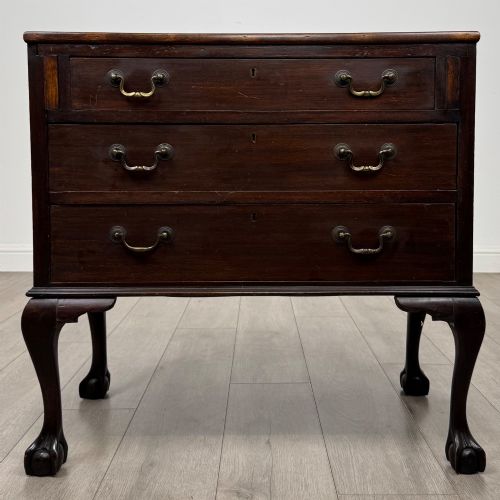
Three Drawer Mahogany Chest
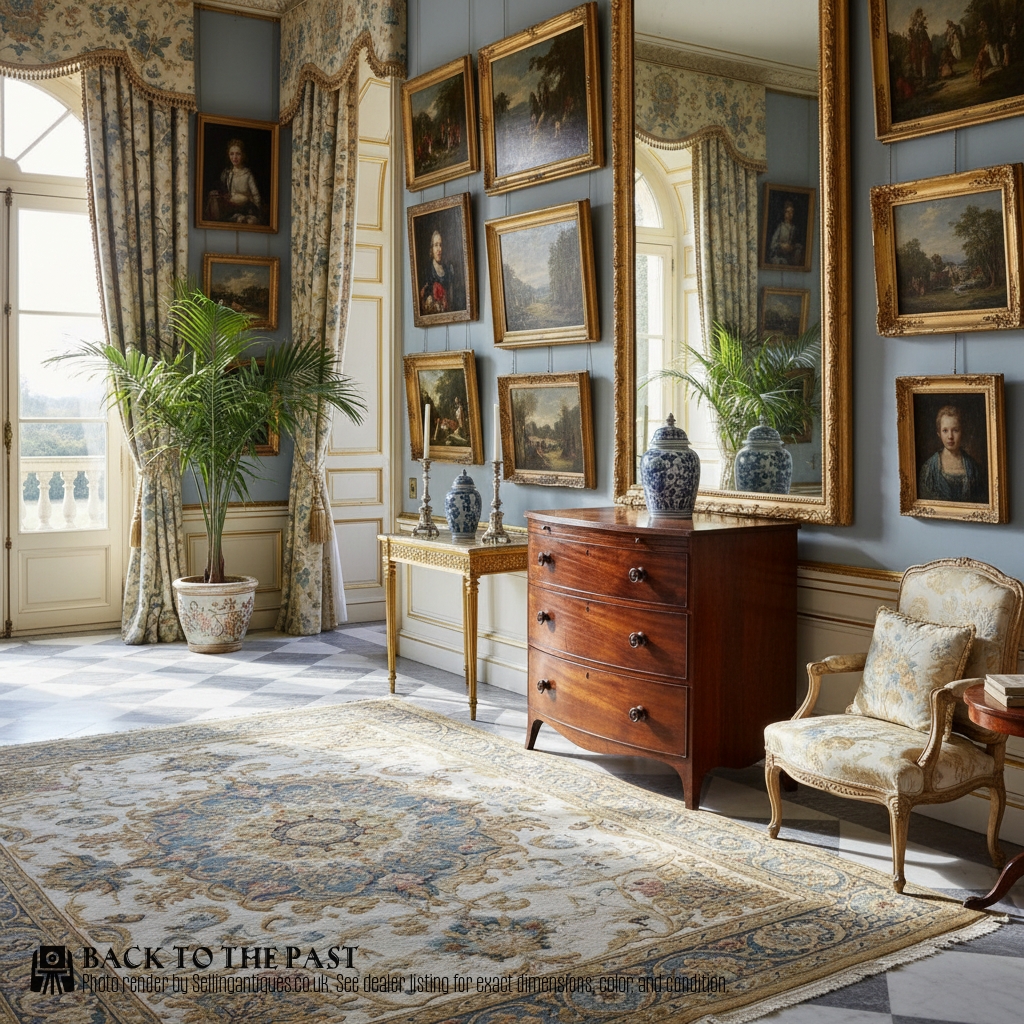
A three drawer mahogany chest offers practical storage wrapped in rich timber and honest proportion, making it a timeless staple for any period interior.
Three Drawer Mahogany Chest
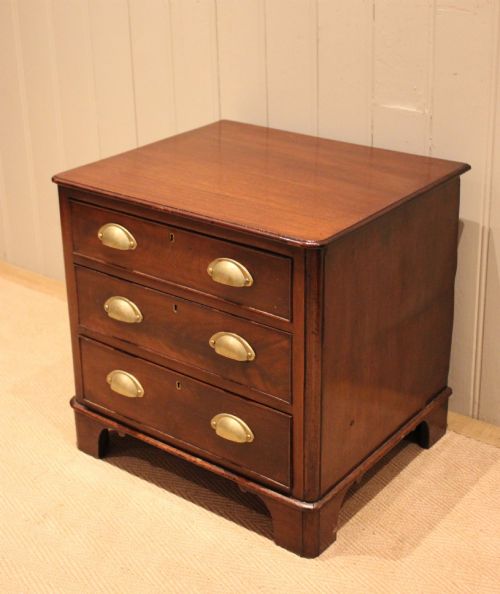
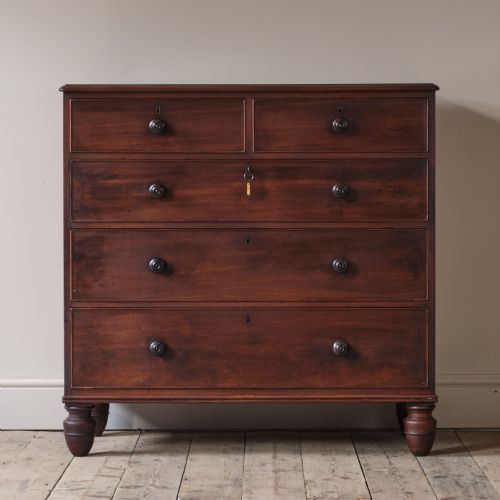
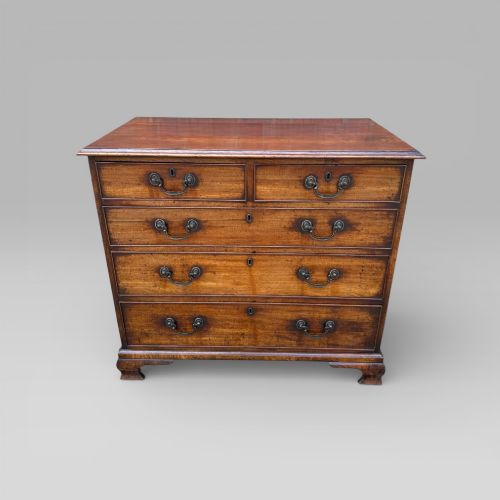
A three drawer mahogany chest is a staple item of storage furniture, appearing frequently in Georgian, Regency, and Victorian iterations across the evidence.
You will most commonly meet compact versions designed as bedside chests or low proportions, alongside larger three-height configurations suited to bedroom or hall placement.
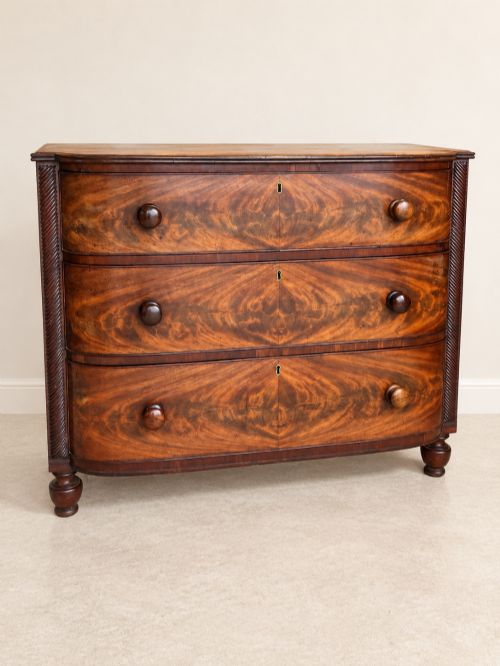
The form spans straightforward rectilinear carcases as well as elegant bow fronts and occasional serpentine or bombe silhouettes, all executed in durable timbers.
How they were made
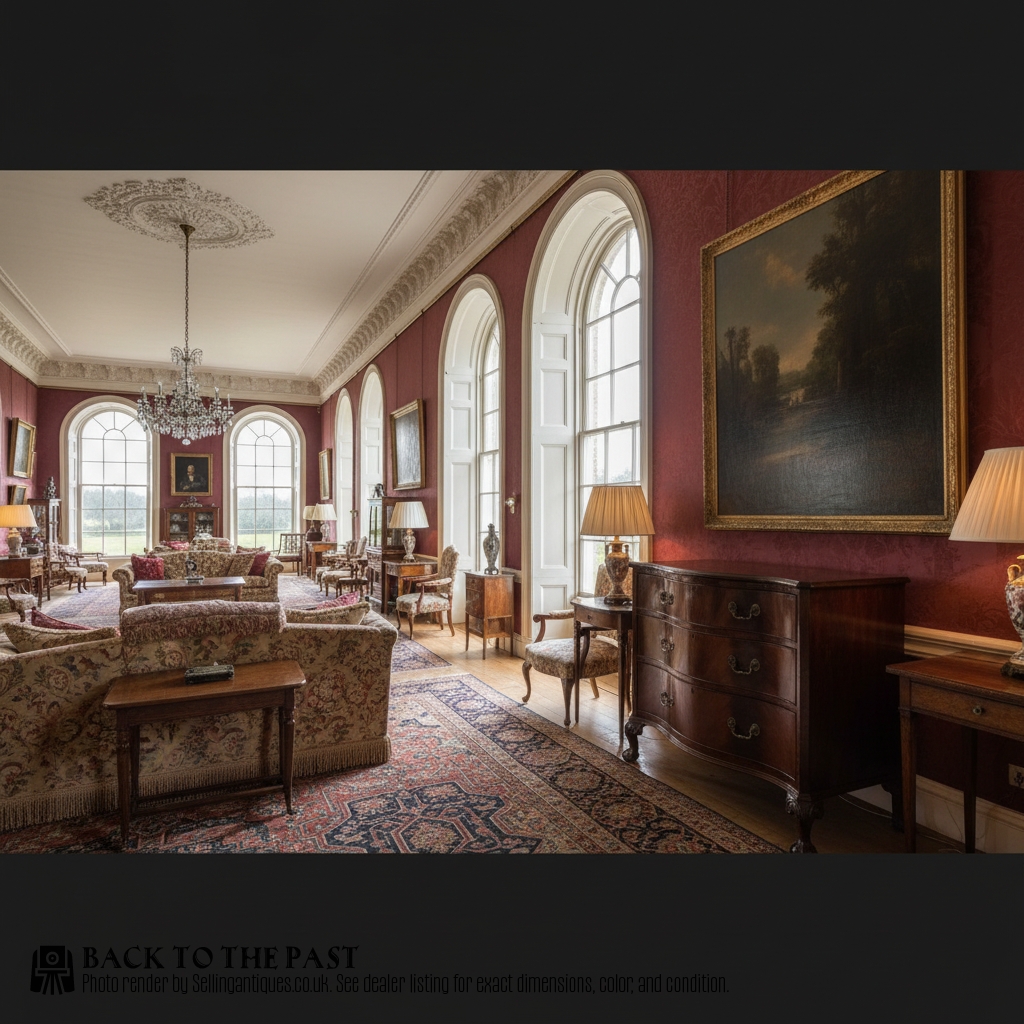
Cabinetmakers built these carcases primarily from solid mahogany and flame mahogany veneer, often supported by secondary timbers such as oak, pine, and boxwood for internal framing and drawer linings.
Surface decoration frequently relied on contrasting crossbanding, satinwood, and delicate black line inlay, while structural integrity was secured with traditional joinery.
Drawer pulls commonly utilised brass handles, sometimes accompanied by working locks and keys.
Three Drawer Mahogany Chest Retail Price Guide 2026
Typical asking prices for three drawer mahogany chest among the pieces listed under this phrase on Sellingantiques today, from the lower quarter to the upper quarter. They describe what is for sale here now, not the wider market.
Many an antique drawer still guards a stray pin or faint ink stain left behind by a long-gone writer.
What varies in quality
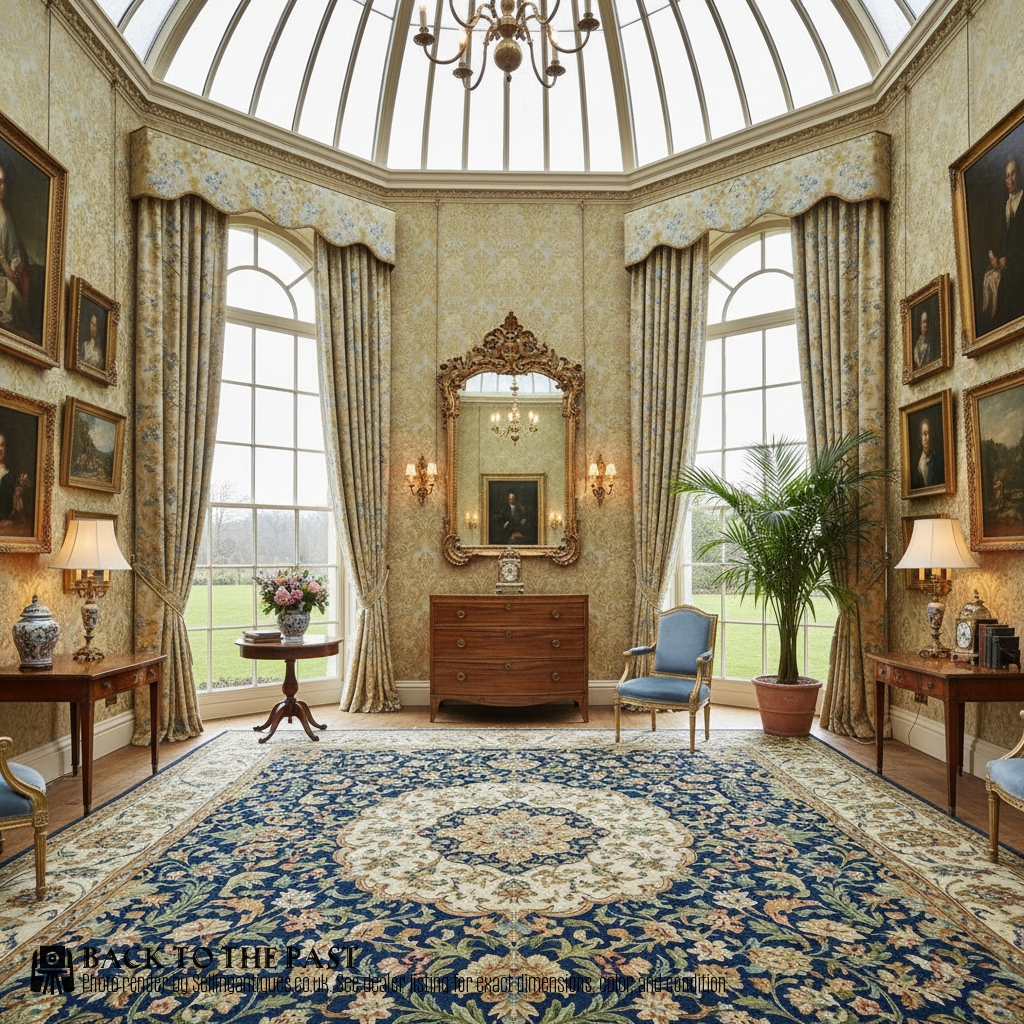
Quality rests heavily on the choice of timber, with finely figured flame mahogany and crisp crossbanding elevating certain pieces far above plain variants.
Proportion and execution define the top of the range, visible in slender bracket feet, well-executed line inlay, and tight drawer tolerances rather than mere age alone.
T & G Seddon·J Moorcroft·Christopher Pratt Bradford
The Three Drawer Mahogany Chest Glossary
- Crossbanding
- A strip of veneer laid perpendicular to the grain of the primary surface, typically framing the top or drawer fronts to create a neat border.
- Flame mahogany
- A highly figured cut of timber showing a flickering, flame-like grain pattern that was prized by period cabinetmakers for principal surfaces.
- Bow front
- A convex, curved front profile popular during the Regency and Victorian eras, designed to soften the rigid geometry of a standard chest.
- Bracket foot
- A simple foot shape formed by two mitred pieces of wood, often shaped in ogee or splayed profiles on Georgian and Regency examples.
- Line inlay
- Narrow contrasting strips of wood or dark material inset flush into the timber surface to form delicate geometric outlines.
Three Drawer Mahogany Chest: Frequently Asked Questions
Where should I put a three drawer mahogany chest?
These pieces suit bedrooms as bedside storage or smaller dressing chests, while narrower low variants fit comfortably into hallways or landings.
Their restrained footprint allows them to slip into alcoves or sit beneath mirrors without dominating the floor plan.
How do I care for a mahogany surface?
Keep timber away from direct heat sources and strong sunlight to prevent the polish and veneer from drying out or fading over decades.
An occasional application of traditional beeswax helps maintain the natural sheen and protects the grain.
Are these chests heavy to move?
Most solid mahogany chests carry reasonable weight due to dense hardwood construction and internal oak or pine framing.
Removing the drawers beforehand makes repositioning much easier and protects the joints from unnecessary strain.
How do I date a mahogany chest?
Look to the overall silhouette, foot style, and secondary woods such as oak or pine drawer linings to point toward Georgian, Regency, or Victorian eras.
Construction details like hand-cut dovetails and timber choice often reveal the period more reliably than applied decoration.