


English Mahogany Furniture
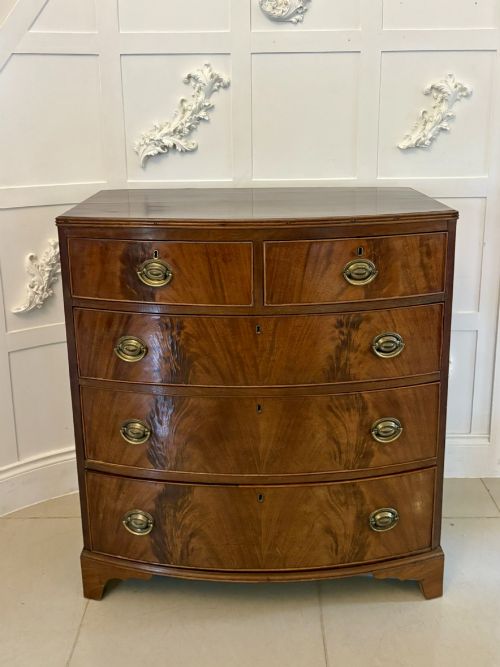
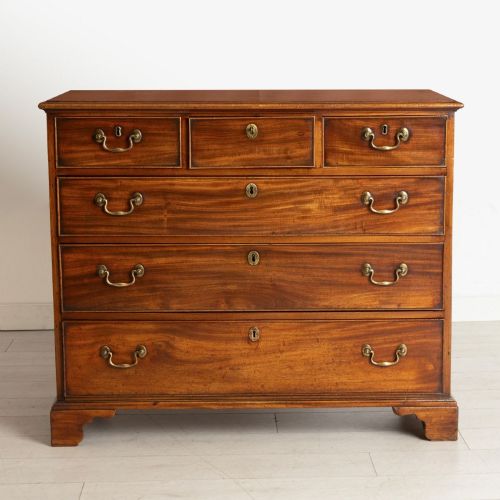
English mahogany furniture spans formal dining chairs, chests of drawers and bookcases made from the eighteenth century onwards.
English Mahogany Furniture
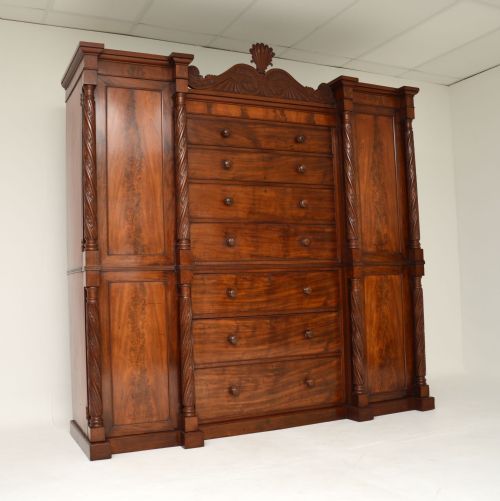
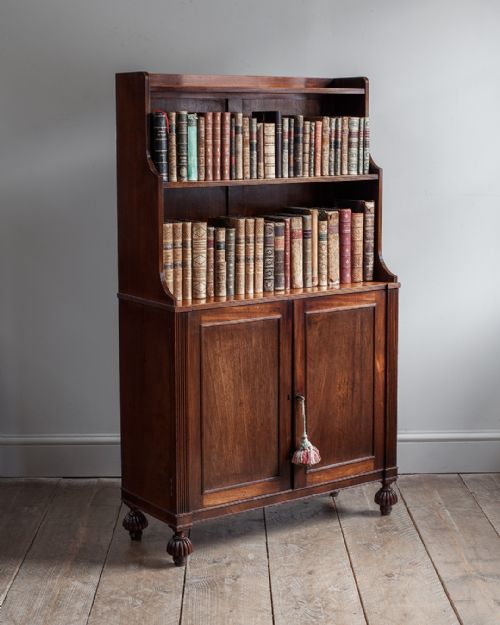
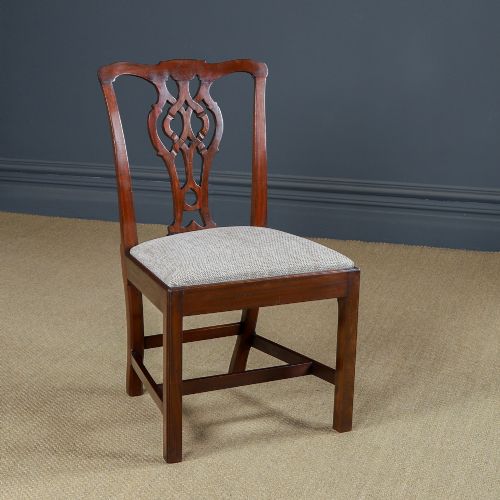
English mahogany furniture encompasses practical domestic forms such as chests of drawers, dining chairs, bookcases, and side tables produced across multiple periods. The material gained widespread favour during the eighteenth century due to its rich tone and dense grain, which allowed for crisp carving and durable construction.
Pieces from the Georgian and Regency eras dominate the selection, showing formal restraint alongside architectural details like bracket feet and reeded columns. Later nineteenth-century examples introduce bolder proportions and varied veneers, reflecting shifting domestic tastes under William IV and Victoria.
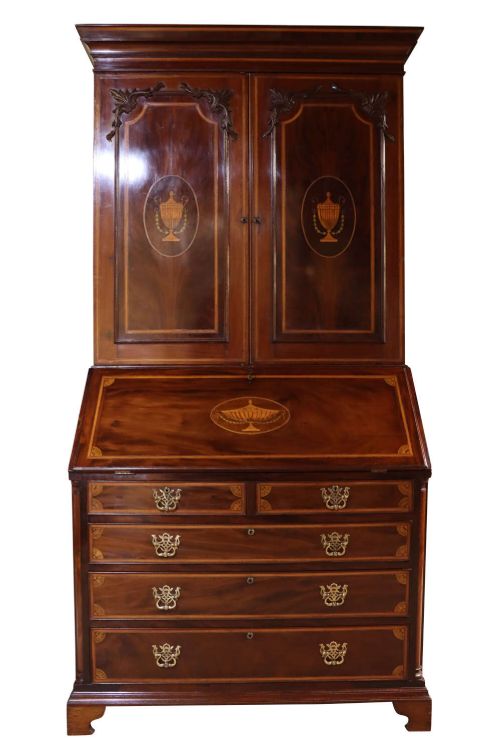
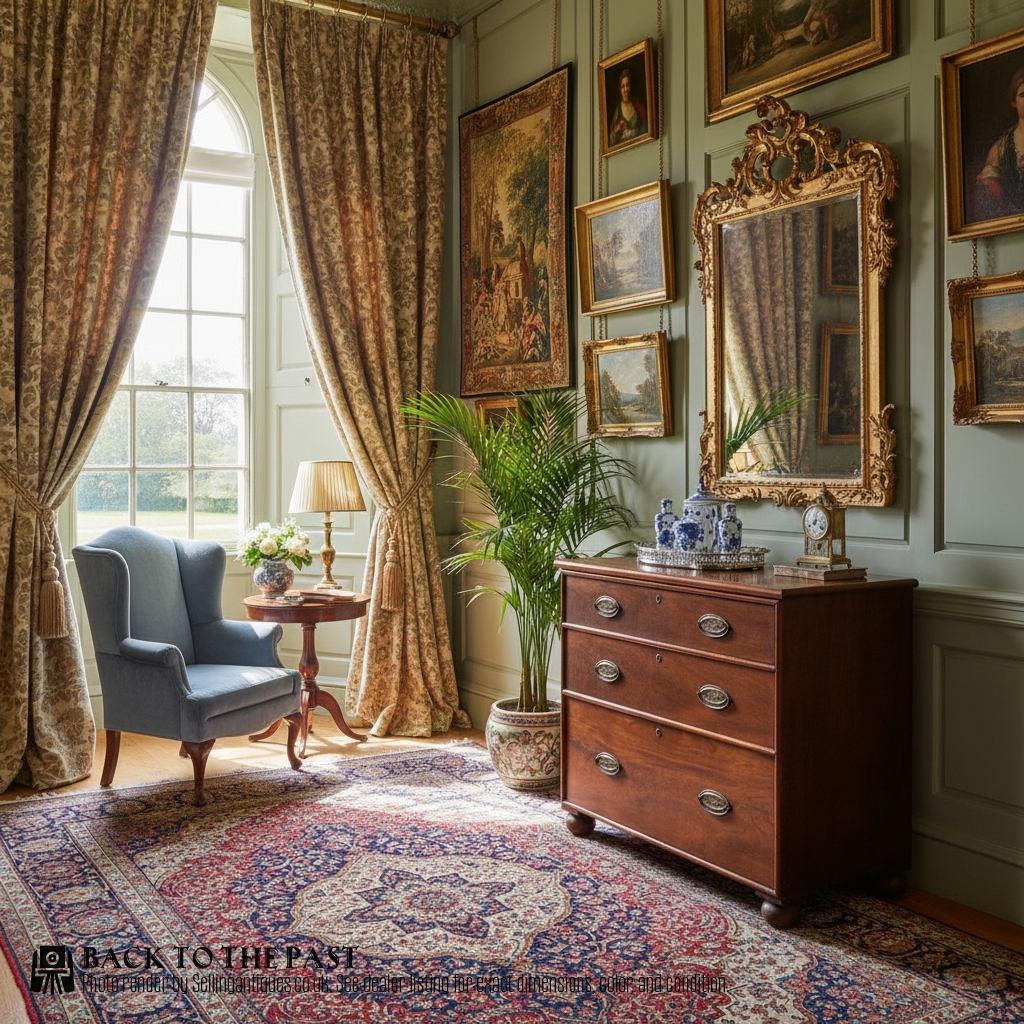
Buyers encounter distinct regional and workshop variations, from simple provincial chests to elaborate metropolitan cabinets fitted with brass handles and glazed doors. These items served specific functions in historic households, functioning as storage or seating, and retain those roles in modern interiors.
Materials and construction
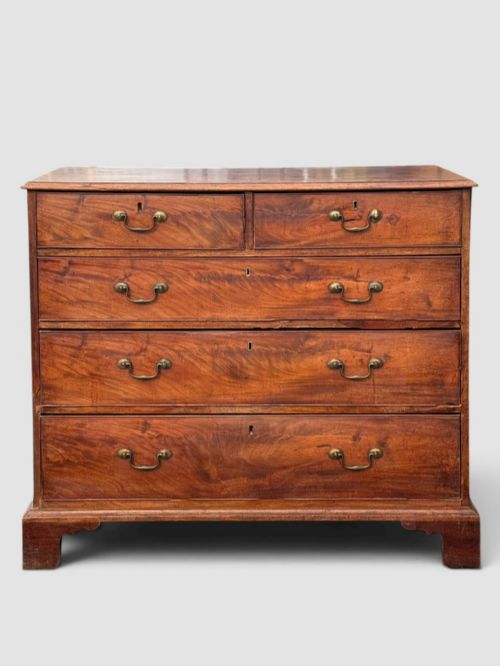
Makers utilised solid mahogany for structural elements and applied flame mahogany veneer to prominent drawer fronts and tabletops to create striking visual patterns. Secondary timbers like oak often appear in internal drawer linings and carcass backs.
Metal fittings such as brass drop handles and castors accompanied high-grade pieces, while secondary materials like leather, fabric, and velvet lined writing surfaces or upholstered seating. Joinery techniques relied on dovetails for drawers and mortise and tenon joints for frames.
English Mahogany Furniture Retail Price Guide 2026
Typical asking prices for english mahogany furniture among the pieces listed under this phrase on Sellingantiques today, from the lower quarter to the upper quarter. They describe what is for sale here now, not the wider market.
Several dining chairs double as office desks, proving that eighteenth-century ancestors also worked from home on occasional seating.
Evaluating quality
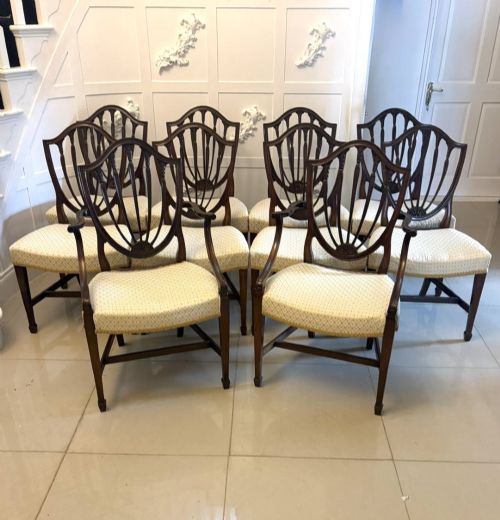
Quality rests upon the selection of timber figures, where symmetrical flame grain and deep natural patina elevate a piece above plain stock. The crispness of carved details, such as acanthus leaves on Chippendale style chairs or reeding on Regency legs, indicates the skill of the original workshop.
Proportion and structural integrity define the best examples, showing balanced dimensions and original brass hardware rather than later replacements. The retention of secondary woods and undisturbed internal linings points to careful preservation over centuries.
T & G Seddon·Maple & Co·Holland and sons·Howard & Sons
The English Mahogany Furniture Glossary
- Bow front
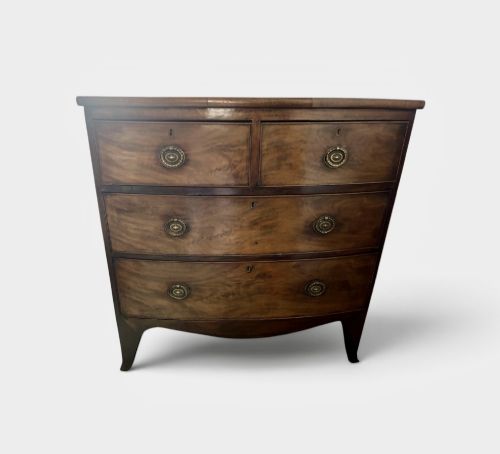
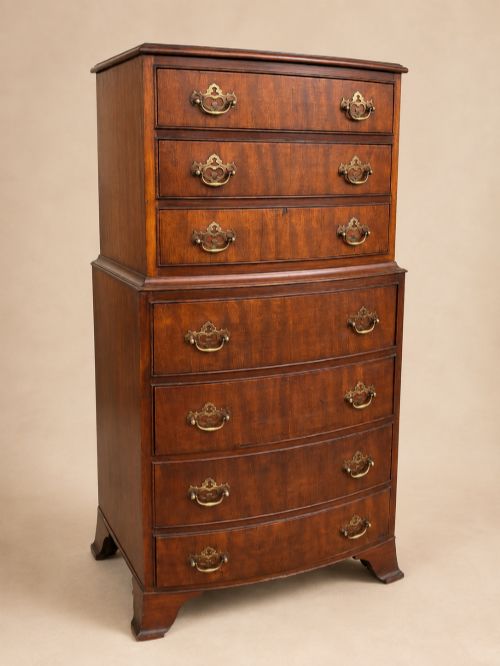
- A convex curved cabinet front that projects outward in a smooth arc. This shape became popular during the Regency period on chests of drawers and sideboards.
- Chippendale style
- A design aesthetic inspired by Thomas Chippendale characterised by elaborate carving, cabriole legs, and ball and claw feet. It emerged during the eighteenth century.
- Flame mahogany veneer
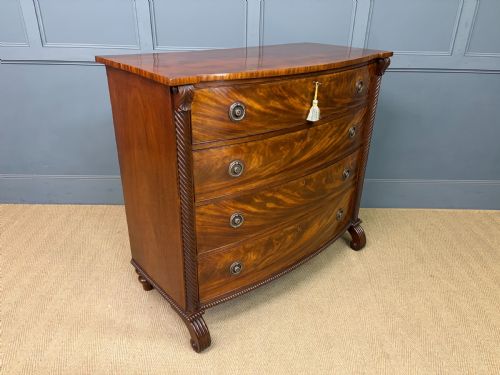
- A thin slice of wood cut from the fork of the tree where branches meet, creating a distinctive flickering flame pattern. Cabinet makers applied this to drawer fronts for decorative impact.
- Canterbury
- A low stand with slatted or partitioned divisions designed for holding sheet music or books. These pieces often feature low legs with castors for easy movement.
- Tallboy
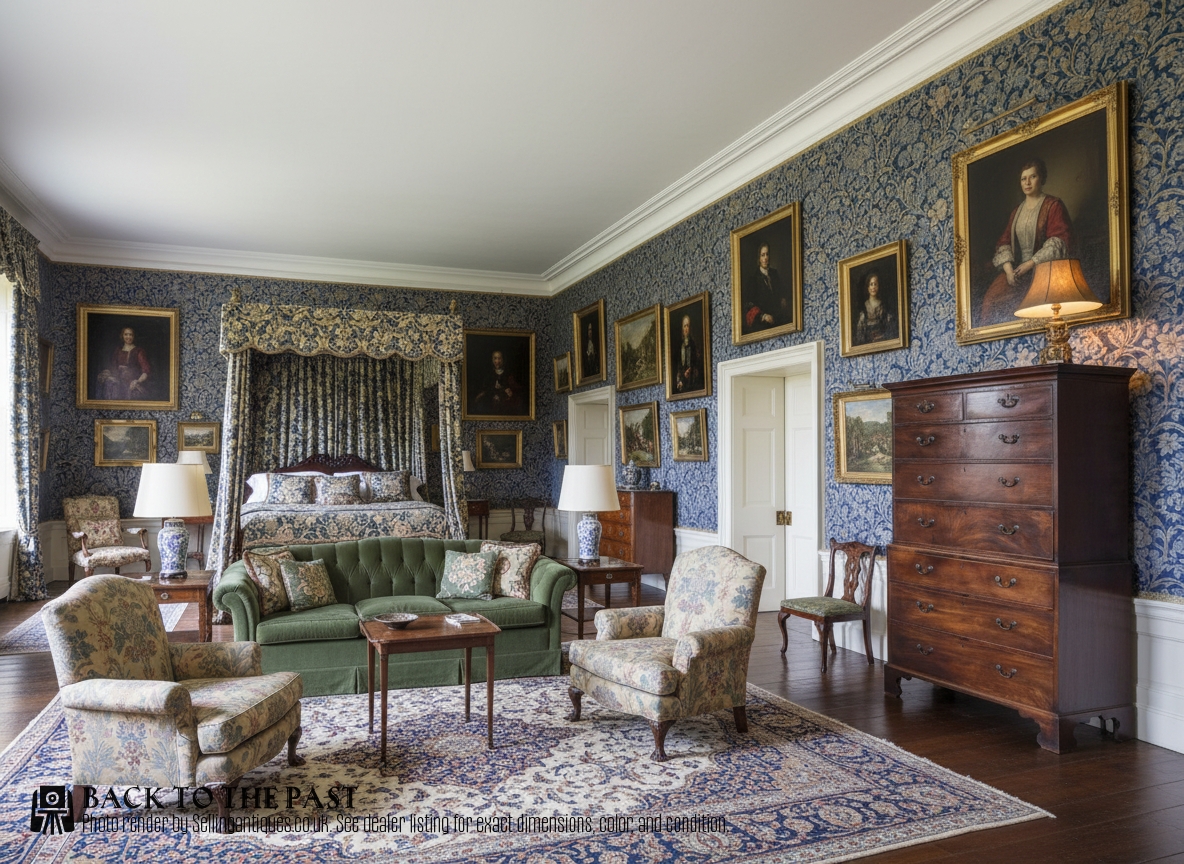
- A tall chest of drawers consisting of one chest stacked upon another, also known as a chest on chest. This form maximised vertical storage space in eighteenth-century bedrooms.
English Mahogany Furniture: Frequently Asked Questions
How do I date a mahogany chest of drawers?
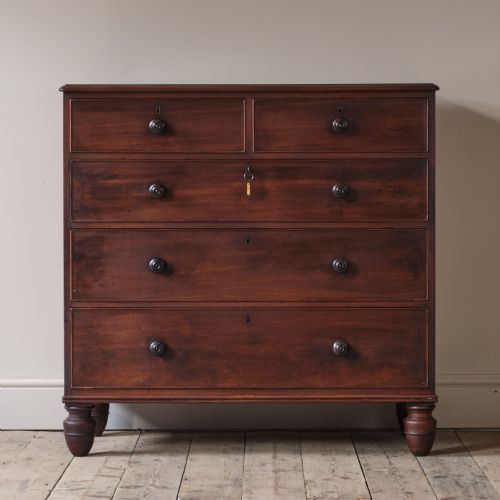
Dating relies on examining construction methods, timber selection, and hardware styles. Hand-cut dovetails and oak drawer linings typically indicate eighteenth or early nineteenth-century origins.
Later Victorian examples often incorporate machine-sawn components and different internal woods. Brass handle styles and foot designs also shift across the Georgian, Regency, and Victorian periods.
What is flame mahogany?
Flame mahogany refers to a specific veneer cut taken from the junction where a branch joins the main trunk of the tree. This wood exhibits a dramatic, fiery grain pattern.
Cabinet makers applied these thin sheets to drawer fronts and tabletops to create striking visual focal points. It appears frequently on finer pieces from the Georgian and Regency eras.
How should I care for antique mahogany?
Maintenance involves keeping pieces away from direct sunlight and heat sources to prevent the wood from drying out and the veneer from lifting. Regular dusting with a soft, dry cloth preserves the finish.
Application of traditional wax polish helps nourish the timber and maintain its natural sheen. Avoid silicone-based sprays, which can damage historic polished surfaces over time.
Where were these pieces used in historic homes?
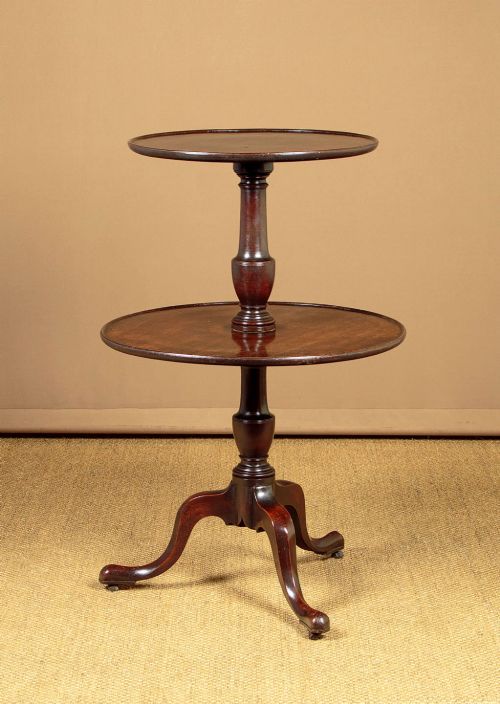
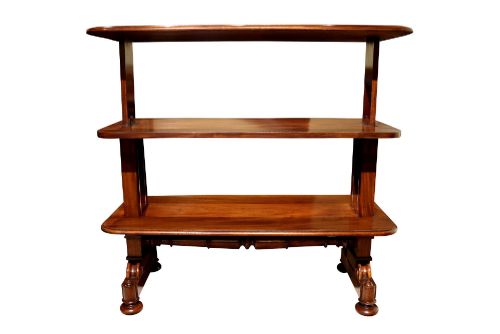
Different forms served specific rooms, such as dining chairs and dumb waiters in formal dining spaces, and bookcases or writing desks in libraries. Wardrobes and chests of drawers furnished bedrooms.
Smaller items like occasional tables and Canterbury stands occupied drawing rooms for daily convenience. Their placement reflected strict domestic hierarchies and entertaining customs.