
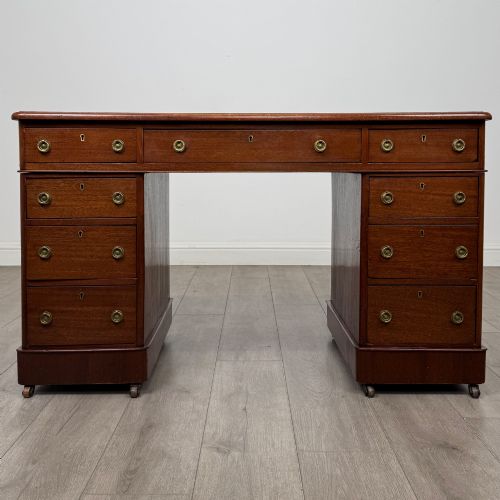
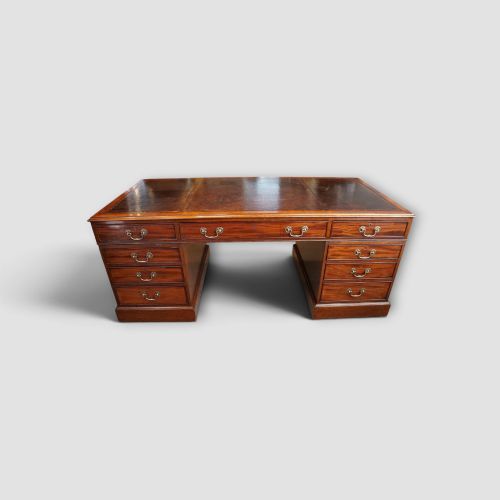
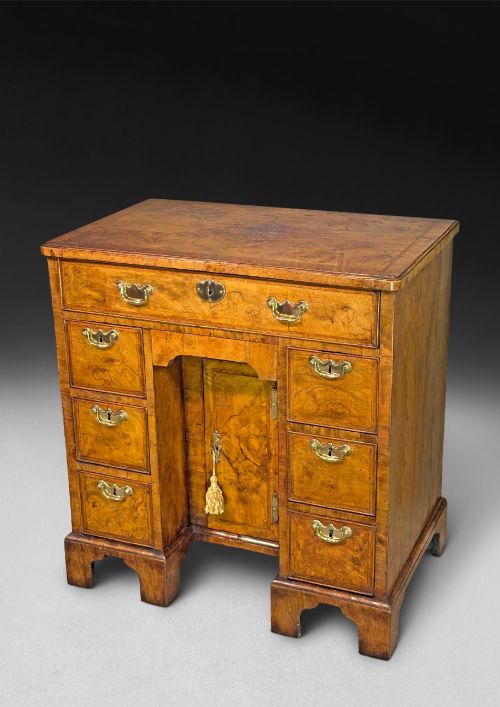
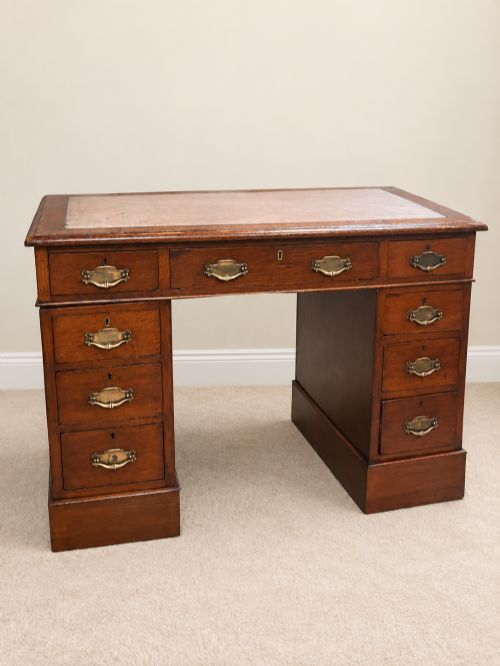


Executive Writing Table
An executive writing table is a grand freestanding desk designed to anchor a room, crafted in rich timbers and styled for serious correspondence.
Identifying an executive writing table
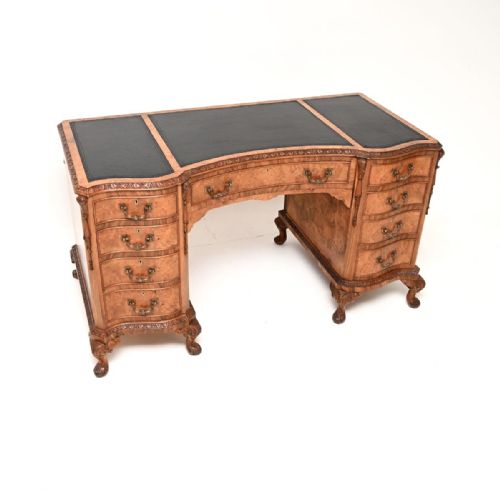
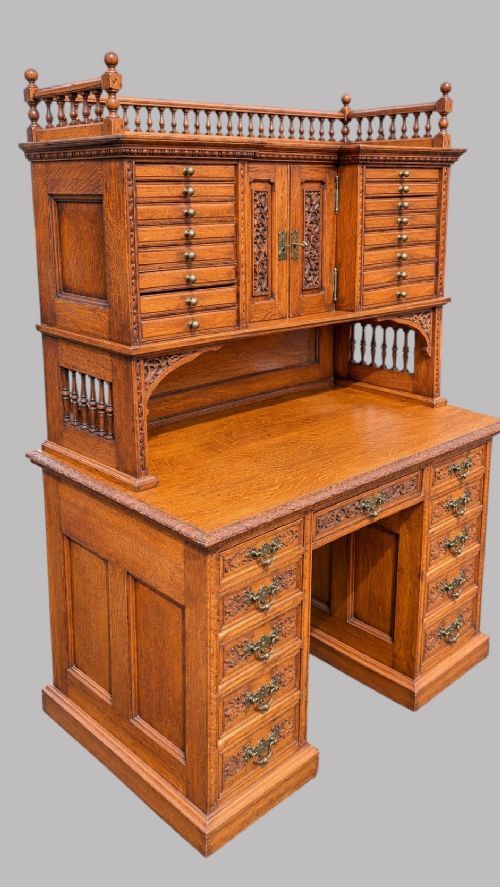
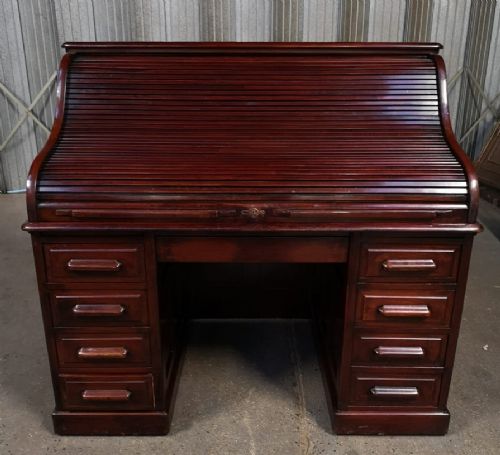
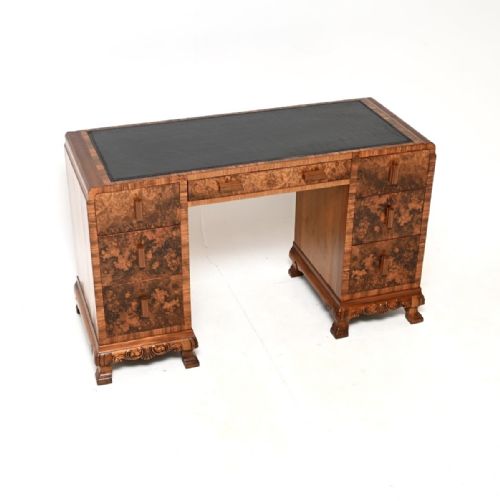
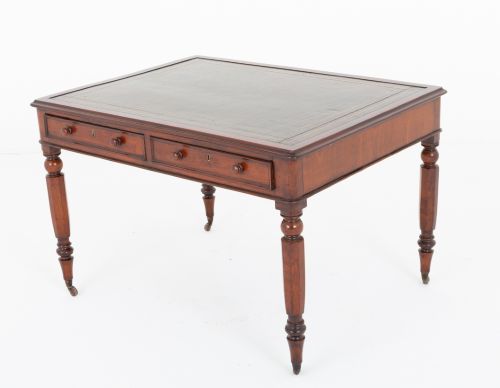
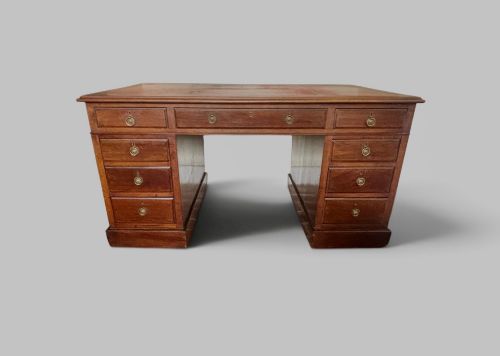
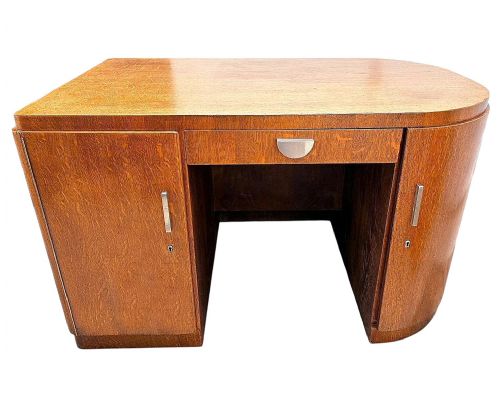
The search for an executive writing table brings up substantial freestanding desks designed to sit proudly in the centre of a room rather than against a wall. The pieces seen on this page span the 19th Century, 1860, 1880, the Regency period, and the Edwardian era, showing a strong preference for French revival and traditional British designs.
Most examples take the form of a bureau plat or a library writing table, often featuring leather writing surfaces and generous proportions. These forms reflect the functional demands of gentlemen and scholars from the Georgian Style, Victorian, and Late Victorian periods.
Makers and workshops of the period utilised distinct regional styles, ranging from the opulent ormolu mounts of French Rococo Revival to the disciplined cabinet-making associated with Gillows and Marsh, Jones & Cribb.
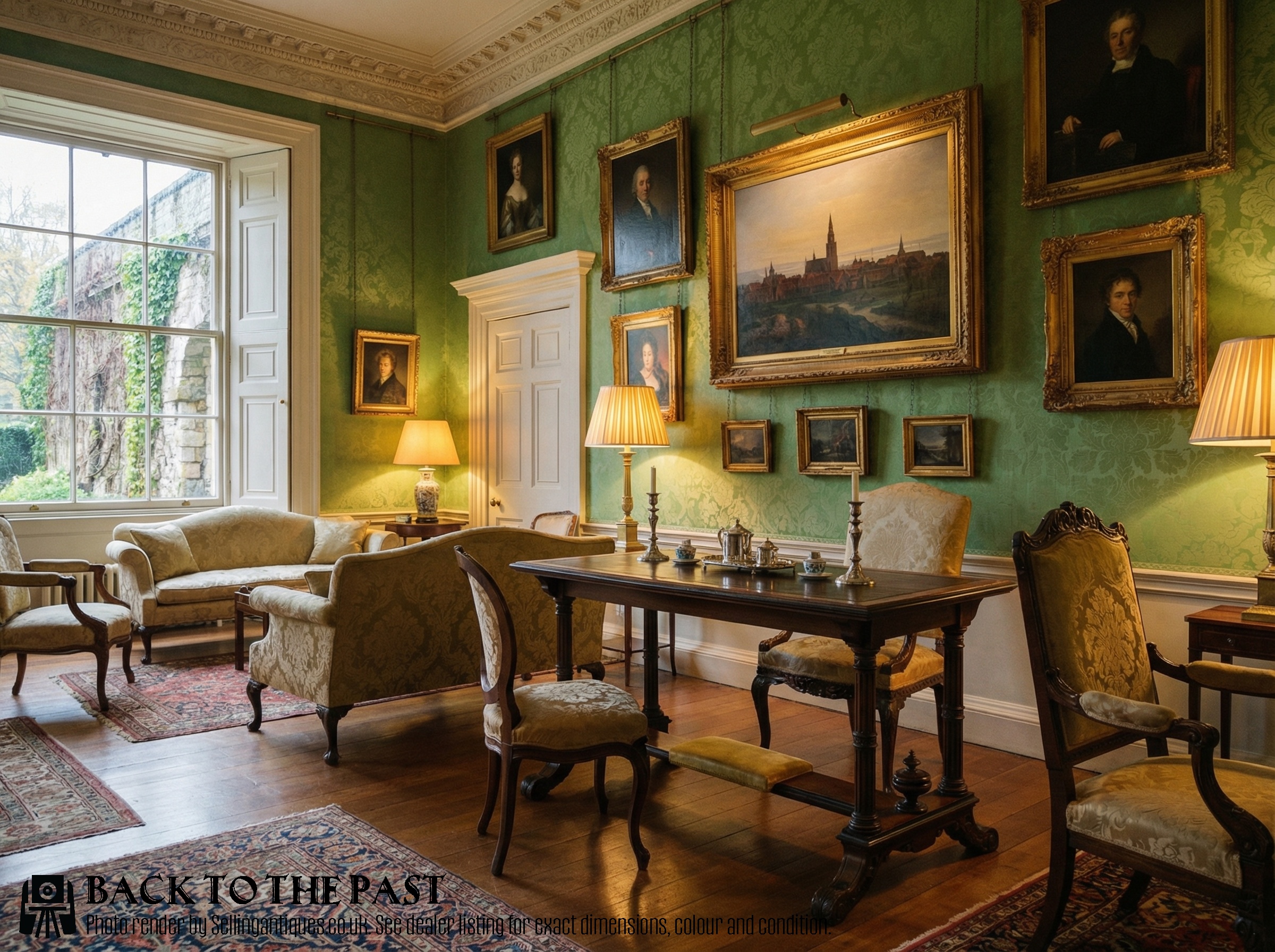
Materials and construction
Construction relies upon dense hardwoods such as mahogany, walnut, kingwood, rosewood, tulipwood, and satinwood, often arranged in intricate parquetry or burr veneers. These timbers provide both structural integrity and a striking visual grain across the primary surfaces.
Metal ornamentation plays a defining role, with cast ormolu and brass mounts applied to corners, legs, and handles to accentuate the classical and revivalist curves. Leather inserts are traditionally tooled and fitted to the writing surfaces, providing a durable and tactile plane for daily use.
Retail Price Guide 2026
Typical UK retail prices for executive writing table, calculated from the Sellingantiques database of over a million retail prices indexed since 2003. This retail price guide relies exclusively on Sellingantiques data; no external sources or auction records are used, so the figures do not describe the wider market.
Some partners' desks feature concealed secret drawers once used for stashing private correspondence away from prying eyes.
Judging quality in these desks
Quality reveals itself in the precision of the cabinet-making and the crispness of any applied bronze or ormolu mounts. Finer pieces demonstrate seamless timber matching in their veneers and parquetry, alongside drawers that run smoothly on carefully fitted runners.
The distinction between standard workshop production and exhibition quality lies in the depth of hand-carving, the weight and finish of the hardware, and the attribution to known makers such as Gillows or Marsh, Jones & Cribb.
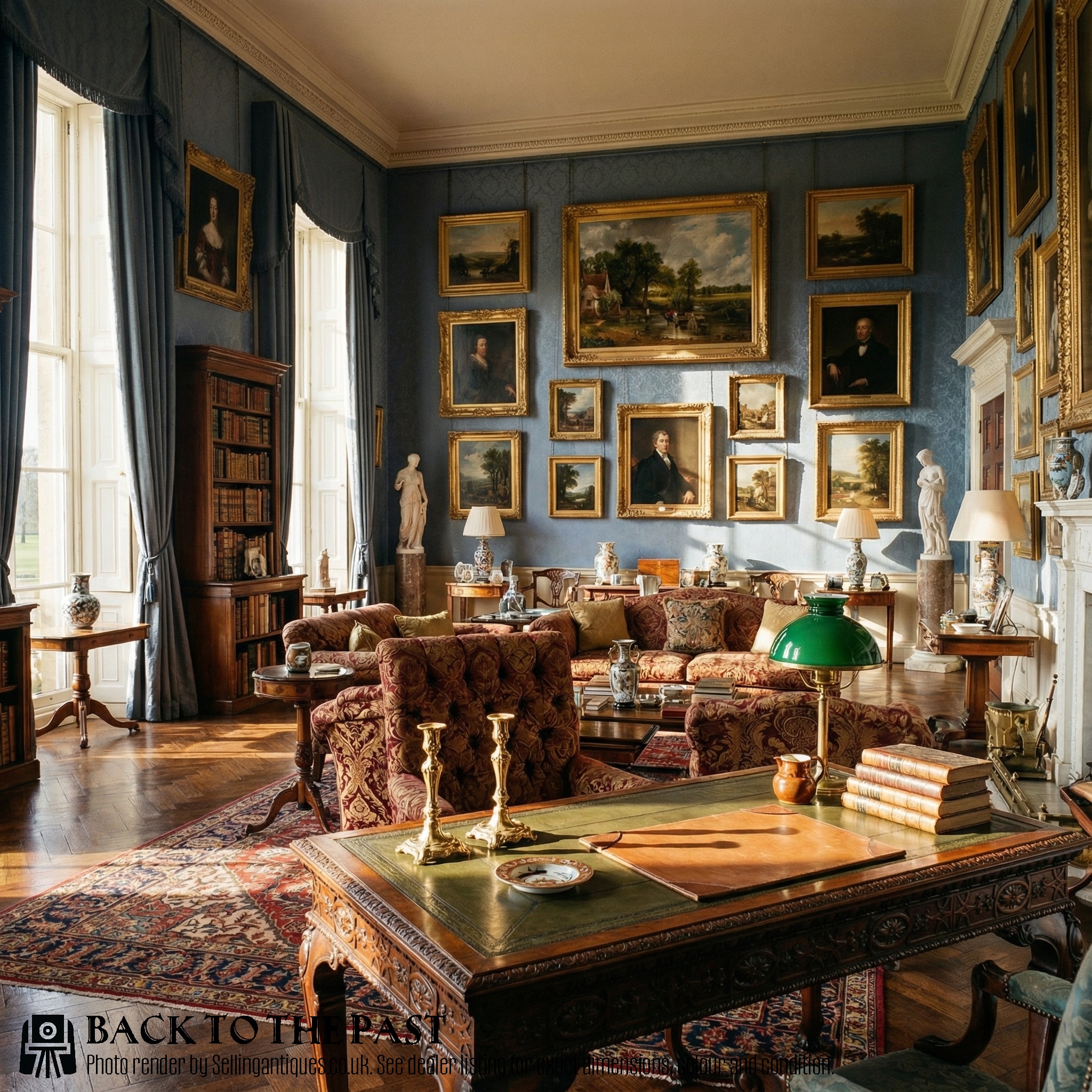
Marsh, Jones & Cribb·Gillows of Lancaster and London
The Executive Writing Table Glossary
- Bureau plat
- A freestanding French writing table, typically featuring multiple drawers and a leather-inset top.
- Ormolu
- Gilded bronze mounted onto furniture as decorative enrichment, popular in French-influenced design.
- Parquetry
- Geometric patterns of wood veneer laid down on a structure to create a mosaic effect.
- Library writing table
- A large desk finished on all sides so it can stand in the middle of a room, often used for research and letters.
- Regency
- A British design period spanning the early 19th century, known for classical restraint and archaeological revival.
Frequently Asked Questions
Where should an executive writing table go?
These desks are designed as freestanding pieces meant to command the centre of a room rather than sit flush against a wall.
Positioning them away from boundaries allows the finished back and detailed ormolu mounts to be seen from all angles.
How do I care for the leather top?
The leather writing surface benefits from occasional dusting with a soft cloth and gentle conditioning to keep the hide supple.
Avoiding direct sunlight prevents the dyed leather from fading or drying out over decades of use.
What is the difference between a bureau plat and a standard desk?
A bureau plat is a specific French form of writing table that is finished on all four sides and traditionally lacks a superstructure.
English library desks share this freestanding quality, prioritising symmetry and large working surfaces over compartmentalised pigeonholes.
How do I identify a Regency writing table?
Regency pieces often display classical architectural proportions, restrained brass inlay, and dark native or exotic timbers.
Cabinet-makers of this early nineteenth-century era drew heavily on Greek and Roman motifs.