

English Walnut Desk
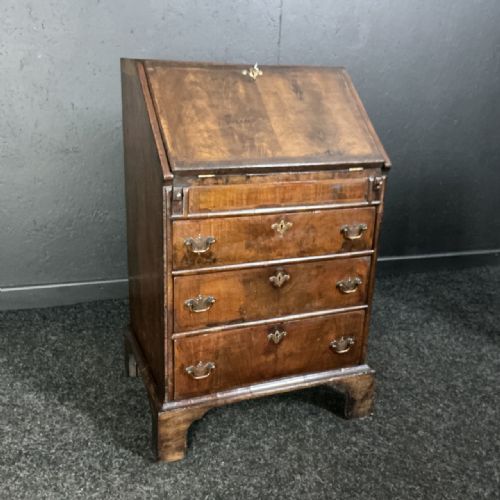
An English walnut desk brings rich timber grain and classic craftsmanship to a study.

Forms and Origins
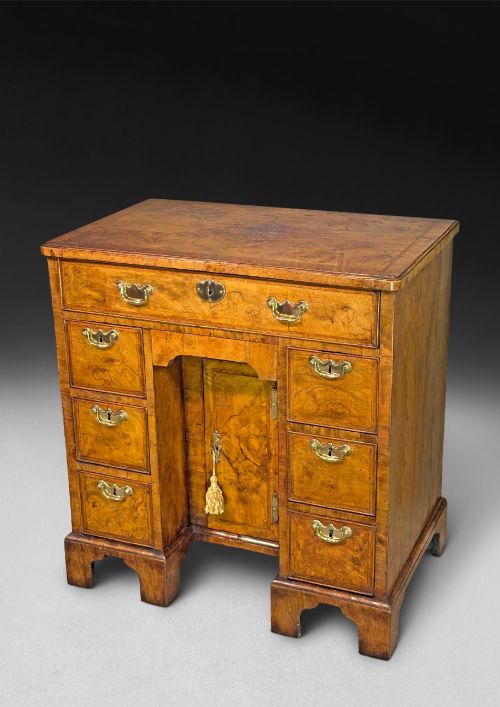
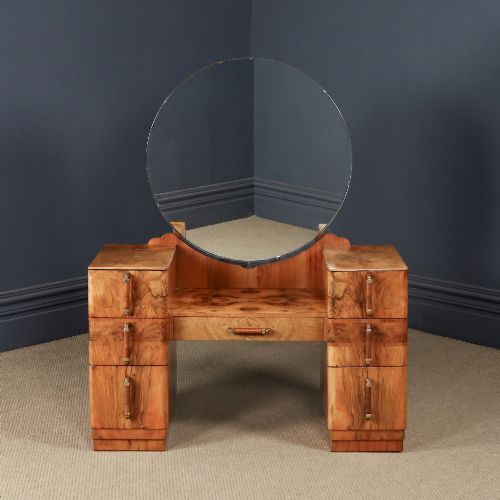
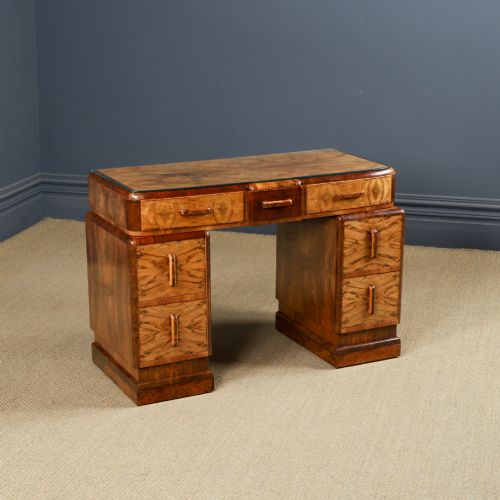
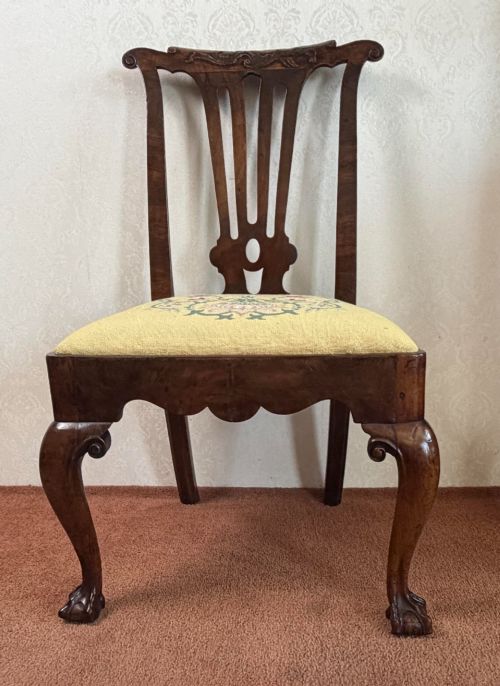
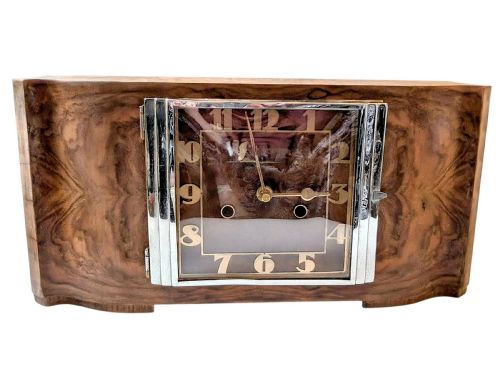
Early examples frequently showcase the figured walnut veneers favoured by craftsmen under William and Mary, Queen Anne, and George I. Later 19th-century and 20th-century iterations introduce styles from Victorian davenports to streamlined Art Deco skyscraper and cloud-shaped pedestal desks.
Secondary timbers such as oak frequently support the primary walnut and burr elm structures, while inset leather writing surfaces and brass hardware complete the traditional configuration of these pieces.

Materials and Technique
Cabinet makers utilised solid walnut and decorative veneers like burr elm and figured walnut applied over firmer sub-frames. Joinery techniques relied on dovetailed drawer construction and solid timber panels supported by secondary woods such as oak.
Surface detailing incorporated inlaid banding and polished finishes designed to highlight the natural grain patterns of the wood. Brass handles, escutcheons, and occasional glass elements were integrated to provide functional and decorative contrast.
Writing surfaces frequently received inserts of leather, providing a durable platform for correspondence and study. These materials combined structural stability with sophisticated ornamentation across the Georgian, Victorian, and later eras.
Retail Price Guide 2026
Typical UK retail prices for english walnut desk, calculated from the Sellingantiques database of over a million retail prices indexed since 2003. This retail price guide relies exclusively on Sellingantiques data; no external sources or auction records are used, so the figures do not describe the wider market.
Some Victorian correspondence boxes secretly house magnifying glasses and letter sets for the meticulous letter writer.
Gradations in Quality
The visual appeal of an english walnut desk relies heavily on the selection and matching of burr and figured veneers across the primary surfaces. Superior examples demonstrate continuous grain patterns and meticulous timber selection that elevate the overall composition.
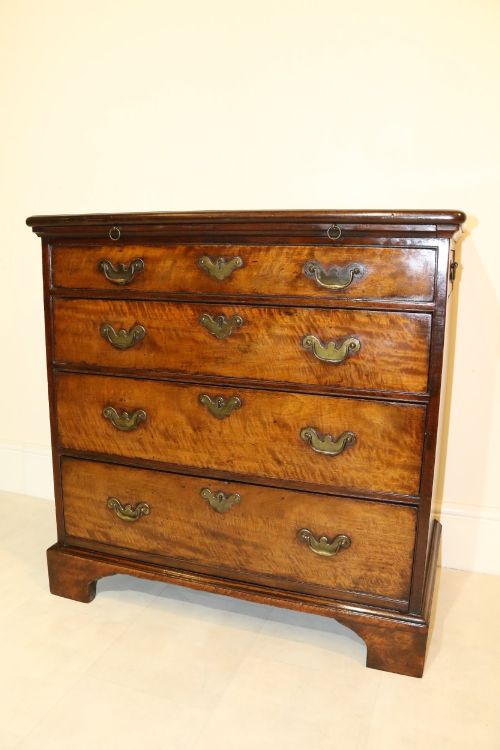
Construction methods and hardware integration distinguish exceptional pieces from standard workshop output. Finely executed dovetailing, substantial secondary timbers like oak, and original brass fittings indicate a higher standard of period craftsmanship.
Angus of London·Howard and Son·James Shoolbred·Maple and Co, London
The English Walnut Desk Glossary
- Lowboy
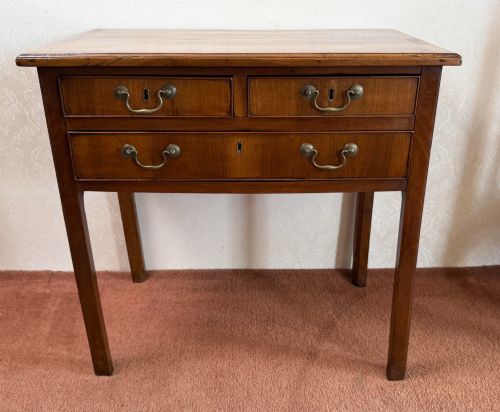
- A small side table featuring one or more rows of drawers, frequently utilised as a dressing table or writing surface during the 18th century.
- Bureau
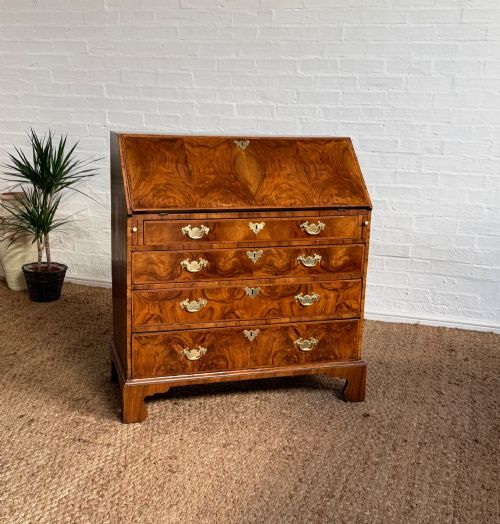
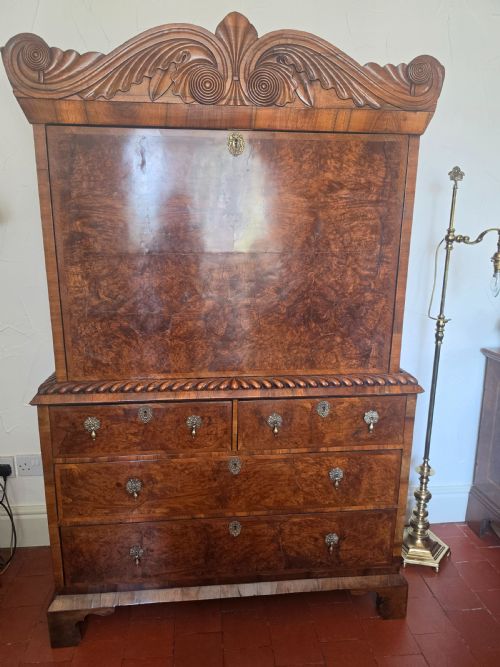
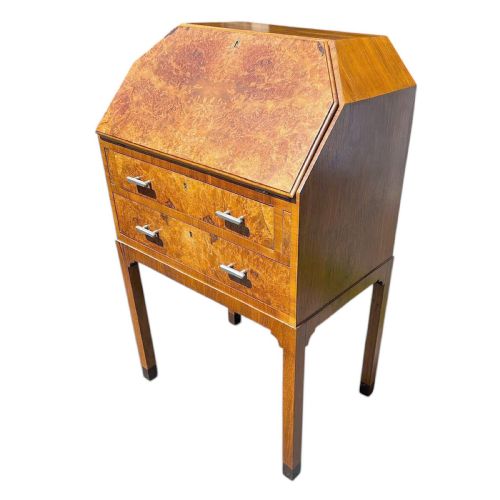
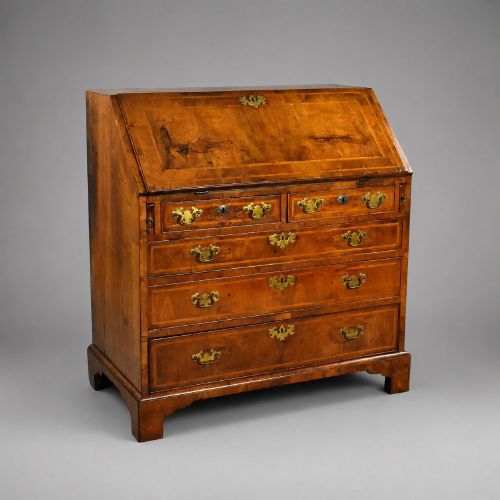
- A sloping desk form that opens to reveal a fitted interior of small compartments and pigeonholes above drawers.
- Davenport
- A compact Victorian desk style featuring a sloping top above a pedestal of side drawers.
- Burr Elm
- A knotty timber growth prized for its swirling grain patterns and utilised extensively as a decorative veneer alongside walnut.
- Kneehole Desk
- A form characterised by a central recess for the user's legs, flanked by pedestals of drawers.
Frequently Asked Questions
What periods do these desks cover?
The archive records pieces originating from the late 17th century through the Georgian and Victorian eras up to Art Deco designs of the 1930s and 1940s.
Earlier examples favour bureau and lowboy forms in figured timber, while later decades introduce pedestal office desks and davenports.
What is a lowboy used for?
A lowboy functions as a compact table with drawers, originally placed in bedchambers or parlours for correspondence and personal grooming.
Its modest proportions allow it to serve today as a side table or dressing table.
Are writing slopes separate from desks?
Writing slopes are portable desktop boxes that fold open to create an angled writing surface for letters and documents. They contain compartments for inkwells and pens rather than standing independently on the floor like pedestal desks.