


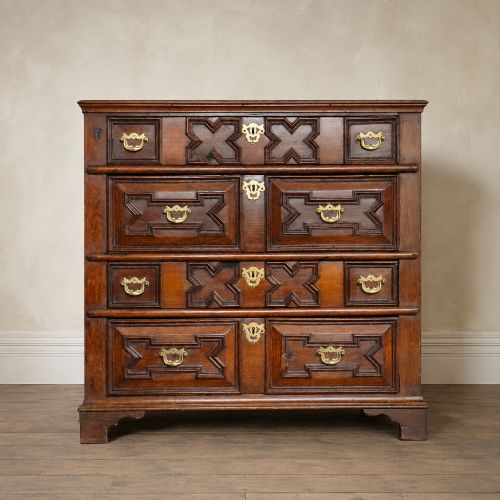
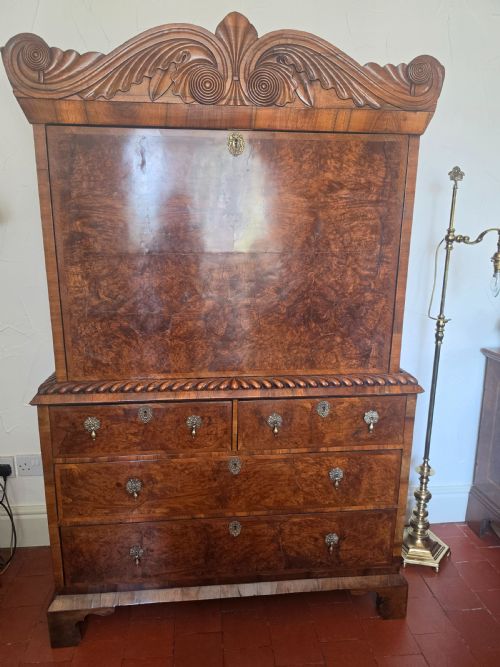
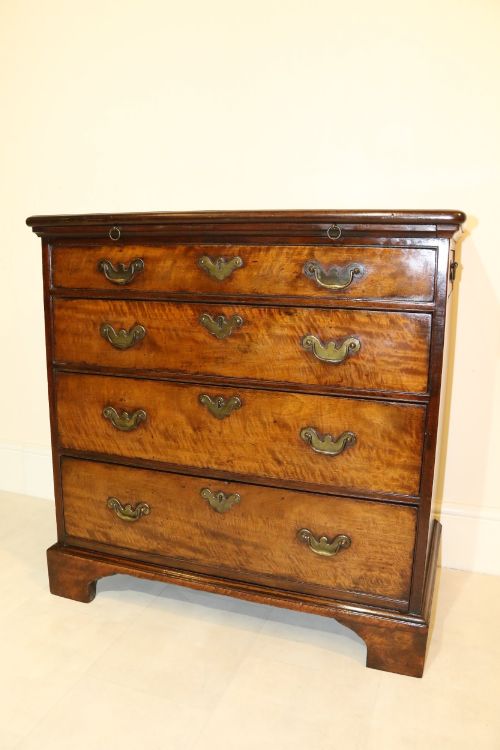
Early 18th Century Bureau
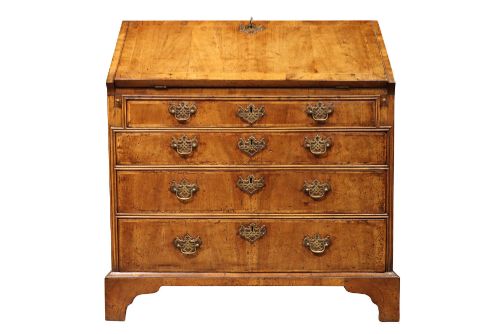
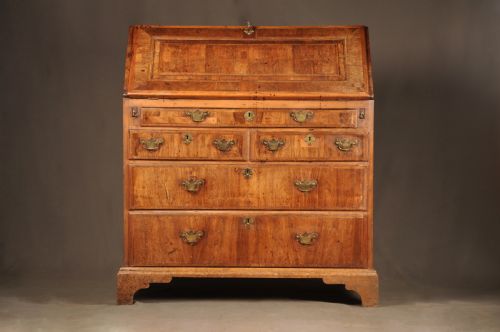
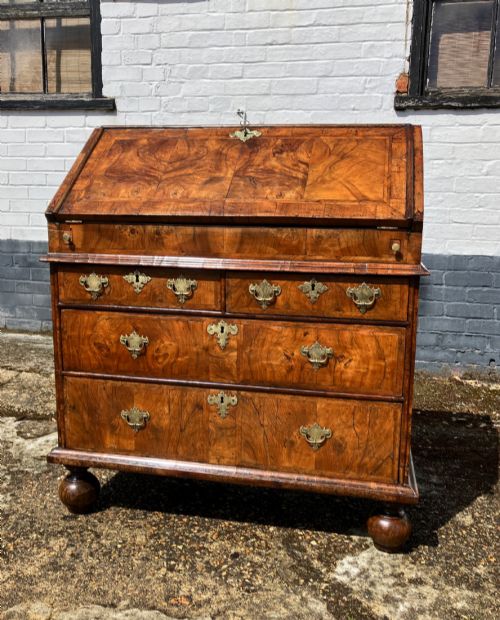
An early 18th century bureau brings walnut timber, fitted writing drawers, and a drop-front desk into a room.
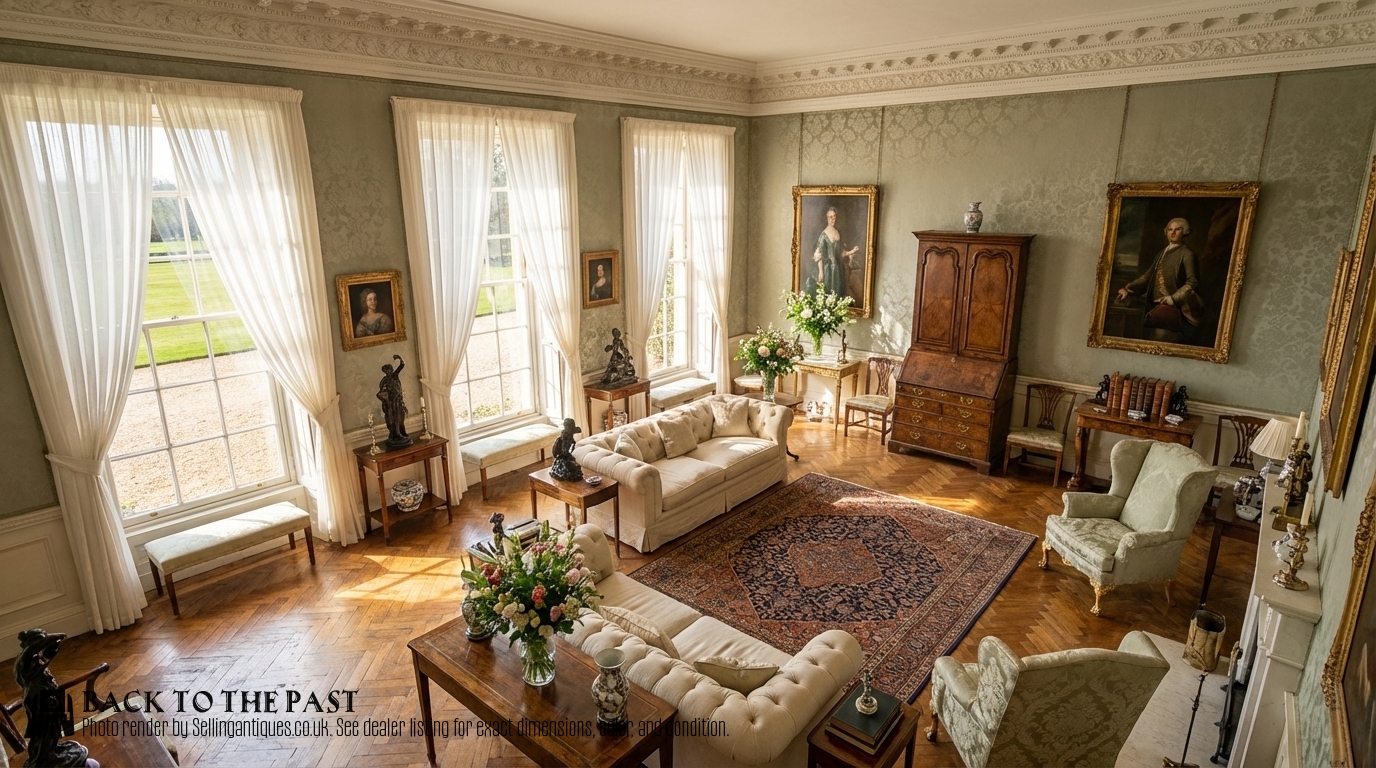
Early 18th Century Bureau
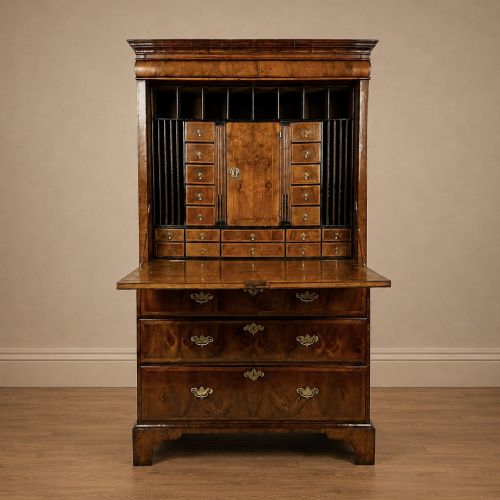
An early 18th century bureau is a domestic writing desk featuring a sloping fall-front that opens to reveal internal pigeon holes, small drawers, and secret compartments. Buyers looking for this phrase meet compact oak pieces alongside more decorative walnut examples fitted with tall bookcases.
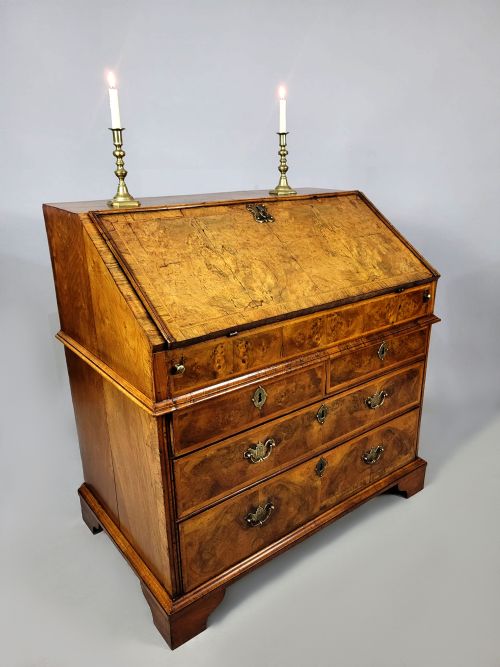
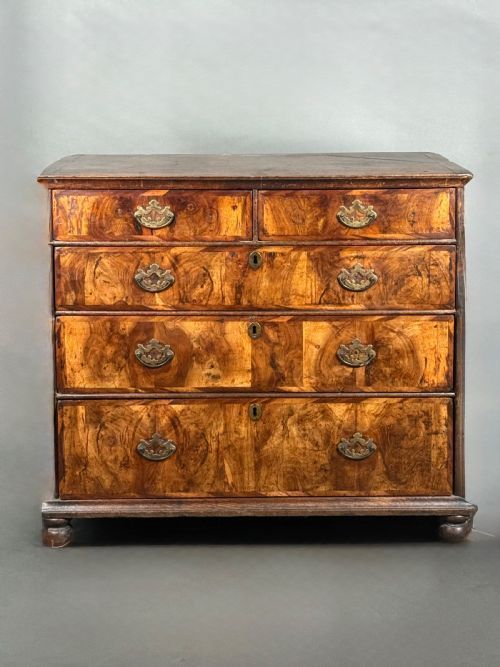
The form developed rapidly around 1700 through the reigns of William and Mary, Queen Anne, and the early Georges. Most items on this page sit on bracket feet or short legs, combining a chest of drawers base with a practical writing surface.
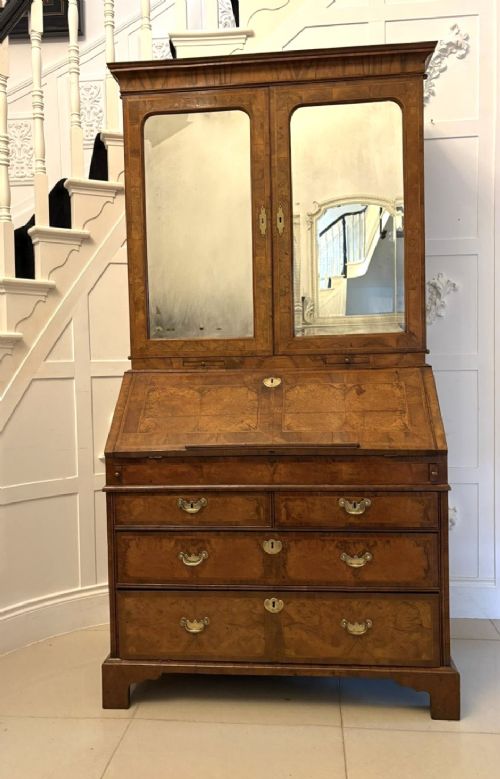
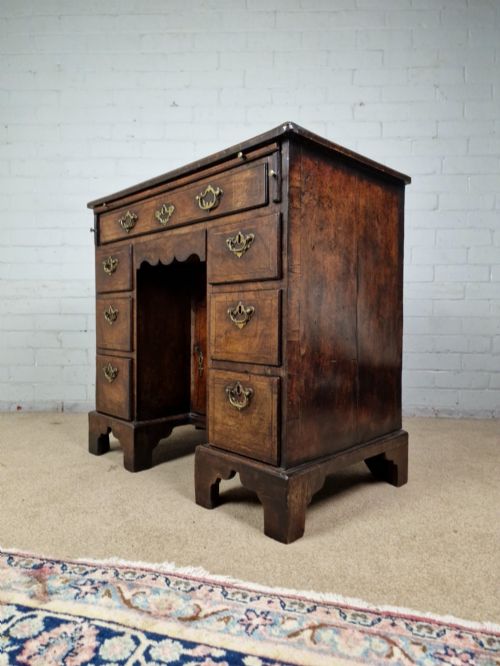
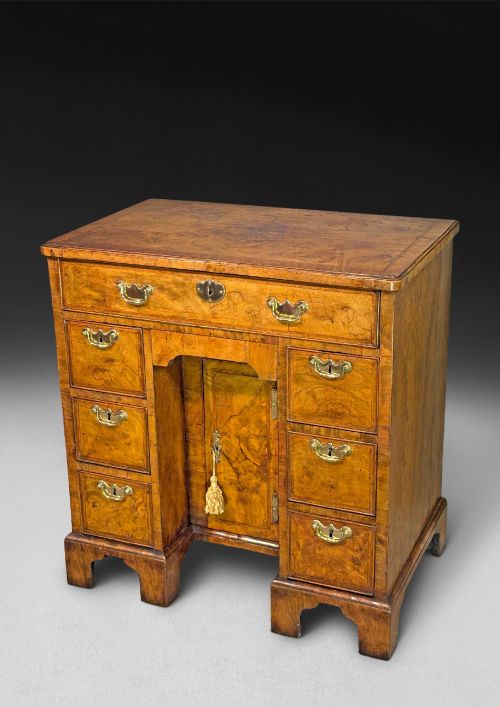
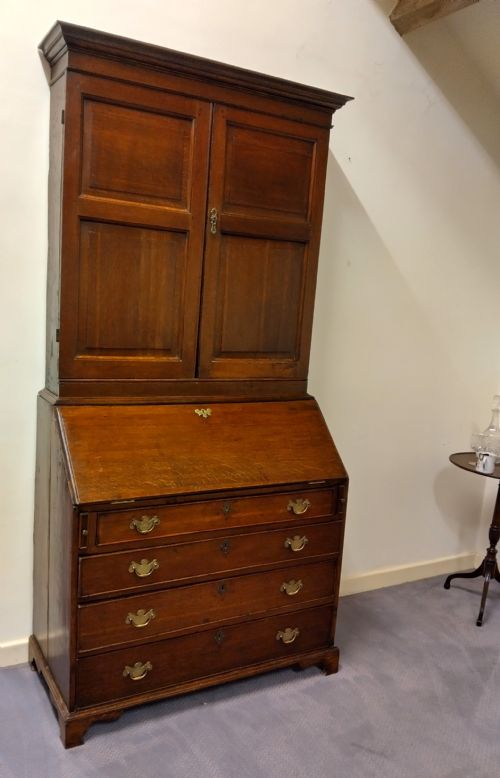
Makers also produced related variants including kneehole desks, escritoires, and bureau bookcases with mirrored or glazed upper sections. Walnut and oak dominate the surviving examples, often enriched with cross-banded borders and burr veneers.

How they were made
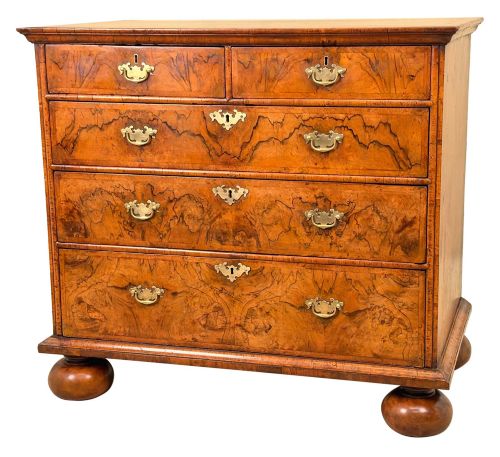
Cabinetmakers constructed these desks using solid timbers like oak and walnut, frequently applying figured walnut or burr elm veneers to the primary surfaces. Cross-banding in contrasting wood and feather-banding details framed the drawer fronts and the fall-front flap.
Internal construction relied on secondary woods for drawer linings, joined with hand-cut dovetails. Ironwork and brass handles, escutcheons, and hinges secured the carcase and operated the doors and desk flaps.
Early 18th Century Bureau Retail Price Guide 2026
Typical asking prices for early 18th century bureau among the pieces listed under this phrase on Sellingantiques today, from the lower quarter to the upper quarter. They describe what is for sale here now, not the wider market.
Some early desks include secret compartments hidden behind slide-out pigeon hole blocks for storing private papers.
What varies in quality
The choice of veneer defines the visual hierarchy, with highly figured burr walnut and book-matched grain patterns commanding greater attention than plain timber. Original brass hardware, handles, and escutcheons preserve the integrity of the piece against later replacements.
Proportion and scale also separate standard items from superior examples, particularly in smaller desks and bureau bookcases with fitted interior compartments. Crisp execution of cross-banding and geometric mouldings indicates skilled workshop production.
The Early 18th Century Bureau Glossary
- Fall-front
- The hinged sloping board on a bureau that drops down to form the writing surface. It conceals the internal pigeon holes and small drawers when closed.
- Escritoire
- A tall writing cabinet or desk, often featuring a fall-front or a central drop flap that opens for correspondence. These pieces combine storage drawers with fitted writing compartments.
- Kneehole desk
- A compact desk featuring a central recess for the user's legs, flanked by pedestals of small drawers. Examples from this period often rest on bracket feet.
- Burr walnut
- Timber taken from walnut tree growths, producing highly figured, swirling grain patterns. Cabinetmakers sliced this wood into thin veneers for decorative drawer fronts and desk surfaces.
- Feather-banding
- A decorative inlay technique using strips of veneer arranged in a herringbone or chevron pattern. It borders drawer fronts and fall-fronts on better walnut furniture.
Early 18th Century Bureau: Frequently Asked Questions
What is an early 18th century bureau?
An early 18th century bureau is a wooden writing desk with a sloping flap that opens to display small drawers and pigeon holes. These pieces usually sit above a chest of three or four graduating drawers.
Craftsmen built them primarily in oak and walnut during the reigns of Queen Anne and George I. They served as private spaces for correspondence and household accounts in wealthy homes.
How do I tell an oak bureau from a walnut one?
Oak bureaus have a distinct open grain and a pale, golden-brown colour that deepens with age. Walnut pieces display a darker, smoother surface often enhanced by figured veneers and decorative cross-banding.
Oak examples tended to be sturdier and more utilitarian, while walnut versions were commissioned for more formal reception rooms and parlours.
Where should I place a bureau in my home?
A bureau fits well in a living room, hallway, or study where the drop-front can be opened for occasional writing or laptop use. Their compact footprint makes them suitable for rooms with limited floor space.
Keep them away from direct sunlight and heat sources to protect the polished wood finishes and delicate walnut veneers from drying out.
What is the difference between a bureau and a bureau bookcase?
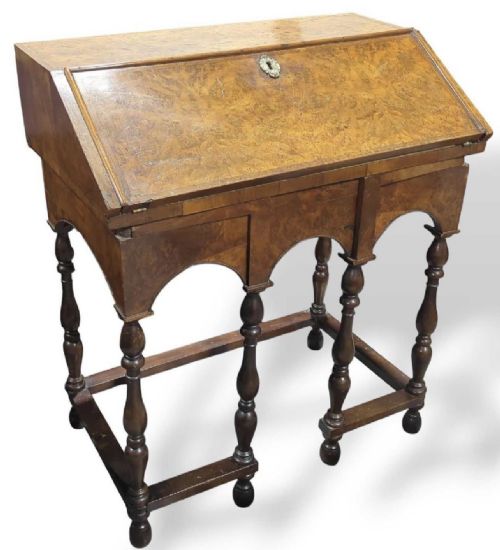
A standard bureau consists of a desk base with a sloping front and drawers, standing alone on feet or a low stand. A bureau bookcase adds a tall upper section enclosed by mirrored or glazed doors.
The upper cabinet provides shelved storage for books and porcelain display, making the combined piece significantly taller and more imposing.