

Burr Walnut Secretary Desk
These burr walnut secretary desk pieces combine intricate timber grain with practical writing compartments, offering timeless storage and workspace for traditional interiors.
Burr Walnut Secretary Desk
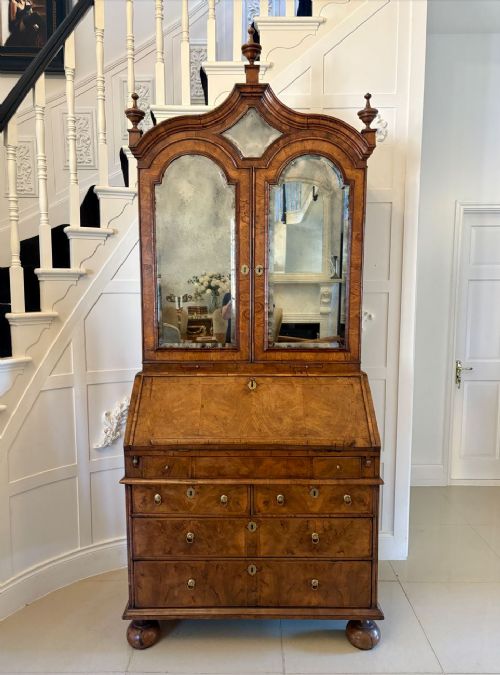
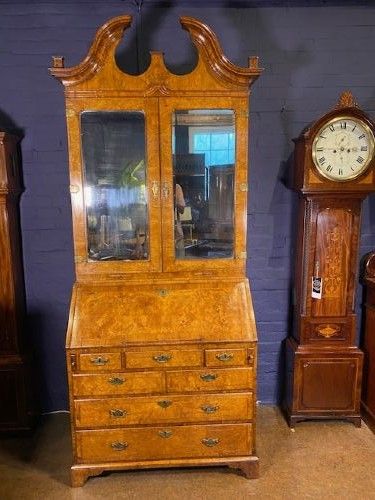
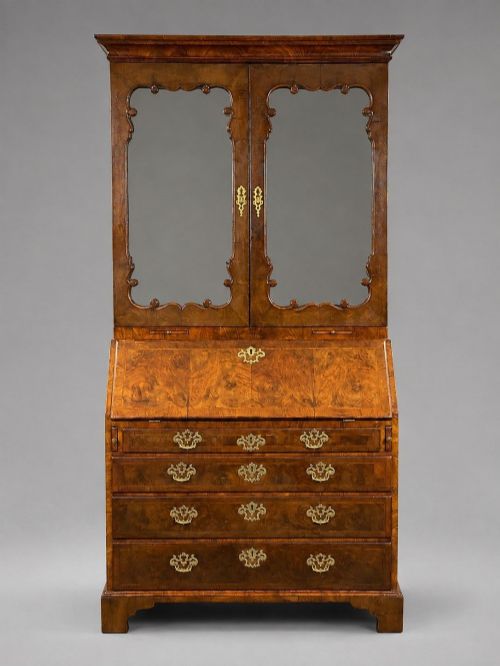
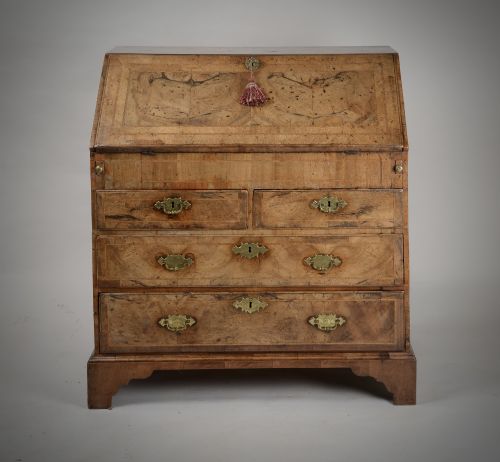
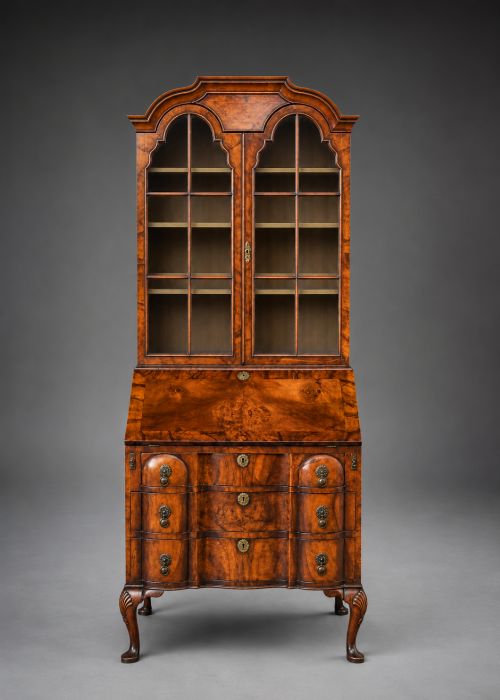
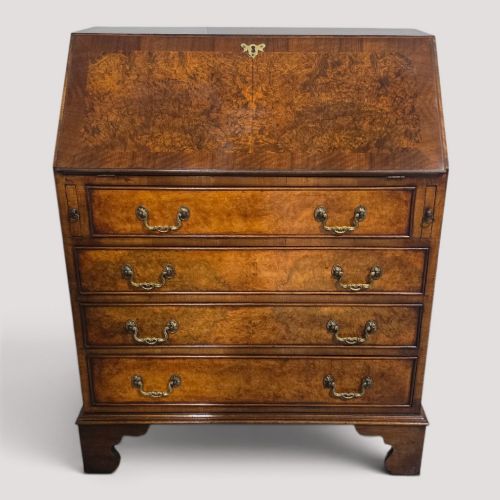
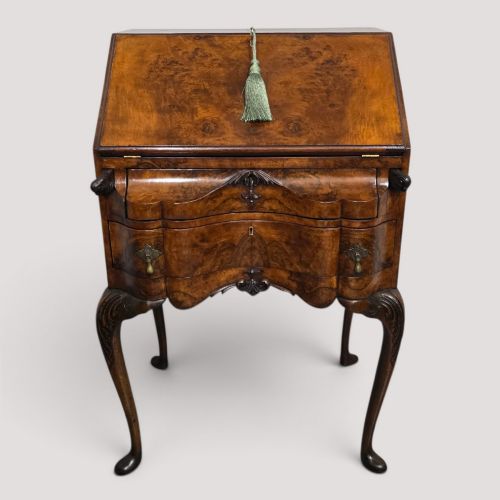
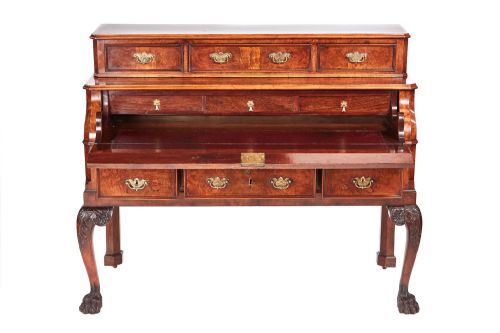
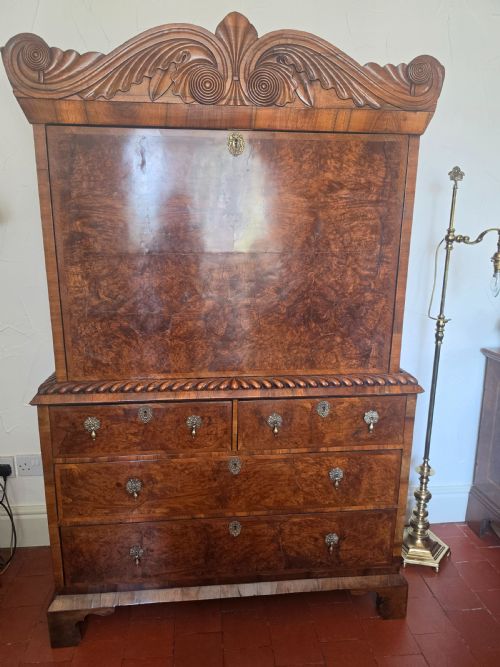
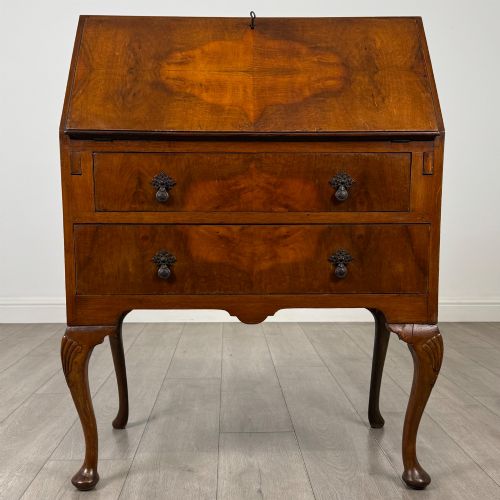
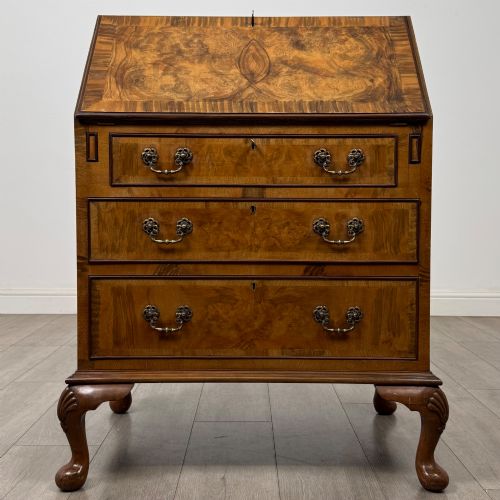
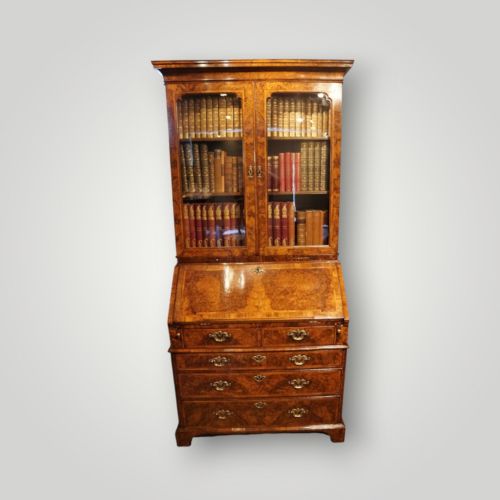
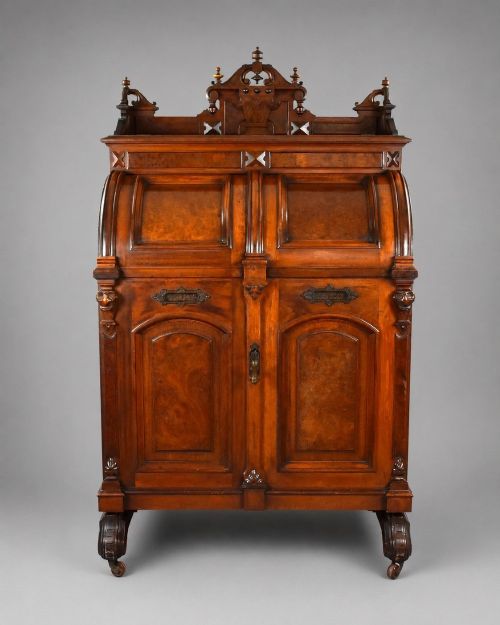
A burr walnut secretary desk brings together rich timber surfaces and functional writing compartments, appearing across several distinct periods in these listings. Buyers encounter forms ranging from tall bureau bookcases with glazed or domed top sections to compact fall-front writing desks and bureau on stand variants.
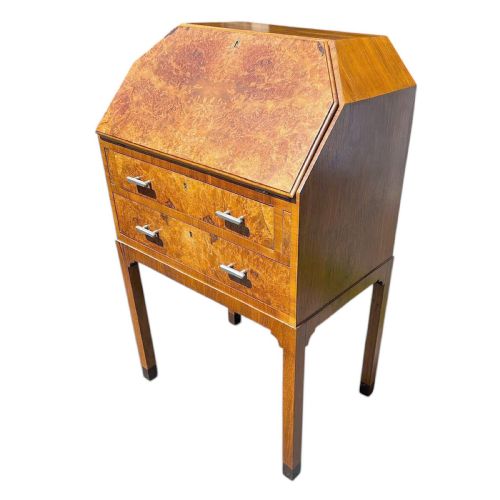
The material identity shifts between dense burr walnut, figured walnut, and linear walnut veneers, often enhanced by decorative marquetry or featherbanding. Origin styles span early English and continental pieces from the seventeenth and eighteenth centuries through to revival interpretations produced during the Edwardian era and the 1920s.
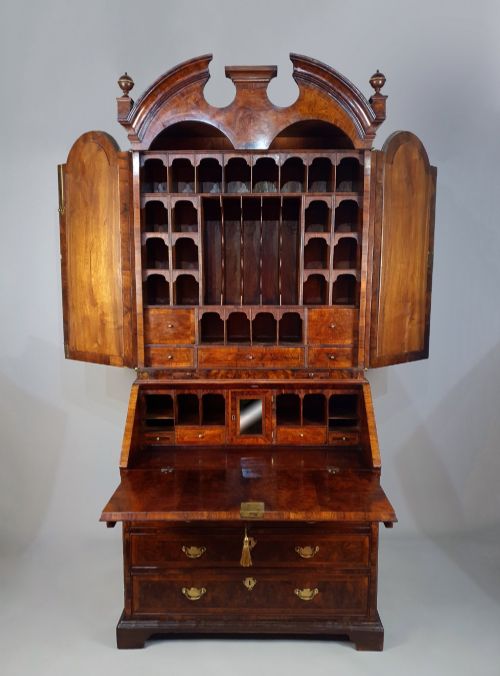
Most examples balance a slant front or drop-down writing surface above banks of drawers or compartmentalised interiors. These writing pieces accommodate both upright cabinet formats and lower desk configurations depending on the specific period of manufacture.

Materials and construction methods
Cabinet makers constructed these pieces using solid oak or secondary softwoods as a carcase foundation, upon which highly figured burr walnut veneers were applied. Timber selection focused on knot growths and root sections to produce swirling grain patterns across the main exterior surfaces.
Secondary decorative elements relied on brass for handles, escutcheons, and hinges, while glass panels featured in the upper bookcase doors of larger cabinet formats. Leather inserts occasionally lined the interior writing surfaces, and marquetry inlay introduced contrasting botanical motifs.
Burr Walnut Secretary Desk Retail Price Guide 2026
Typical asking prices for burr walnut secretary desk among the pieces listed under this phrase on Sellingantiques today, from the lower quarter to the upper quarter. They describe what is for sale here now, not the wider market.
Evaluating craftsmanship and condition
Quality separates pieces through the tightness of the veneer matching and the symmetry of the burr grain across the fall front and drawer fronts. Superior examples maintain intact featherbanding and precise marquetry without significant lifting or replacement of the delicate walnut veneers.
Internal complexity dictates the standing of a piece, where fitted drawers, pigeonholes, and secret compartments demonstrate higher cabinet-making ambition. Structural integrity in the fall-front hinges and the original patination of the timber surface further divide standard production from exceptional works.
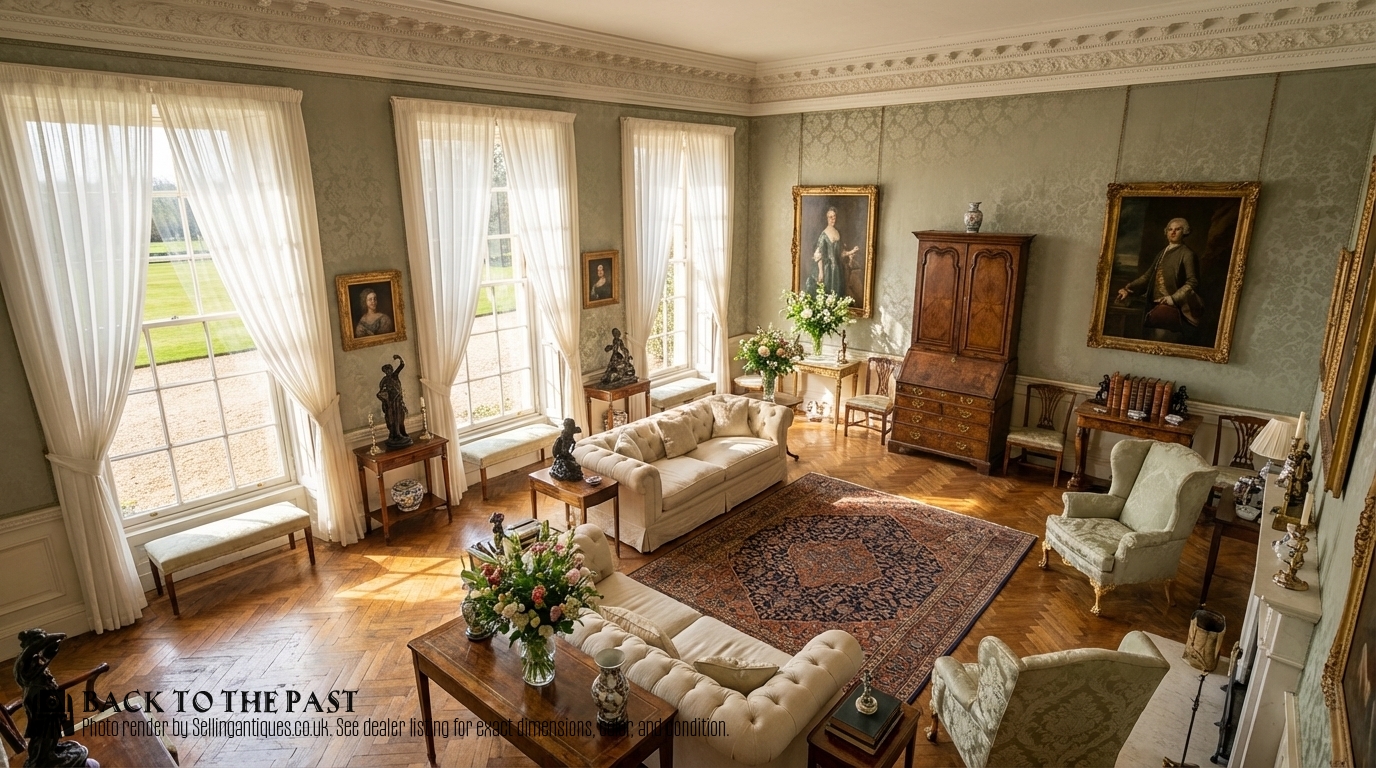
The Burr Walnut Secretary Desk Glossary
- Burr walnut
- Timber sliced from the gnarled growth of a walnut tree, producing highly decorative swirling grain patterns. This veneer serves as the primary decorative surface on high-status cabinets and desks.
- Bureau bookcase
- A dual-purpose piece combining a sloping writing desk base with an upper shelving cabinet enclosed by doors. Upper sections frequently incorporate glass panes or double dome structures.
- Fall front
- A hinged writing flap that pulls down to form a horizontal surface for correspondence. It conceals internal drawers and pigeonholes when closed.
- Featherbanding
- A type of narrow banding inlay created by cutting veneers at an angle to form a herringbone pattern. It frames the drawer fronts and primary panels of walnut furniture.
- Marquetry
- The art of applying pieces of veneer to a structure to form decorative patterns and pictures. Floral and geometric designs appear on continental and early English pieces.
Burr Walnut Secretary Desk: Frequently Asked Questions
How do I date an antique walnut desk?
Dating relies on examining the construction methods, secondary timbers like oak, handle hardware, and the specific style of the feet and interior drawers.
Early eighteenth-century pieces display different internal configurations and dovetailing compared to Edwardian or 1920s revival items.
Where were these secretary desks made?
The listings show origins spanning English workshops as well as continental centres, notably Dutch and South German cabinet makers.
Regional differences appear in the complexity of the marquetry inlay and the contouring of the upper cabinet cornices.
How should I care for burr walnut?
Burr walnut requires stable indoor humidity away from direct sunlight and heat sources to prevent the thin decorative veneers from drying out or lifting.
Regular dusting with a dry cloth and occasional application of appropriate furniture wax helps preserve the polished timber surface.