

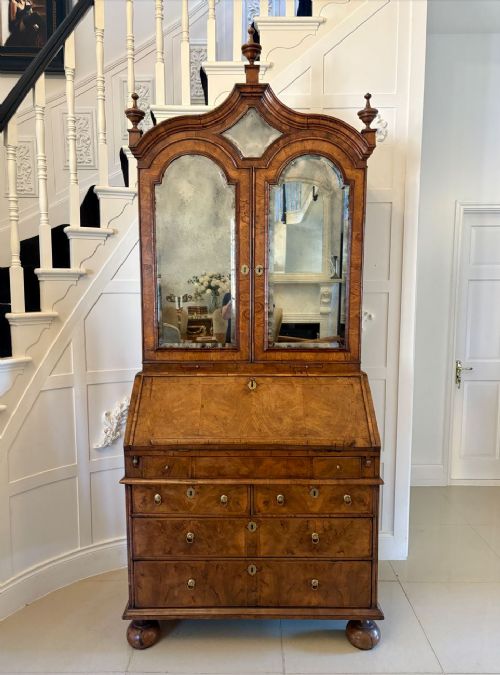
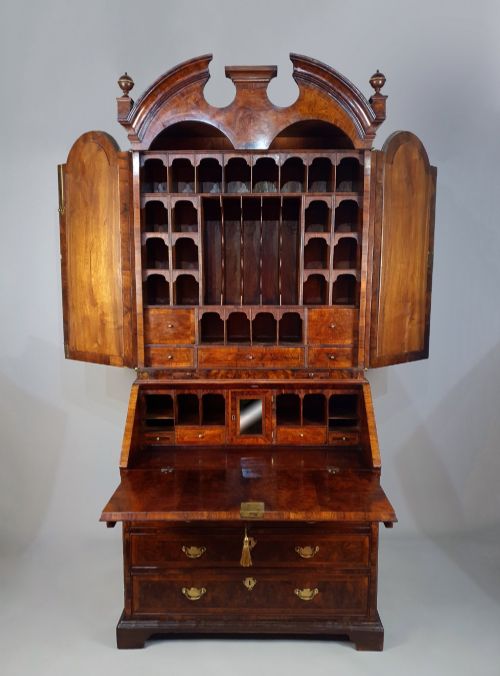
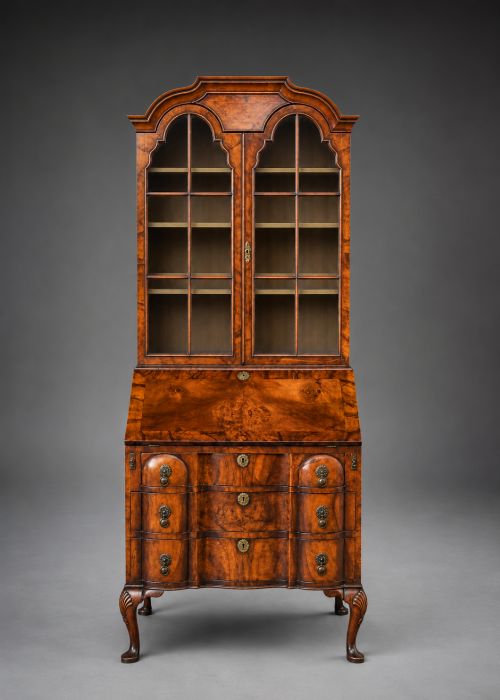


Double Dome Bookcase
A double dome bookcase is a substantial architectural cabinet topped with twin rounded hoods, prized for its impressive presence and generous storage.
What They Are
A double dome bookcase combines a tall display cabinet and a writing bureau into one monumental piece of furniture. These architectural works frequently appear in bureau bookcase forms featuring panelled doors and sloping writing flaps.
The evidence shows examples spanning the seventeenth and eighteenth centuries, including George I, William and Mary, and Queen Anne styles. Makers of this era favoured walnut, burr walnut, and oak to construct these imposing double dome bookcase forms.
How They Were Made
Cabinet makers utilised wood marquetry, ebonised wood, and pine alongside primary timbers like walnut and oak. Selected veneers were meticulously matched to create dramatic patterns across the large surfaces of the double dome top.
Fine brass hardware, including hinges and drawer pulls, accompanied glass panels fitted within the upper cabinet doors. Secondary woods like pine were often employed for internal drawer linings and hidden structural elements.
Retail Price Guide 2026
Typical UK retail prices for double dome bookcase, calculated from the Sellingantiques database of over a million retail prices indexed since 2003. This retail price guide relies exclusively on Sellingantiques data; no external sources or auction records are used, so the figures do not describe the wider market.
The archive reveals variations spanning Italian Rococo and English Georgian styles, alongside bureau bookcase forms.
What Varies in Quality
The sophistication of the burr walnut veneer selection distinguishes finer examples from simpler constructions. Figured grain patterns aligned across multiple drawers and doors demonstrate superior cabinet work.
The proportion and execution of the curved double dome hoods dictate the visual balance of the piece. Crisp architectural mouldings and original brass fixtures elevate the standing of early examples.
The Double Dome Bookcase Glossary
- Double dome
- A top section featuring two rounded arched hoods side by side. This distinctive shape requires advanced carpentry to curve the timber smoothly.
- Bureau bookcase
- A combination furniture form comprising a sloping desk compartment beneath glazed or panelled upper shelves. The bureau section typically drops down to reveal fitted compartments and small drawers.
- Burr walnut
- Timber taken from walnut tree growths that produces intricate, swirling grain patterns. Cabinet makers prized this wood for decorative veneering on high-status furniture.
- Marquetry
- Inlaid patterns formed by fitting contrasting pieces of wood veneer into a background. This decorative technique adorned surface panels on seventeenth and eighteenth century pieces.
Frequently Asked Questions
How do I identify a George I piece?
George I pieces date from the early eighteenth century and often display clean walnut veneers, cross-banding, and restrained brass hardware. The proportions remain architectural and solid.
Comparison with William and Mary examples reveals how leg joinery and internal fittings evolved while retaining the characteristic double dome profile.
Where were these bookcases used?
These large cabinets stood in the principal rooms and libraries of substantial houses to store valuable books and private papers. The upper glazed doors kept volumes free from dust while displaying fine bindings.
The lower bureau section provided a secure, concealed place for correspondence and writing materials.
What materials are used in these bookcases?
Primary construction relies on timbers such as walnut, burr walnut, oak, and pine. Decorative surfaces frequently feature intricate wood marquetry and matched veneers.
Additional materials include brass for hinges and drawer fittings, alongside clear glass panels set into the upper doors.