51,696  PAGES BROWSED TODAY PAGES TODAY 285 ANTIQUES UPLOADED TODAYNEW ARRIVALS
285 ITEMS ADDED TODAY
Sort Order
Items Per Page
Browse Categories
Sort order
Relevant Links
Items per page
ID #SA1232818
FOR SALE
£9,500
Email Buy
Save
Queen Anne Burr Walnut Bureau Bookcase C. 1710
Webberley Antiques
for sale €11,115     $12,065
£9,500
Webberley Antiques

Webberley Antiques

Sellingantiques Verified Since Nov 2008
View Dealers Stock Page
  • About Us
    Specialists in 18th century and earlier furniture for more than 45 years
Id #SA1232818
PDF SHARE
SAVE

Queen Anne Burr Walnut Bureau Bookcase C. 1710

18th century
Description

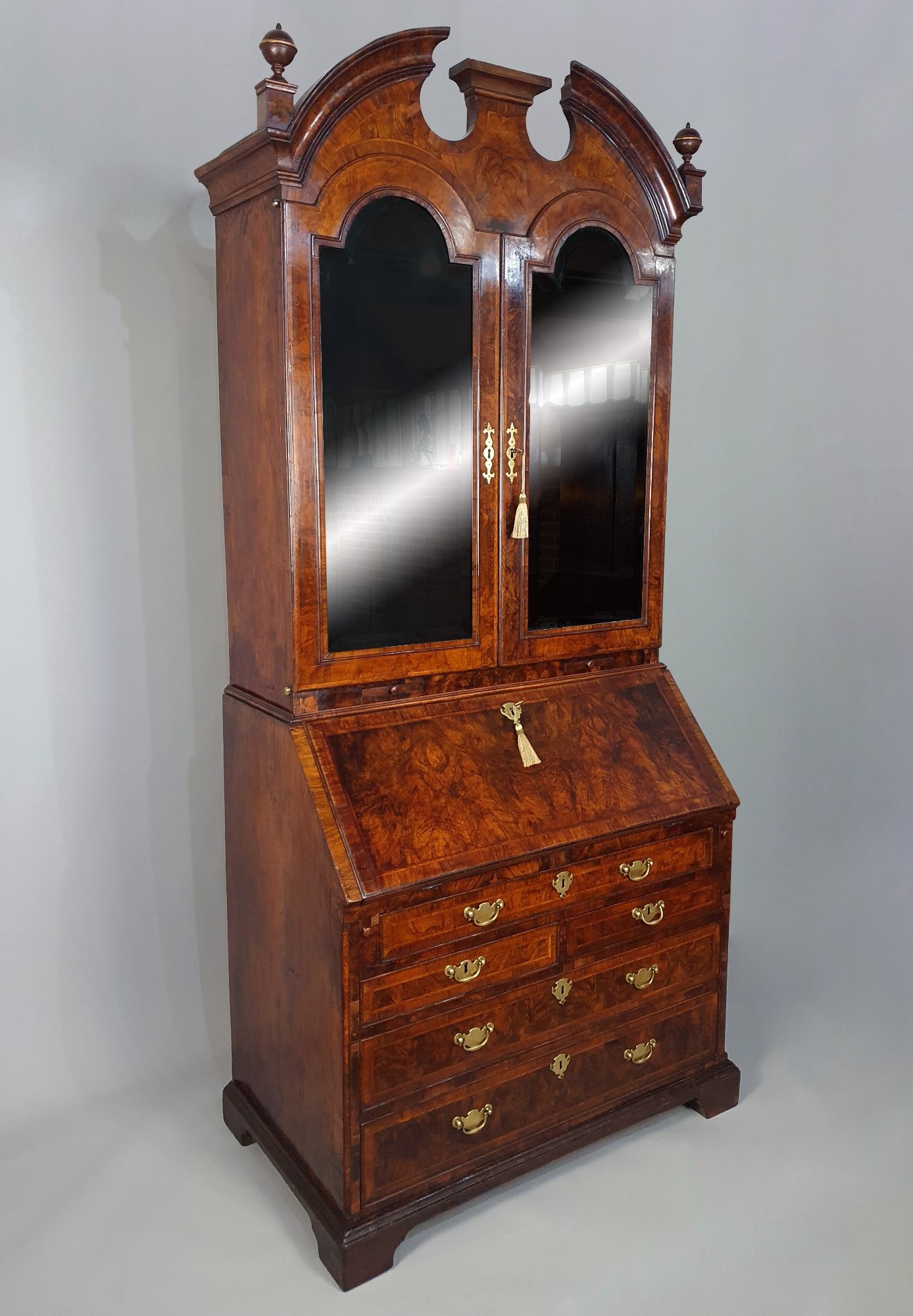
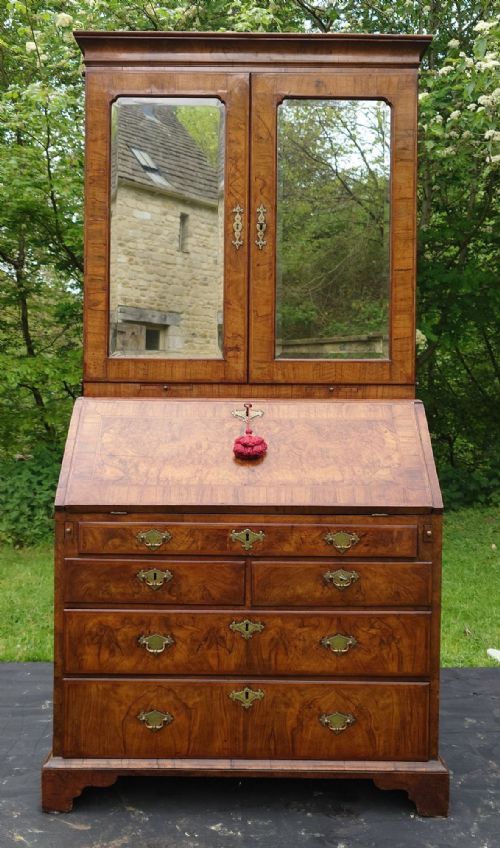
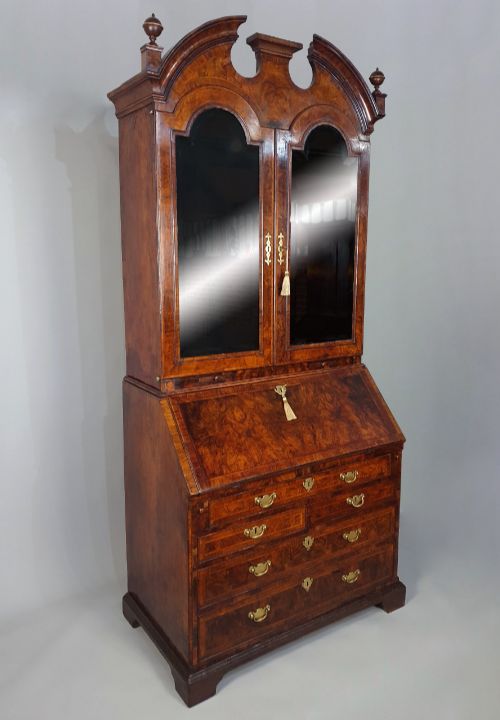
Of a spectacularly rich colour and outstanding original condition, this beautiful bureau bookcase is of the finest quality and dates from c. 1710

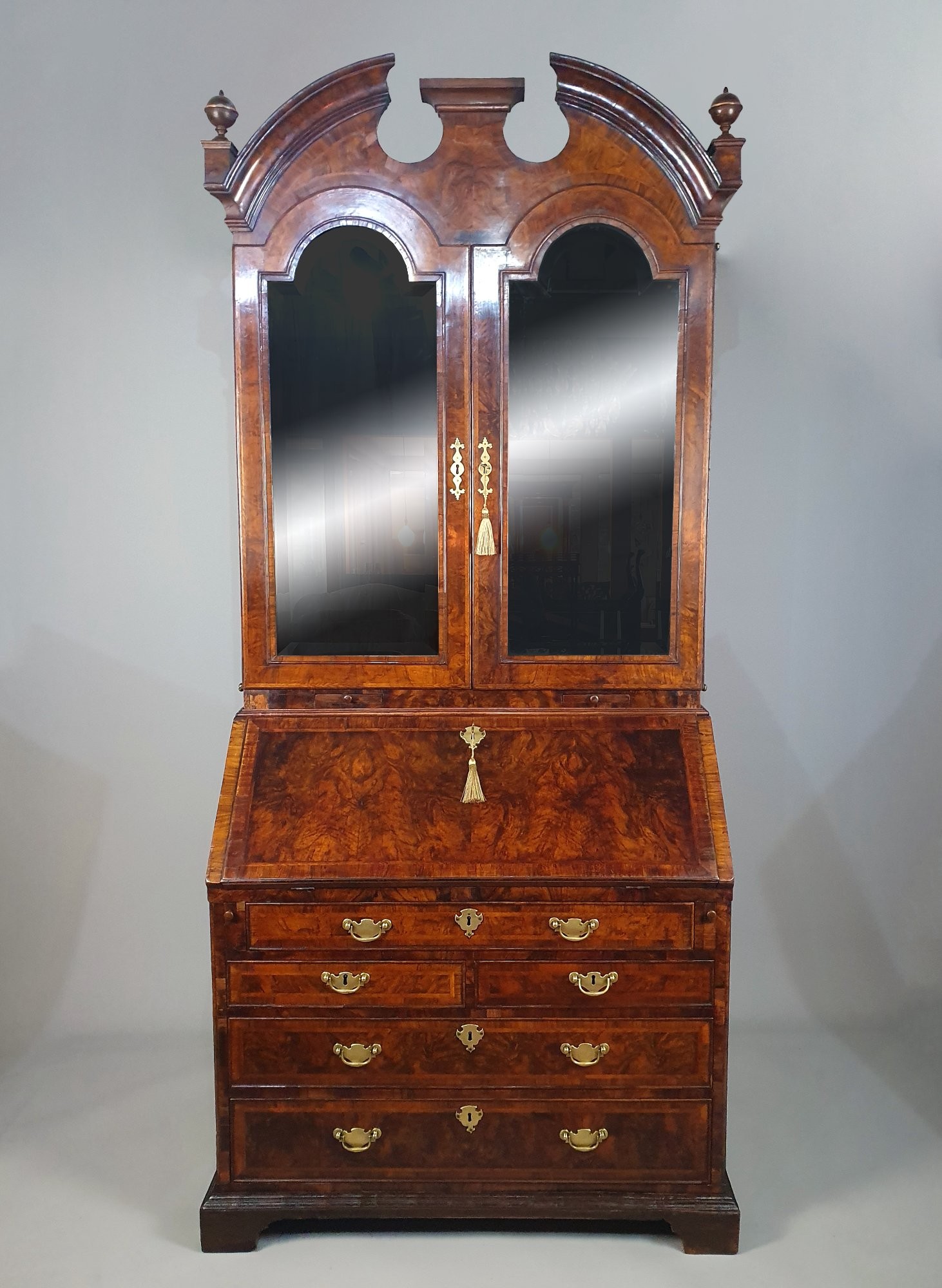
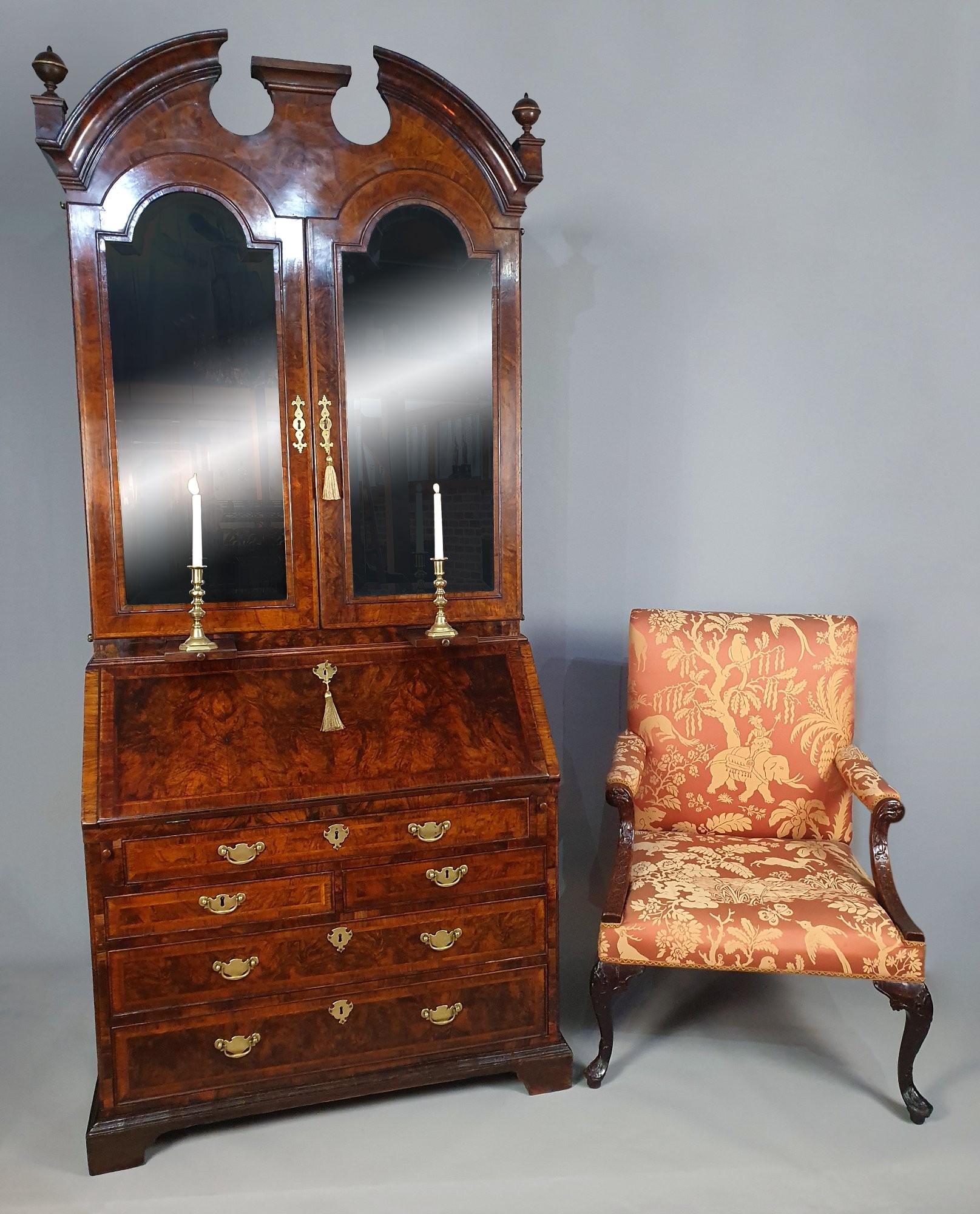
With broken arch pediment with walnut cavetto moulding above two mirrored doors each with the original deeply bevelled and shaped plates, and two candle slides below so that the candle light would reflect in the mirrors.
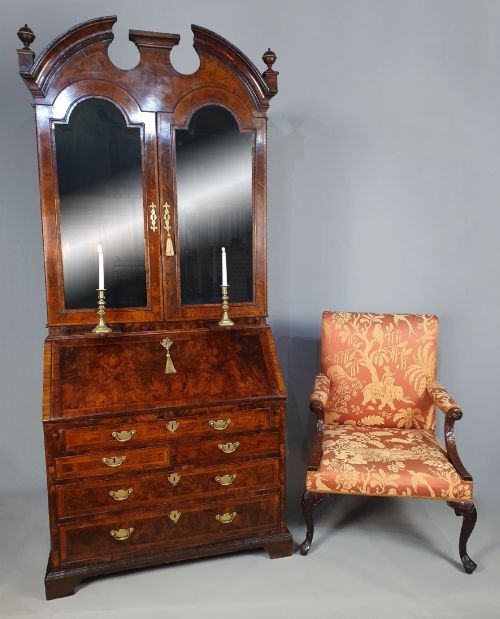
The well shaped doors with featherbanded inlays and crossbanded borders, the fall drawers and pediment with matching featherbanded inlays and crossbanded borders in figured walnut centred with burr walnut panels.
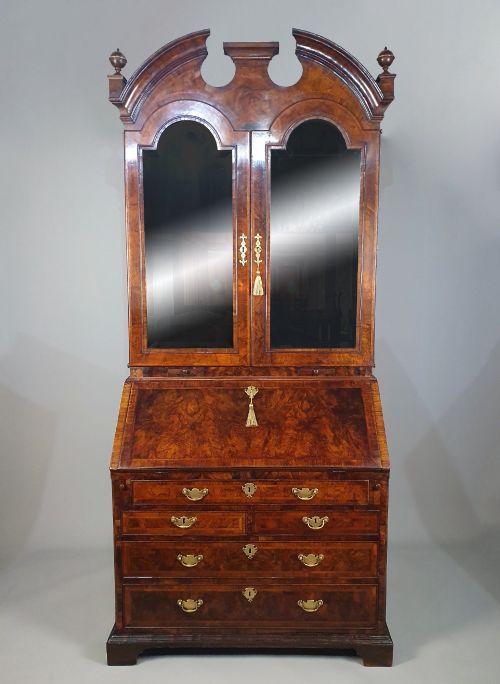
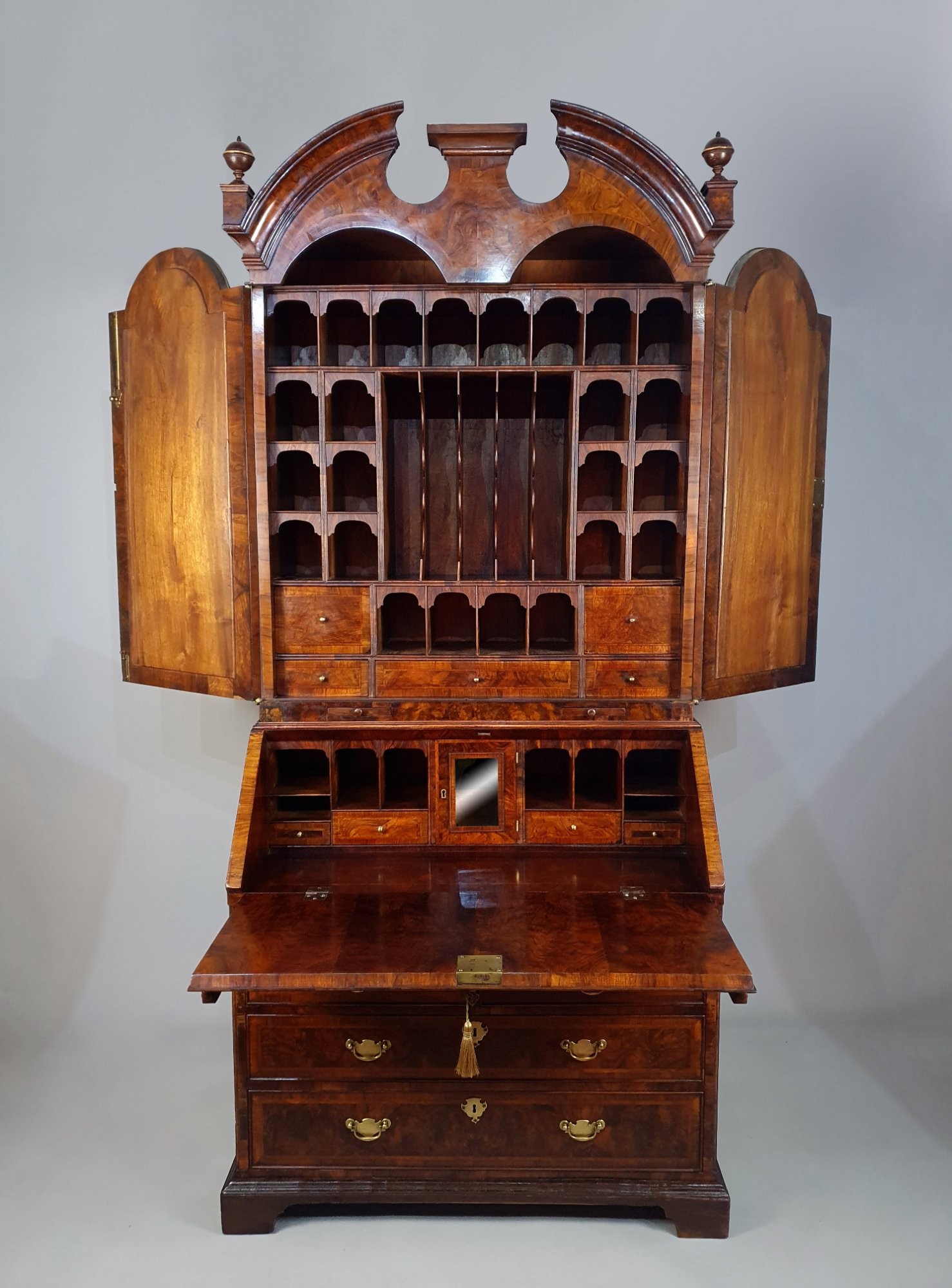
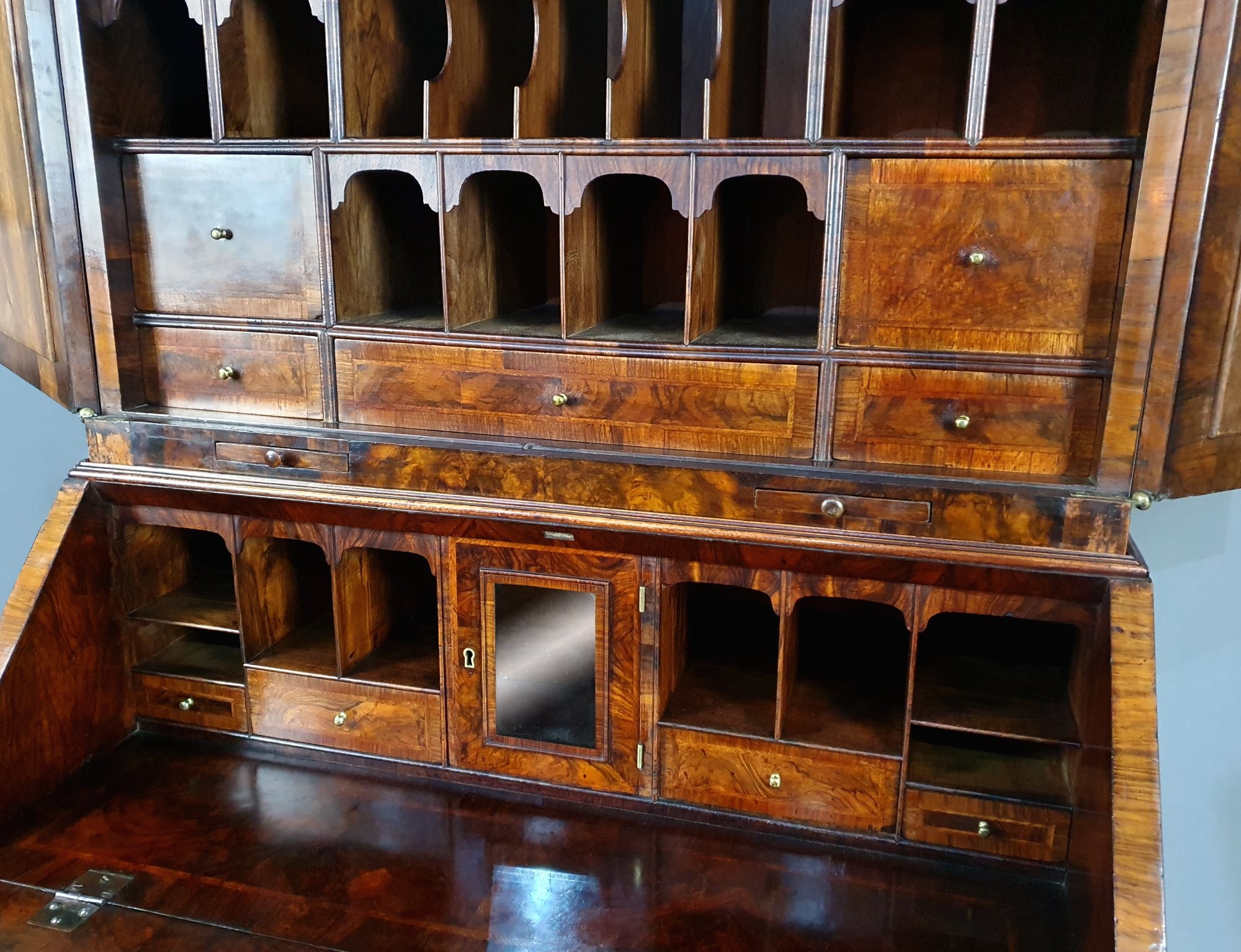
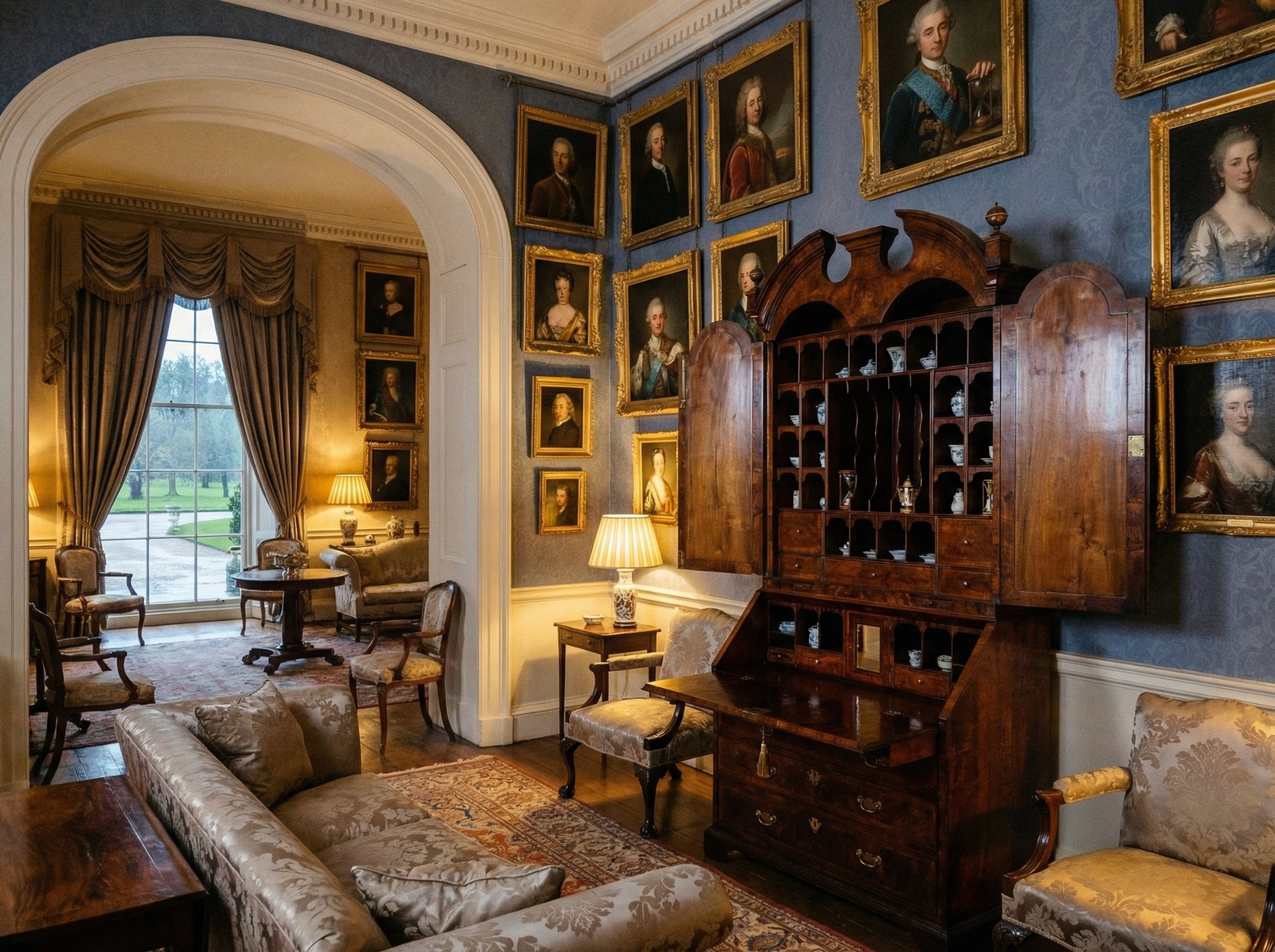
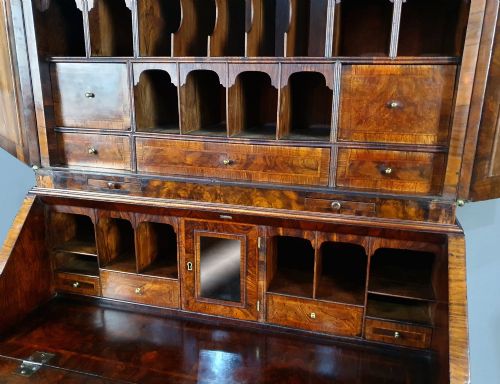
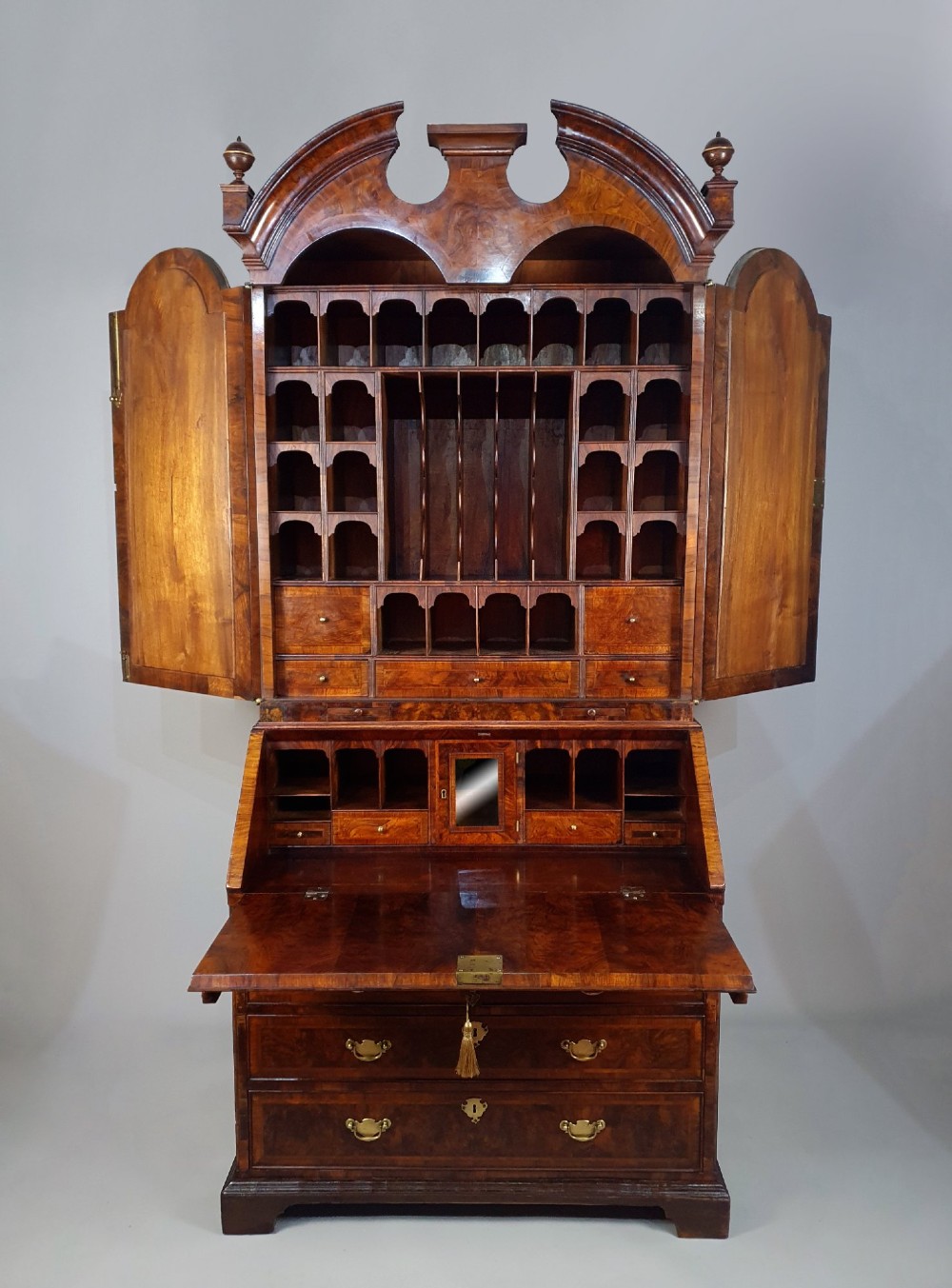
The upper case doors with crossbanding and moulded bead frames to the plates, open with original hinges and locking mechanism to reveal a fully fitted interior of small featherbanded drawers with original handles and tall canopied pigeon holes.

In superb condition for age and clearly very well cared for and with only a couple of very minor veneer repairs and restorations. With one mirror plate slightly more foxed than the other but both mirror plates original and reflecting very well and the foxing not noticeable in daylight or in normal indoor lighting.
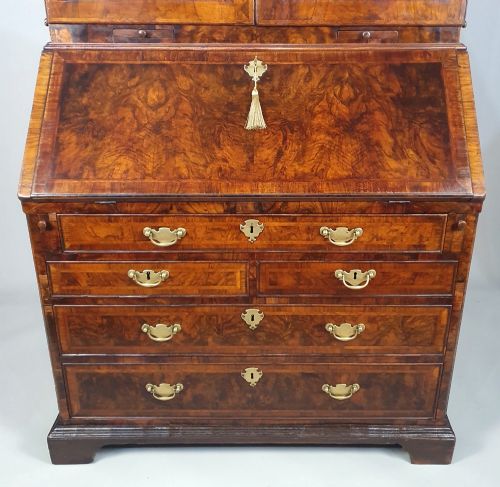
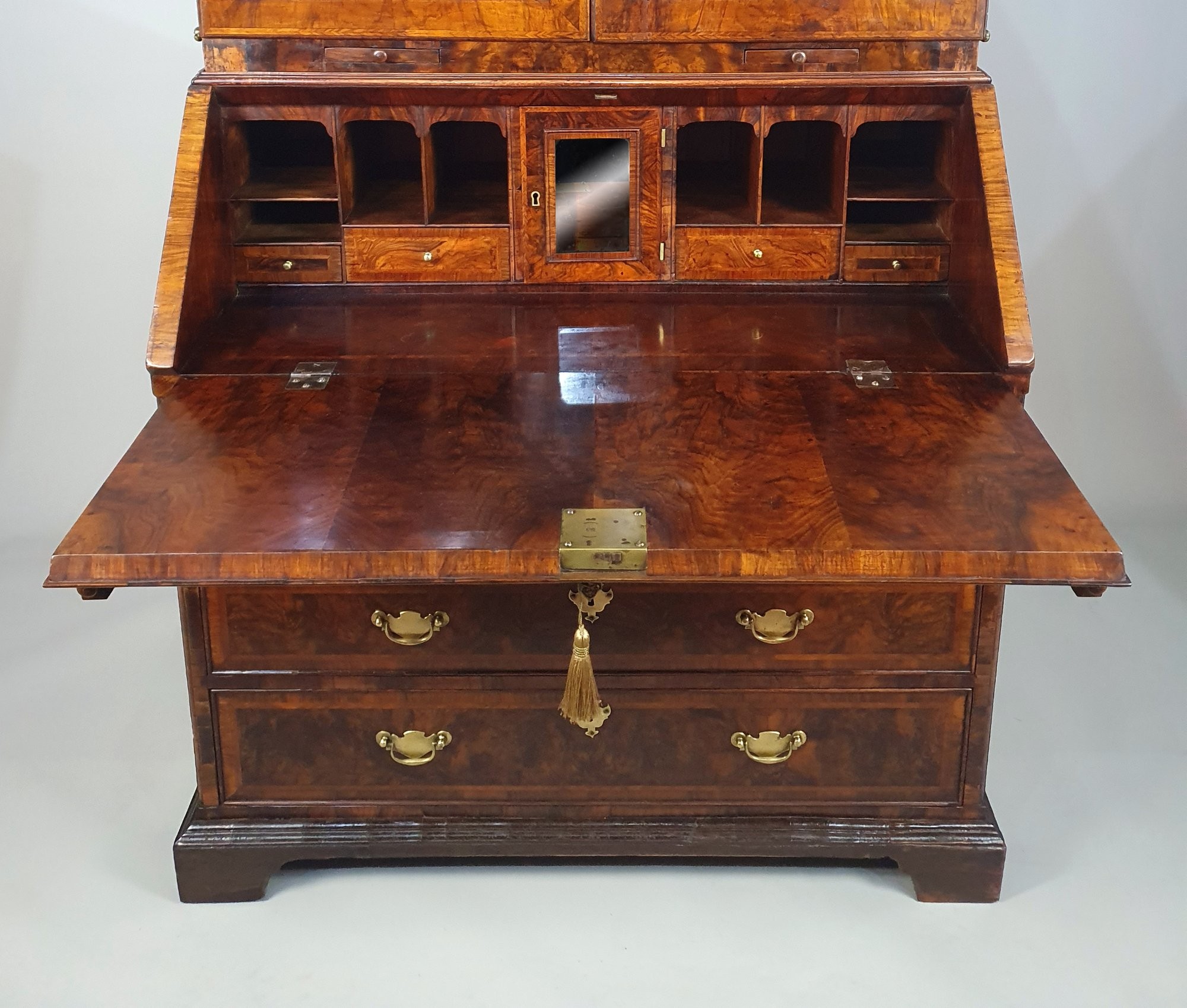
The fall lowers on original hinges to sit firm and level on the lopers and encloses a very finely made interior with central architectural mirror panel door and small well shaped drawers and pigeon holes, the drawers all with featherbanding. The fall retains its original lock and an original key which operates the locks to the fall and all but one of the principal drawers (all locks original).
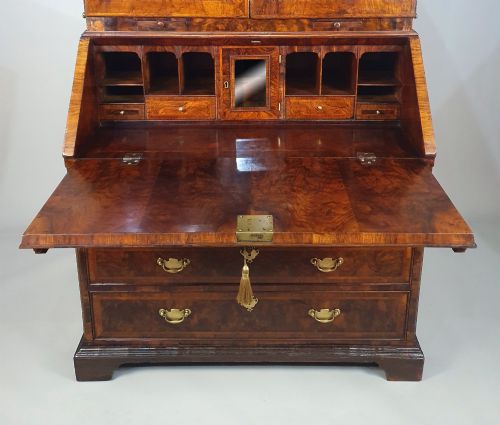
All of the inner and principal drawers are oak lined with slender oak wainscot boards and very fine dovetailed joints.

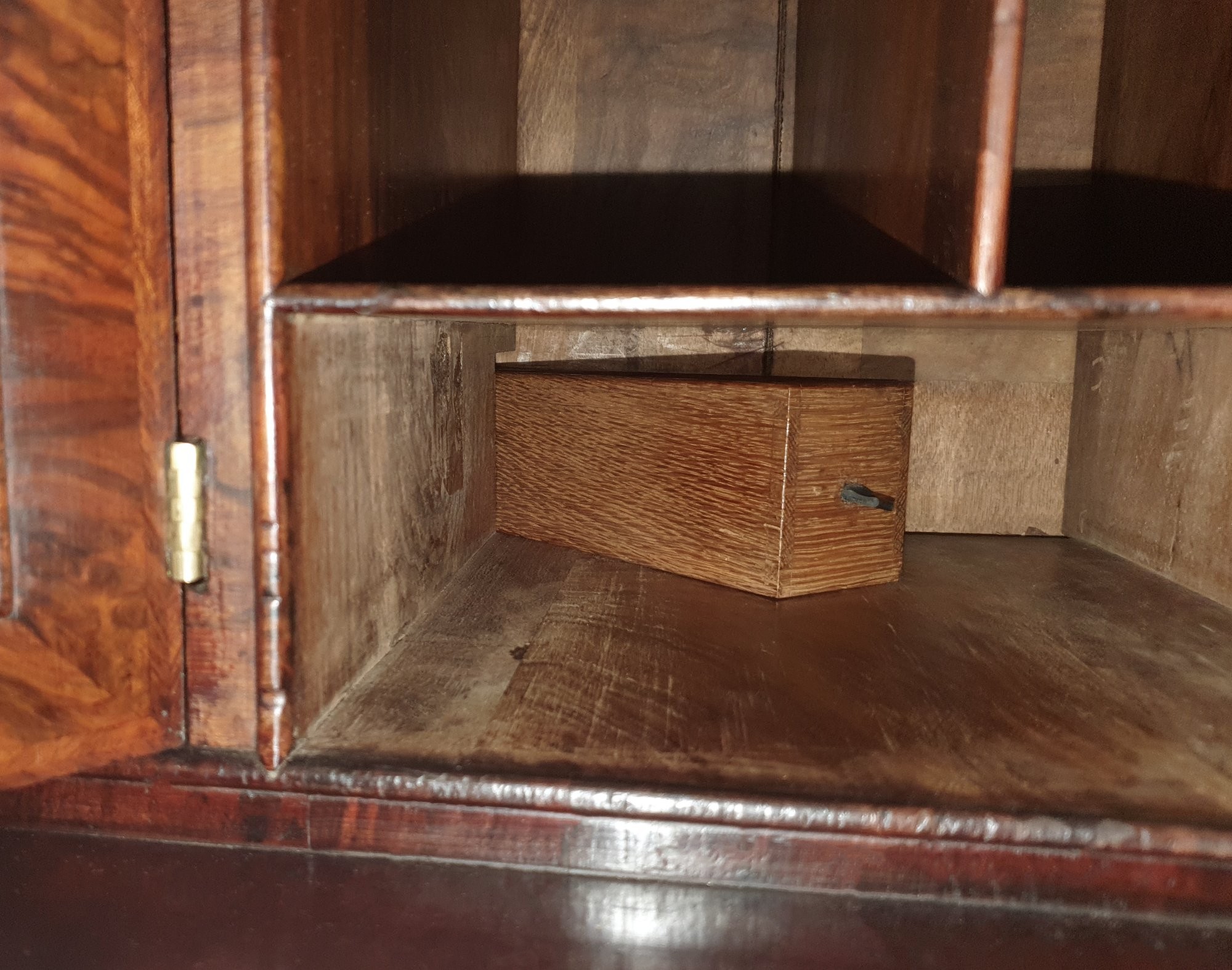
The small door opens on original pierced and shaped brass strap hinges to reveal an inner drawer and shelf. Remove the low long drawer to the right of this door to access a secret compartment and secret drawer – original also – with a leather thong handle.
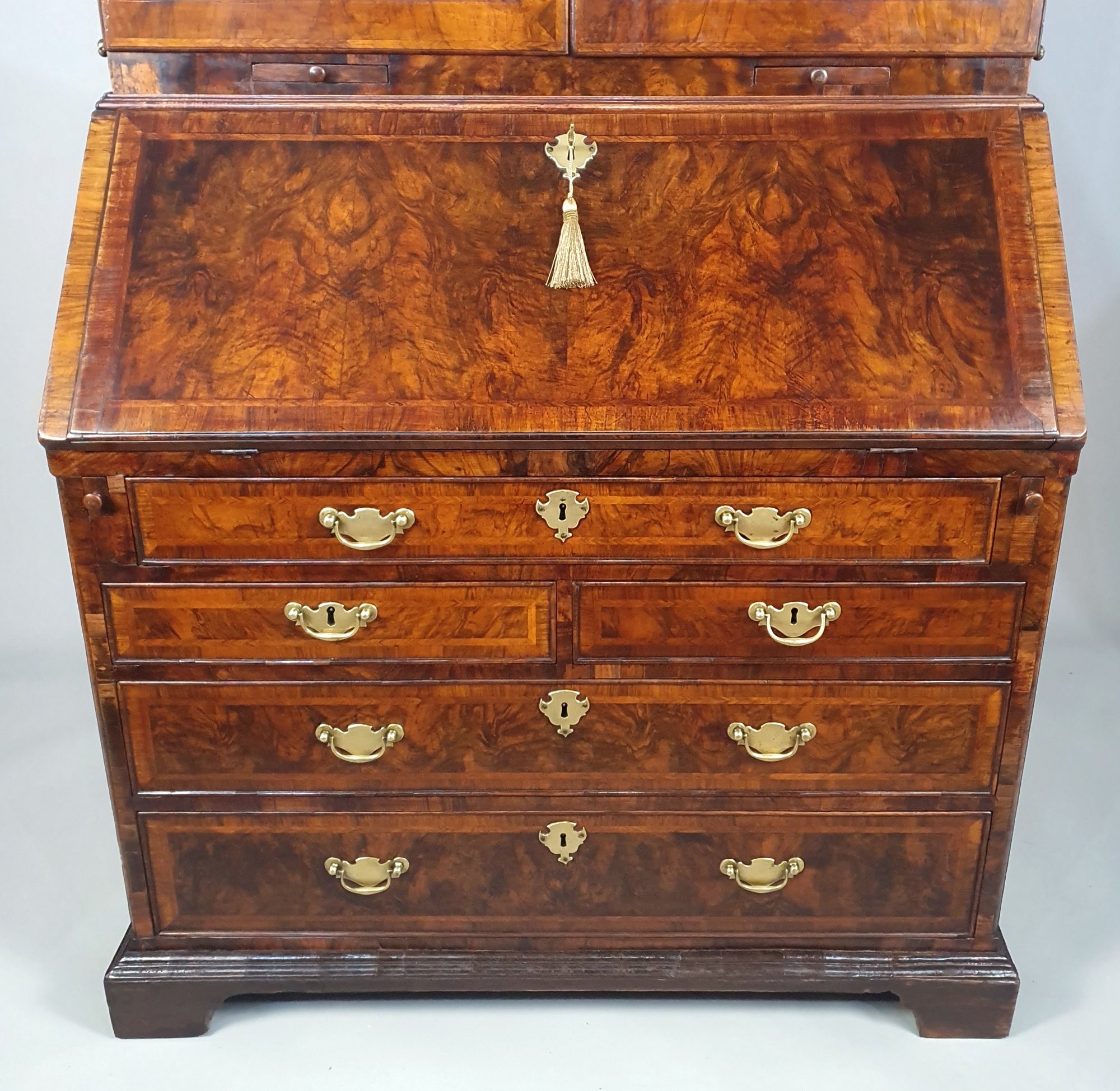
Retaining all of its original brass handles and escutcheons and with original locks and working keys for both the lower bureau and upper bookcase.

The whole dressed in the most beautifully matched burr and figured walnut veneers and set on original bracket feet and plinth.
The use of bracket feet in this late Queen Anne Period indicates that it was made in London where the fashions changed in line with aristocratic and Royal tastes and were immediately reflected in the form and designs of their cabinet makers.
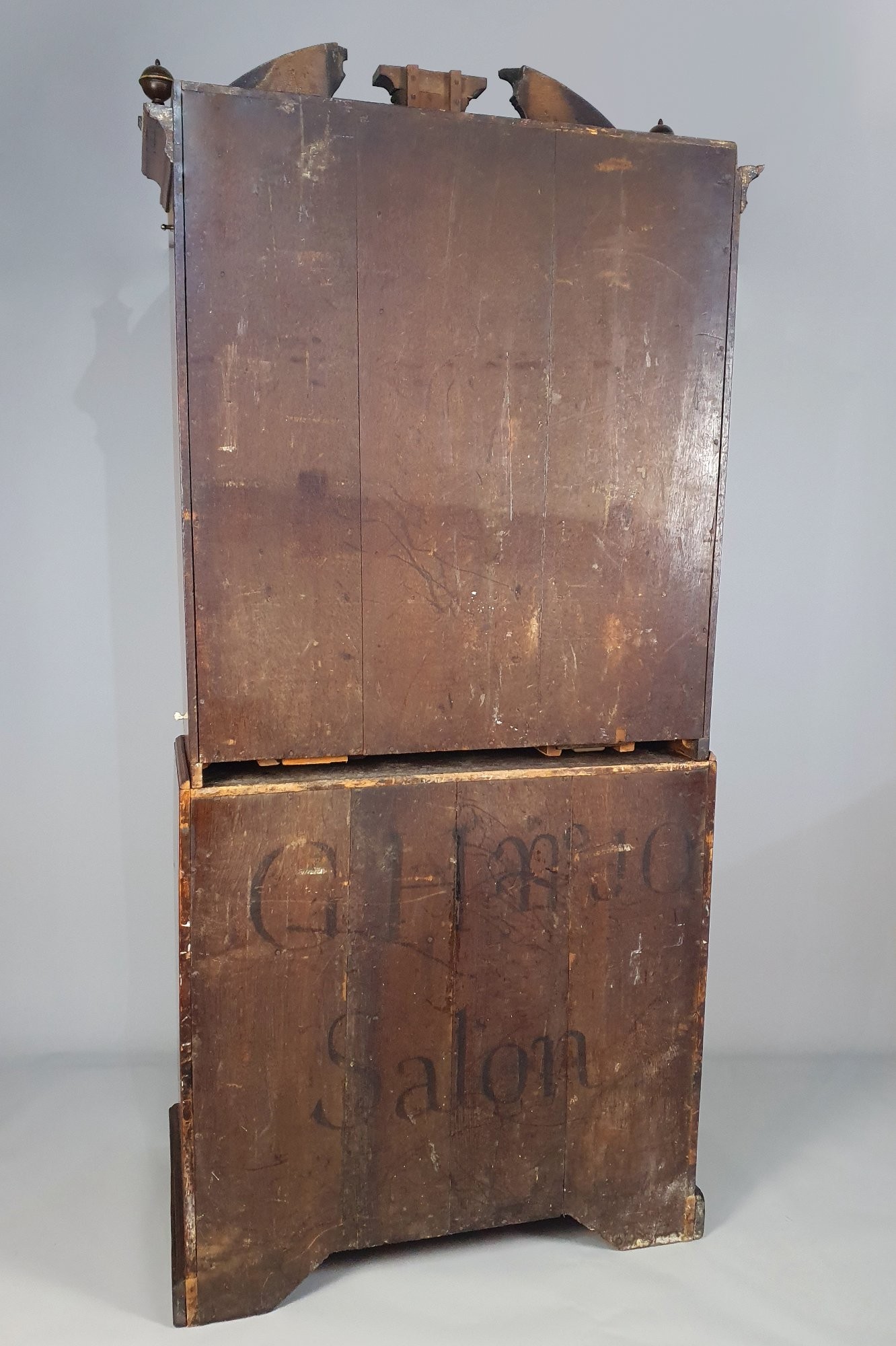
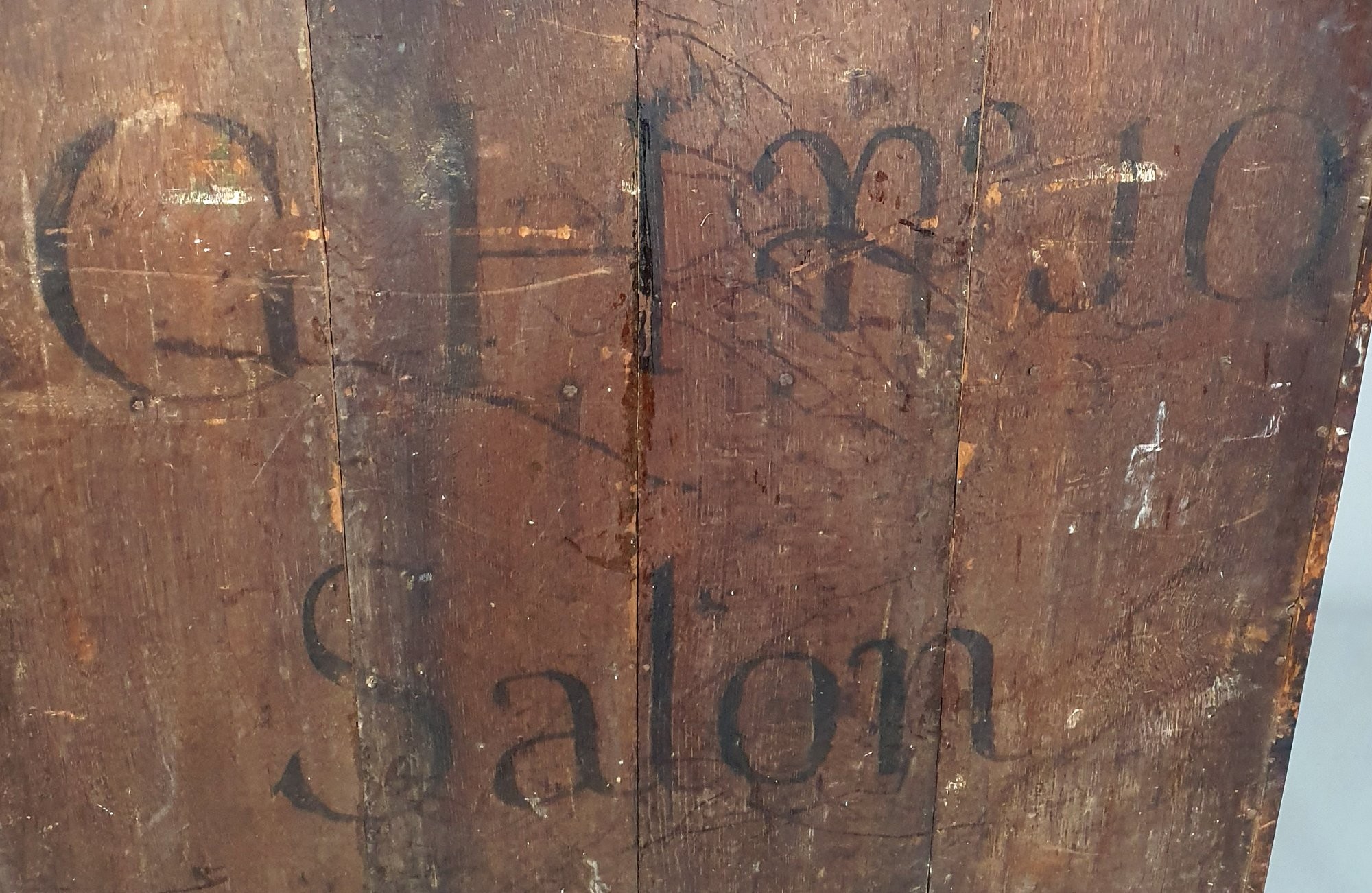
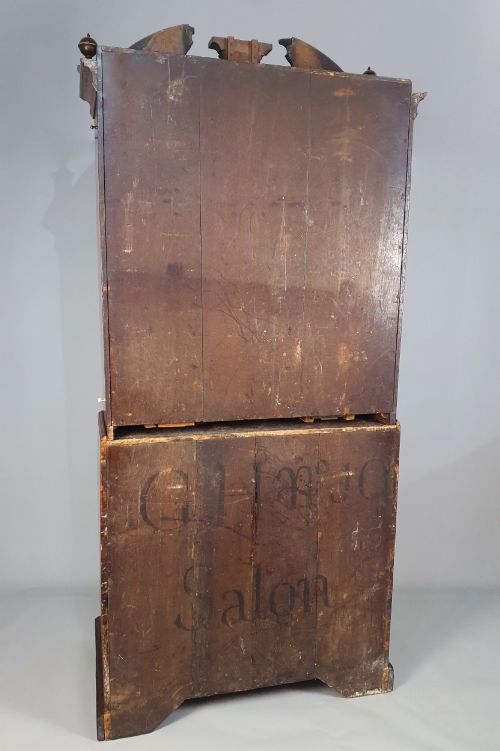
On the back, in early script which appears to be contemporaneous, are the words G H Salon No JO. In the early 1700s a ‘Salon’ was a gathering place, usually hosted by an influential and wealthy woman in her private home, and was used to encourage social, intellectual and literary conversations and exchanges. The gatherings were a central hub for the aristocracy and upper middle class in this ‘Enlightened’ period and included academics, writers, artists, political figures and enabled the dissemination of good manners and social etiquette that helped to define ‘polite society’. For women, who were for the most part excluded from formal education, the Salon provided a space for education and networking, the privacy of the setting enabling people to express themselves freely without censorship. In the early 1800s Holland House was one such Salon, presided over by Lady Holland and was the most famous meeting place for politicians, artists, writers and philosophers.
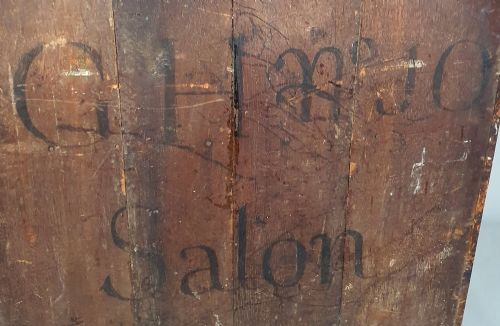
It is easy to imagine this beautiful bureau bookcase in such a setting where it could be admired and used by an array of invited guests.

Strongly recommended as a very fine, genuine and rare example in superior original condition.

Physical Dimensions
Height
230cm (90.55")
Width
105cm (41.34")
Depth
58.75cm (23.13")
Declaration

Webberley Antiques has dated this Queen Anne Bureau Bookcase to the 18th Century.

Reference Numbers
Sellingantiques Reference
SA1232818
Dealers Notes

I describe and photograph my pieces accurately and with the aim that on arrival each will exceed your expectations.

I operate a full refund guarantee and am always happy to give free, honest and friendly advice.

Description
Of a spectacularly rich colour and outstanding original condition, this beautiful bureau bookcase is of the finest quality and dates from c. 1710

With broken arch pediment with walnut cavetto moulding above two mirrored doors each with the original deeply bevelled and shaped plates, and two candle slides below so that the candle light would reflect in the mirrors.

fig 1. An early 18th-century Queen Anne burr walnut bureau bookcase featuring an open double-domed upper cabinet with fitted interior pigeonholes above a fall-front desk section.
fig 1. Queen Anne Burr Walnut Bureau Bookcase C. 1710

The well shaped doors with featherbanded inlays and crossbanded borders, the fall drawers and pediment with matching featherbanded inlays and crossbanded borders in figured walnut centred with burr walnut panels.

fig 2. An early 18th-century Queen Anne burr walnut bureau bookcase featuring an open double-domed upper cabinet with fitted interior pigeonholes above a fall-front desk section.
fig 2. Queen Anne Burr Walnut Bureau Bookcase C. 1710

The upper case doors with crossbanding and moulded bead frames to the plates, open with original hinges and locking mechanism to reveal a fully fitted interior of small featherbanded drawers with original handles and tall canopied pigeon holes.

In superb condition for age and clearly very well cared for and with only a couple of very minor veneer repairs and restorations.
Webberley Antiques

With one mirror plate slightly more foxed than the other but both mirror plates original and reflecting very well and the foxing not noticeable in daylight or in normal indoor lighting.

fig 3. An early 18th-century Queen Anne burr walnut bureau bookcase featuring an open double-domed upper cabinet with fitted interior pigeonholes above a fall-front desk section.
fig 3. Queen Anne Burr Walnut Bureau Bookcase C. 1710

The fall lowers on original hinges to sit firm and level on the lopers and encloses a very finely made interior with central architectural mirror panel door and small well shaped drawers and pigeon holes, the drawers all with featherbanding. The fall retains its original lock and an original key which operates the locks to the fall and all but one of the principal drawers (all locks original).

fig 4. An early 18th-century Queen Anne burr walnut bureau bookcase featuring an open double-domed upper cabinet with fitted interior pigeonholes above a fall-front desk section.
fig 4. Queen Anne Burr Walnut Bureau Bookcase C. 1710

All of the inner and principal drawers are oak lined with slender oak wainscot boards and very fine dovetailed joints.

The small door opens on original pierced and shaped brass strap hinges to reveal an inner drawer and shelf. Remove the low long drawer to the right of this door to access a secret compartment and secret drawer – original also – with a leather thong handle.

fig 5. An early 18th-century Queen Anne burr walnut bureau bookcase featuring an open double-domed upper cabinet with fitted interior pigeonholes above a fall-front desk section.
fig 5. Queen Anne Burr Walnut Bureau Bookcase C. 1710

Retaining all of its original brass handles and escutcheons and with original locks and working keys for both the lower bureau and upper bookcase.

The whole dressed in the most beautifully matched burr and figured walnut veneers and set on original bracket feet and plinth.

fig 6. An early 18th-century Queen Anne burr walnut bureau bookcase featuring an open double-domed upper cabinet with fitted interior pigeonholes above a fall-front desk section.
fig 6. Queen Anne Burr Walnut Bureau Bookcase C. 1710

The use of bracket feet in this late Queen Anne Period indicates that it was made in London where the fashions changed in line with aristocratic and Royal tastes and were immediately reflected in the form and designs of their cabinet makers.

fig 7. An early 18th-century Queen Anne burr walnut bureau bookcase featuring an open double-domed upper cabinet with fitted interior pigeonholes above a fall-front desk section.
fig 7. Queen Anne Burr Walnut Bureau Bookcase C. 1710

On the back, in early script which appears to be contemporaneous, are the words G H Salon No JO. In the early 1700s a ‘Salon’ was a gathering place, usually hosted by an influential and wealthy woman in her private home, and was used to encourage social, intellectual and literary conversations and exchanges. The gatherings were a central hub for the aristocracy and upper middle class in this ‘Enlightened’ period and included academics, writers, artists, political figures and enabled the dissemination of good manners and social etiquette that helped to define ‘polite society’. For women, who were for the most part excluded from formal education, the Salon provided a space for education and networking, the privacy of the setting enabling people to express themselves freely without censorship. In the early 1800s Holland House was one such Salon, presided over by Lady Holland and was the most famous meeting place for politicians, artists, writers and philosophers.

fig 8. An early 18th-century Queen Anne burr walnut bureau bookcase featuring an open double-domed upper cabinet with fitted interior pigeonholes above a fall-front desk section.
fig 8. Queen Anne Burr Walnut Bureau Bookcase C. 1710

It is easy to imagine this beautiful bureau bookcase in such a setting where it could be admired and used by an array of invited guests.

Strongly recommended as a very fine, genuine and rare example in superior original condition.

Height
230cm (90.55")
Width
105cm (41.34")
Depth
58.75cm (23.13")
Date of Manufacture

Webberley Antiques has dated this Queen Anne Bureau Bookcase to the 18th Century.

Reference Numbers
Sellingantiques Ref
SA1232818
Webberley Antiques
Webberley Antiques
Sellingantiques verified Since Nov 2008

Specialists in 18th century and earlier furniture for more than 45 years

Dealer Profile

You can view the stock and full dealer information on the Webberley Antiques Profile Page
PDF SHARE
SAVE
An early 18th-century Queen Anne burr walnut bureau bookcase featuring an open double-domed upper cabinet with fitted interior pigeonholes above a fall-front desk section.
1 / 11
Archive I An early 18th-century Queen Anne burr walnut bureau bookcase featuring an open double-domed upper cabinet with fitted interior pigeonholes above a fall-front desk section.

Queen Anne Burr Walnut Bureau Bookcase C. 1710
Archive II An early 18th-century Queen Anne burr walnut bureau bookcase featuring an open double-domed upper cabinet with fitted interior pigeonholes above a fall-front desk section. View II
Archive III An early 18th-century Queen Anne burr walnut bureau bookcase featuring an open double-domed upper cabinet with fitted interior pigeonholes above a fall-front desk section. View III
Archive IV An early 18th-century Queen Anne burr walnut bureau bookcase featuring an open double-domed upper cabinet with fitted interior pigeonholes above a fall-front desk section. View IV
Archive V An early 18th-century Queen Anne burr walnut bureau bookcase featuring an open double-domed upper cabinet with fitted interior pigeonholes above a fall-front desk section. View V
Archive VI An early 18th-century Queen Anne burr walnut bureau bookcase featuring an open double-domed upper cabinet with fitted interior pigeonholes above a fall-front desk section. View VI
Archive VII An early 18th-century Queen Anne burr walnut bureau bookcase featuring an open double-domed upper cabinet with fitted interior pigeonholes above a fall-front desk section. View VII
Archive VIII An early 18th-century Queen Anne burr walnut bureau bookcase featuring an open double-domed upper cabinet with fitted interior pigeonholes above a fall-front desk section. View VIII
Archive IX An early 18th-century Queen Anne burr walnut bureau bookcase featuring an open double-domed upper cabinet with fitted interior pigeonholes above a fall-front desk section. View IX
Archive X An early 18th-century Queen Anne burr walnut bureau bookcase featuring an open double-domed upper cabinet with fitted interior pigeonholes above a fall-front desk section. View X
Archive XI An early 18th-century Queen Anne burr walnut bureau bookcase featuring an open double-domed upper cabinet with fitted interior pigeonholes above a fall-front desk section. View XI
FURTHER BROWSING

Visitors also looked at these ⇣

Enlarged Archival View
Telephone 07765 233266
Location
East Sussex
United Kingdom

By appointment only.
Verified Since Nov 2008
Items For Sale 80
Items Sold 422
Webberley Antiques
Webberley Antiques
Verified Since Nov 2008
View Dealer Info
Location: East Sussex, United Kingdom, , By appointment only.
Verified
Nov 2008
For Sale
80
Sold
422
An early 18th-century Queen Anne burr walnut bureau bookcase featuring an open double-domed upper cabinet with fitted interior pigeonholes above a fall-front desk section.
Queen Anne Burr Walnut Bureau Bookcase c. 1710
Ref: SA1232818
An early 18th-century Queen Anne burr walnut bureau bookcase featuring an open double-domed upper cabinet with fitted interior pigeonholes above a fall-front desk section.
Detail View 1
Detail View 2
Detail View 3
Detail View 4
Detail View 5
Detail View 6
Detail View 7
Detail View 8
Detail View 9
Detail View 10
Archival Detail
Every single antique dealer on our platform is individually approved by our internal team. We verify their professional trade history, ethical standards, and photographic quality to ensure a secure, high-standard buying environment. Upon joining, every dealer agrees to a strict 9-point code of conduct. While issues can occasionally arise, our dealers typically resolve them swiftly and directly with the buyer. In fact, since our founding in 2002, Sellingantiques has only had to step in to help resolve an issue on roughly five occasions—a true testament to the quality of our dealers and their dedication to your happiness.
Our dealers are highly experienced in packing and shipping fragile, high-value antiques. Because you are in direct contact with the dealer, you will be able to easily go through all available shipping and insurance options together to ensure your item arrives safely.
Antiques are the ultimate green purchase. By choosing historical pieces over newly manufactured goods, you completely eliminate the carbon footprint of modern mass production while preserving exceptional, timeless craftsmanship.

Queen Anne furniture, originating in early 18th-century Britain, is characterised by curved silhouettes, restrained ornament, and the extensive application of figured walnut veneers.

These pieces were predominantly constructed with oak or pine timber for the underlying carcass, faced with thin cuts of figured burr walnut veneers, crossbanded borders, and cast brass hardware.

Authentic period pieces exhibit hand-cut dovetail joints, hand-sawn timber surfaces, natural wood shrinkage, original brass escutcheons, and signs of historic timber oxidisation.

A bureau bookcase functions as a primary focal point in a study or living area, pairing effectively alongside modern minimalist lighting and contemporary art.

Maintain the finish by dusting with a dry microfibre cloth, applying high-grade beeswax polish sparingly once or twice yearly, and keeping the piece away from direct heat sources to prevent veneer lifting.
items
Add keywords to the filter
Price
£100
£250000
Era
Movements
Material
Origin
Stock Location
Freshness
Online Payments
Categories