


Antique Pine Bureau
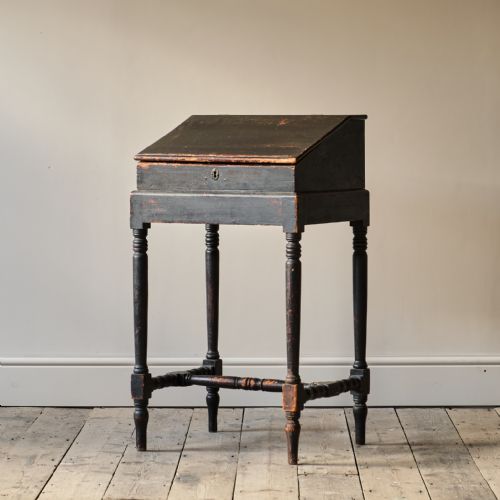
A pine chest or cabinet of drawers with a hinged fall that lowers to a writing surface, made as everyday furniture for letters, ledgers and papers.
Antique Pine Bureau
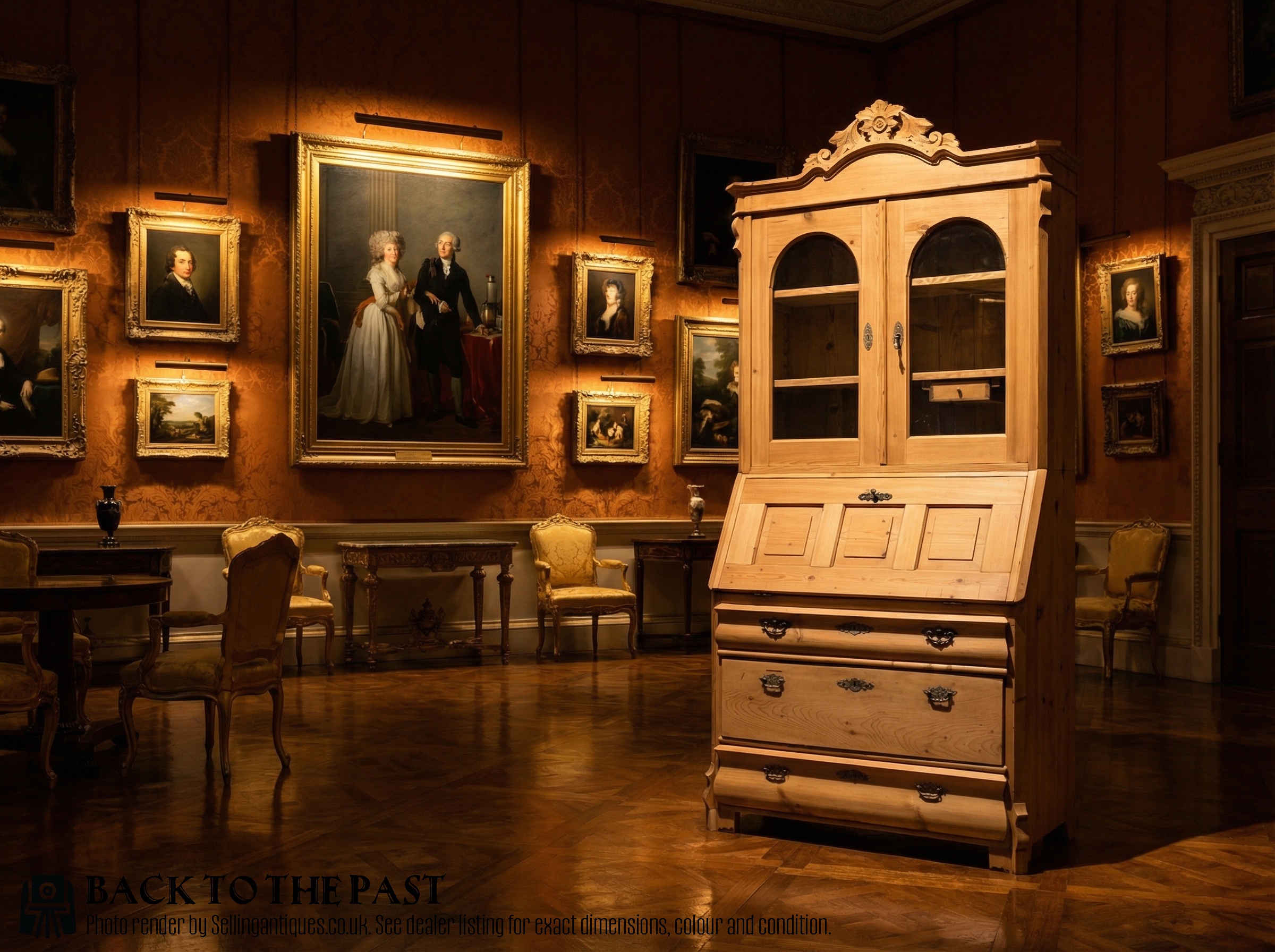
The fall-front writing cabinet on a chest of drawers took shape in Europe in the later 17th and 18th centuries, a way of putting a lockable writing surface over storage. Pine versions were vernacular furniture, made from a secondary timber and often meant to be painted or grained rather than shown as bare wood.
The form you'll meet most often on Sellingantiques is a single-carcass pine bureau or drop-front secretaire with small drawers inside, roughly 19th century to Edwardian. "Secretaire" is the defining word in this group, appearing in a third of the titles and used broadly as bureau is used. A few pieces are simply writing desks, writing tables or clerks' desks.
The main variant is the two-part piece: a bureau or secretaire bookcase with a shelved, glazed or part-glazed section standing on the writing case. Roughly a fifth to a quarter of listings take that shape. Painted, ebonized and faux-grained surfaces account for about a quarter, so waxed pine is not the whole story.
Dating is loose. Only 16 of 33 listings carry a clean year, and the dated field spans 1770 to 1920. Where years do appear they cluster late, in the 1900s, 1910s and 1920s, so a substantial part of the group is Edwardian or later. The rest lean on bracket labels: 19th century, Victorian, Georgian.
Where The Range Widens
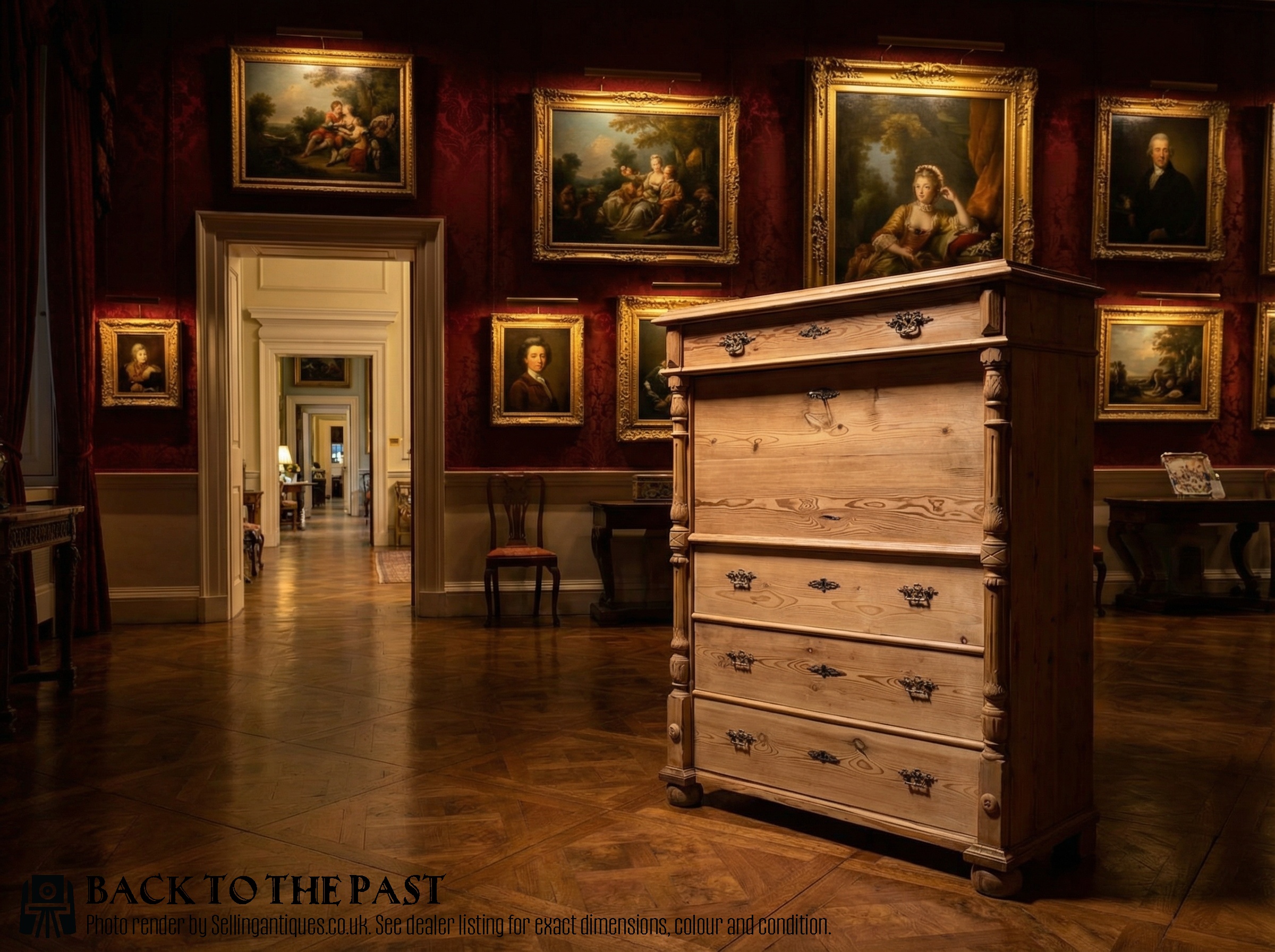
Construction sets the top from the bottom. Two-part pieces with a bookcase or cabinet above the writing case sit above the plain single carcass, and three of the four highest-priced listings are bookcase or cabinet forms. A plain undecorated pine bureau with nothing over it fills the lower half.
Surface and origin do the rest. The Swedish and Danish painted pieces, four listings in all, sit at the very top; every other bureau in the group is English or unattributed. Period paint, graining and ebonizing lift a piece where bare pine does not, which follows from a timber that was often intended to be covered.
Then the small things a title bothers to announce. Internal drawers, a named writing slope, secret drawers in one listing only: all sit in the upper half. Scale works at both ends, with seven titles calling the piece large and the single one describing small proportions also priced high. The earliest dated pieces, including a 1770 bookcase, sit up there too.
Antique Pine Bureau Retail Price Guide 2026
Typical UK retail prices for pine bureau, calculated from the Sellingantiques database of over a million retail prices indexed since 2003. This retail price guide relies exclusively on Sellingantiques data; no external sources or auction records are used, so the figures do not describe the wider market.
The most expensive antique pine bureau ever sold on Sellingantiques was a Swedish pine bureau bookcase, in September 2023.
The Antique Pine Bureau Glossary
- Drop front or fall front
- The hinged panel that lowers to become the writing surface. Sloping on some pieces, vertical on others.
- Secretaire
- Used in a third of titles in this group, broadly interchangeably with bureau, and usually implying a drop-front writing section over drawers.
- Interior drawers
- The small drawers and pigeonholes revealed when the fall is opened. Named in several titles, and titles that name them sit in the upper half.
- Part glazed
- An upper section with glass in some but not all of its doors or panels. The fully glazed and part-glazed tops both turn up on bookcase forms.
- Faux mahogany
- Pine painted to imitate a costlier timber. Ebonized, meaning stained or painted black in imitation of ebony, works the same way.
- Escritoire
- An older word for a writing cabinet, appearing once across the archive. Pitch pine, a denser resinous pine, is named once as well.
Antique Pine Bureau: Frequently Asked Questions
Is a pine secretaire the same as a bureau?
In practice the two words are used for the same thing. "Secretaire" appears in a third of the titles in this group, more often than any word for colour, size or origin, and "bureau" carries the rest.
Where there's a shade of difference, secretaire tends to imply a drop-front writing section standing over drawers. Both open to a writing surface with small drawers behind.
How old are these bureaux?
The dated field spans 1770 to 1920, but only 16 of the 33 listings carry a clean year. The rest use bracket labels: 19th century, Victorian, 1800s, Georgian, 18th century.
Where years are given they cluster late, in the 1900s, 1910s and 1920s. So a good part of the group is Edwardian or later, despite the antique pine framing. The earliest is a George III bureau bookcase dated 1770.
Why are Scandinavian pine bureaux priced highest?
Scandinavia turns up rarely but decisively in this archive: three Swedish listings and one Danish, four in all, and they occupy the very top of the range.
All four are painted. Every other piece in the group is English or unattributed, so the Scandinavian pieces stand apart on both origin and surface.
Are painted pine bureaux common?
Painted, ebonized and faux-grained surfaces account for roughly a quarter of the group. Pine was often made up as furniture intended to be painted or grained rather than shown bare.
The rest are plain or waxed pine, and a pair of Victorian ladies' make-up chests were offered ready to wax or paint. Decorative surfaces sit at the upper end of the range.
What does a bureau bookcase add?
It's the main variant on the single-carcass form: a two-part piece with a shelved, glazed or part-glazed section above the writing case. Bookcase appears in six titles, glazed or part glazed in two.
These sit above the plain bureaux in the range. Three of the four highest-priced listings are bookcase or cabinet forms.
Do many have secret drawers?
Secret drawers are named in one listing across the whole archive. Fitted interiors more generally are commoner, with internal drawers and writing slopes called out in several titles.
Those titles sit in the upper half of the range.