



Antique Oak Bureau
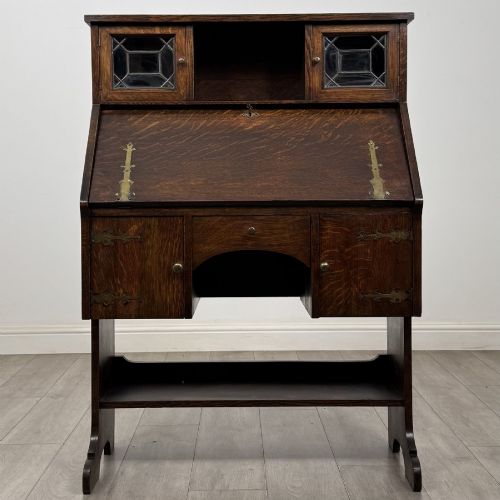
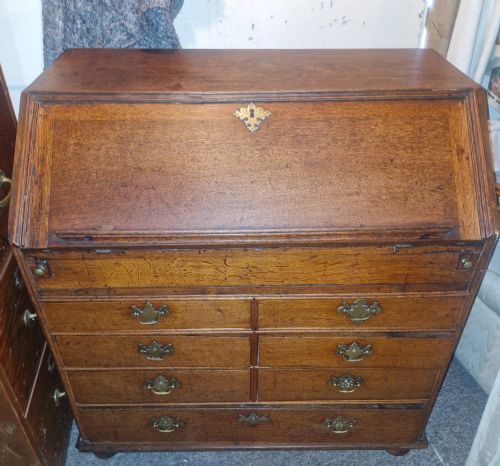
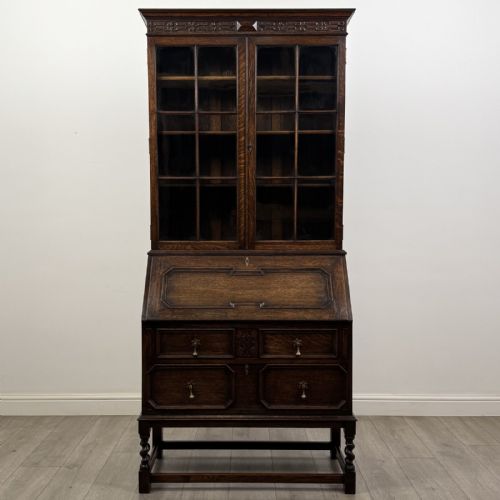
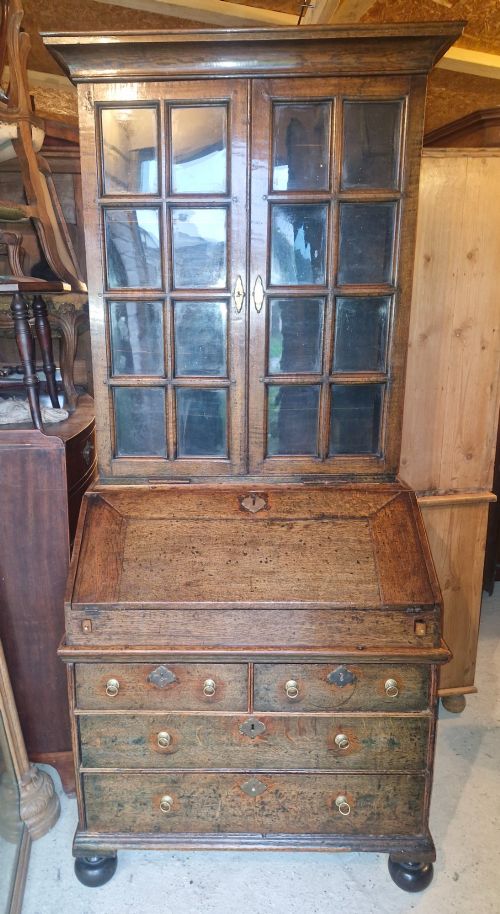
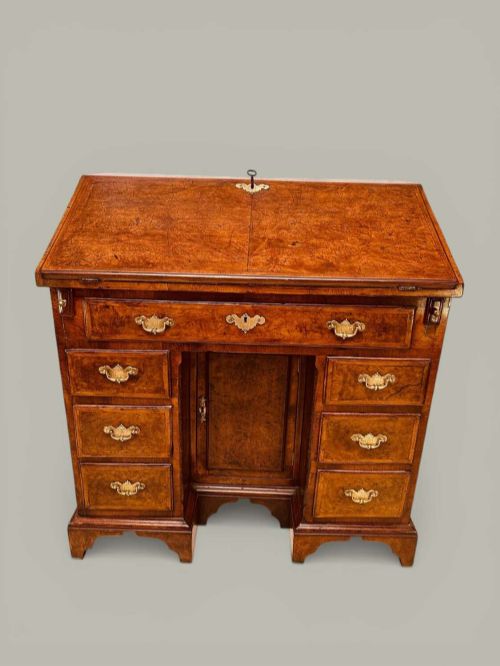
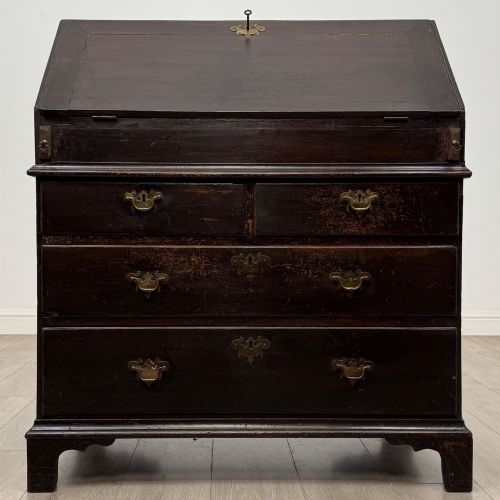
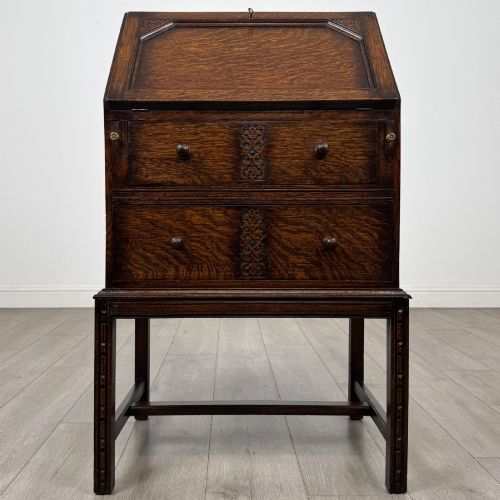
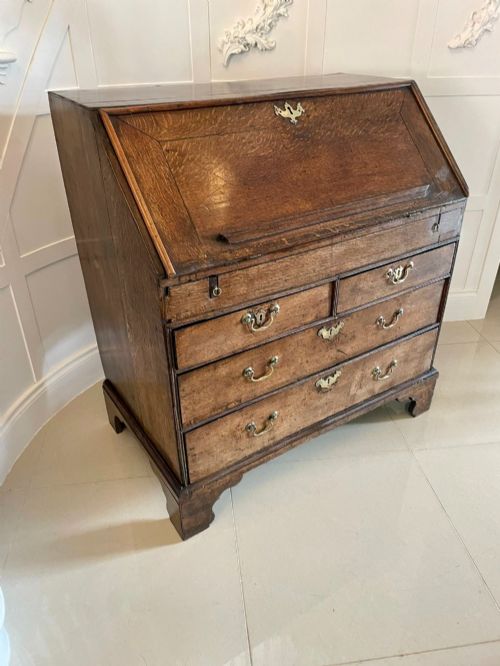
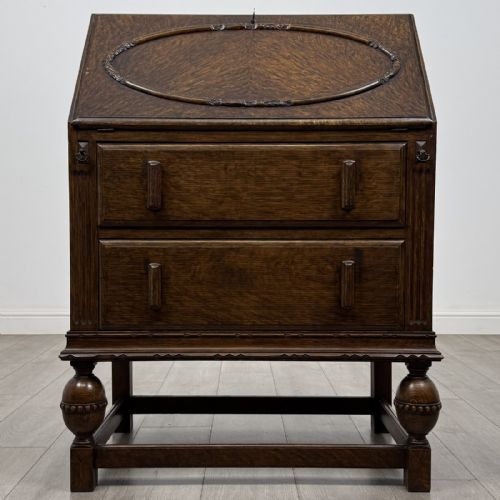
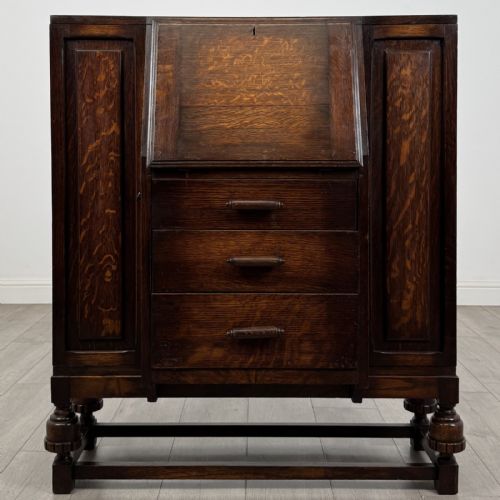
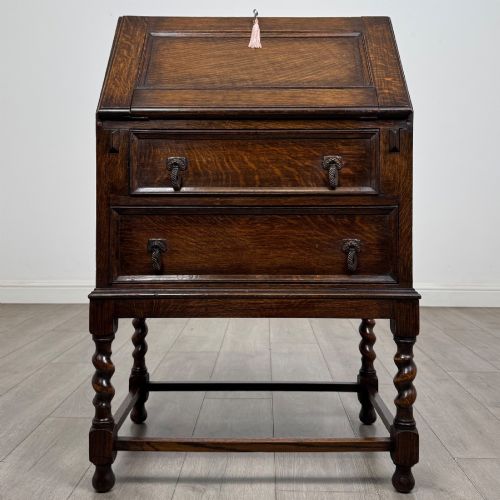
An oak writing desk with a hinged sloping fall that drops to make a writing surface, over drawers, with pigeonholes and small drawers behind.
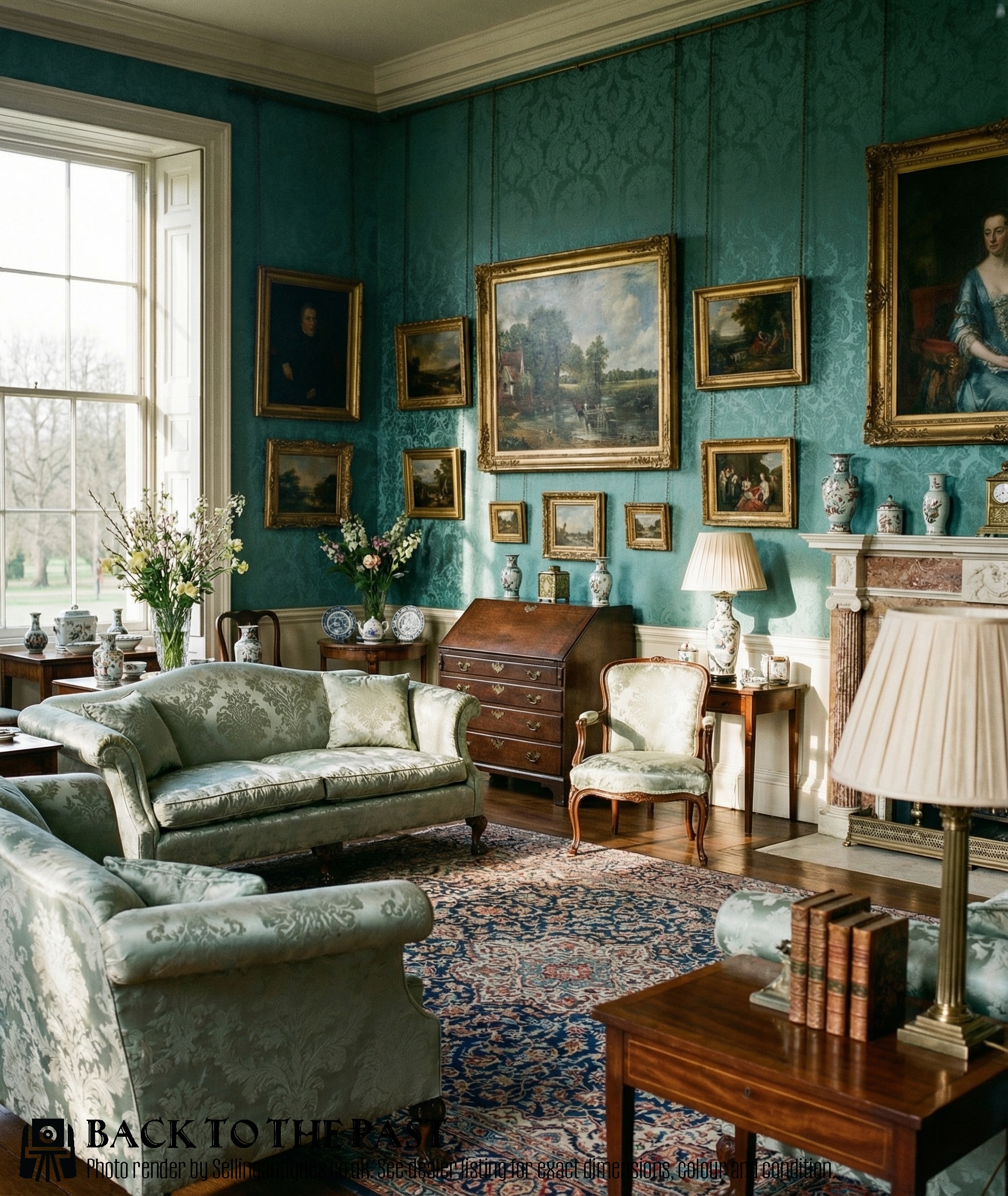
Antique Oak Bureau
The form began in England in the later 17th century: a chest of drawers with a hinged fall above it, giving a flat surface to write on and a lockable place for papers. Oak was the everyday timber for country and provincial versions, and the shape was revived in oak again and again through the 19th and 20th centuries.
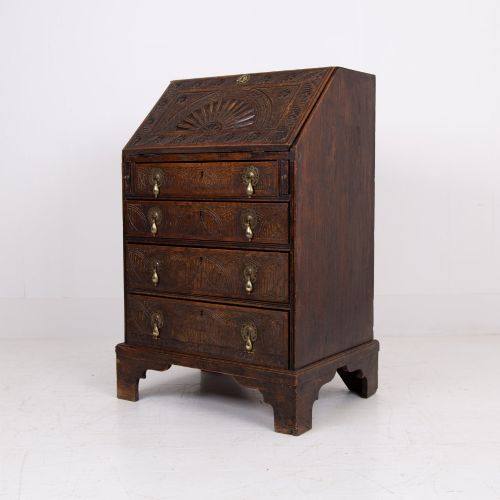
The piece you'll meet most often is a plain slope-front oak bureau on bracket feet, two short drawers over two or three long ones, no decoration and no name attached. Small size is a recurring note, and hundreds of titles on Sellingantiques say nothing more than a period word and the word bureau.
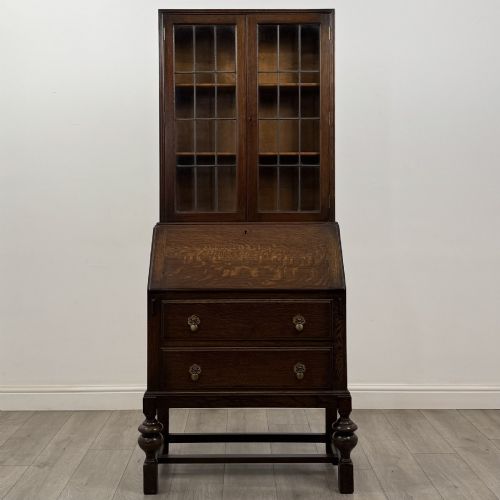
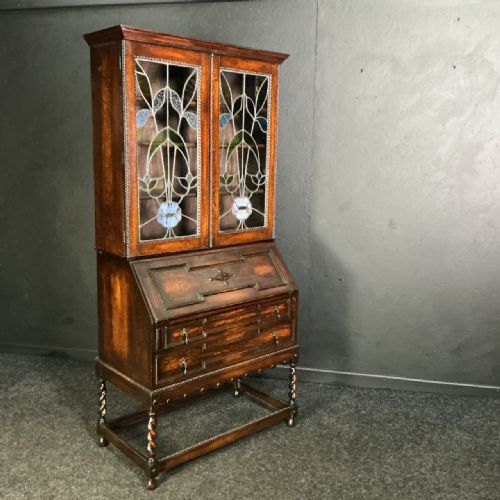
About a fifth are bureau bookcases, the same base carrying a glazed or panelled upper stage. That's the largest named variant by some distance. Bureaux on stands, corner bureaux and two-stage cupboard forms appear too, the last two only a handful of times across the whole archive.
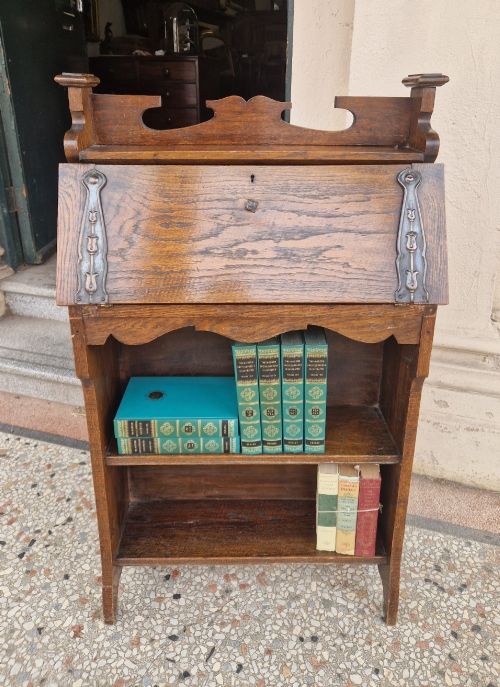
Age splits the category roughly in two. One half is 18th-century country oak, Georgian and earlier, with Queen Anne and 17th-century pieces at the far end. The other is 20th-century revival work in oak: Arts and Crafts, Edwardian golden oak, and 1920s and 1930s Jacobean, Queen Anne and Art Deco taste.
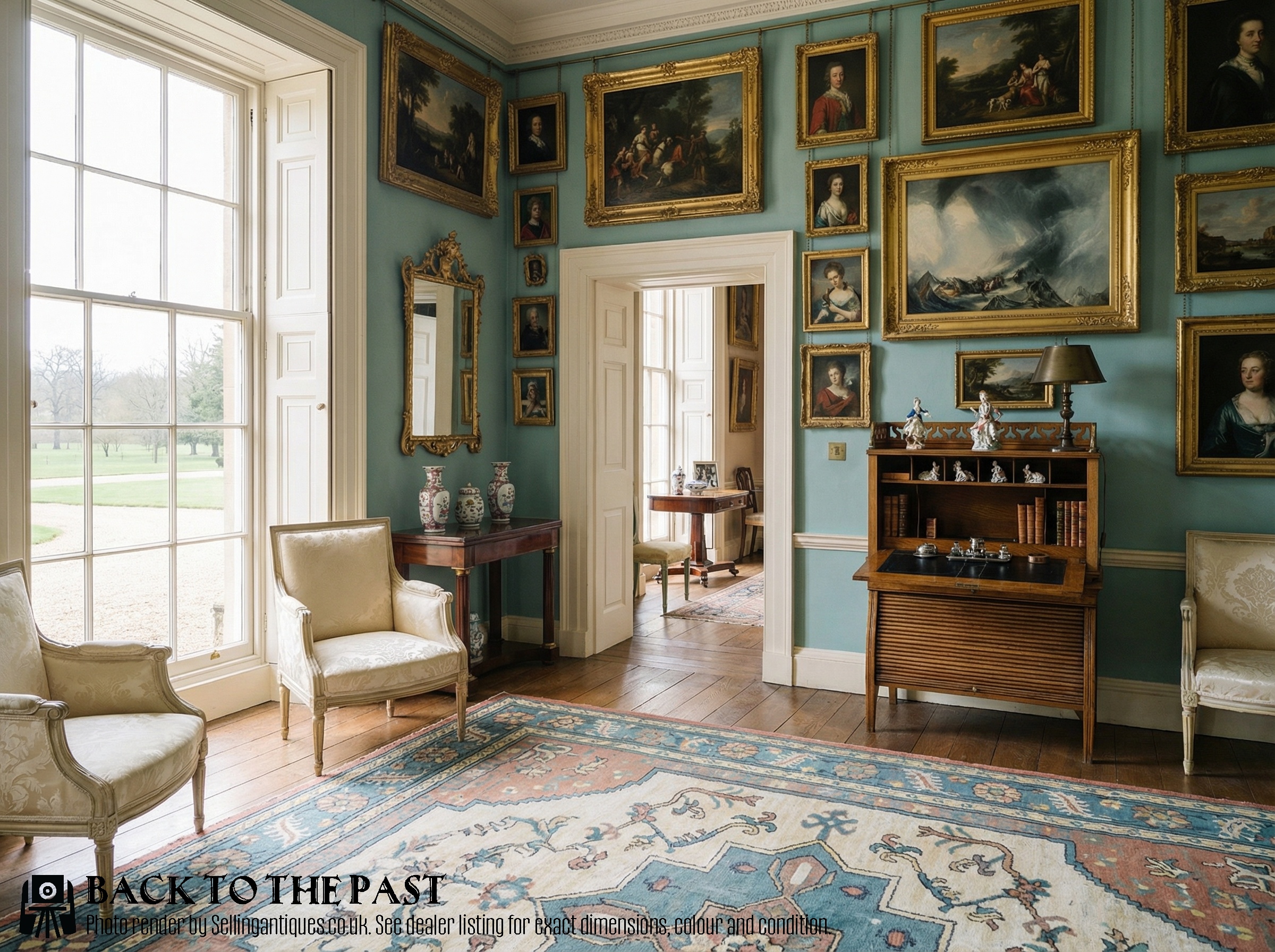
Where The Range Splits
Age does most of the work. The upper end is held by early 18th-century pieces, William and Mary, Queen Anne and George I, and by dome-topped bureau bookcases. Plain Edwardian and 1920s oak sits at the bottom. A two-stage top lifts a bureau above the plain base form throughout.
Within period pieces, small beats large. Diminutive proportions recur in the higher-placed listings, and a bureau of thirty-odd inches wide carries better than a broad one. What's behind the fall matters as much: stepped interiors, telescopic interiors, well-fitted arrangements and secret drawers all attach to the stronger listings.
Timber and attribution make up the rest. Burr and pollard oak, parquetry, inlaid starbursts, painted oak and marquetry each turn up on a few of the highest-priced pieces. Welsh attribution is the only regional label that recurs, and labelled 20th-century work sits above its unattributed equivalents.
Antique Oak Bureau Retail Price Guide 2026
Typical UK retail prices for oak bureau, calculated from the Sellingantiques database of over a million retail prices indexed since 2003. This retail price guide relies exclusively on Sellingantiques data; no external sources or auction records are used, so the figures do not describe the wider market.
Two period labels tie for the lead on Sellingantiques: 18th Century and Georgian, at 114 listings each. The 1920s come next.
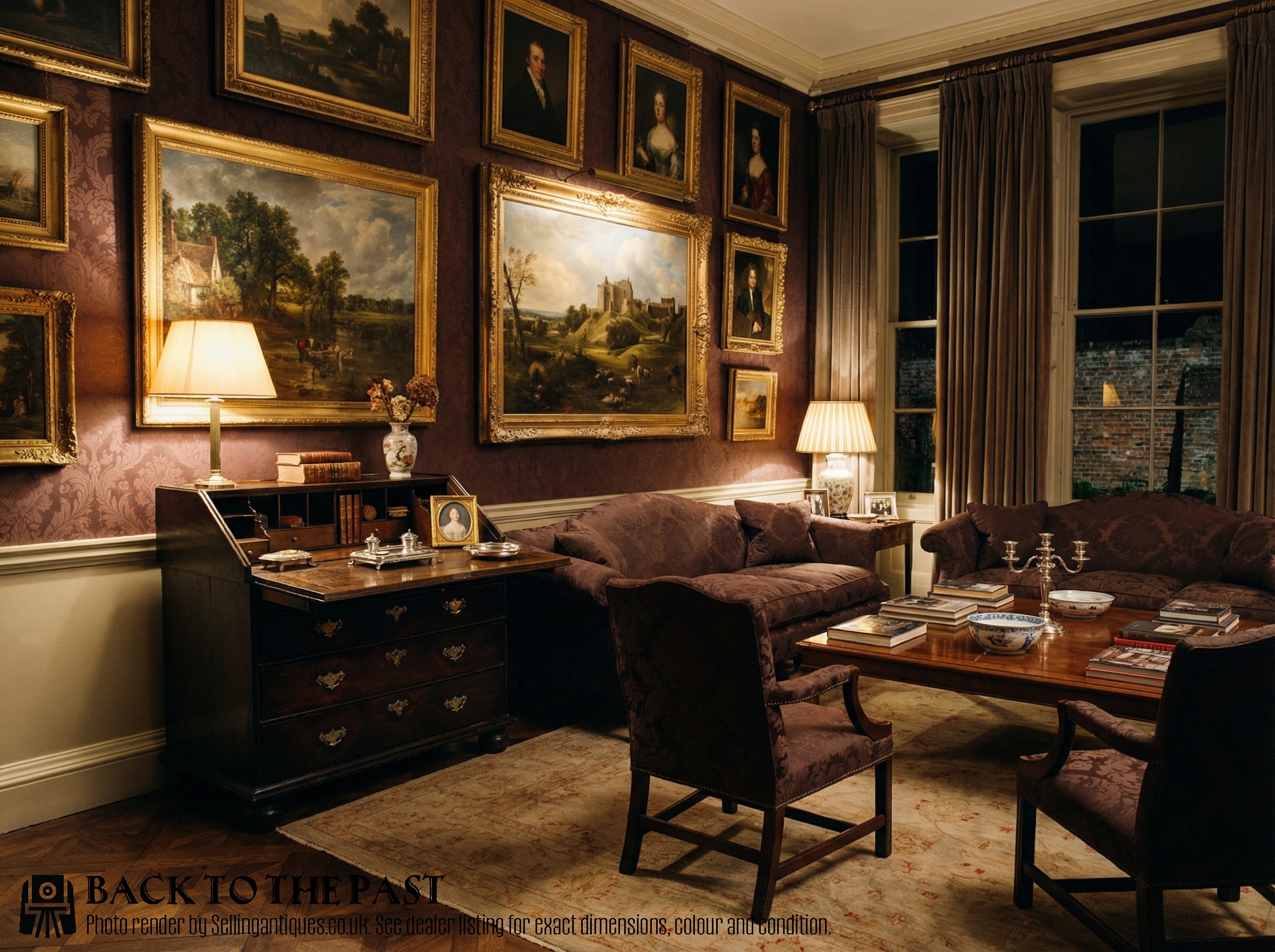
The Antique Oak Bureau Glossary
- Fall front
- The hinged sloping flap that drops to form the writing surface. Listings use 'fall' and 'fall front' interchangeably, and a few pieces are roll-top or cylinder instead.
- Bureau bookcase
- A bureau with a glazed or panelled upper stage above the fall. The commonest named variant in this category, at one in five listings.
- Fitted interior
- The pigeonholes and small drawers behind the fall. Descriptions qualify it as stepped, telescopic or well fitted where there's more going on than usual.
- Secret drawer
- A concealed compartment within the interior. Noted in a number of Georgian and 17th-century titles, sometimes as 'many secret drawers'.
- Golden oak
- The warm honey-toned finish of Edwardian and 1920s oak. Limed oak, with white filler worked into the grain, belongs to the Art Deco end instead.
- Escritoire
- Used for late 17th-century fall-front writing cabinets rather than the sloped bureau. Secretaire, a drawer-fronted writing section, appears in a handful of listings in place of bureau.
Antique Oak Bureau: Frequently Asked Questions
How old are most oak bureaux for sale?
Dates run from 1695 to 1930, though only around two in five listings carry a clean year rather than an era label.
The two biggest groups are 18th Century and Georgian, tied exactly and describing much the same population from two angles. The 1920s, Edwardian and 1930s follow behind them.
What's the difference between a bureau and a bureau bookcase?
A bureau is the fall-front desk over drawers. A bureau bookcase adds an upper stage above the fall, glazed or panelled.
The bookcase form is the commonest named variant on Sellingantiques, about one in five. Two-stage bureau cupboards and dome-topped versions belong to the same family.
Are oak bureaux English?
Overwhelmingly, yes. The stock is English almost throughout.
Continental oak turns up only as single pieces from Norway, Sweden, France, the Netherlands and Flanders, plus one Australian silky oak bureau. Welsh work is the one regional attribution that recurs, including a miniature bureau given to Glamorgan.
Why are small bureaux described that way so often?
Size is one of the things dealers lead with. The word 'small' appears in around one title in ten, alongside 'diminutive' and 'of small proportions'.
Among period pieces, the smaller ones sit higher in the range. Widths quoted in titles run down to a little over two feet.
Which unusual forms turn up in this category?
Corner bureaux appear twice in the whole sample, and a table-top bureau, the desk section with no base under it, twice more.
One-offs include a child's bureau, a wall-mounted desk and letter rack combination, a metamorphic drink cabinet in bureau form, and a bureau bookcase adapted to hold a television. Green Man carved bureaux are a small but persistent sub-genre.
Do oak bureaux carry maker's names?
Rarely. No maker names were drawn from the dealer copy for this category at all, so nothing here can be treated as an established attribution.
A dozen or so titles mention a label, and those are 20th-century pieces. Everything else is sold on period, form and timber.