




Antique Cylinder Bureau
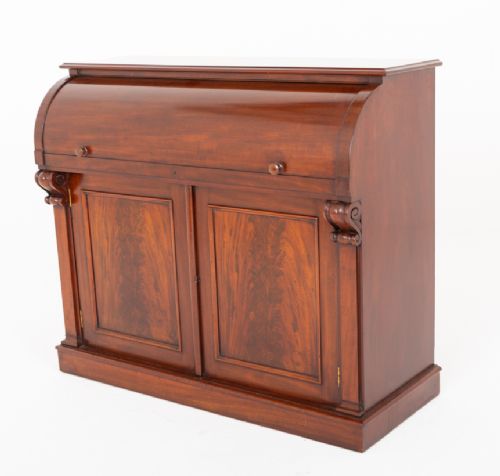
A writing desk closed by a curved quarter-round front that swings or slides back over the writing surface, keeping papers shut away without the swing of a fall-front.
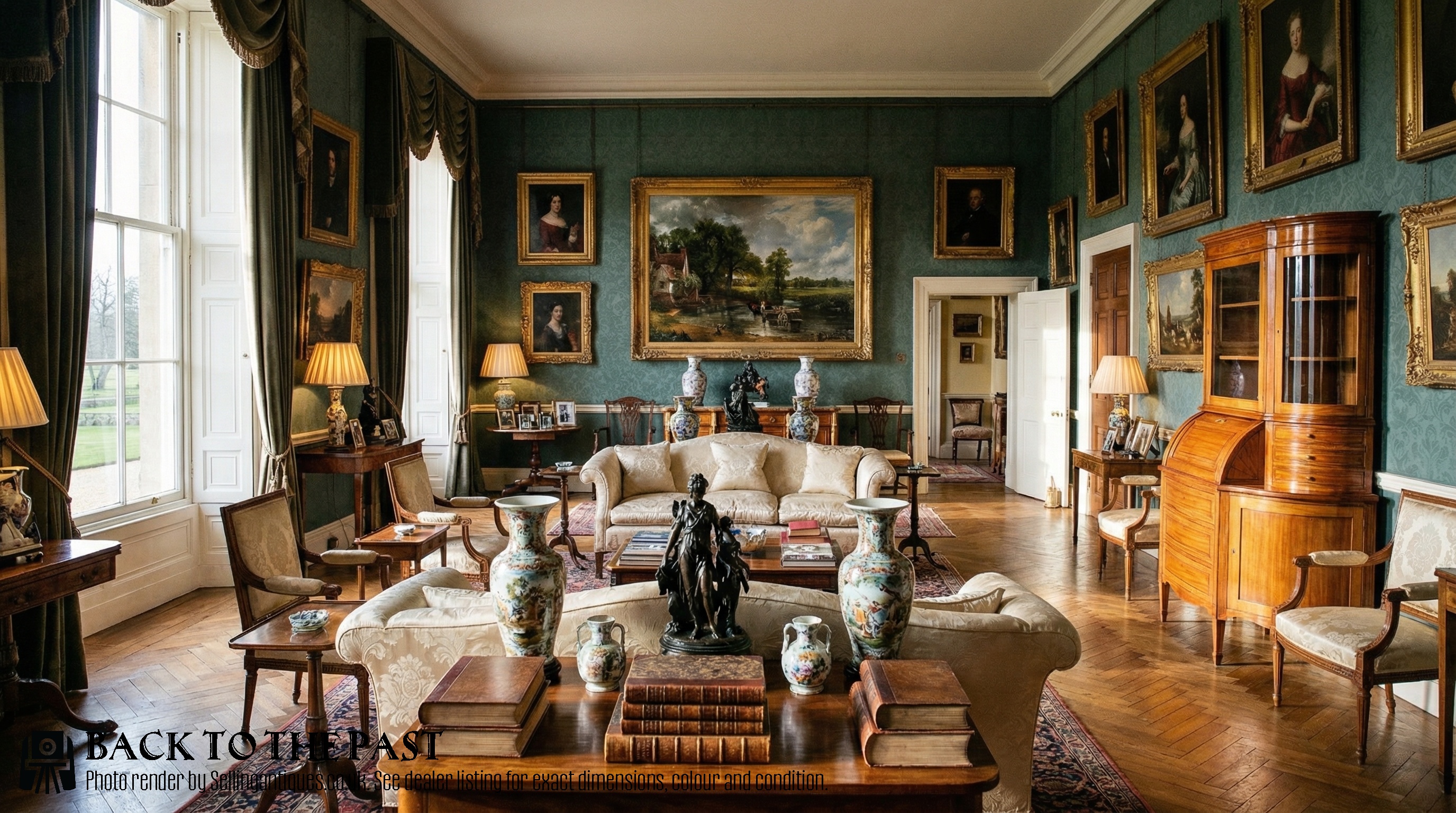
What Is A Cylinder Bureau?
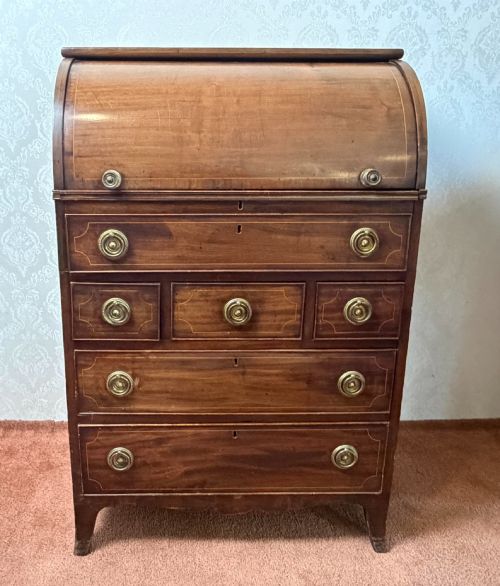
The cylinder front was developed for writing furniture in the second half of the 18th century, as a way of closing a desk without a fall flap dropping into the room. It stayed in production through the 19th century and into the Edwardian revival, which is where the bulk of the archive sits.
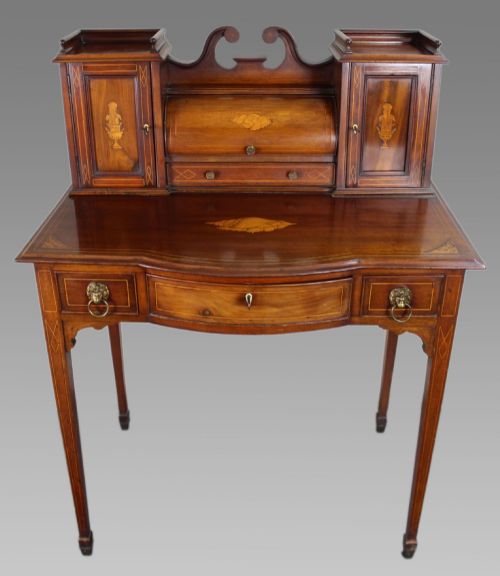
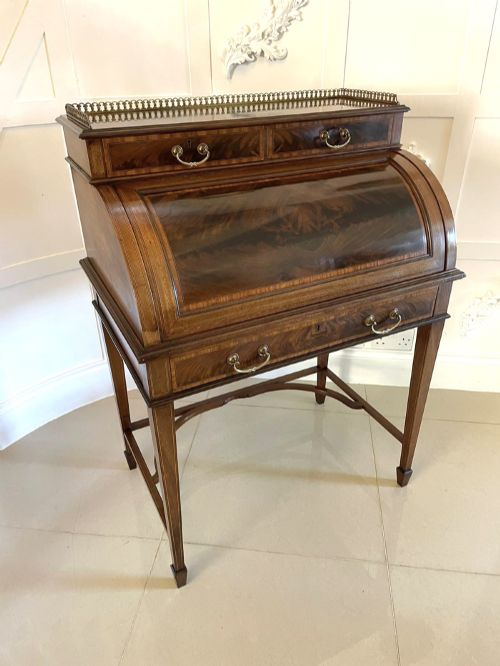
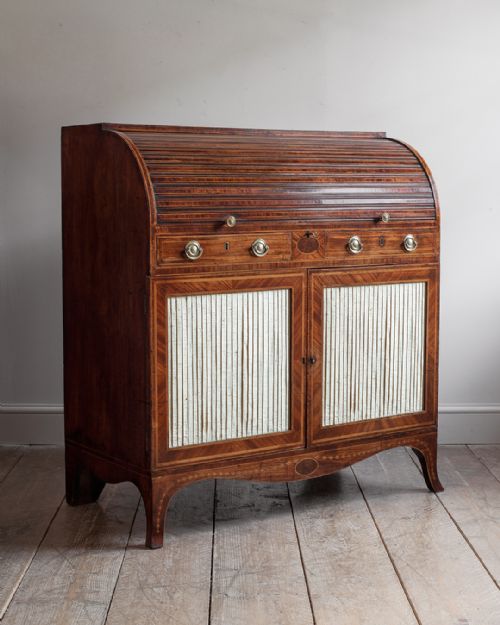
The version you're most likely to meet is an English mahogany cylinder desk, Edwardian or late Victorian, and usually inlaid. Mahogany appears in nearly half of all titles and inlay in over a quarter, so 'inlaid mahogany' is effectively the default description of the form on Sellingantiques.
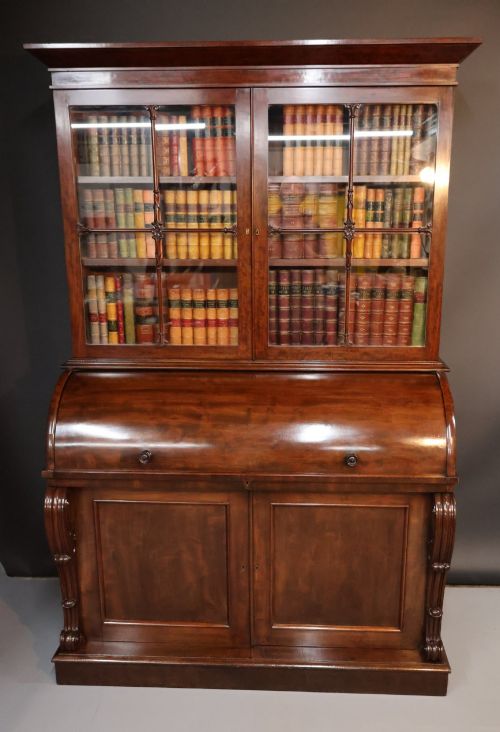
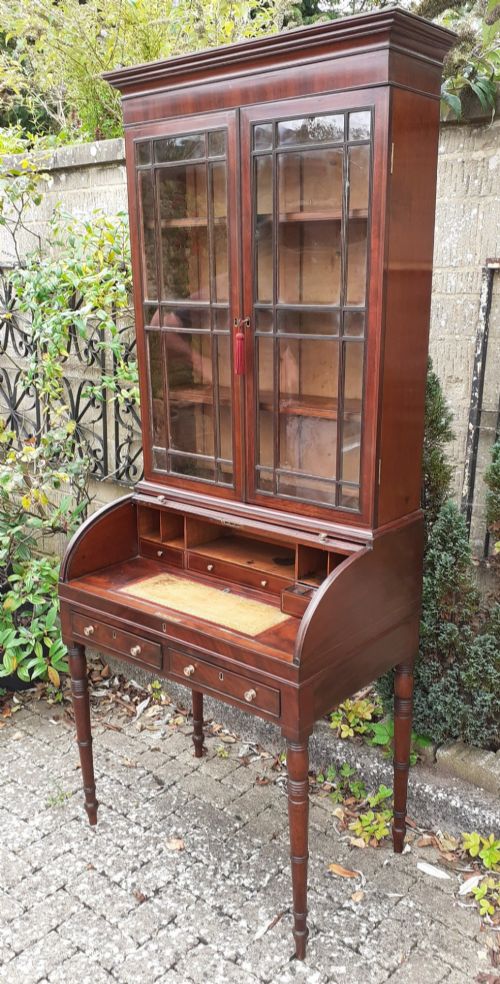
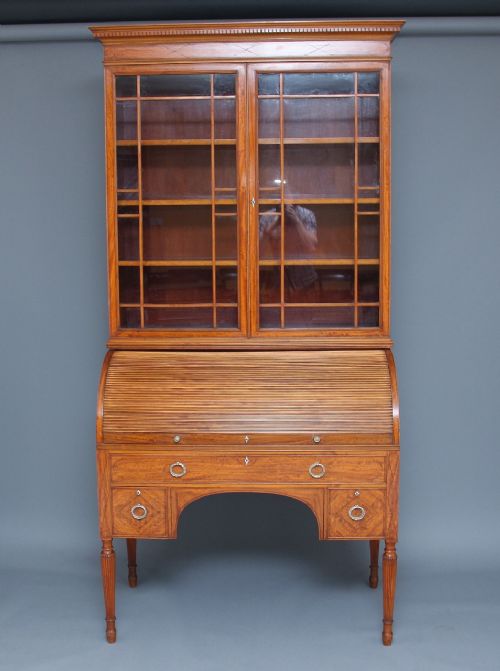
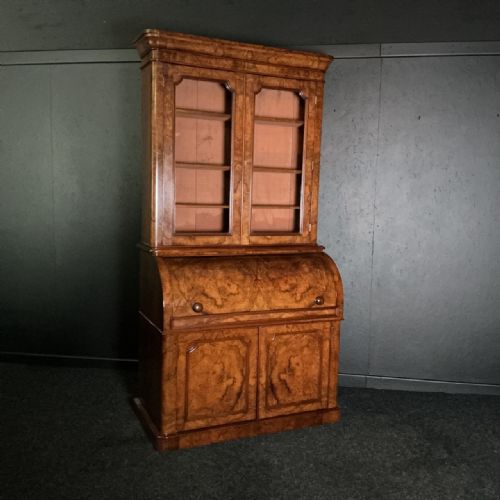
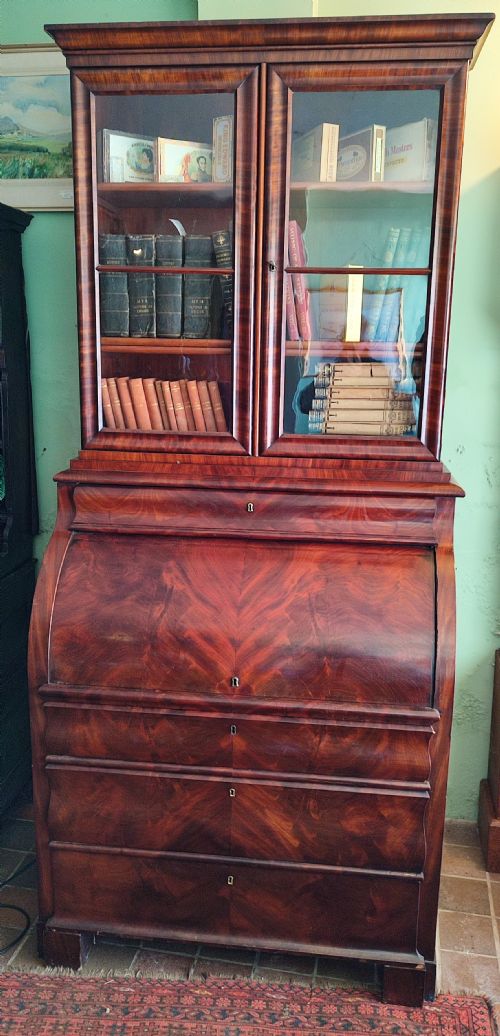
One in five carries a glazed or panelled bookcase or cabinet top rather than standing as a desk alone. The rest are low desks on legs or built over a carcass of drawers.
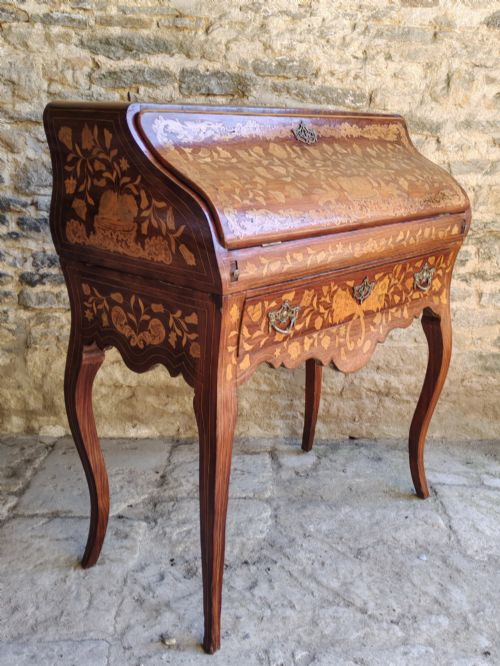
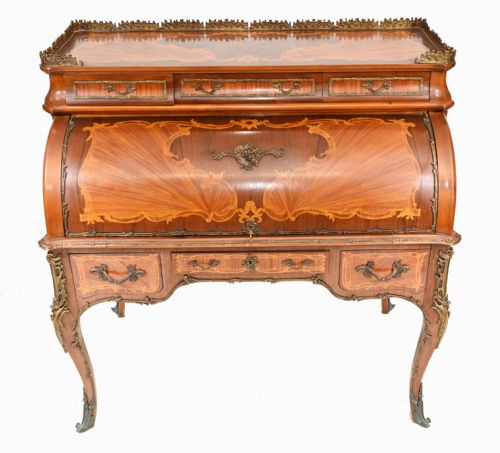
Beyond the English run there are French cylinder bureaux and bureaux de dame, with marble tops, ormolu and kingwood or rosewood parquetry; Dutch floral marquetry pieces, some bombé-fronted; and a small Sheraton Revival group in satinwood and other pale timbers. Flemish, Italian, American and Biedermeier examples each turn up once.
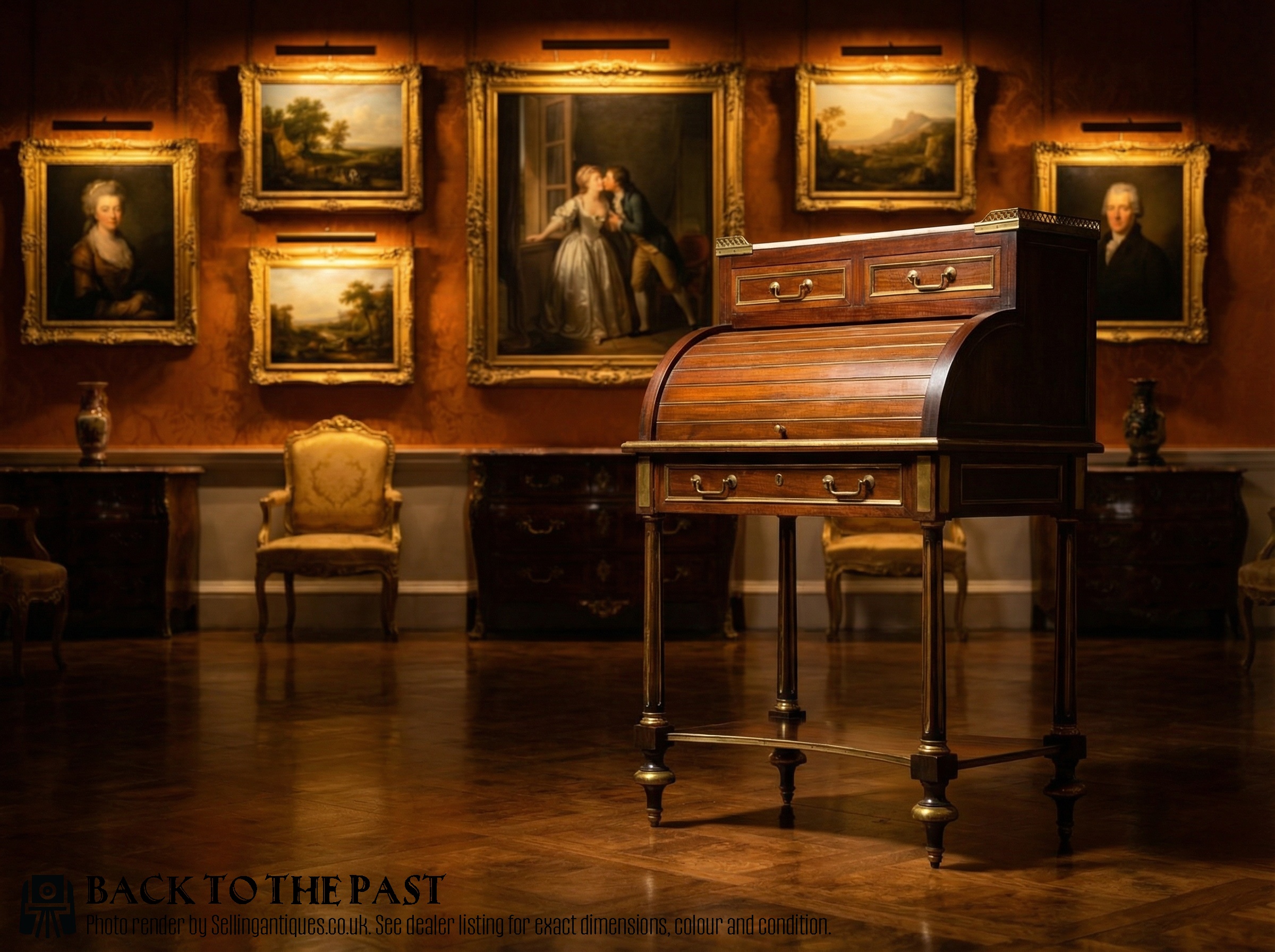
What Separates Them
Timber does most of the work. Plain mahogany sits at the bottom of the range, and the titles that reach highest name pale, figured or exotic woods: satinwood, yew, padouk, pollard oak, burr elm, mulberry, burr walnut. Each of those unusual timbers appears in a single title.
Decoration follows the same line. Marquetry, whether Dutch floral or the geometric parquetry of the French pieces, concentrates in the upper half, while the lowest-placed entries are described plainly and briefly. A surmounting bookcase or cabinet adds standing too, and several of the highest entries carry one.
Two other things lift a piece. Titles naming a London retailer, or using 'attributed to' and 'in the manner of', cluster in the upper part of the range. So does scale at either extreme: miniature and very small pieces are advertised as such, and so are large or substantial ones. Being finished on all sides and free to stand away from a wall is stated as a selling point in its own right.
Retail Price Guide 2026
Typical UK retail prices for cylinder bureau, calculated from the Sellingantiques database of over a million retail prices indexed since 2003. This retail price guide relies exclusively on Sellingantiques data; no external sources or auction records are used, so the figures do not describe the wider market.
19th Century is the period label used most on Sellingantiques for cylinder bureaux, with 1900s next and Edwardian third.
The Antique Cylinder Bureau Glossary
- Cylinder
- The curved quarter-round front that closes the writing area, either a solid panel or made up of slats.
- Tambour
- A flexible front of narrow strips glued to canvas, running in grooves at each side. It appears in several 18th-century titles.
- Roll top
- Used interchangeably with cylinder in nine titles for the same closing action, so the two words describe one thing.
- Bureau bookcase
- A cylinder bureau with a glazed or panelled upper case above the writing section, which covers about a fifth of the listings.
- Bureau de dame
- A small French lady's writing desk. Several titles use the French term, others simply say 'ladies'.
- Bonheur du jour
- A small writing table with a raised superstructure, a description borrowed for the cylinder form in two French titles.
Frequently Asked Questions
What wood are most cylinder bureaux made from?
Mahogany, by a wide margin. It accounts for nearly half of all titles in the archive, and very often comes with inlay.
After that the field spreads out: walnut and maple each appear in a modest run, satinwood in the Sheraton Revival group, and kingwood or rosewood on the French pieces. Padouk, yew, mulberry, pollard oak, burr elm, plum pudding mahogany and red walnut each show up once.
How old is a typical cylinder bureau?
The dated field runs from 1700 to 1920, but half the dating is a period word rather than a year. The single commonest entry in the whole archive is the bare phrase '19th Century'.
After that come the 1900s, Edwardian, the 1890s and Victorian. Genuinely 18th-century pieces are a minority, with a handful labelled Georgian or Regency, and the tail runs into the 1910s.
Is a cylinder bureau the same as a roll top desk?
The closing action is the same, and nine titles in the archive use 'roll top' where others say 'cylinder'.
A cylinder front can be a solid curved panel or a slatted one. A handful of the 18th-century entries call the slatted version a tambour, a flexible front of strips glued to canvas.
Do they come with a bookcase on top?
One in five does. The upper case is glazed or panelled and sits above the writing section, and some titles call it a cylinder cabinet bookcase instead.
The other four in five stand alone as desks, either on legs or over a carcass of drawers.
Are French cylinder bureaux common on the site?
About one in nine of the archive is French, and the share is higher in current stock than in what has sold.
These are the pieces with marble tops, ormolu mounts and kingwood or rosewood parquetry. Vernis Martin lacquer work appears three times, always on a French piece.
How many come up for sale each year?
Around nineteen a year across Sellingantiques, and 77 different dealers have handled one.
That works out at a single example for most dealers who carry them, so they arrive one at a time rather than in runs.