
Antique Mahogany Bureau
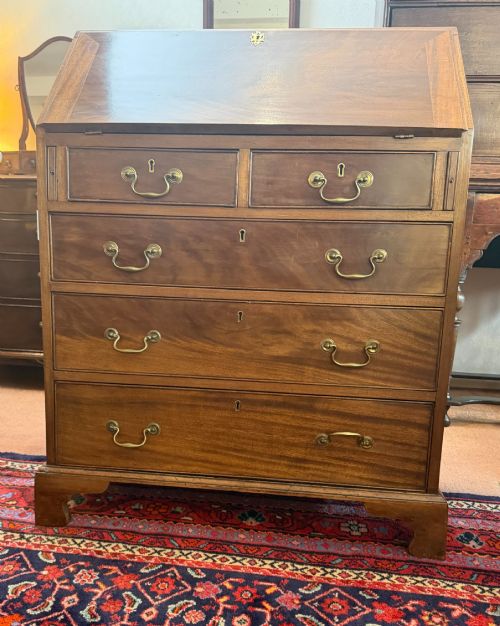
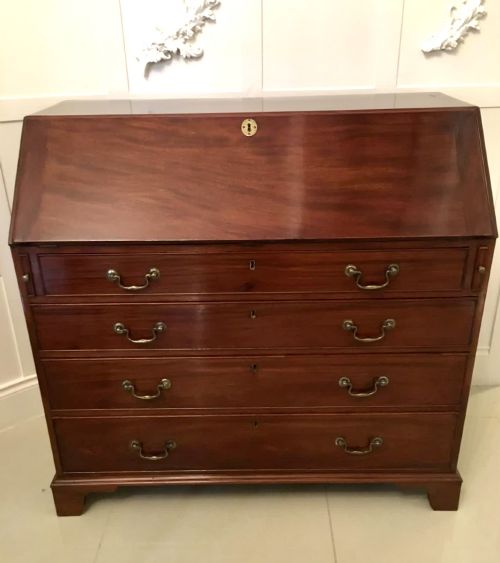
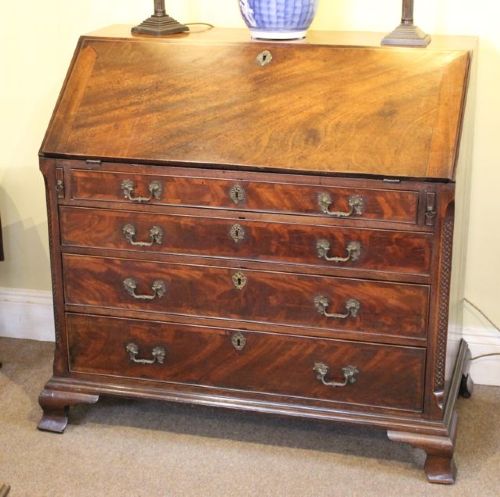
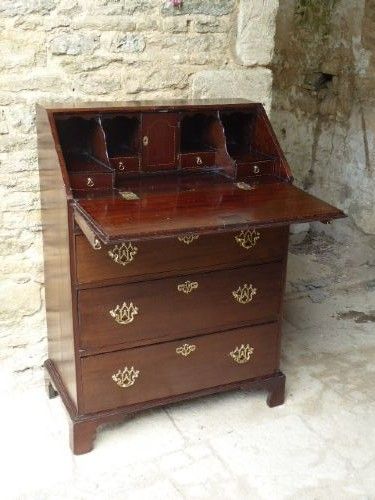
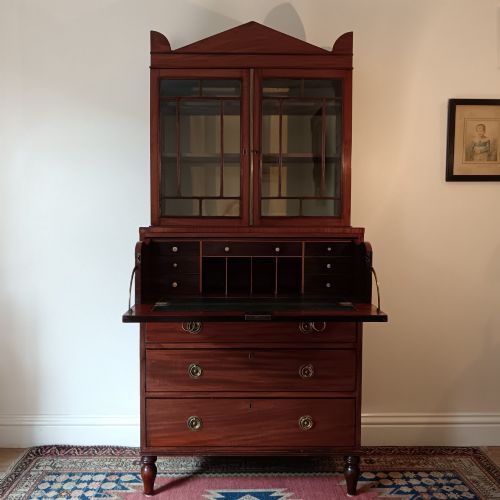
A mahogany writing desk with a sloping or fall front that lets down onto lopers to make a writing surface, over drawers below and a stepped interior of small drawers and pigeonholes.

What Is A Mahogany Bureau?
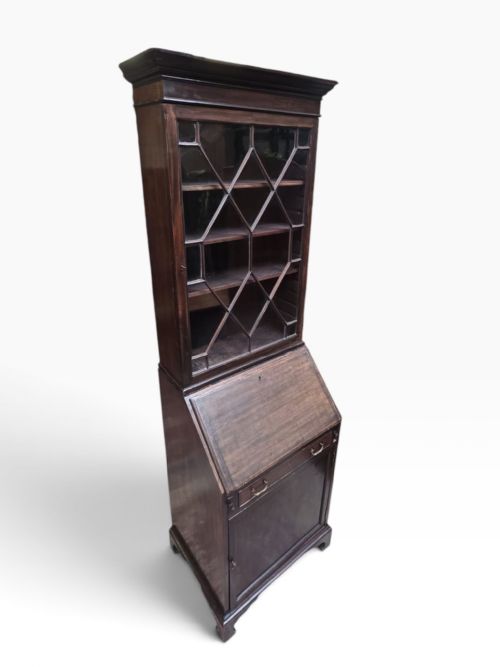
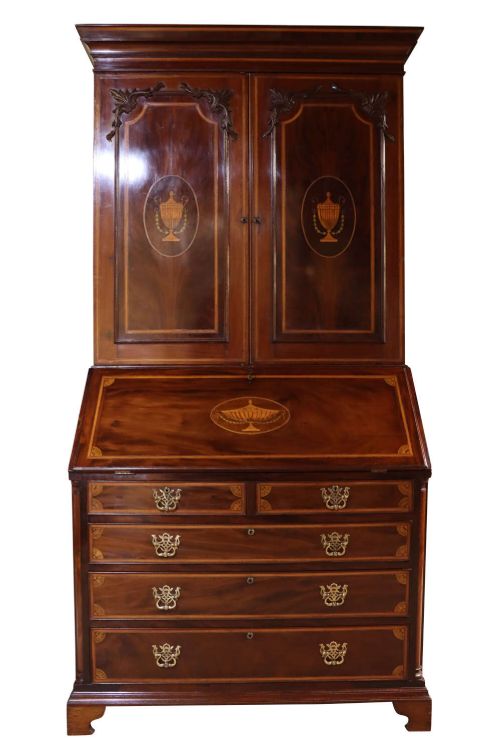
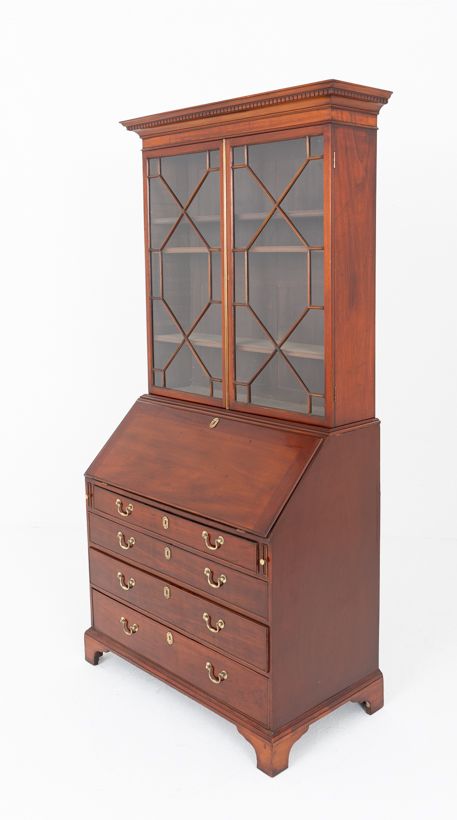
The form settled into its familiar English shape in the early 18th century, and mahogany became the standard timber for it as the century went on. Two builds turn up throughout: the plain single-carcase bureau, and the taller bureau bookcase with a glazed or panelled upper stage for books and papers.
Two period labels carry the category on Sellingantiques. Georgian and 18th Century together account for well over a third of everything dated, and a George III fall-front bureau in plain mahogany is the piece you are most likely to meet. Edwardian is the next single block, usually inlaid with contrasting banding or stringing.
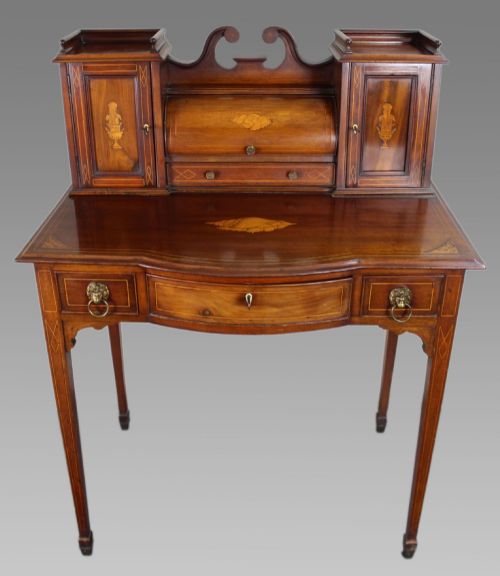
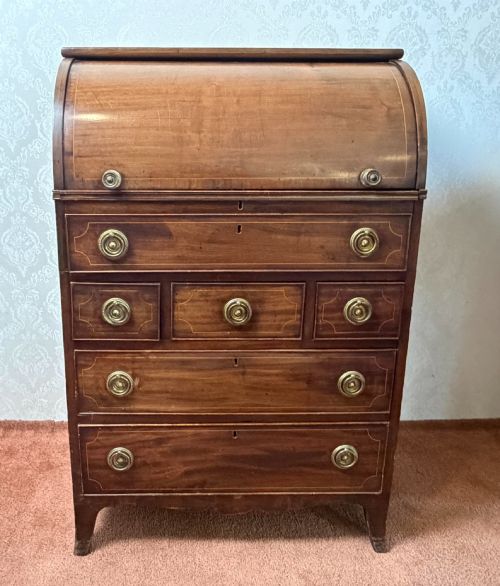
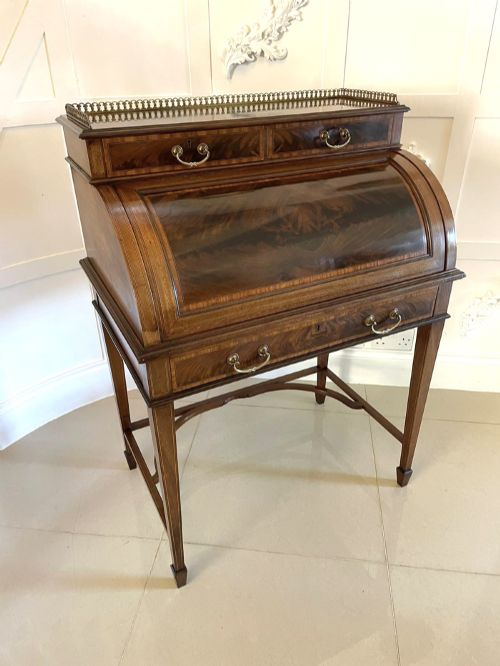
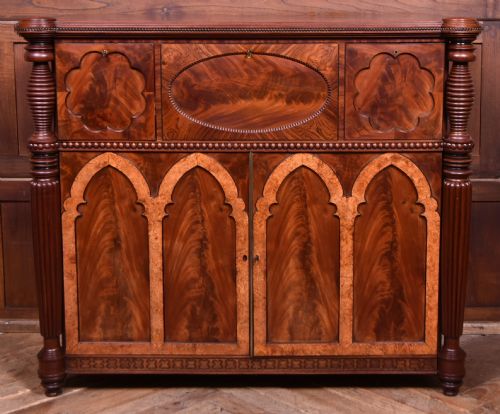
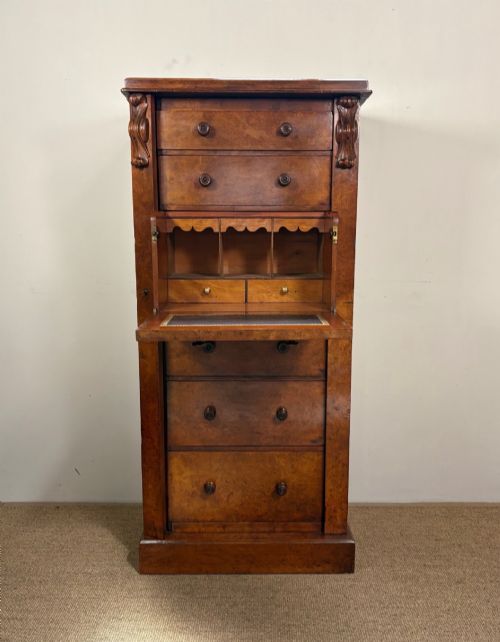
A quarter of all titles mention a bookcase stage, so the two-part form is a defining variant rather than an occasional one, though the single carcase still outnumbers it. Around it sit cylinder and roll-top desks, secretaire chests, and small ladies' writing pieces including the bonheur du jour.
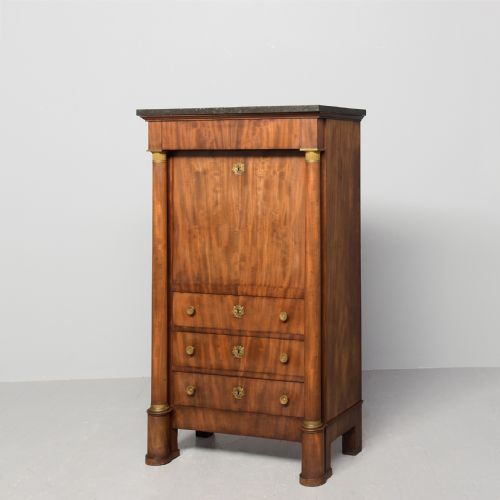
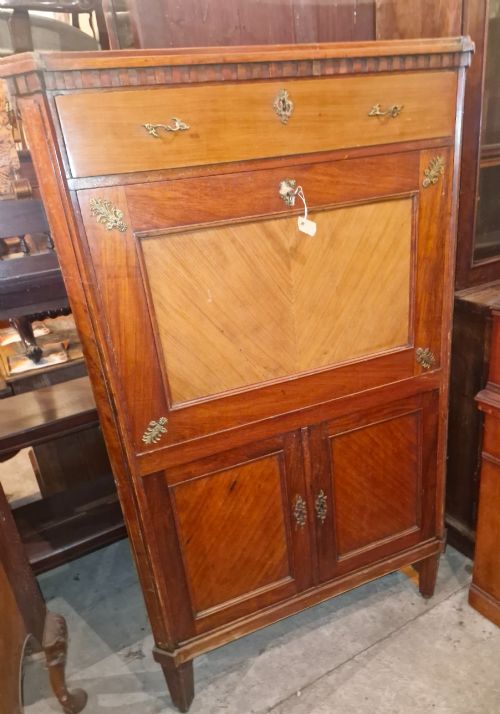
Continental work is a thin but persistent seam: secretaire abattants, escritoires, Biedermeier pieces and Dutch marquetry examples in single figures. The dated field runs from 1740 to 1930, and since only a third of listings carry a clean year, broad entries like '19th Century' or '1800s' read as a bracket.
Where The Range Splits
The upper stage does much of the work. The top of the range is heavy with bureau bookcases and secretaire bookcases, while the plain single-carcase bureau clusters low. Above that, the highest-priced entries are Continental and marquetry cylinder pieces rather than English bureaux at all.
Timber and decoration separate the rest. Figured, flame and Cuban mahogany push a piece upward, and so does marquetry or satinwood inlay against a plain mahogany surface. Inlay is the commonest decorative term in the archive by a wide margin, and it almost always accompanies a cylinder or roll-top cover.
Size cuts both ways. 'Small' is the most-used size word by a distance, and dealers reach for 'petite', 'diminutive', 'miniature' and 'neat' on Georgian pieces at the top while 'small' does duty at the cheap Edwardian end. Named attributions and stamps sit with the dearer entries.
Retail Price Guide 2026
Typical UK retail prices for mahogany bureau, calculated from the Sellingantiques database of over a million retail prices indexed since 2003. This retail price guide relies exclusively on Sellingantiques data; no external sources or auction records are used, so the figures do not describe the wider market.
One-offs from the archive: a child's bureau, a barrister's bureau, a bureau on stand that doubled as a lectern, and a double-sided tambour roll-top.
Maple & Co·Gillows
The Antique Mahogany Bureau Glossary
- Fall front
- The hinged sloping flap that drops to make the desk top, supported on pull-out lopers either side.
- Bureau bookcase
- A bureau with a glazed or panelled upper stage above it. A quarter of titles here mention one.
- Secretaire
- A writing section behind a drop-front or a pull-out drawer front, rather than behind a sloped fall.
- Astragal glazed
- Upper doors divided by slim glazing bars. The phrase recurs through the bookcase titles.
- Cylinder
- A curved or tambour sliding cover over the writing area, as on cylinder and roll-top desks. Nearly always paired with inlay.
- Bonheur du jour
- Small lady's writing table with a raised superstructure of drawers or shelves above the top.
Frequently Asked Questions
What is a secretaire abattant?
An upright Continental form with a vertical fall front over drawers or a cupboard below, rather than the sloping fall of the English bureau.
It appears in twenty titles on Sellingantiques, part of a small Continental seam that also takes in escritoires and Dutch marquetry pieces.
How common are bureau bookcases?
A bookcase stage is mentioned in a quarter of all titles, which makes the two-part form a defining variant of the category.
The single-carcase bureau still outnumbers it. Bookcase and secretaire bookcase entries sit toward the upper end of the range.
Which period do most listings fall in?
Georgian and 18th Century are the two labels that carry the category, together accounting for well over a third of everything dated.
Edwardian is the next single block, typically inlaid. A scatter of 1920s and 1930s dates appears at the late end.
Why do so many listings give only a period label?
The dated field runs 1740 to 1930, but only 359 of 1,068 listings carry a clean year. The rest rely on a period label instead.
Broad entries such as '19th Century' and '1800s' are common, and read as a bracket rather than a date. Only the 1750s breaks out as a decade at the early end.
Does inlay mean a later piece?
Inlay is the commonest decorative term in the archive, and 'Edwardian inlaid' is a pairing that recurs in dozens of titles.
It also turns up on cylinder and roll-top desks, which cluster at the later Victorian and Edwardian end. Marquetry and satinwood inlay sit above plain mahogany surfaces in the range.
What unusual forms turn up?
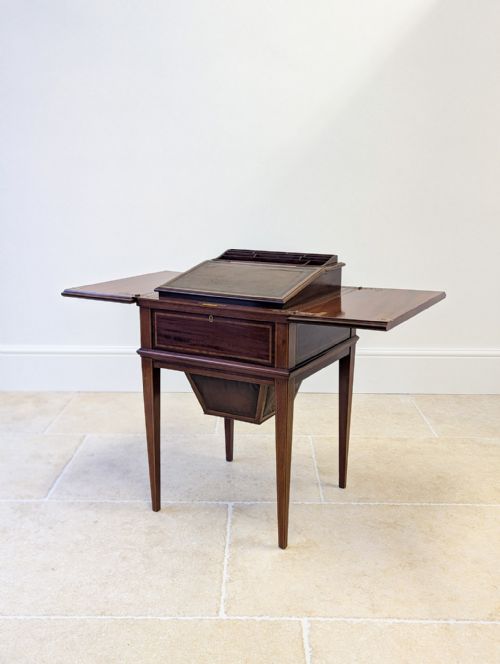
The oddities appear once each: a child's bureau, a barrister's bureau, a bureau on stand doubling as lectern or rostrum, a metamorphic writing table and a double-sided tambour roll-top.
Around 111 mahogany bureaux are listed on Sellingantiques in a year, and 177 different dealers have offered one, so the sweep is wide.